admin
admin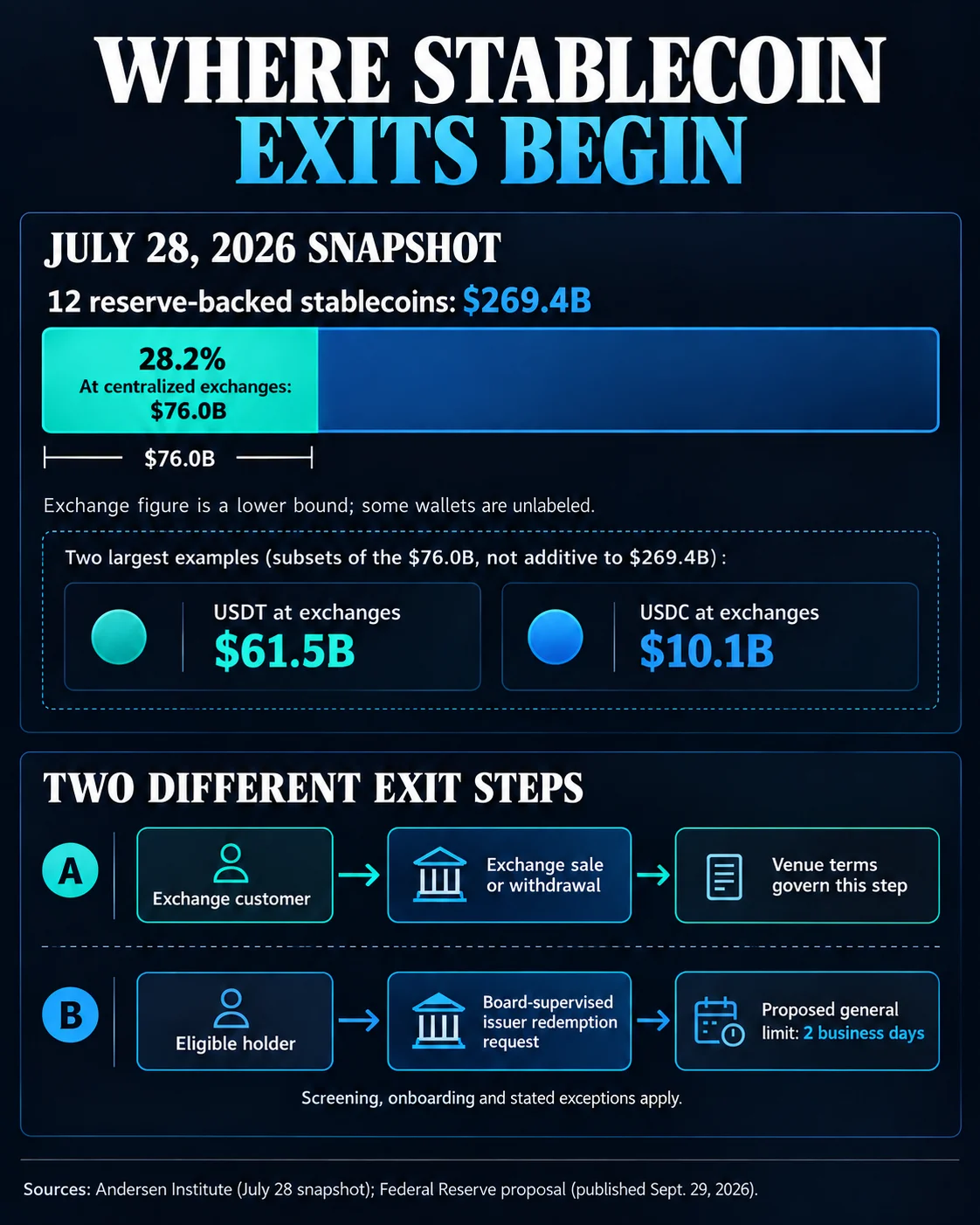
The Federal Reserve has put forth a proposal that could significantly reshape the stablecoin landscape by establishing a general two-business-day limit on redemptions for issuers under its supervision. This move aims to bring greater clarity and promptness to the process by which holders of these digital assets can convert them back into fiat currency. The proposal, published in the Federal Register on September 29th, following an announcement by the Board on September 24th, introduces new obligations for payment stablecoin issuers overseen by the Board, requiring them to publicly disclose their redemption procedures.
At the heart of the proposal is Section 247.12, which stipulates that the normal period for an issuer to redeem a stablecoin after a request should not exceed two business days. Issuers would be mandated to clearly outline how a customer can initiate a redemption and must accept such requests for at least one token, subject to standard screening and onboarding processes. While the Federal Reserve acknowledges the need for flexibility, it allows for extensions to this redemption period under specific circumstances, such as for the preservation of safety, financial stability, or the broader public interest. Furthermore, the proposal includes provisions for limited safe harbors that would permit delays in redemption if they are tied to necessary customer verification procedures or unforeseen events beyond the issuer’s control. These requirements are currently open for public comment, indicating a period of deliberation before any final rules are enacted.
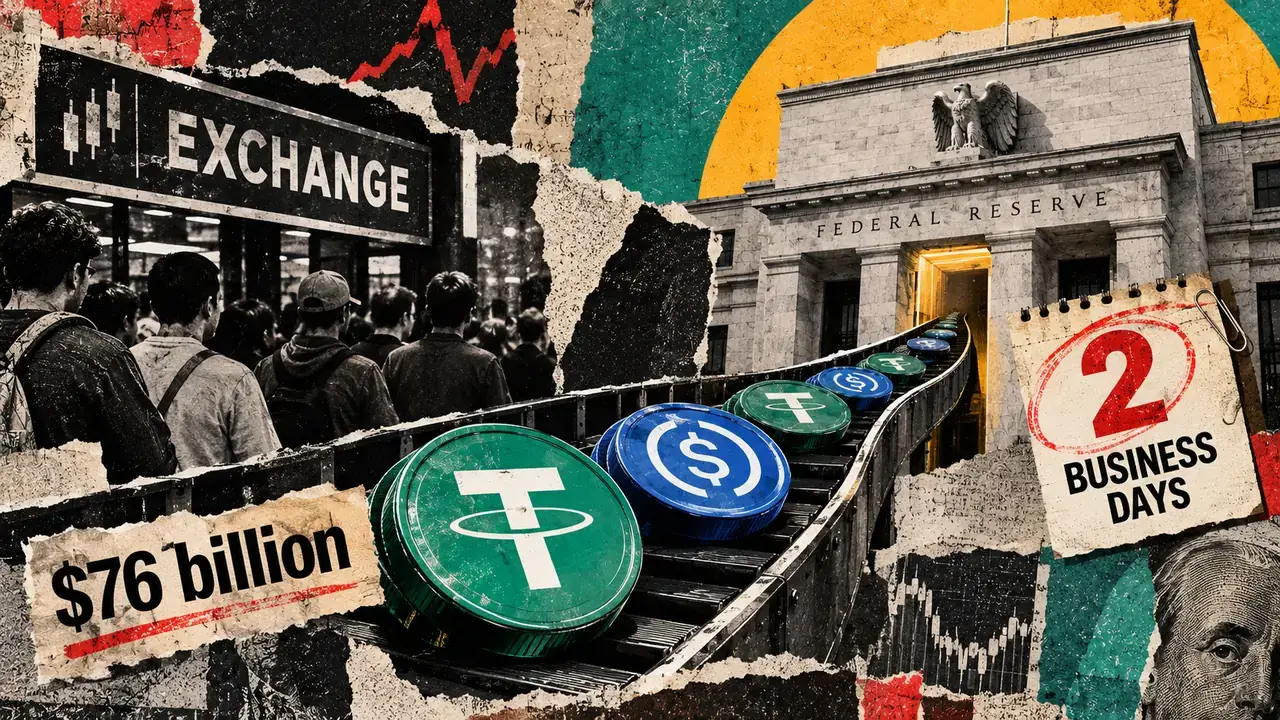
The implications of this proposal extend directly to the significant volume of stablecoins currently held on centralized exchanges. A snapshot taken by researchers on July 28th revealed that an estimated $76 billion of stablecoins were held across various centralized exchanges. For a customer holding stablecoins on such a platform, the first hurdle in converting their assets is not with the direct issuer, but with the exchange itself. This means customers may need to navigate the exchange’s internal processes for withdrawal or conversion before their request even reaches the stablecoin issuer. The Andersen Institute for Finance and Economics, in their research titled "Mapping Stablecoin Supply: Coins, Blockchains, and Venues," identified this substantial figure across 12 reserve-backed dollar stablecoins. It is important to note that the researchers consider this $76 billion figure a conservative estimate, as some exchange wallets are not easily identifiable or publicly disclosed.
The Crucial Distinction: Exchange vs. Issuer Obligations
The proposed Federal Reserve rule underscores a critical distinction between an exchange’s responsibilities and an issuer’s obligations. If an exchange initiates a qualifying redemption request to a Board-supervised issuer on behalf of its customers, the issuer’s adherence to the proposed two-business-day limit would become paramount. However, the initial instruction from an exchange customer to sell, convert, or withdraw their balance constitutes a separate transaction governed by the terms and conditions set by the exchange. This customer-facing step is independent of the issuer’s redemption obligations.
Current industry practices highlight why this distinction is so significant. For instance, Circle, a prominent issuer of USD Coin (USDC), states in its terms of service that direct USDC redemption is available to eligible holders outside the European Economic Area who possess a Circle Mint account in good standing. This implies that a holder without such an account may not be able to redeem directly with Circle until they meet these eligibility and registration requirements. Circle’s Mint service is described as a platform designed primarily for institutional distributors, indicating a tiered approach to direct redemption access.
Coinbase, a major cryptocurrency exchange, has its own user agreement that acknowledges a customer’s ownership of the balance in their USDC wallet. However, Coinbase’s agreement explicitly states that the exchange is not obligated to repurchase USDC for dollars. While Coinbase may choose to facilitate such repurchases, the agreement directs customers to Circle for direct redemption, emphasizing that these transactions fall under Circle’s separate terms and conditions. Coinbase also reserves the right to suspend trading or withdrawal services, further complicating the direct redemption path for users who rely on the exchange for their stablecoin holdings. Eligibility for Circle Mint and the timing of any specific exchange withdrawal are ultimately dependent on the individual customer’s circumstances and the policies of the venue in question.
The Scope and Limitations of Current Data
The Andersen Institute’s July snapshot, while providing a valuable overview of stablecoin holdings, also presents certain scope limitations when applying the Federal Reserve’s proposed rules. The $76 billion figure includes approximately $61.5 billion of Tether (USDT) and $10.1 billion of USDC, alongside other stablecoins, held at exchanges. The Federal Reserve’s proposal, however, specifically addresses issuers that are under the supervision of the Board. This means that a comprehensive analysis requires an issuer-by-issuer examination, as the proposal’s scope does not uniformly apply to all stablecoins or all issuers.
Tether’s current redemption terms, for example, necessitate a verified customer for direct redemption and impose a minimum redemption amount of $100,000. These varying policies across different issuers mean that the aggregate figure of $76 billion at exchanges represents a complex interplay of distinct issuer policies and regulatory classifications. Therefore, comparing this total directly to the Federal Reserve’s proposal requires a granular, issuer-specific analysis.
Historical Context: The March 2023 USDC Stress Episode
To understand the potential impact of stablecoin runs and the importance of redemption mechanisms, the Andersen researchers also analyzed venue balances during the March 2023 stress episode involving USDC. Using March 9th as the pre-shock baseline for this event, they observed that exchanges held 15.2% of the total USDC supply. Critically, these exchanges accounted for a disproportionately large share, 40%, of the subsequent supply decline during the stress period.
This data illustrates that while token balances held at identified exchange wallets provide a useful metric, the actual routes for individual customer redemptions remain outside these wallet-balance measurements. During the March 2023 event, the portion of USDC held by exchanges experienced significant volatility. From March 10th to March 13th, the overall USDC supply decreased by $2.7 billion, while identified exchange balances saw an increase of $600 million. This initial phase suggests that some tokens might have been moving onto exchanges even as the overall supply contracted. However, in the subsequent period, from March 13th onwards, the USDC supply fell by an additional $8.1 billion, and exchange balances dropped by a substantial $4.9 billion. This reversal indicates a significant outflow from exchanges as the stress event unfolded.
The analysis of this episode reveals that treating the entire event as an immediate exodus from exchanges would be an oversimplification, failing to capture the nuanced movements of stablecoins. The March 2023 USDC episode offers limited guidance on how other stablecoins, such as USDT, might behave under similar future shocks. Furthermore, wallet-location data alone cannot reveal the precise order of individual redemption requests made by customers to exchanges.
The Federal Reserve’s Proposed Framework and Future Outlook
The Federal Reserve’s proposed rule aims to establish clear redemption obligations for issuers that fall under the Board’s regulatory purview. It introduces a framework with defined timelines, exceptions, and eligibility checks, which could significantly alter the operational landscape for these entities. The Andersen Institute’s July snapshot provides valuable insight into the scale of stablecoin balances currently concentrated within exchanges, offering a quantitative backdrop against which the proposed regulatory changes can be assessed.
However, the current dynamics of venue balances and the actual timing of customer exits require ongoing and fresh evidence. The Federal Reserve’s proposal is a significant step towards enhancing the stability and trustworthiness of the stablecoin market. By mandating prompt redemption and requiring transparent procedures, the central bank seeks to mitigate risks associated with potential stablecoin runs and ensure that users can reliably access their funds. The public comment period will be crucial in shaping the final form of these regulations, with industry participants and stakeholders likely to weigh in on the practicalities and potential impacts of the proposed two-business-day redemption limit. The ultimate effectiveness of the proposal will hinge on its ability to strike a balance between consumer protection, financial stability, and the innovative potential of the stablecoin ecosystem.