Dwi Wanna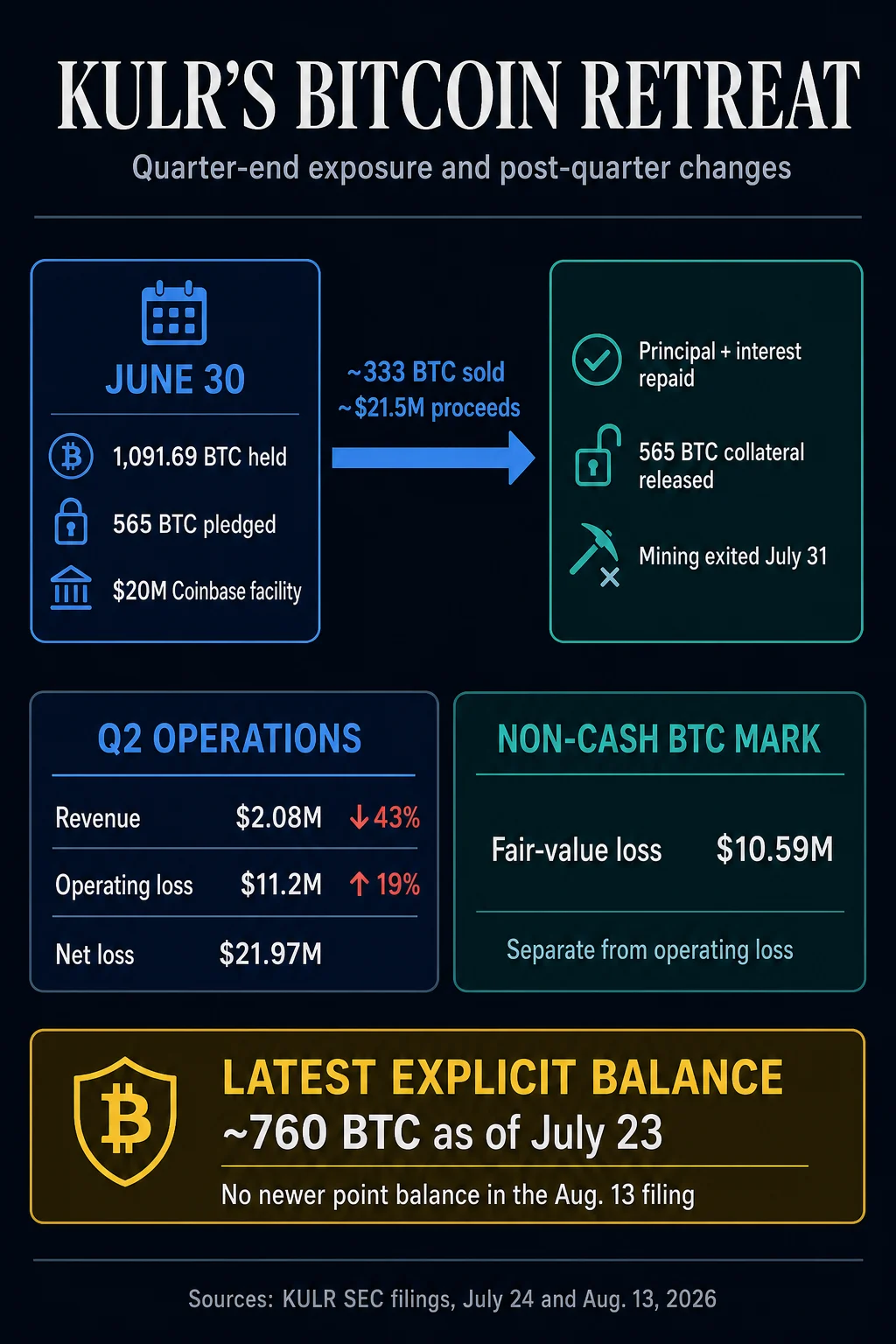
KULR Technology Group, a prominent developer of thermal management and battery safety solutions, has officially announced a strategic retreat from its Bitcoin-centric treasury model, marking a significant shift in the company’s capital allocation strategy. The decision includes the complete cessation of its Bitcoin mining operations, the full repayment of outstanding debt to Coinbase, and the commencement of a disciplined liquidation of its Bitcoin (BTC) holdings. This move represents a sharp departure from the aggressive cryptocurrency accumulation strategy the company inaugurated in late 2024, signaling a return to its core competencies in energy storage and thermal management technologies.
The pivot comes at a time when the company’s financial reports reflect the challenges of balancing a high-volatility asset with a traditional industrial technology business. According to the company’s latest filings and executive statements, the primary driver behind this reversal is the need to reduce balance-sheet volatility and provide shareholders with a clearer view of the underlying battery business performance. By transitioning Bitcoin from a long-term reserve asset to a source of corporate liquidity, KULR aims to fortify its operational foundations and ensure that capital is available for its primary research, development, and manufacturing goals.
The Strategic Reversal: From Accumulation to Liquidation
In late 2024, KULR Technology Group made headlines by adopting a corporate treasury policy that allowed for up to 90% of its surplus cash to be deployed into Bitcoin. At the time, management viewed the cryptocurrency as a hedge against inflation and a potential driver of non-dilutive capital growth. During the first half of 2025, the company acted aggressively on this policy, spending approximately $69.9 million to acquire 693.81 BTC.
However, the landscape changed significantly by 2026. During the first half of the current year, KULR purchased no additional Bitcoin. Instead, the company’s board of directors authorized the use of the existing treasury to fund ongoing operations. Chief Financial Officer Mike Kimel noted that while the initial strategy provided a degree of financial flexibility during periods of crypto-asset appreciation, the inherent volatility of the market eventually became a distraction for investors. Kimel emphasized that the fluctuations in Bitcoin’s market price were making it increasingly difficult for the market to accurately value KULR’s core energy platform and battery safety innovations.
The financial data for the second quarter of 2026 underscores these difficulties. KULR recorded a $10.59 million non-cash Bitcoin fair-value loss, which served as a primary contributor to a total net loss of $21.97 million for the period. Simultaneously, the company saw a 43% decline in revenue, falling to $2.08 million, while its operating loss widened by 19% to $11.2 million. These figures prompted a "deliberate and disciplined" reduction of the Bitcoin position to stabilize the company’s financial standing.
Deleveraging the Balance Sheet and the Coinbase Repayment
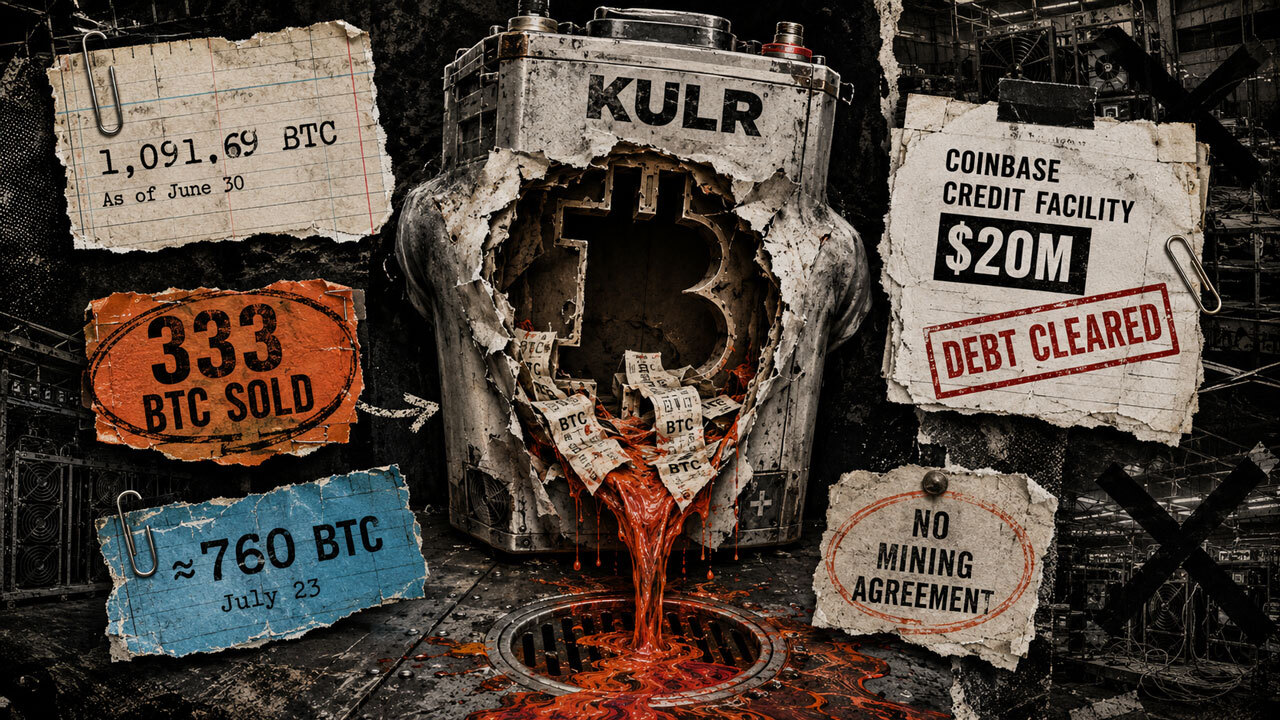
A critical component of KULR’s retreat from the crypto sector involved the resolution of its debt obligations. Entering the second half of 2026, KULR held 1,091.69 BTC, valued at $63.92 million. This valuation represented a sharp decline from the company’s original cost basis of $109.8 million, highlighting the impact of market downturns on the firm’s treasury.
Of this total holding, 565 BTC (valued at approximately $33.1 million) had been pledged as collateral for a $20 million credit facility with Coinbase. KULR had utilized this facility to maintain liquidity, drawing $5 million in March and an additional $15 million in May. To eliminate the risks associated with Bitcoin-backed leverage—specifically the risk of forced liquidation during market crashes—the company took decisive action following the close of the second quarter.
KULR sold approximately 333 BTC, generating $21.5 million in proceeds. Of this amount, $20 million was immediately directed toward the full repayment of the Coinbase principal. This transaction not only cleared the company’s debt but also triggered the release of the 565 BTC that had been held as collateral. By removing this leverage, KULR effectively insulated its remaining treasury from the threat of margin calls, leaving the company with a disclosed position of approximately 760 BTC.
Dismantling Bitcoin Mining Operations
Beyond its treasury holdings, KULR has also moved to exit the Bitcoin mining industry, a venture that was previously integrated into its broader energy technology ecosystem. The company had leveraged its thermal management expertise to optimize mining hardware, but the economic realities of the mining sector in 2026 proved less favorable than anticipated.
The exit was executed through the termination of two major mining agreements. The first agreement reached its natural conclusion and was not renewed upon its expiration on July 30. The second contract, which was originally slated to run through October 2027, was terminated prematurely in July. To exit this long-term commitment, KULR agreed to a one-time payment of $150,000. While this incurred a short-term cost, management noted that the move eliminated approximately $2.1 million in future contractual commitments, further streamlining the company’s liabilities.
The decision to shutter mining operations was supported by data showing diminishing returns. In the second quarter of 2026, KULR’s mining activities yielded 8.44 BTC, a decrease from the 11.25 BTC earned during the same period the previous year. Quarterly mining revenue also saw a significant drop, falling from $1.12 million to approximately $606,000. Although the total production for the full first half of the year actually increased to 17.23 BTC (up from 14.22 BTC in H1 2025), the total revenue slipped due to the declining average value of the Bitcoin earned. The average value per BTC fell from $96,225 in the previous year’s period to $73,594, illustrating the "hashrate race" and price volatility that have squeezed margins for corporate miners.
Chronology of KULR’s Bitcoin Strategy (2024–2026)
- Late 2024: KULR adopts a Bitcoin treasury strategy, authorizing the deployment of up to 90% of surplus cash into BTC.
- H1 2025: Aggressive accumulation phase. KULR invests $69.9 million to acquire 693.81 BTC.
- March 2026: KULR draws $5 million from a Coinbase credit facility, pledging BTC as collateral.
- May 2026: An additional $15 million is drawn from the Coinbase facility to support operational liquidity.
- June 30, 2026: Q2 ends with KULR reporting a $10.59 million non-cash fair-value loss on its 1,091.69 BTC holdings.
- July 2026: KULR terminates its mining contracts, paying $150,000 to avoid $2.1 million in future liabilities.
- Post-Q2 2026: KULR sells 333 BTC for $21.5 million, repays $20 million debt to Coinbase, and releases 565 BTC from collateral.
- August 2026: Management confirms a "disciplined" strategy to prioritize the core battery business over crypto-asset accumulation.
Analysis of Implications for the Battery Technology Sector
KULR’s strategic shift is indicative of a broader trend among small and mid-cap technology firms that experimented with cryptocurrency treasuries during the bull market cycles of the early 2020s. While pioneers like MicroStrategy have maintained a "buy and hold" conviction, other firms have found that the volatility of Bitcoin can obscure the fundamental performance of their primary businesses.
For KULR, whose core value proposition lies in its patented thermal runaway shields and cooling technologies—used by NASA, the Department of Defense, and major electric vehicle manufacturers—the move to divest from Bitcoin is seen as an attempt to regain favor with traditional industrial investors. These investors typically seek exposure to the "green energy" and "battery safety" sectors without the added layer of digital asset risk.
Market analysts suggest that KULR’s experience demonstrates the limits of the "Bitcoin as a Reserve Asset" model for companies with intensive capital expenditure requirements. When a core business requires consistent reinvestment in R&D and manufacturing, a volatile treasury asset can become a liability if its value drops at the same time the business needs cash. By clearing its Bitcoin-backed debt and ending mining operations, KULR has prioritized its survival and growth in the competitive energy storage market over the potential speculative gains of the crypto market.
Official Responses and Future Outlook
In official communications, KULR’s leadership has been transparent about the transition. CFO Mike Kimel reiterated that the company’s primary mission is to lead in the battery safety space. He noted that by refraining from issuing new shares through the company’s at-the-market (ATM) program during the first half of 2026, the company has demonstrated its commitment to protecting shareholder value from dilution while using its Bitcoin holdings as a strategic financial buffer.
The company’s remaining position of approximately 760 BTC remains a significant asset on the balance sheet, but it is no longer viewed as an untouchable reserve. Management now has the authority to liquidate further portions of this holding to fund the expansion of its energy platform or to navigate future market cycles.
As KULR Technology Group moves forward, the focus will return to its suite of thermal management solutions, including its KULR ONE modular battery platform and its ongoing contracts for space exploration and defense. The retreat from Bitcoin marks the end of a high-risk experimental chapter, positioning the company to face the evolving demands of the global energy transition with a more traditional and stable financial structure. For shareholders, the move offers a return to clarity, where the company’s stock price is once again a direct reflection of its innovations in battery technology rather than a proxy for the fluctuating price of Bitcoin.