admin
admin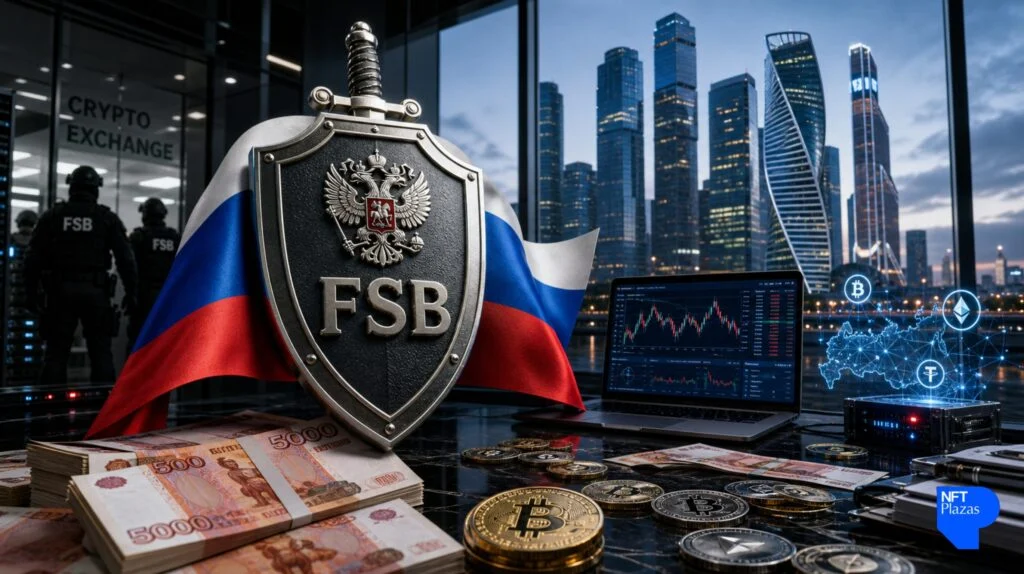
The Federal Security Service (FSB) of Russia, working in conjunction with the Russian Ministry of Internal Affairs, executed a series of targeted raids on August 7, resulting in the apprehension of more than 20 individuals suspected of operating unlicensed cryptocurrency exchange points within Moscow City, the capital’s prominent financial district. These facilities are accused of forming a critical link in an extensive money-laundering network that facilitated phone scams, converting illicitly obtained cash into digital assets for transfer outside of Russia’s traditional banking system. The operation underscores Russia’s escalating efforts to regulate its nascent digital asset market and combat financial crime, particularly those involving cross-border illicit flows.
The Nexus of Illicit Finance: Unlicensed Exchanges in Moscow City
Moscow City, known for its towering skyscrapers and status as Russia’s premier business and financial hub, became the unlikely backdrop for this significant law enforcement action. The FSB’s investigation pinpointed nine "unauthorized financial channels" allegedly operating from crypto exchange offices embedded within this high-profile complex. These entities were reportedly offering cash-to-digital-asset exchange services, operating entirely outside the purview of the country’s supervised financial system. The choice of Moscow City as a base of operations for such illicit activities is not coincidental; its dense concentration of businesses and high-net-worth individuals, coupled with a constant flow of capital, provides an ideal environment for blending legitimate and illegitimate financial transactions. For criminal enterprises, operating within a major financial district can lend a deceptive air of legitimacy, making detection more challenging.
During the coordinated searches, authorities seized a substantial volume of documents related to currency exchange operations, alongside other crucial evidence pertinent to the ongoing investigation. The sheer scale of the alleged operations was highlighted by the FSB, which stated that one of the offices under scrutiny was believed to have processed up to $2 million in a single day at peak times. While this figure awaits independent verification, if accurate, it paints a stark picture of the sophisticated and high-volume nature of the illicit financial infrastructure in question. Such capacity suggests these crypto exchange points were not merely catering to small retail transactions but were acting as significant liquidity providers for large-scale criminal endeavors.
Unveiling the Money Laundering Mechanism
At the heart of the case lies a sophisticated cash-to-crypto scheme designed to obfuscate the origins of funds stolen through phone scams and expedite their transfer across borders. According to Russian authorities, cash pilfered from phone scam victims within Russia was collected domestically by a network of couriers. These funds were then funnelled into the crypto exchange offices in Moscow City, where they were rapidly converted into various digital assets. This conversion was critical for the criminal network, as it allowed them to bypass the traditional banking system, which is subject to stringent anti-money laundering (AML) and know-your-customer (KYC) regulations, making it difficult for law enforcement to trace.
Unregistered or unlicensed cryptocurrency exchanges present a particularly attractive avenue for financial criminals due to several inherent characteristics. Firstly, they often offer rapid processing of large cash volumes, a critical requirement for moving illicit funds quickly before they can be flagged by authorities. Secondly, these platforms frequently operate with minimal or entirely absent identity verification requirements, providing a high degree of anonymity to users. This lack of robust KYC procedures is a significant vulnerability exploited by money launderers. Lastly, the borderless nature of cryptocurrencies allows for the swift transfer of value across international boundaries without the delays, scrutiny, or reporting obligations associated with traditional cross-border bank transfers. For Russian authorities, this creates a formidable "bottleneck" in their efforts to trace the financial flows originating from scams that primarily target domestic citizens, making it exceedingly difficult to recover stolen funds or identify the ultimate beneficiaries.
The Human Element: Couriers and Victims
The human cost and operational structure of these scams are equally concerning. Russian authorities revealed that many of those arrested were young individuals, typically between 18 and 25 years old. These young couriers, described as having limited financial literacy, were reportedly recruited from various regions across Russia, lured by the promise of quick and easy money. Their primary role was to collect cash directly from scam victims and then deliver it to the designated crypto exchange points in Moscow City. While not necessarily the masterminds behind the elaborate scheme, these individuals served as an indispensable link, bridging the physical collection of illicit cash with its digital transformation. Their vulnerability and lack of awareness of the broader criminal enterprise highlight a common tactic used by organized crime groups to insulate higher-level operators from direct exposure.
The operational method frequently observed in these phone fraud cases involves sophisticated social engineering tactics. Victims are persuaded through deceptive calls to transfer or hand over significant sums of money. These calls often involve impersonations of bank officials, government authorities, or financial support agents, exploiting fear, urgency, or the promise of financial gain. The psychological manipulation employed by these scam centers is highly effective, preying on the trust and financial anxieties of ordinary citizens.
Allegations of External Links: Ukraine-Based Call Centers
A particularly sensitive aspect of the FSB’s investigation is the accusation that "Ukraine-linked scam call centers" were orchestrating the broader scheme, utilizing the courier and exchange network to move funds out of Russia. This allegation, presented by the FSB, positions the financial crime within a broader geopolitical context, suggesting potential cross-border criminal syndicates with ties to a neighboring country. While the specific nature of these alleged links and the extent of their involvement remain subjects of ongoing investigation, the accusation itself adds a layer of complexity and national security concern to the case. It implies that these financial crimes are not merely domestic but potentially part of a larger, internationally coordinated effort to defraud Russian citizens and move capital across borders, potentially for purposes beyond simple personal enrichment.
Russia’s Broader Battle Against Financial Fraud
The August 7th raids are not an isolated incident but rather indicative of Russia’s ongoing, intensified battle against financial fraud and illicit activities within its financial system. Data from the Central Bank of Russia (CBR) consistently highlights the high risks associated with financial fraud. In recent years, the CBR has reported detecting thousands of pyramid schemes and financial frauds, along with identifying thousands of crypto wallets linked to victims and blocking tens of thousands of suspicious online resources. For instance, in 2023, the Central Bank reported a significant increase in financial pyramid schemes, detecting over 7,000 such schemes and related financial frauds. It also tracked over 4,600 crypto wallets involved in illicit activities and blocked more than 21,500 suspicious online resources. These figures underscore the pervasive nature of financial crime and the critical role digital assets have come to play in facilitating these operations. The CBR has long maintained a cautious, if not outright skeptical, stance on cryptocurrencies, primarily citing concerns about their use in money laundering, financing of terrorism, and potential threats to financial stability and consumer protection.
A Tightening Grip: Russia’s Evolving Crypto Regulatory Landscape
The arrests in Moscow City occur amidst a significant tightening of Russia’s cryptocurrency regulatory framework. The Central Bank of Russia has been a driving force behind these legislative changes, which aim to bring digital assets under stricter state control. New laws on digital assets are slated to take effect on September 1, 2026, with a transitional period extending to July 1, 2027. This grace period is intended to allow existing market participants to apply for necessary licenses and adjust their operations to comply with the new, more stringent requirements.
Under the impending framework, significant restrictions will be imposed, particularly on non-professional investors. These individuals will be limited to purchasing digital assets up to 300,000 rubles (approximately $3,200 USD at current exchange rates) per year, and only through licensed intermediaries. Furthermore, cryptocurrencies remain prohibited for use as a domestic means of payment within Russia, a stance that the authorities have consistently maintained to protect the ruble’s sovereignty and prevent capital flight.
However, Moscow’s approach to digital assets is not entirely prohibitive. The government has increasingly explored and discussed the potential role of digital assets, including a state-issued digital ruble, in facilitating cross-border payments. This dual approach reflects a strategic balancing act: on one hand, a determined effort to curb illicit crypto activities and protect the domestic financial system; on the other, a recognition of digital assets’ potential utility in circumventing Western sanctions and enhancing international trade relations, particularly with friendly nations. This complex regulatory environment highlights the delicate line Russia is attempting to walk between embracing innovation and maintaining stringent control.
The Investigative Path Forward
The current investigation into the Moscow City crypto exchange raids is being pursued under charges of large-scale fraud, a serious offense under Russian criminal law that can carry sentences of up to 10 years in prison upon conviction. The immediate focus for authorities will be to meticulously determine the precise role of each group and individual within the sprawling operation. This includes identifying the core operators of the exchange offices in Moscow City, understanding the full extent of the cash-collecting couriers’ network, and uncovering the transaction coordinators who managed the conversion and movement of digital assets.
A critical turning point in the investigation will be to ascertain whether the crypto exchange points were fully aware that the funds they were processing originated from criminal activities, specifically phone fraud. If evidence emerges to prove such knowledge, the case could expand significantly to include more severe charges, such as money laundering (Article 174 of the Russian Criminal Code) or organizing illegal financial activities. The prosecution’s ability to demonstrate intent and knowledge will heavily rely on a thorough examination of seized transaction records, digital forensics from confiscated devices, and statements obtained from those arrested. The cooperation of lower-level participants, such as the couriers, could also be instrumental in building a stronger case against the alleged masterminds.
Implications for Russia’s Financial System and Digital Asset Strategy
The Moscow City case is poised to serve as a pivotal test for how Russian authorities will handle unregistered exchanges accused of facilitating criminal money flows, especially as the domestic crypto market prepares to enter a phase of significantly stricter regulation starting in September 2026. The outcome of this high-profile investigation will undoubtedly set precedents and send a strong message to both legitimate and illicit participants in Russia’s digital asset space.
The broader implications extend beyond law enforcement and regulation. This crackdown reinforces the Russian government’s commitment to protecting its citizens from financial exploitation and safeguarding the integrity of its financial system. It also highlights the persistent challenges posed by the anonymity and borderless nature of cryptocurrencies, not just for Russia but for regulatory bodies worldwide. The ability of such networks to process millions of dollars daily underscores the urgent need for robust international cooperation in combating financial cybercrime.
Furthermore, this event could influence the pace and scope of future regulatory developments. While Russia cautiously explores the utility of digital assets for specific strategic purposes, this incident may solidify the government’s resolve to maintain tight control over the domestic crypto market. It reinforces the narrative that unregulated crypto poses significant risks, thereby justifying the strict new laws. The case will ultimately shape public perception of cryptocurrencies in Russia, potentially reinforcing skepticism among the general populace while providing clearer guidelines for legitimate market participants. As Russia navigates the complexities of the digital age, its approach to cryptocurrency will remain a critical element of its broader financial and national security strategy.