admin
admin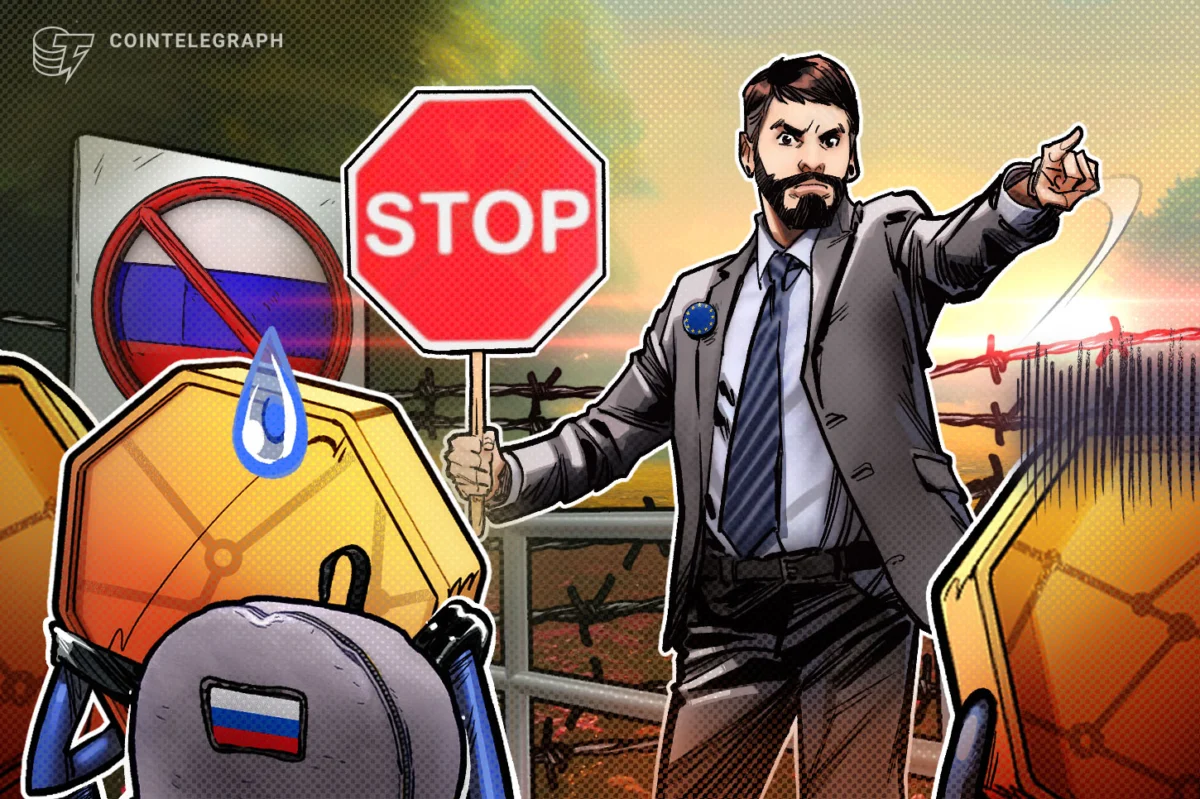
The European Union has formally included the cryptocurrency exchange HTX, formerly known as Huobi Global, in its comprehensive sanctions package targeting entities perceived to be aiding Russia in circumventing existing financial restrictions. This move, announced in a decision on Thursday, places HTX on a list of 18 entities identified for "providing crypto-assets services or payment services established outside of the Union that are significantly frustrating the purpose of the prohibitions" against Russia, amid the ongoing war in Ukraine. The designation underscores a growing international effort to close loopholes in sanctions regimes, particularly those exploited through digital assets, and represents a significant escalation in regulatory pressure on the global cryptocurrency industry.
EU’s Latest Sanctions Package and Rationale
The European Council’s decision to amend its previous measures comes "in view of Russia’s actions destabilizing the situation in Ukraine," a justification that has underpinned numerous rounds of sanctions since the full-scale invasion in February 2022. The inclusion of HTX specifically targets an entity deemed to be facilitating a "continued financial lifeline" for Russia’s military aggression. EU officials articulated their unwavering commitment to identifying and penalizing financial institutions, credit institutions, or crypto-asset service providers that either connect to Russia’s financial messaging system or enable the circumvention of Union restrictive measures. The stated aim is to prohibit any transactions between these designated entities and EU operators, thereby tightening the financial noose around the Kremlin.
This latest action is part of a broader, evolving strategy by the EU and its allies to adapt sanctions to the complex and often opaque world of digital finance. While traditional banking systems have largely complied with international sanctions, the decentralized and pseudonymous nature of cryptocurrencies has presented new challenges for enforcement agencies. The EU’s explicit targeting of non-EU based crypto service providers signifies a concerted effort to extend the reach of its financial prohibitions beyond its immediate borders, addressing the global interconnectedness of the crypto market. The 18 entities listed alongside HTX are reportedly diverse, reflecting the various channels and services that authorities believe Russia is exploiting to maintain economic stability and fund its war machine.
Background: The Evolving Landscape of Russia Sanctions
The sanctions against Russia are a direct response to its military aggression against Ukraine, which escalated dramatically with the full-scale invasion in February 2022. However, the genesis of these measures dates back to 2014, following Russia’s annexation of Crimea and its involvement in destabilizing eastern Ukraine. Initially, sanctions focused on specific individuals and entities, as well as restrictions on access to EU capital markets and certain technologies.
The 2022 invasion prompted an unprecedented wave of international sanctions from the EU, the United States, the United Kingdom, Canada, Australia, and other allies. These measures have been wide-ranging, targeting:
- Financial Sector: Freezing assets of the Russian Central Bank, disconnecting major Russian banks from SWIFT, banning transactions with key state-owned enterprises, and imposing restrictions on capital market access.
- Energy Sector: Phasing out imports of Russian oil and gas, imposing price caps.
- Trade: Banning imports of numerous Russian goods and exports of dual-use technologies, luxury goods, and goods critical for Russia’s industrial and technological base.
- Individuals and Entities: Sanctioning hundreds of high-ranking officials, oligarchs, military personnel, and state-owned companies.
Despite these extensive measures, Russia has demonstrated resilience, partly due to its pre-invasion efforts to de-dollarize its economy and build up foreign currency reserves. Critically, the emergence and increasing adoption of cryptocurrencies have also provided avenues for circumvention, enabling individuals and entities to move funds outside the traditional financial system. Early in the conflict, concerns were raised by various governments and financial watchdogs about the potential for crypto to be used by sanctioned Russian entities, leading to calls for greater oversight and regulatory action against crypto service providers.
The Role of Cryptocurrency in Sanctions Circumvention
The digital asset ecosystem, while offering innovative financial solutions, has also presented a complex challenge for global sanctions enforcement. Cryptocurrencies can facilitate cross-border transactions that are often harder to trace than traditional bank transfers, particularly when conducted through exchanges with lax KYC (Know Your Customer) and AML (Anti-Money Laundering) procedures or via peer-to-peer networks. While the overall volume of illicit transactions, including sanctions evasion, remains a small fraction of the total crypto market, even small amounts can be significant for sanctioned individuals or entities struggling to access conventional financial services.
Blockchain analytics firms and government agencies have published reports detailing how Russian entities, including those linked to intelligence services and sanctioned oligarchs, have attempted to use cryptocurrencies to bypass restrictions. Methods include using offshore exchanges, mixing services to obscure transaction origins, and converting fiat currency into stablecoins or other cryptocurrencies. The appeal lies in the perceived anonymity and the global accessibility of crypto markets, which theoretically allow funds to be moved without relying on banks that adhere to international sanctions.
Regulators worldwide have been grappling with how to effectively monitor and control these flows. The EU’s explicit ban on providing crypto-asset services to Russian nationals and residents, implemented in October 2022, was an early attempt to curb this potential avenue. This ban included prohibiting all crypto-asset wallets, accounts, or custody services, regardless of the amount of the wallet, indicating a zero-tolerance approach. However, the challenge has persisted, leading to the current strategy of directly sanctioning foreign entities believed to be actively enabling circumvention. This shift from blanket bans on users to targeting specific service providers reflects a more targeted and aggressive enforcement posture.
HTX: From Huobi Global to a Sanctioned Entity
HTX, formerly known as Huobi Global, is a prominent cryptocurrency exchange with a significant global user base. Founded in China in 2013, Huobi quickly grew to become one of the largest exchanges worldwide, particularly popular in Asia. Over the years, it faced various regulatory shifts, including a ban on crypto exchanges in China, which led it to relocate its operations and focus on international markets. In September 2023, Huobi Global rebranded to HTX, a move celebrated as marking its 10th anniversary and symbolizing a new phase in its development. The rebranding was intended to reflect its evolution and commitment to a broader web3 ecosystem, with "H" representing Huobi, "T" for TRON (referencing its advisor Justin Sun, who is also the founder of the TRON blockchain), and "X" for the exchange.
Despite its global aspirations and claims of regulatory compliance, HTX has increasingly come under international scrutiny. The UK government imposed similar sanctions on HTX in May, preceding the EU’s decision. The UK’s Office of Financial Sanctions Implementation (OFSI) stated there were "reasonable grounds to suspect" that HTX was supporting Russia’s government by facilitating financial services and funds via sanctioned entities. This dual sanctioning by two major economic blocs indicates a coordinated intelligence effort and a shared concern regarding the exchange’s operations.
In response to previous inquiries, HTX has consistently maintained that "regulatory compliance remains [its] absolute top priority" and that the exchange "proactively monitor[s] and strictly adhere[s] to regulatory frameworks in all jurisdictions." However, these statements now stand in contrast to the specific allegations from both the UK and the EU, which suggest a failure to adequately prevent sanctioned activities or, at worst, active facilitation. The nature of the "significant frustration" of sanctions cited by the EU suggests that authorities believe HTX’s services have materially undermined the effectiveness of the prohibitive measures.
Broader Regulatory Landscape and Global Efforts
The sanctions against HTX are not isolated but are part of a broader, intensifying global regulatory push to bring the cryptocurrency industry into alignment with traditional financial compliance standards. The EU, in particular, has been at the forefront of this effort. Alongside the HTX sanctions, EU officials also announced measures that would prohibit Belarusian nationals and residents from owning, controlling, or managing crypto exchanges and digital asset service providers. This move aligns with the region’s landmark Markets in Crypto Assets (MiCA) framework, which is set to become fully applicable by the end of 2024.
MiCA represents the most comprehensive regulatory framework for crypto assets globally, aiming to provide legal certainty, support innovation, and protect consumers while addressing market integrity and financial stability risks. Its provisions cover a wide range of crypto assets and service providers, imposing stringent requirements for authorization, operational resilience, consumer protection, and market abuse prevention. The ban on Belarusian nationals owning or managing crypto entities, much like the sanctions against HTX, underscores the EU’s determination to prevent any perceived nexus between illicit activities, state-sponsored circumvention, and the crypto ecosystem.
Beyond the EU, other jurisdictions are also enhancing their regulatory frameworks. The United States, through agencies like OFAC (Office of Foreign Assets Control) and FinCEN (Financial Crimes Enforcement Network), has repeatedly sanctioned individuals and entities involved in crypto-related illicit finance, including those linked to ransomware attacks, terrorist financing, and sanctions evasion. FATF (Financial Action Task Force), the global money laundering and terrorist financing watchdog, has also issued guidelines for virtual asset service providers (VASPs), urging member countries to implement robust KYC/AML controls, including the controversial "travel rule" which requires financial institutions to share customer information during transactions. These collective efforts signal a clear global trend: the era of largely unregulated crypto operations is drawing to a close, especially for centralized exchanges operating at scale.
Implications for HTX and the Cryptocurrency Industry
The imposition of sanctions by the EU, following similar actions by the UK, carries significant implications for HTX and the wider cryptocurrency industry.
For HTX, the immediate consequences are severe:
- Operational Restrictions: The prohibition on transactions between HTX and EU operators will severely limit its ability to serve customers within the European Union, potentially leading to a significant loss of market share in one of the world’s largest economic blocs.
- Reputational Damage: Being publicly identified as an entity facilitating sanctions circumvention carries a heavy reputational cost. This could erode trust among users, institutional partners, and other jurisdictions, potentially leading to a broader exodus of legitimate customers globally.
- Banking Relationships: Traditional financial institutions are highly risk-averse regarding sanctioned entities. HTX may find it increasingly difficult to maintain banking relationships, which are crucial for fiat on-ramps and off-ramps, hindering its ability to operate effectively.
- Regulatory Scrutiny: The sanctions will undoubtedly invite intensified scrutiny from other national regulators worldwide, potentially leading to further investigations, fines, or even additional sanctions in other jurisdictions.
- Compliance Costs: Even if HTX intensifies its compliance efforts, the cost of implementing and monitoring robust sanctions screening and AML programs will increase substantially.
For the broader cryptocurrency industry, these sanctions serve as a stark warning:
- Increased Scrutiny: Regulators globally will likely intensify their focus on how exchanges and other crypto service providers manage sanctions compliance, particularly those operating across multiple jurisdictions.
- Pressure for Robust KYC/AML: The incident will amplify calls for all centralized crypto exchanges to implement and rigorously enforce stringent Know Your Customer (KYC) and Anti-Money Laundering (AML) policies, including comprehensive sanctions screening.
- Impact on Decentralization Narrative: While decentralized finance (DeFi) often champions censorship resistance, the targeting of a major centralized exchange highlights the vulnerability of centralized entities to state-level pressures. This could reignite debates about the true decentralization of the crypto ecosystem and the trade-offs between regulatory compliance and core crypto ethos.
- Market Consolidation: Smaller or less compliant exchanges may struggle to meet the escalating regulatory demands, potentially leading to market consolidation around larger, more compliant players.
- Legitimacy and Mainstream Adoption: For crypto to achieve broader mainstream adoption and integration into the global financial system, it must shed its association with illicit finance. These sanctions, while challenging for some entities, contribute to the long-term goal of legitimizing the industry by demonstrating that authorities are capable and willing to enforce financial laws within the digital asset space.
Conclusion and Future Outlook
The European Union’s decision to sanction HTX marks a pivotal moment in the ongoing battle against financial crime and sanctions circumvention in the digital age. It underscores the growing sophistication of international regulatory bodies in identifying and targeting crypto entities perceived to be undermining global security and economic stability. This action, following the UK’s similar move, signals a coordinated and robust approach from major economic powers, leaving little doubt that the days of operating outside traditional financial regulations are rapidly diminishing for large, centralized crypto exchanges.
As the geopolitical landscape remains volatile and sanctions regimes continue to evolve, the onus will be increasingly on crypto service providers to demonstrate proactive and uncompromising adherence to international laws. Failure to do so risks not only severe financial penalties and operational restrictions but also irreparable damage to reputation and trust. The HTX case serves as a powerful reminder that while technology may offer new pathways for finance, the fundamental principles of anti-money laundering and sanctions compliance remain non-negotiable for those seeking to operate within the global financial system, digital or otherwise. The future of the crypto industry will largely depend on its ability to mature, embrace comprehensive regulatory frameworks, and unequivocally distance itself from illicit activities, thereby paving the way for sustainable growth and broader acceptance.