admin
admin
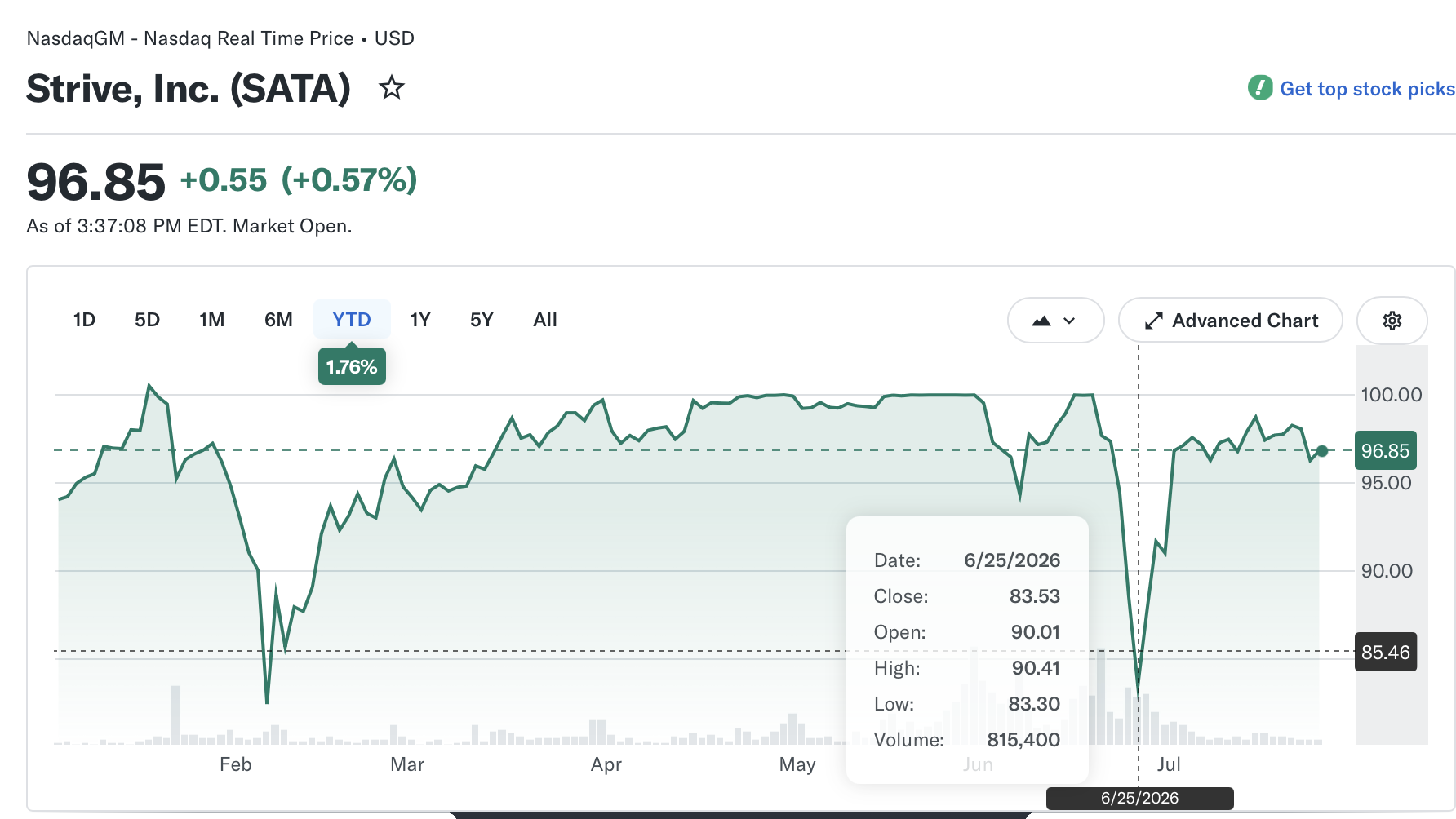
Strive’s innovative SATA preferred shares have demonstrated a remarkable recovery, climbing from a low of $83.30 in June to approximately $97, according to data from Yahoo Finance. This rebound signifies a significant reversal, recouping the majority of the losses incurred during a recent market downturn and positioning the shares within roughly 3% of their target $100 par value. The recovery is being closely watched by market analysts and investors as it potentially validates the emerging "digital credit" model, which seeks to blend traditional financial instruments with the burgeoning world of corporate Bitcoin treasuries.
The Genesis of Digital Credit: Strive’s SATA and Strategy’s STRC
The concept of "digital credit" through preferred shares has gained traction as companies increasingly integrate Bitcoin (BTC) into their corporate treasury strategies. This approach allows firms to raise capital for Bitcoin acquisitions without diluting the ownership stake of common shareholders, appealing to a distinct segment of investors seeking exposure to Bitcoin’s potential upside alongside more predictable income streams.
Strive introduced SATA to the market in November 2025, specifically designed to finance the expansion of its Bitcoin treasury. These variable-rate perpetual preferred shares are engineered to trade consistently near their $100 par value by dynamically adjusting their dividend rate. This mechanism is crucial: as market interest rates or Bitcoin-related risk premiums fluctuate, the dividend rate can be modified to maintain the attractiveness of the shares, thereby stabilizing their price around par. Strive’s objective was clear: secure capital for its Bitcoin holdings while offering investors a yield-bearing instrument tied to the growth of its digital assets. The Nasdaq listing of SATA and its oversubscribed, upsized IPO in late 2025 underscored strong initial market confidence in this novel financing strategy.
Similarly, Strategy, a pioneering force in corporate Bitcoin adoption, launched its STRC preferred shares in 2025 with an analogous objective: to maintain a $100 share price through a variable dividend structure. Strategy has long been at the forefront of this movement, and its initiatives have often served as a benchmark for other companies exploring similar avenues. These preferred shares represent a sophisticated financial instrument, typically offering investors a fixed or floating dividend rate and holding a higher claim on the company’s assets and earnings than common stock, particularly in the event of liquidation. Their perpetual nature means they have no maturity date, offering a long-term financing solution for the issuing company.
Navigating the June Market Turbulence

The mid-2026 period presented a significant test for these nascent digital credit instruments. A broader market sell-off, driven by macroeconomic concerns, rising interest rates, and a general de-risking sentiment across financial markets, severely impacted cryptocurrencies and related assets. Bitcoin, while demonstrating resilience in the long term, experienced a notable price correction during this period, which consequently pressured the valuations of companies with significant Bitcoin treasuries.
During this tumultuous phase in June, Strive’s SATA shares plummeted to their low of $83.30. This sharp decline reflected investor apprehension regarding the stability of the preferred share model in the face of significant Bitcoin price volatility and the broader market’s uncertainty. Investors questioned whether the variable dividend mechanism could effectively counter such strong downward pressure and maintain the intended par value.
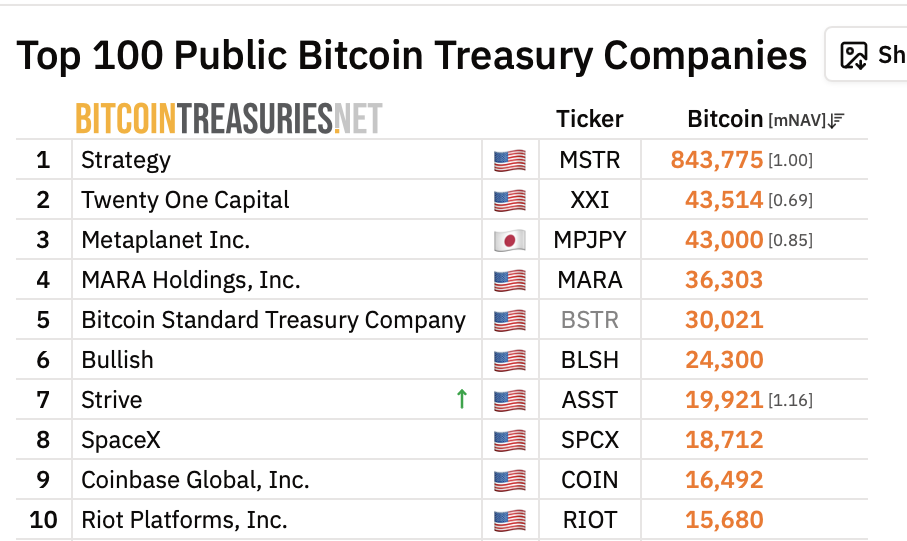
Strategy’s STRC shares also experienced a substantial decline during the same late-June sell-off. While STRC has also recovered from its lows, it continues to trade below par, hovering around $87. This comparative performance highlights the nuanced market perception of these instruments and the underlying companies. Factors such as the scale of Bitcoin holdings, overall company capitalization, investor base, and specific corporate communications can influence how each preferred share product weathers market storms and subsequently recovers. Strategy, being the world’s largest public corporate Bitcoin holder, with a massive 843,775 BTC (as per BitcoinTreasuries.NET), has a different risk profile and market footprint compared to Strive, which has climbed to seventh place with 19,921 BTC. The sheer size of Strategy’s Bitcoin treasury, while a testament to its conviction, also exposes it to larger absolute swings in dollar value, which might contribute to different recovery dynamics for its preferred shares.
The Mechanics of Recovery and Investor Confidence
The rebound of SATA shares to near par value is a critical development for the "digital credit" sector. It suggests that the underlying financial engineering and the issuing company’s commitment to maintaining the integrity of these instruments are proving effective. The variable dividend feature is key here; by adjusting the dividend payout, companies aim to ensure that the yield offered remains competitive relative to other income-generating assets, thereby enticing investors to hold or acquire the shares at or near par.
Market analysts infer that the recovery reflects a renewed confidence among investors in Strive’s ability to manage its Bitcoin treasury and honor its dividend commitments. This confidence is likely bolstered by a stabilization in the broader cryptocurrency market and a clearer understanding of the robust capitalization strategies employed by companies like Strive and Strategy. The fact that SATA is "perpetual" implies a long-term commitment, and its variable rate helps it adapt to changing economic environments, making it a more flexible instrument than traditional fixed-rate preferred shares.
Expert Insights and Broader Market Implications
Samson Mow, founder and CEO of Jan3, a prominent figure in the Bitcoin industry, offered valuable insights into the recent market dynamics. Speaking to Cointelegraph, Mow asserted that adjustments undertaken by Bitcoin treasury companies are beginning to restore confidence in preferred-share products, reinforcing his belief that Bitcoin has already established its market bottom.
"I think every action that Strategy has undertaken to strengthen their balance sheet and encourage STRC to go back to par is also working," Mow stated, emphasizing the holistic nature of market recovery. He further elaborated on the interconnectedness of these instruments: "But everything sort of works in tandem. I think as SATA returns to par, you’re going to see STRC return to par too, because people say, ‘OK, this model’s not broken.’ Everyone is capitalized for three or more years of dividend payments… there was no reason to panic all along."
Mow’s assessment highlights several crucial points. Firstly, it underscores the importance of proactive balance sheet management by these companies. Strategies such as timely capital raises, prudent Bitcoin acquisition tactics, and transparent communication with investors contribute significantly to market stability. Secondly, his comment about capitalization for "three or more years of dividend payments" addresses a core concern for preferred share investors: the issuer’s ability to sustain dividend payouts. This fundamental financial strength underpins the long-term viability of these instruments, reassuring investors that temporary price dips do not necessarily signify an existential threat to the model.
The "model’s not broken" sentiment is vital for the growth of "digital credit." If these instruments can weather significant market volatility and demonstrate a clear path to recovery, they become more attractive to a wider range of institutional and retail investors. This validation can pave the way for more companies to explore preferred equity as a means to finance Bitcoin treasury operations, further legitimizing Bitcoin as a corporate treasury asset.
Evolving Landscape of Bitcoin Treasury Strategies
Mow also pointed to a broader trend of refinement within the Bitcoin treasury sector, with companies continuously innovating their capital-raising strategies. He cited Lyn Alden’s Orange Juice treasury company, which launched on July 15, as another example of firms entering the market with distinct approaches and, crucially, a potentially lower Bitcoin cost basis.
The emergence of new players like Orange Juice, potentially leveraging different financial structures or entering the market at more opportune Bitcoin price points, signifies a maturing ecosystem. These new entrants contribute to the diversification of the "digital credit" market, offering investors a wider array of options and potentially driving innovation in financial product design. A lower Bitcoin cost basis can provide a stronger buffer against price fluctuations, enhancing the perceived safety and stability of the underlying treasury for preferred shareholders.
This evolution is not just about capital raising; it’s also about optimizing the treasury management itself. Companies are learning from market experiences, refining their risk management frameworks, and exploring various ways to maximize the benefits of holding Bitcoin while mitigating associated risks. The interplay between Bitcoin’s price performance, the companies’ operational strategies, and the market’s perception of their financial instruments creates a dynamic and complex environment.
Future Outlook and Implications for Digital Credit
The successful recovery of Strive’s SATA preferred shares carries significant implications for the future of "digital credit" and corporate Bitcoin adoption.
- Validation of the Preferred Share Model: The rebound suggests that the preferred share structure, with its variable dividend mechanism, can indeed function as intended, providing a stable financing option for Bitcoin treasuries even amidst market turbulence. This validation could encourage more companies to consider this path.
- Enhanced Investor Confidence: A proven track record of recovery builds trust. Investors who might have been hesitant about these novel instruments may now view them with greater confidence, potentially increasing demand and liquidity in the future.
- Market Maturation: The sector is demonstrating its capacity to adapt and recover from stress. This resilience is a hallmark of a maturing market, moving beyond its speculative early stages to embrace more sophisticated financial engineering.
- Diversification of Funding Sources: "Digital credit" offers an alternative to traditional debt or common equity issuance, providing companies with greater flexibility in how they finance their Bitcoin holdings. This diversification is beneficial for corporate financial health and strategy.
- Competitive Landscape: As more companies enter the Bitcoin treasury space and refine their financing methods, the competitive landscape will intensify. This could lead to more innovative products, better terms for investors, and greater efficiency in capital allocation.
- Bitcoin as a Mainstream Asset: The continued success and refinement of these financial instruments further integrate Bitcoin into mainstream finance, demonstrating its utility not just as a speculative asset but as a strategic component of corporate balance sheets.
In conclusion, Strive’s SATA preferred shares’ robust recovery from their June lows marks a pivotal moment for the "digital credit" sector. It underscores the resilience of well-structured financial instruments designed to leverage Bitcoin’s potential while managing its volatility. With expert voices like Samson Mow affirming the underlying soundness of these models and new players continually innovating, the landscape of corporate Bitcoin treasuries and the financing mechanisms supporting them appear poised for continued growth and refinement, solidifying Bitcoin’s role in the future of corporate finance.