admin
admin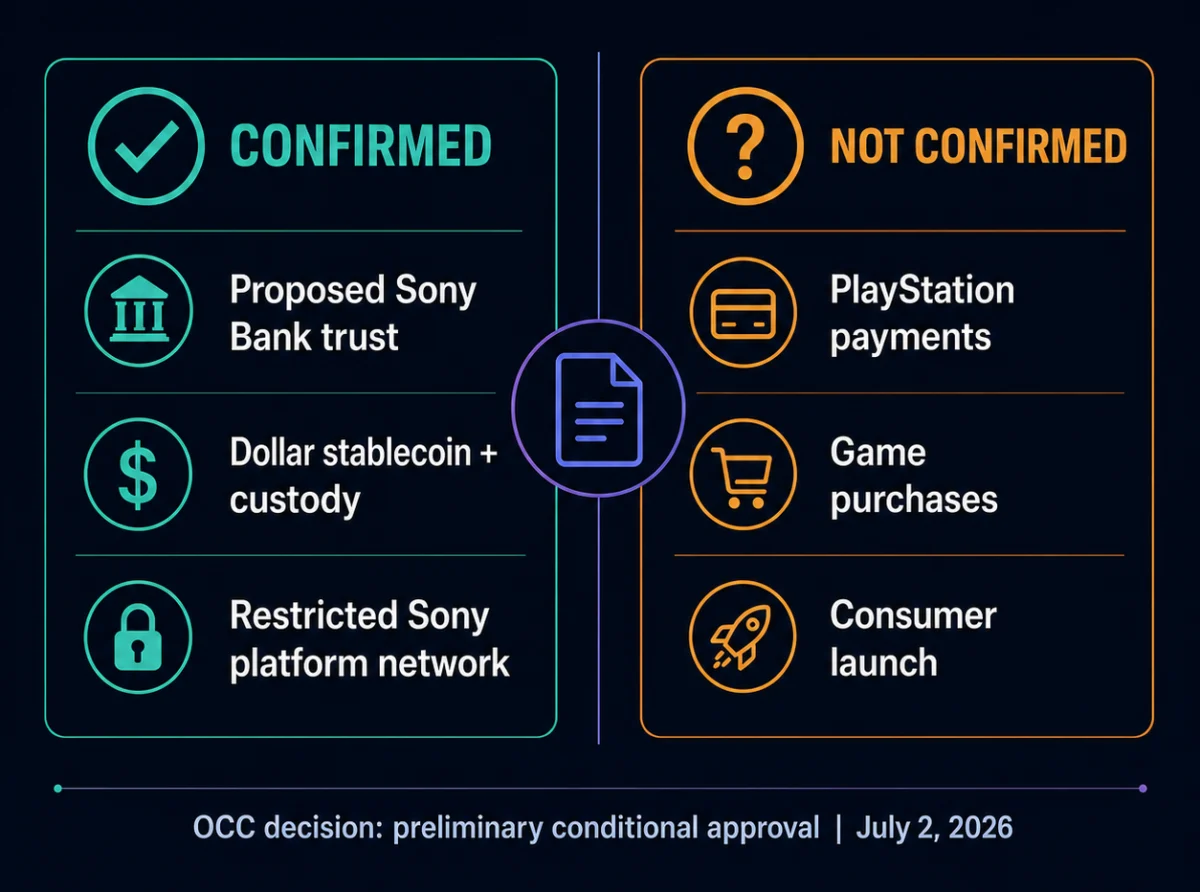
Online discourse, particularly within cryptocurrency communities, has surged with speculation that Sony is poised to integrate a proprietary cryptocurrency for PlayStation game purchases. However, a comprehensive review of official documentation and announcements reveals that these enthusiastic predictions may be premature, misinterpreting the scope and intent of recent regulatory developments. The cornerstone of this speculation centers on a preliminary conditional approval granted by the Office of the Comptroller of the Currency (OCC) for a proposed trust bank named Connectia Trust, wholly owned by Sony Bank. While this development signifies a potential expansion of Sony’s financial services capabilities, it does not, in its current public record, explicitly link to PlayStation, the PlayStation Store, or the direct purchase of video games using a Sony-issued digital currency.
The Genesis of Connectia Trust: Regulatory Approval and Financial Framework
The pivotal moment that ignited the current wave of speculation occurred on July 2, when the OCC provided preliminary conditional approval for Connectia Trust. This approval, detailed in a document accessible via the OCC’s official website, outlines the establishment of a U.S. trust bank. Crucially, neither this regulatory decision nor Sony Bank’s subsequent announcement on July 7 explicitly mentions any integration with Sony’s flagship gaming division, PlayStation, or its digital storefront. The focus of the approval is on the foundational financial services structure that Connectia Trust is envisioned to provide.
Connectia Trust, as described in the OCC’s preliminary approval, is slated to be fully owned by Sony Bank. The proposed structure includes the issuance of a stablecoin backed by the U.S. dollar, maintenance of reserves, provision of custody services, and support for transfers within a restricted, permissioned closed-loop network. The intended customer base for Connectia Trust encompasses U.S. retail customers who already maintain relationships with the broader Sony Group or its subsidiaries, alongside Sony Group companies themselves. This framework is designed to facilitate payments and financial transactions within a controlled ecosystem, specifically tailored for Sony’s established user base and internal operations.
Deconstructing the Speculation: What the Documentation Actually Says
The public filings meticulously detail a payment system designed for confined use within approved Sony properties and by defined customer segments. This is a stark contrast to an open-ended cryptocurrency intended for broad application across the internet. The language employed in the OCC filing is intentionally general, avoiding specific commitments to particular consumer services or explicitly stating that games could be purchased with the proposed digital token.
The viral spread of social media posts, however, has led many observers to make a direct leap: PlayStation, being Sony’s most recognizable consumer platform, appears to be the logical beneficiary of a Sony-controlled payment rail, thus enabling game purchases via a stablecoin. The prospect of a tightly controlled, closed ecosystem has also drawn attention, prompting discussions about its potential benefits and drawbacks. It is imperative to reiterate that mere online conjecture does not constitute an official product announcement from Sony.
A Phased Regulatory Journey: From Preliminary to Final Approval
Connectia Trust’s journey through the regulatory landscape is far from complete. The OCC’s recent action represents a preliminary conditional approval, signifying that the trust bank cannot commence operations until it satisfies all pre-opening requirements and secures final regulatory endorsement. Sony Bank has indicated that it is preparing for a potential launch in 2027, contingent upon the successful attainment of all necessary approvals. Importantly, the bank has explicitly stated that neither the opening date nor the issuance of the stablecoin is guaranteed. This cautious approach underscores the complex and often lengthy nature of financial regulatory processes.
Unpacking the Potential: Beyond Game Purchases
While the immediate focus of speculation has been on PlayStation game purchases, the broader implications of Connectia Trust’s proposed framework extend beyond this specific use case. The structure, designed for a restricted network, could potentially support a variety of Sony’s consumer services. This might include facilitating payments for digital content on other Sony platforms, managing subscriptions, or even streamlining in-app purchases across different Sony-branded applications. The closed-loop nature of the network could offer enhanced security and regulatory compliance, which are paramount in the financial services sector.

Furthermore, the involvement of a major financial institution like Sony Bank in issuing a dollar-backed stablecoin signifies a growing institutional embrace of digital asset technology. This move could pave the way for other large corporations to explore similar ventures, potentially accelerating the mainstream adoption of stablecoins for transactional purposes. The OCC’s preliminary approval, even for a closed-loop system, suggests a growing comfort level among regulators with well-structured digital currency initiatives by established entities.
A Look at Sony’s Evolving Financial Landscape
To fully appreciate the context of Connectia Trust, it is helpful to consider Sony’s recent strategic moves in its financial services sector. In October 2025, Sony completed a significant partial spin-off of its financial services business. Instead of retaining it as a consolidated subsidiary, Sony now holds a 16.40% stake in Sony Financial Group, as documented in Sony’s corporate records. This strategic decision, while not precluding coordination, means that the OCC’s approval for Connectia Trust is one element among several in Sony’s evolving financial strategy, rather than a direct, singular pathway to PlayStation-related digital currency integration.
This partial spin-off could allow Sony to focus more intensely on its core entertainment and technology businesses while still benefiting from its financial services arm. The establishment of Connectia Trust under Sony Bank, therefore, can be viewed as an independent initiative by the banking division to leverage emerging financial technologies within a controlled environment, separate from the immediate operational needs of PlayStation.
Broader Implications for the Digital Currency Ecosystem
The potential launch of Connectia Trust, even with its restricted scope, carries broader implications for the digital currency ecosystem. It demonstrates that established, globally recognized corporations are actively exploring the integration of digital assets and blockchain technology into their business models. This institutional validation can lend credibility to the digital currency space, potentially attracting further investment and innovation.
However, the emphasis on a "restricted, permissioned closed-loop network" also highlights the current regulatory environment surrounding digital assets. For widespread adoption, particularly in cross-border transactions or open markets, a more standardized and less restrictive regulatory framework would likely be necessary. The success of Connectia Trust could serve as a valuable case study, providing insights into the operational challenges and regulatory considerations of launching and managing a corporate-backed stablecoin.
The Road Ahead: Patience and Precision in Reporting
The narrative surrounding Sony and digital currencies is clearly complex and multifaceted. While the crypto community’s enthusiasm for a PlayStation-integrated cryptocurrency is understandable given Sony’s vast gaming footprint, it is crucial to ground expectations in factual reporting and official statements. The OCC’s preliminary approval for Connectia Trust is a significant step, but it is precisely that – a preliminary step. The future integration of this financial framework with PlayStation remains speculative until Sony makes explicit announcements to that effect.
For now, Sony Bank has secured a conditional pathway to develop a U.S.-based stablecoin and custody operation for a closed Sony network. Whether this pathway will eventually lead to PlayStation crypto payments is a question that awaits further developments and official confirmations from the company. In the interim, it is vital for news outlets and industry observers to maintain a precise and objective approach, distinguishing between regulatory approvals, corporate strategies, and speculative interpretations within the digital currency landscape. The evolution of financial technology is often incremental, and understanding each step with accuracy is paramount to informed discourse.