admin
admin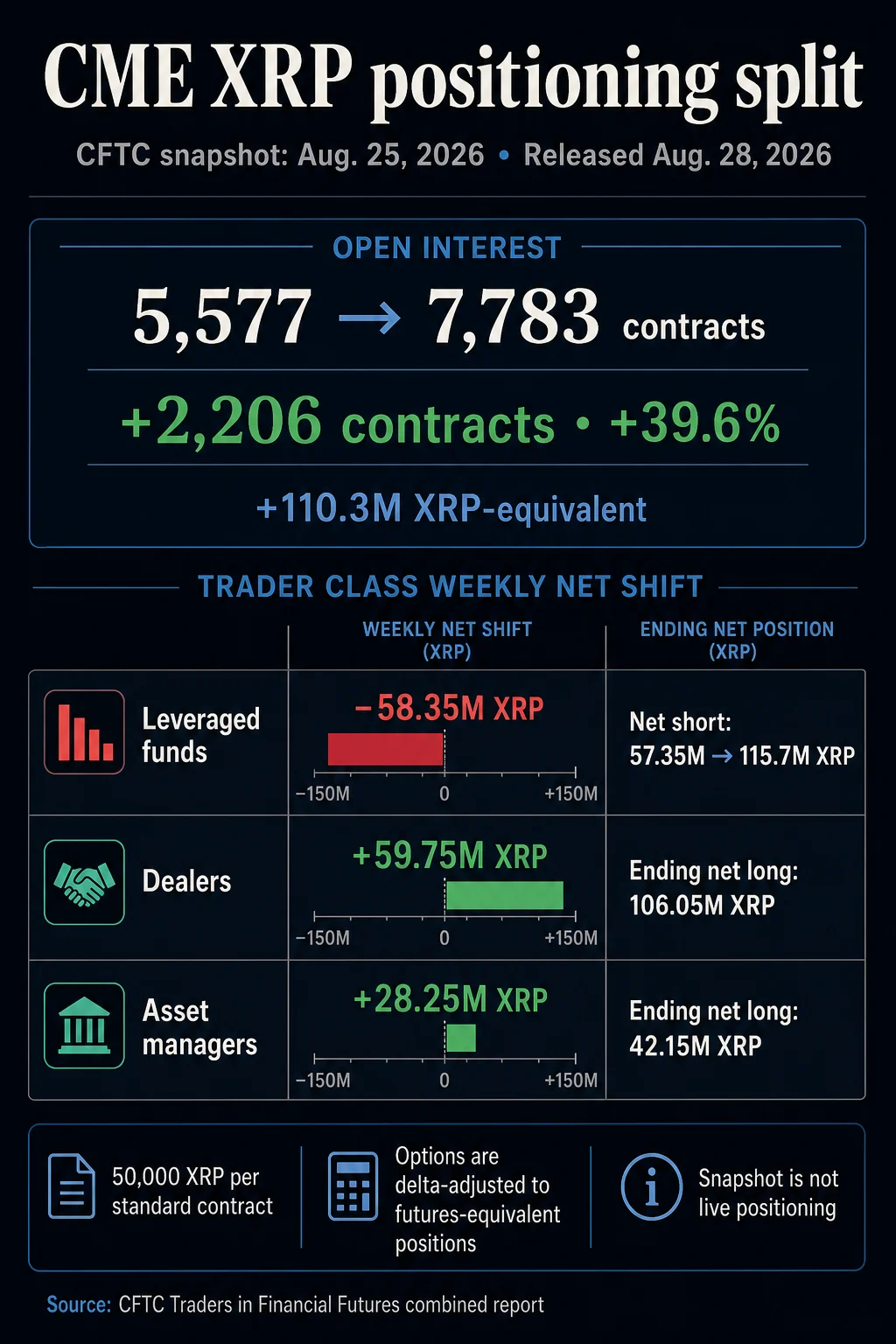
Leveraged funds have more than doubled their net short positions on XRP futures traded on the CME, even as the token experienced a significant price recovery and overall open interest surged by nearly 40% within a single week. This divergence in market sentiment and positioning highlights a growing tension in the XRP market, with institutional players exhibiting markedly different views on the digital asset’s future trajectory.
Surge in Open Interest Amidst XRP’s Price Rebound
Recent data from the Commodity Futures Trading Commission (CFTC) reveals a substantial increase in XRP open interest on the CME. In the span of a week, open interest climbed by 2,206 futures-equivalent contracts, reaching a total of 7,783 contracts. Given that each standard CME XRP contract represents 50,000 XRP, this surge equates to an additional approximately 110.3 million XRP in total market exposure. This brought the aggregate exposure to roughly 389.2 million XRP.
This expansion in open interest occurred concurrently with a notable price recovery for XRP. The digital asset had previously seen a significant rebound, appreciating approximately 32% from its $1 mark earlier in the month. At the time of reporting, XRP was trading near the $1.38 level, indicating a positive momentum shift for the token. This recovery was reportedly fueled by increased inflows into Bitcoin ETFs, a trend that may have indirectly benefited other major cryptocurrencies like XRP, alongside strategic repositioning by large holders, often referred to as "whales."
Divergent Institutional Positioning: Leveraged Funds vs. Asset Managers
Despite the upward price momentum, leveraged funds significantly increased their bearish stance on XRP. Their positioning shifted to hold 892 long contracts against 3,206 short contracts. This resulted in a widened net short position of 2,314 contracts, equivalent to approximately 115.7 million XRP. This marks a substantial increase from the 57.35 million XRP net short held by these funds just a week prior. This expansion added approximately 58.35 million XRP-equivalent of net short exposure, making leveraged funds the most directional short players among the reportable CFTC categories.
In contrast, other institutional players, namely dealers and asset managers, adopted a more bullish outlook. Dealers significantly bolstered their net-long position, increasing it by 1,195 contracts, which translates to about 59.75 million XRP. Their total net-long position reached 2,121 contracts. Asset managers also added to their bullish bets, acquiring an additional 565 net contracts, or roughly 28.25 million XRP-equivalent, concluding the reporting period with a net long position of 843 contracts.
A Market Divided: Implications of the Positioning Split
The stark divergence in institutional positioning on the CME’s XRP market suggests a fractured outlook on the token’s future performance. This split indicates that rather than a uniform institutional consensus, the market is characterized by sharply differing views on XRP’s direction. It is important to note that the CFTC does not publicly disclose whether leveraged fund shorts represent outright bearish bets or are utilized as hedges against other market positions.
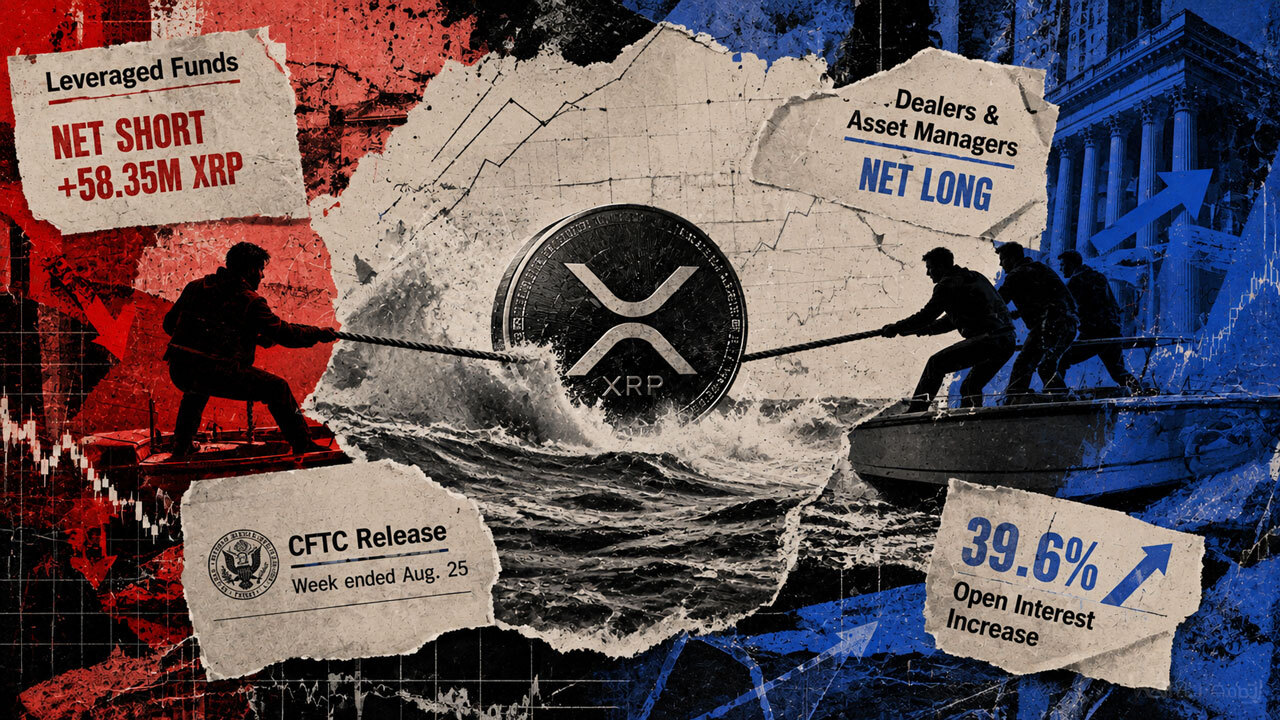
However, the significant increase in net short exposure by leveraged funds, particularly during a period of price recovery, positions them for potential vulnerability. If XRP’s upward trajectory continues or accelerates, these leveraged short positions could face substantial pressure. Such a scenario might lead to a cascade of forced liquidations, further amplifying any upward price movements and potentially triggering a short squeeze.
Conversely, if the current rebound in XRP is sustained, it could force leveraged funds to re-evaluate their positions. A retreat from these shorts would signal that the prevailing price momentum is indeed compelling enough to alter institutional strategies. This would be reflected in a reduction of their net short exposure, indicating a capitulation to the bullish trend.
Historical Context and Market Dynamics
The XRP market has been subject to significant volatility and intense scrutiny, largely influenced by the ongoing legal proceedings involving Ripple Labs and the U.S. Securities and Exchange Commission (SEC). While a recent court ruling offered a partial victory for Ripple, declaring that programmatic sales of XRP did not constitute unregistered securities offerings, the broader regulatory landscape remains a key factor influencing investor sentiment and market dynamics.
The CME’s XRP futures market has seen rapid expansion, with open interest growing substantially over recent months. This growth underscores increasing institutional interest in gaining exposure to XRP through regulated derivatives. However, as the recent data illustrates, this growing interest is not translating into a unified market view. The contrast between leveraged funds’ bearish bets and asset managers’ bullish positions highlights the inherent uncertainties and differing risk appetites within the institutional investor community.
The dynamics observed in the CME XRP market can be analyzed through the lens of market microstructure. The presence of substantial leveraged positions, whether long or short, introduces amplified risk. When these positions are built against the prevailing price trend, they become particularly susceptible to reversals. The current situation, where leveraged funds are doubling down on shorts as XRP recovers, presents a classic scenario where a sustained rally could inflict significant losses on these entities.
The Role of Hedges and Speculation
The ambiguity surrounding the nature of leveraged fund shorts—whether they are speculative bets or strategic hedges—adds another layer of complexity. In traditional finance, leveraged short positions are often used to profit from anticipated price declines. However, they can also serve as a protective measure against potential losses in other related assets. For instance, a fund holding a significant long position in XRP might simultaneously establish a short position in XRP futures to mitigate downside risk. Without explicit disclosure, it remains challenging to definitively categorize the intent behind these positions.
Nonetheless, the sheer scale of the net short position held by leveraged funds—over 115 million XRP-equivalent—suggests a considerable bearish conviction or a significant hedging strategy. If these shorts are indeed speculative bets on a price decline, then XRP’s current rally poses a direct threat to their profitability and capital.

Future Outlook and Potential Scenarios
The interplay between XRP’s price action and institutional positioning on the CME will be a critical indicator to monitor in the coming weeks. Several scenarios could unfold:
-
Continued XRP Rally and Short Squeeze: If XRP continues its upward momentum, potentially driven by broader market sentiment or positive developments related to Ripple, leveraged funds holding substantial shorts may be forced to cover their positions. This buying pressure could accelerate the price increase, leading to a short squeeze and further gains for XRP.
-
Price Consolidation or Correction: Alternatively, XRP’s rally could falter, leading to price consolidation or a correction. In such a scenario, the leveraged funds’ bearish bets would be validated, at least in the short term. This could also lead to increased selling pressure as those who profited from the short positions exit their trades.
-
Shifting Institutional Sentiment: The actions of dealers and asset managers, who have been increasing their net-long positions, could also provide clues. If these entities continue to accumulate XRP, it might signal a growing institutional conviction in the asset’s long-term prospects, potentially drawing in more capital and supporting future price appreciation.
The current market structure, with a significant bearish bet from leveraged funds against a backdrop of recovering prices and bullish positioning from other institutional players, creates a potentially volatile environment. The 115 million XRP-equivalent short position represents a substantial overhang that could be unwound rapidly if market conditions shift unfavorably for the bears. This dynamic underscores the high-stakes game being played out in the XRP derivatives market, with significant implications for the token’s price discovery and overall market sentiment. The resolution of this "tug-of-war" between bullish and bearish institutional forces will likely shape XRP’s performance in the near to medium term.