admin
admin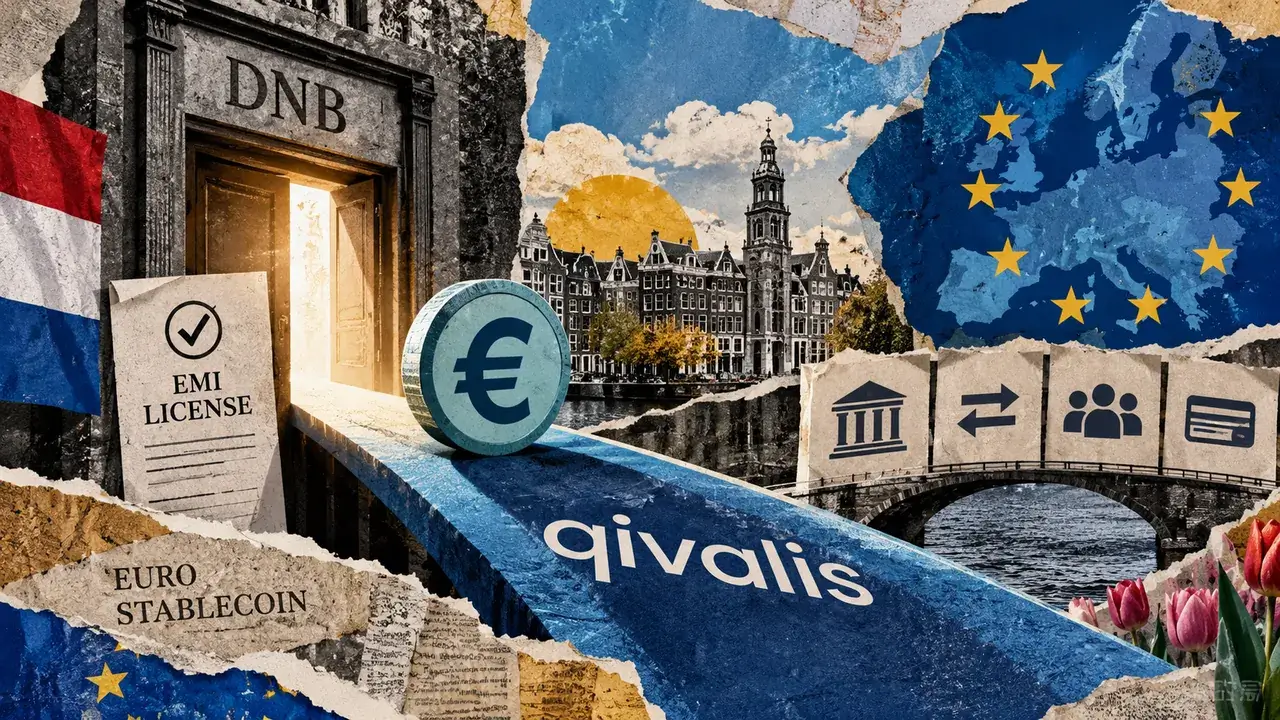
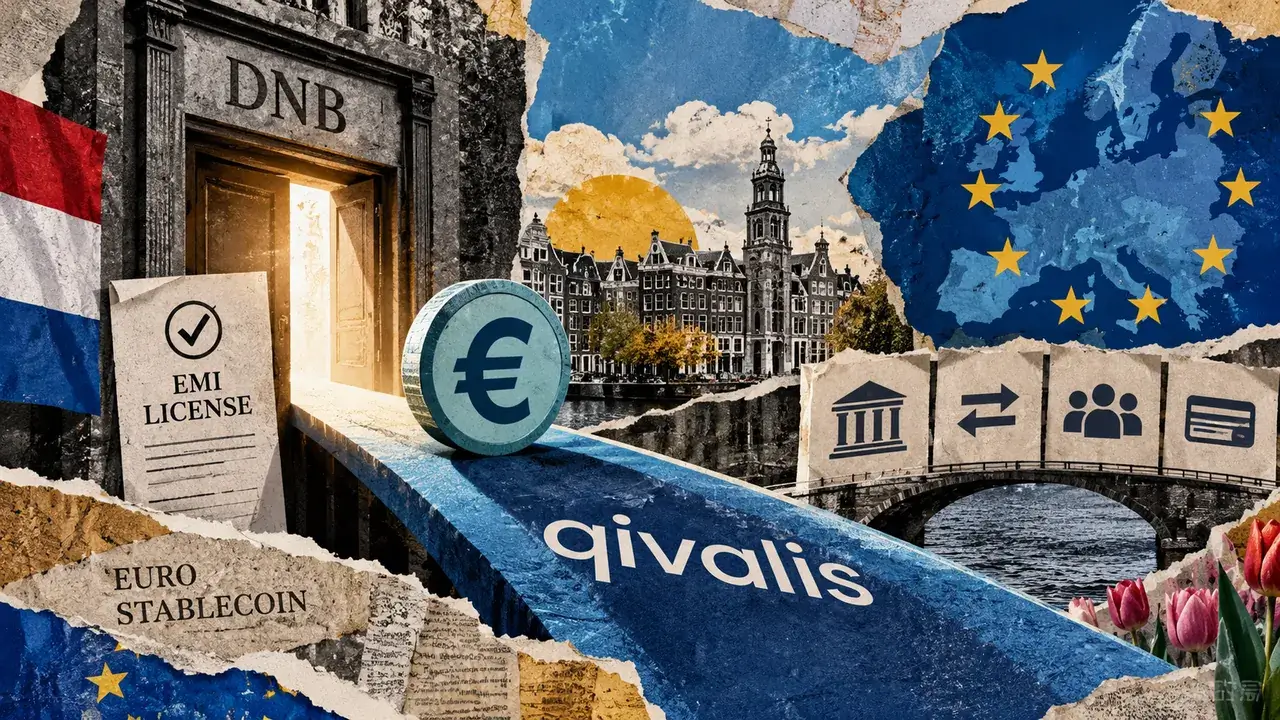
Bank-backed digital finance firm Qivalis has announced a significant milestone in its pursuit of launching a euro-denominated electronic money token (EMT), having successfully obtained an Electronic Money Institution (EMI) license from De Nederlandsche Bank (DNB), the Dutch central bank. This authorization, disclosed on October 14, represents a critical step towards Qivalis’s ambition to enter the European digital payments market. However, the company’s planned issuance remains contingent upon navigating the intricate requirements of the European Union’s Markets in Crypto-Assets Regulation (MiCA) and the subsequent publication of its comprehensive white paper.
The DNB’s granting of the EMI license signifies that Qivalis has met a fundamental prerequisite for operating as an issuer of electronic money within the Netherlands. This regulatory approval underscores the Dutch central bank’s oversight and confidence in Qivalis’s operational framework and compliance measures. The company has stated that this license is a key condition for its planned token issuance, which it aims to commence within the coming months. This timeline, however, is explicitly tied to adherence to all applicable MiCA provisions and the formal release of its white paper, which will detail the token’s structure, risks, and operational mechanics.
Qivalis’s strategic approach involves a business-to-business-to-everything (B2B2X) distribution model. Under this paradigm, Qivalis will act as the issuer of the EMT, while its network of partners—comprising eligible banks, cryptocurrency exchanges, payment service providers, and market infrastructure participants—will facilitate the token’s distribution and accessibility to end-users across 15 European countries. The company has highlighted the backing of 37 European banks as a testament to the collaborative nature of its rollout strategy, suggesting a broad base of institutional support for its innovative payment solution.
Despite the regulatory hurdle cleared with the EMI license, Qivalis has not yet commenced public issuance of electronic money or the provision of payment services. According to disclosures on its official website, updated concurrently with the license announcement, the firm is still in the preparatory stages. The absence of a fixed launch date and the reliance on a "coming months" projection indicate that the path to market is not immediate and will be carefully managed to ensure full compliance with evolving regulatory frameworks.
The Regulatory Framework: MiCA and Electronic Money Tokens
The European Union’s Markets in Crypto-Assets Regulation (MiCA), which officially came into force in June 2023 and will be largely applicable from late 2024, is designed to provide a comprehensive legal framework for crypto-assets within the EU. For issuers of Electronic Money Tokens (EMTs), like the one Qivalis plans to launch, MiCA introduces specific requirements to safeguard consumer protection and financial stability.
Article 48 of MiCA outlines the general authorization requirements for issuers of EMTs. Typically, this involves obtaining authorization either as a credit institution or an electronic money institution, a category Qivalis has now secured through its Dutch license. Beyond initial licensing, issuers are mandated to notify relevant national competent authorities of their intention to issue an EMT and to publish a detailed white paper. This white paper serves as a crucial disclosure document for potential users, providing comprehensive information about the issuer, the token’s technical specifications, the rights and obligations of token holders, the underlying technology, and an assessment of associated risks.
De Nederlandsche Bank (DNB) has further elaborated on these requirements through its specific guidance for EMT issuance. The Dutch central bank mandates that potential issuers must formally notify the DNB of their intention to issue a token and submit the accompanying white paper for review. While MiCA Article 51 clarifies that national authorities are not permitted to require prior approval of EMT white papers before publication, the notification and publication process remains a critical step. This ensures that regulators are informed and that the public has access to the necessary information to make informed decisions.
Qivalis’s explicit acknowledgment that its issuance remains subject to "applicable MiCA requirements" underscores the ongoing nature of its regulatory compliance journey. The EMI license is a foundational element, but the subsequent steps—including the detailed content and publication of the white paper—are equally vital for Qivalis to legally offer its EMT to the public.
Timeline and Procedural Milestones
The journey for Qivalis to become a fully operational EMT issuer can be traced through a series of anticipated and achieved milestones:
- Initial Planning and Partnership Formation: Prior to the DNB announcement, Qivalis would have engaged in extensive discussions with potential partner institutions, including banks and payment service providers, to establish the B2B2X distribution network. This phase would have involved securing commitments from the 37 European banks mentioned in their announcement.
- Application for EMI License: The company would have submitted a formal application to De Nederlandsche Bank, detailing its business model, financial projections, risk management procedures, and compliance frameworks. This is a rigorous and often lengthy process, requiring substantial documentation and adherence to stringent regulatory standards.
- Obtaining the EMI License (October 14, 2026): The successful acquisition of the EMI license from DNB marks a pivotal achievement, signifying regulatory approval to operate as an electronic money institution in the Netherlands and, by extension, within the EU’s single market framework.
- White Paper Development: Concurrently with or following the licensing process, Qivalis would have been developing its comprehensive white paper. This document must meticulously detail all aspects of the EMT, from its pegging mechanism and reserve management to its technological underpinnings and the legal recourse available to token holders.
- White Paper Publication: Once finalized, the white paper must be published. This act serves as the formal notification to the public and regulatory bodies about the impending issuance of the EMT.
- MiCA Compliance Checks: Qivalis will need to ensure that all aspects of its operations, including its tokenomics, reserve management, and distribution channels, are fully compliant with the specific articles of MiCA pertaining to EMTs.
- Planned Issuance (within the coming months): Following the successful publication of the white paper and confirmation of MiCA compliance, Qivalis plans to begin issuing its euro-denominated EMTs. This will likely be a phased rollout, starting with its designated partner institutions.
This chronological overview highlights that while the EMI license is a significant hurdle overcome, the full launch is dependent on further regulatory procedural steps and the operational readiness of its partner network.
Supporting Data and Market Context
The European market for digital payments and stablecoins is evolving rapidly, with increasing interest from both traditional financial institutions and fintech innovators. Qivalis’s ambition to launch a euro-denominated EMT places it within a segment of the market aiming to bridge the gap between traditional finance and decentralized technologies.
Euro-denominated stablecoins, often referred to as Euro-pegged tokens, aim to provide the benefits of blockchain technology—such as faster settlement times, reduced transaction costs, and increased transparency—while maintaining the stability of the euro. This is particularly relevant for cross-border payments and remittances, where traditional banking channels can be slow and expensive.
The European Central Bank (ECB) has been actively exploring the potential of a digital euro, indicating a broader regulatory and institutional interest in digital currencies. While a central bank digital currency (CBDC) differs significantly from a privately issued EMT, the discussions around digital currencies highlight the growing acceptance of digital forms of money.
The regulatory clarity provided by MiCA is a crucial development for the European crypto market. Before MiCA, the regulatory landscape was fragmented, creating uncertainty for businesses operating across different EU member states. MiCA aims to harmonize these rules, fostering innovation while ensuring investor protection and market integrity. For EMTs, MiCA’s provisions on reserves, governance, and transparency are designed to prevent the kind of instability seen with some other crypto-assets.
The backing of 37 European banks for Qivalis’s initiative is a strong indicator of the potential demand and institutional acceptance for such digital euro solutions. This consortium suggests a collective effort to explore the benefits of tokenized money within established financial infrastructures. The success of Qivalis’s model could pave the way for wider adoption of stablecoins in institutional and retail payment systems across the EU.
Implications and Broader Impact
The successful launch of Qivalis’s euro-denominated EMT could have several significant implications for the European financial landscape:
- Enhanced Payment Efficiency: If successful, Qivalis’s EMT could offer a faster and more cost-effective alternative for cross-border payments and settlements, particularly between businesses. This could reduce reliance on traditional correspondent banking networks, which are often subject to delays and higher fees.
- Increased Financial Inclusion: By distributing the EMT through various channels, Qivalis aims to make digital euro payments accessible to a wider audience, potentially fostering greater financial inclusion for individuals and businesses that may be underserved by traditional banking services.
- Catalyst for Further Innovation: The establishment of a regulated, bank-backed EMT could encourage further innovation in the stablecoin and digital asset space within Europe. It may also spur other institutions to develop similar offerings or to integrate Qivalis’s token into their existing services.
- Testing Ground for MiCA Implementation: Qivalis’s journey serves as a real-world test case for the implementation of MiCA’s provisions concerning EMTs. Its ability to navigate these regulations and launch successfully will provide valuable insights for both regulators and other market participants.
- Competition for Traditional Payment Providers: A widely adopted EMT could introduce new competition for established payment providers, potentially driving down costs and improving service offerings across the board.
However, the success of Qivalis is not guaranteed. Several challenges remain, including building widespread trust and adoption among end-users, ensuring robust and transparent reserve management to maintain the euro peg, and adapting to any future regulatory changes or market shifts. The B2B2X model, while promising, relies heavily on the successful integration and promotion efforts of its partner institutions.
Official Statements and Related Parties
While the original announcement focuses on Qivalis’s achievement, the broader ecosystem of its partner banks and payment providers will play a crucial role. In a typical scenario for such a launch, one would expect statements from:
- De Nederlandsche Bank (DNB): The DNB, as the licensing authority, would likely issue a statement emphasizing its commitment to fostering responsible innovation within the digital asset space while upholding financial stability and consumer protection. Their focus would be on the regulatory framework and the adherence to established rules.
- Partner Banks and Financial Institutions: These entities would likely express their enthusiasm for the partnership, highlighting how Qivalis’s EMT can enhance their service offerings, improve payment efficiency for their clients, and contribute to the modernization of financial infrastructure. They would emphasize the security and regulatory compliance of the proposed solution.
- European Regulatory Bodies (e.g., ESMA, ECB): While not directly involved in the licensing, these bodies would be observing the development closely as part of their broader mandate to oversee financial markets and digital currencies. Their commentary would likely focus on the broader implications for market integration and consumer protection under the MiCA framework.
Qivalis itself, through its CEO or other senior executives, would likely reiterate its commitment to regulatory compliance, user security, and the transformative potential of its euro-denominated EMT. Their messaging would aim to build confidence among investors, partners, and potential users, emphasizing the blend of traditional banking rigor with the efficiency of blockchain technology.
In conclusion, Qivalis’s acquisition of a Dutch EMI license is a significant step forward in its quest to launch a regulated euro-denominated electronic money token. The company’s success hinges on its ability to meticulously adhere to the comprehensive requirements of MiCA, publish a transparent and informative white paper, and effectively leverage its network of institutional partners to deliver its innovative payment solution to the European market. The coming months will be critical in determining whether Qivalis can translate regulatory approval into widespread market adoption and a tangible impact on the future of digital payments in Europe.