admin
admin
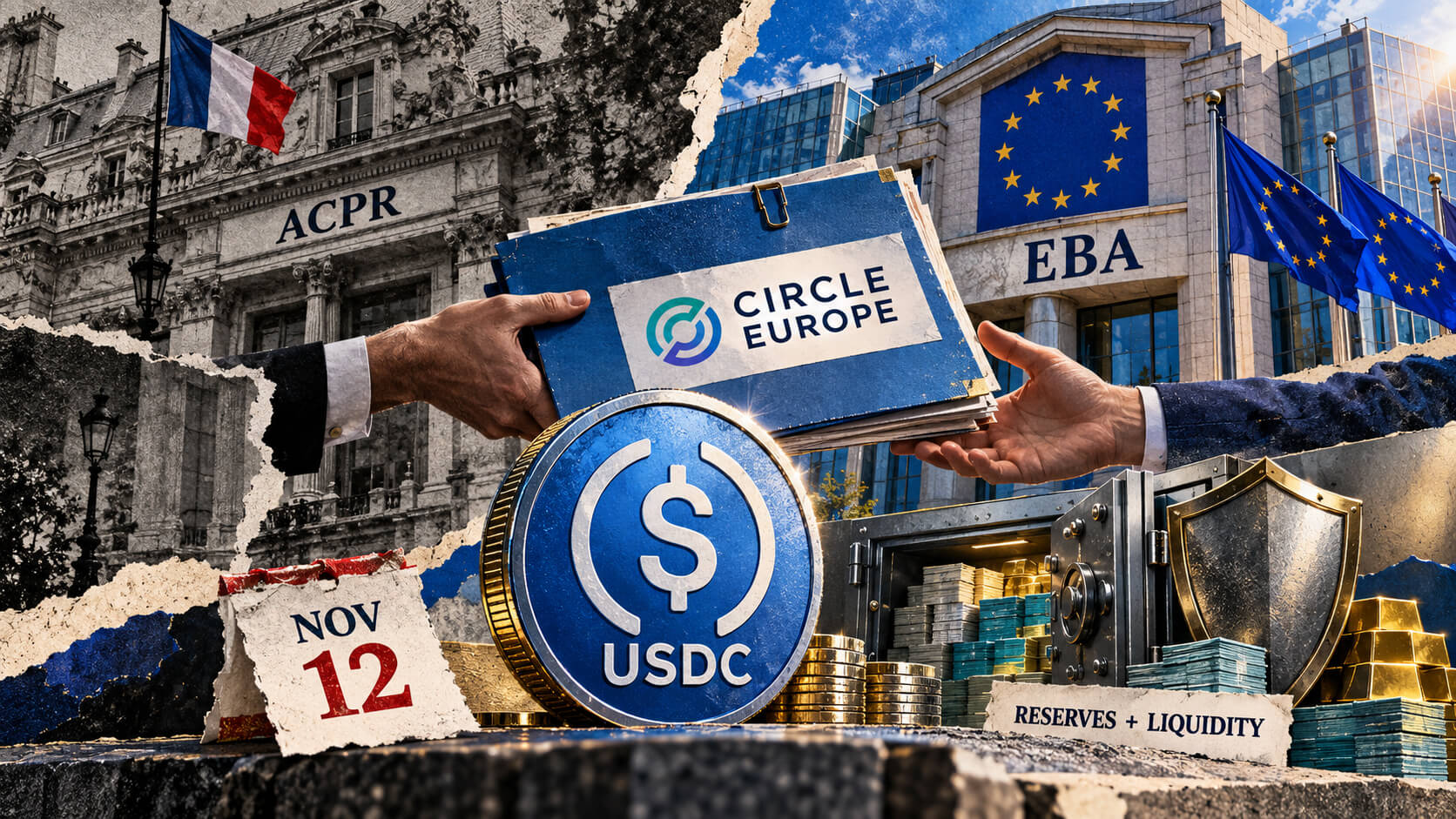
The European Banking Authority (EBA) has officially designated Circle’s Euro-denominated stablecoin, USDC, as the European Union’s first "significant e-money token" under the Markets in Crypto-Assets Regulation (MiCA). This landmark classification, announced on October 14th, mandates a pivotal shift in supervisory responsibilities, with key oversight transitioning from France’s financial regulator, the Autorité de Contrôle Prudentiel et de Résolution (ACPR), to the EBA on November 12th. This development not only elevates the regulatory scrutiny on Circle’s European operations but also reignites a crucial debate surrounding the structure and flexibility of reserve requirements for stablecoin issuers.
The EBA’s classification underscores the growing importance of stablecoins within the EU’s financial landscape and signals a more centralized approach to supervising these critical digital assets. Among the 45 e-money tokens initially notified under MiCA, USDC has emerged as the first to meet the criteria for "significant" status, indicating its substantial market presence and potential systemic impact. While the EBA will assume direct supervision of the EU issuer’s own funds, regulatory capital, reserve assets, liquidity requirements, and recovery and redemption plans, the ACPR will continue to oversee governance, qualifying holdings, fit-and-proper assessments, outsourcing, and conflicts of interest. This bifurcated supervisory model emphasizes a collaborative approach between EU-level and national regulators to ensure comprehensive oversight.
This regulatory milestone brings renewed focus to Circle’s earlier advocacy for a more adaptable framework for reserve management. In its response to the European Commission’s MiCA review consultation, submitted on October 1st, the company articulated concerns that rigid, bank-deposit-centric reserve requirements could inadvertently expose stablecoin issuers to the inherent risks within the traditional banking sector. Circle’s position paper advocated for a departure from mandatory minimum bank deposits, proposing instead a more flexible minimum asset-liquidity requirement that could better mitigate counterparty and credit risks. This stance highlights a fundamental tension between established regulatory prudence and the innovative nature of digital asset finance.
Dual Supervision Under MiCA
The forthcoming transfer of supervisory authority on November 12th marks a significant turning point for Circle Internet Financial Europe SAS, the entity responsible for issuing USDC within the EU. The EBA’s direct oversight will encompass several critical areas:
- Own Funds: The EBA will scrutinize the issuer’s capital adequacy, ensuring sufficient financial resources to absorb potential losses.
- Reserve Assets: The composition and management of the assets backing USDC will be under the EBA’s direct purview, aiming to guarantee the stability and liquidity of the token.
- Liquidity Requirements: The EBA will oversee how the issuer manages its short-term obligations, ensuring it can meet redemption demands promptly.
- Recovery and Redemption Plans: The authority will evaluate the issuer’s strategies for maintaining stability and facilitating orderly redemptions during periods of stress.
Concurrently, the ACPR will maintain its role in supervising:
- Governance: Ensuring robust internal controls and decision-making processes within the issuer.
- Qualifying Holdings: Overseeing significant investments or ownership stakes in the issuer.
- Fit-and-Proper Assessments: Evaluating the suitability and integrity of the individuals managing the issuer.
- Outsourcing and Conflicts of Interest: Monitoring the issuer’s relationships with third-party service providers and managing potential conflicts of interest.
The EBA stated that both authorities are actively cooperating to ensure a seamless transition, emphasizing a coordinated effort to safeguard the integrity of the European financial system. This allocation of responsibilities grants the EBA a direct stake in the financial safeguards underpinning EU-issued USDC, while national oversight continues to address other operational facets of the issuer.
The Regulatory Framework and Circle’s Reserve Proposals
MiCA’s legal architecture, specifically Articles 55 and 58, empowers the EBA to supervise significant e-money token issuers concerning their recovery and redemption planning, as well as additional obligations related to reserves, liquidity, and own funds. The existing baseline requirement under Article 54 of MiCA mandates that credit institutions hold at least 30% of funds received in exchange for e-money tokens in segregated accounts. The remaining balance must be invested in specified secure, low-risk, and highly liquid instruments denominated in the token’s referenced currency.
Circle’s October 1st submission to the European Commission presented a nuanced critique of these provisions. The company argued that the mandatory 30% deposit floor, which rises to 60% for significant token issuers, unnecessarily increases exposure to the credit and counterparty risks inherent in the banking sector. Instead, Circle proposed a more dynamic "minimum asset-liquidity requirement." This approach would allow for greater flexibility in how reserves are held, potentially diversifying away from concentrated bank deposits and embracing a broader spectrum of highly liquid and secure assets.
Furthermore, Circle recommended the removal of a 35% cap on exposure to any single sovereign. They also called for the elimination of a banking-counterparty cap, which is currently measured against 1.5% of that bank’s total assets. Circle’s rationale is that such stringent caps would compel larger issuers to establish relationships with an impractical number of banks, complicating operations and potentially diluting oversight effectiveness. The company’s proposals reflect a desire for regulatory frameworks that are both robust in consumer protection and adaptable to the evolving technological and financial realities of stablecoins.
USDC’s European Issuer and Global Reserve Structure
The EBA’s classification distinguishes between two primary USDC issuers: Circle Internet Financial Europe SAS for the EU and Circle Internet Financial, LLC for the U.S. This separation is reflected in Circle’s own documentation, including its USDC whitepaper, which outlines distinct reserve pools managed by the European entity for European Economic Area (EEA) holders and by the U.S. entity for non-EEA holders, despite the fungibility of the tokens themselves.
While a global circulation figure for USDC is readily available, it does not provide a granular view of the European issuer’s specific reserve portfolio. Circle’s consultation response emphasized the importance of preserving a multi-issuance model and formalizing safeguards that include dynamic rebalancing mechanisms between global and EU-specific reserves. This suggests an operational strategy designed to cater to regional regulatory requirements while maintaining the global utility and convertibility of USDC.
The EBA is also actively preparing for cross-border supervision. The authority recently signed a Memorandum of Understanding (MoU) with the New York State Department of Financial Services (NYDFS). This agreement is designed to facilitate enhanced cooperation and information exchange regarding stablecoin activities, acknowledging the interconnected nature of global digital asset markets and the need for international regulatory collaboration.
It is important to note that the EBA’s announcement does not confer any peg guarantee or new insurance for USDC holders. The EBA has not issued instructions for holders to move funds or automatically alter redemption terms. Circle’s white paper explicitly states that EU deposit-guarantee schemes and investor-compensation coverage do not apply to USDC. The primary actionable date for market participants and stakeholders remains November 12th, when the specified supervisory responsibilities officially transfer to the EBA. Circle’s ongoing dialogue regarding reserve proposals remains a separate but significant policy debate within the broader MiCA implementation process.
Implications and Future Outlook
The EBA’s designation of USDC as a "significant e-money token" under MiCA has several profound implications for the stablecoin market and the broader digital asset ecosystem within the European Union.
Increased Regulatory Scrutiny and Investor Confidence: The transfer of supervision to the EBA signifies a heightened level of regulatory oversight. This move is likely to bolster investor confidence in USDC by demonstrating a commitment to robust financial safeguards and consumer protection. For institutional investors and traditional financial entities considering exposure to stablecoins, the EBA’s direct involvement can serve as a crucial validation, reducing perceived risks.
Potential for Regulatory Arbitrage: As the EU implements its comprehensive MiCA framework, other jurisdictions may feel compelled to strengthen their own stablecoin regulations to remain competitive and prevent regulatory arbitrage. The EBA’s proactive stance could set a precedent for how significant stablecoins are supervised globally.
Impact on Reserve Management Practices: Circle’s push for more flexible reserve requirements, coupled with the EBA’s direct oversight, could lead to a re-evaluation of how stablecoin reserves are managed. If Circle’s arguments gain traction, and the EBA proves amenable to alternative reserve structures, it could pave the way for more diversified and potentially less bank-dependent reserve portfolios for stablecoins operating under MiCA. This could involve a greater allocation to government securities, highly rated corporate bonds, or other liquid assets, provided they meet stringent risk and liquidity criteria.
Market Dynamics and Competition: The classification could also influence the competitive landscape of stablecoins operating within the EU. Tokens that are not deemed "significant" may face a lighter regulatory touch, while those that are will be subject to more stringent requirements. This could create a tiered market, with significant tokens like USDC potentially benefiting from enhanced credibility, while smaller players might need to scale up or face different regulatory pathways.
Operational Adjustments for Circle: For Circle, the transition to EBA supervision necessitates a period of adaptation. The company will need to ensure full compliance with the EBA’s directives regarding capital, liquidity, and reserve management. This may involve adjustments to internal processes, reporting mechanisms, and potentially the allocation of resources to meet enhanced supervisory demands. The successful navigation of this transition will be crucial for maintaining USDC’s position as a leading stablecoin in the European market.
Broader MiCA Implementation: The USDC designation serves as a practical test case for the implementation of MiCA. The effectiveness of the EBA-ACPR cooperation, the practical application of reserve requirements, and the ongoing dialogue between regulators and industry players will provide valuable lessons for the broader rollout and refinement of MiCA’s provisions for other crypto-assets.
The coming months will be critical in observing how the EBA exercises its new supervisory powers and how Circle adapts its operational and reserve management strategies. The successful integration of stablecoins like USDC into the regulated financial system hinges on a delicate balance between fostering innovation and ensuring financial stability, a challenge that the EBA’s oversight of USDC will help to illuminate. The ongoing discourse around reserve requirements also highlights the dynamic nature of crypto regulation, where policy is continuously shaped by technological advancements and market developments.