admin
admin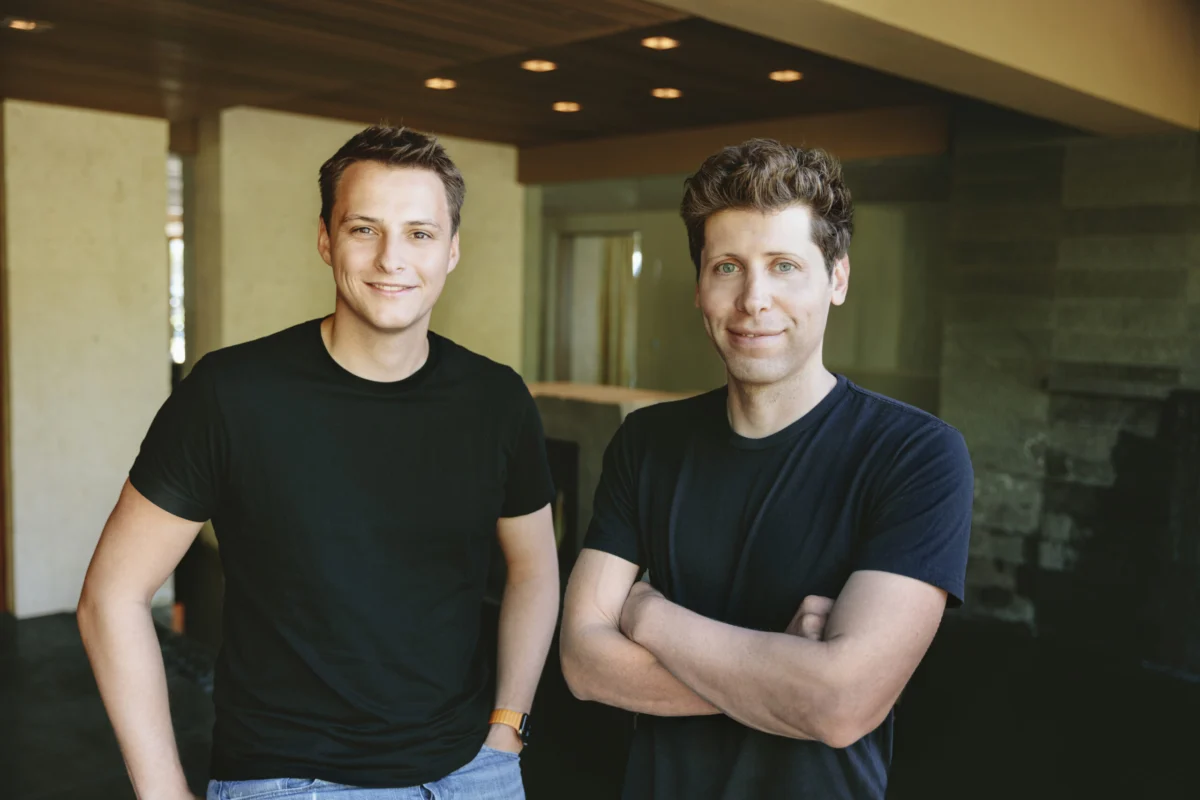
World, the digital identity and online verification venture co-founded by OpenAI Chief Executive Officer Sam Altman and Alex Blania, has successfully raised $52.5 million through a targeted sale of its native WLD tokens to a group of strategic institutional investors. This capital injection, announced via the World Foundation, marks a significant milestone for the project as it seeks to fortify its "Proof of Human" infrastructure during a period of rapid artificial intelligence advancement. The funding round was led by Pantera Capital, a prominent venture capital firm specializing in digital assets and blockchain technology, with additional participation from Eightco Holdings, Bain Capital Crypto, Susquehanna Crypto, and Selini Capital.
The structure of the investment underscores a long-term commitment to the project’s ecosystem, as all participating investors agreed to a 12-month lockup period. Under the terms of the sale, the acquired WLD tokens cannot be traded or liquidated for a full year, a mechanism designed to stabilize the token’s market presence and align investor interests with the project’s multi-year development goals. In an official statement released on Friday, the company emphasized that this lockup period reflects a "long-term commitment to World’s continued growth and utility" as the network expands its global footprint.
The proceeds from the sale are earmarked for the World Foundation, an exempted limited guarantee foundation headquartered in the Cayman Islands. This entity serves as the non-profit steward of the World network, tasked with managing the expansion of the protocol, incentivizing developer participation, and overseeing the transition toward a more decentralized governance model. The foundation’s role is critical as the project shifts from its early-stage development, led primarily by the San Francisco-based startup Tools for Humanity (TFH), toward a globally distributed digital identity standard.
The Core Mission: Solving the Identity Crisis in the Age of AI
At the heart of World’s business model is a response to the "identity crisis" precipitated by the proliferation of generative artificial intelligence. As AI agents and sophisticated bots become increasingly capable of mimicking human behavior, text, and even visual appearance, the ability to distinguish between a biological human and an automated script has become a paramount challenge for digital platforms. World’s solution is the "World ID," a privacy-preserving digital passport that verifies the "humanness" of its holder without necessarily revealing their legal identity.
To achieve the highest tier of verification, the project utilizes a proprietary hardware device known as the "Orb." This metallic, spherical device performs a high-resolution scan of a user’s iris, a biometric marker that is unique to every individual and significantly more difficult to forge than traditional identification methods. The Orb processes the iris scan locally, converting the biological data into a distinct cryptographic identifier—a "code"—before the original image is deleted, according to the company’s privacy protocols. This code then serves as the basis for the World ID, allowing users to prove they are human across various third-party applications.
World’s leadership, including CEO Alex Blania and Sam Altman, has frequently argued that such a system is not merely a technological luxury but a necessity for the future of the internet. They envision a world where World ID serves as the foundation for everything from preventing sybil attacks on social media to the fair distribution of Universal Basic Income (UBI) in an economy increasingly dominated by AI-driven productivity.
Evolution and Rebranding: From Worldcoin to World
The project’s recent funding follows a significant strategic pivot and rebranding. Originally launched under the name "Worldcoin," the project faced substantial scrutiny from both privacy advocates and financial regulators during its initial rollout. Critics raised concerns regarding the collection of biometric data, particularly in developing nations, and the project’s heavy reliance on a cryptocurrency token (WLD) as an incentive for user sign-ups.
In a move to distance itself from the volatility and negative connotations sometimes associated with the broader crypto industry, the company rebranded simply to "World." This change coincided with a broader effort to emphasize the utility of its verification tools over the speculative nature of its token. Despite the rebranding, the WLD token remains a central component of the ecosystem, serving as the medium for the recent $52.5 million raise and acting as a custodial asset within the World App.
The World App functions as both a digital wallet and a portal for identity management. Since its inception, the app has seen millions of downloads, though the company has faced a steep climb in maintaining user engagement and scaling its physical infrastructure. The deployment of Orbs has been a logistical challenge, with devices currently stationed in select major cities and partner retail locations globally.
Chronology of Development and Strategic Partnerships
The $52.5 million raise is the latest in a series of high-stakes developments for the project. In April 2026, World launched a major update to its application, introducing a more streamlined user interface and enhanced privacy controls. This launch was accompanied by the announcement of several high-profile integrations aimed at demonstrating the real-world utility of the World ID.
Partnerships with platforms such as Tinder, Zoom, and Docusign were unveiled to showcase how "Proof of Human" could be used to verify users on dating apps, secure video conferencing environments, and validate signatures on legal documents. For instance, the Tinder integration allows users to display a "Verified Human" badge on their profiles, theoretically reducing the prevalence of "catfishing" and bot-driven scams. Similarly, the partnership with Docusign aims to add a layer of biometric certainty to digital contracts.
However, the path to global adoption has not been without significant obstacles. In June 2026, Tools for Humanity conducted a round of layoffs, a move that surprised some industry observers given the high-profile nature of its founders. The company cited the need to streamline operations and extend its financial runway as it navigated the complexities of physical hardware distribution and varying regulatory landscapes. The recent capital injection from Pantera Capital and others is seen by many as a vital stabilization measure following that period of internal restructuring.
Financial and Market Implications
The participation of Pantera Capital as the lead buyer provides a significant "seal of approval" from the institutional investment community. Pantera, which has been a major player in the blockchain space since 2013, typically invests in projects with the potential to provide foundational infrastructure for the next generation of the internet. Their lead role suggests a belief that World’s identity protocol could become an industry standard.
Supporting data indicates that the demand for identity verification services is projected to grow exponentially. Market research suggests the global identity verification market could reach over $25 billion by 2030, driven largely by the need to combat AI-generated fraud. By positioning itself at the intersection of biometrics, cryptography, and AI, World is attempting to capture a significant share of this emerging sector.
The 12-month lockup on the $52.5 million in tokens also serves to mitigate concerns regarding "dumping" or sudden market sell-offs that often plague crypto-adjacent startups. By restricting the liquidity of these tokens, World ensures that its largest backers are incentivized to support the project through its next phase of technical maturity.
Regulatory Scrutiny and Privacy Challenges
Despite the successful funding round, World continues to navigate a complex web of regulatory challenges. Data protection authorities in several jurisdictions, including the European Union and parts of East Asia, have previously expressed reservations about the collection of iris data. The project’s reliance on the Cayman Islands-based World Foundation reflects the ongoing difficulty of finding a stable regulatory home for decentralized identity projects.
To address these concerns, World has invested heavily in "Personal Data Custody" and "Unverified World ID" tiers, which allow users to interact with the network with varying levels of data sharing. The company maintains that its cryptographic methods ensure that no biometric data is ever linked to a user’s real-world name or location unless the user explicitly chooses to share that information.
Conclusion and Future Outlook
The $52.5 million raise provides World with the financial fortitude necessary to continue its ambitious global rollout. With Sam Altman’s OpenAI continuing to push the boundaries of what artificial intelligence can achieve, the irony of Altman simultaneously building the world’s most prominent "AI detector" is not lost on the industry.
As the 12-month lockup period begins, the focus for Tools for Humanity and the World Foundation will shift toward increasing the density of Orb locations and expanding the number of third-party integrations. The success of the project will likely depend on whether the general public can be convinced that the benefits of a verified "Proof of Human" outweigh the perceived risks of biometric data collection.
For now, the backing of Pantera Capital and other strategic investors suggests that the financial sector sees the "Proof of Human" protocol as a critical piece of the future digital economy. Whether World can scale its metallic Orbs and cryptographic IDs into a ubiquitous global standard remains the central question for the years ahead.