admin
admin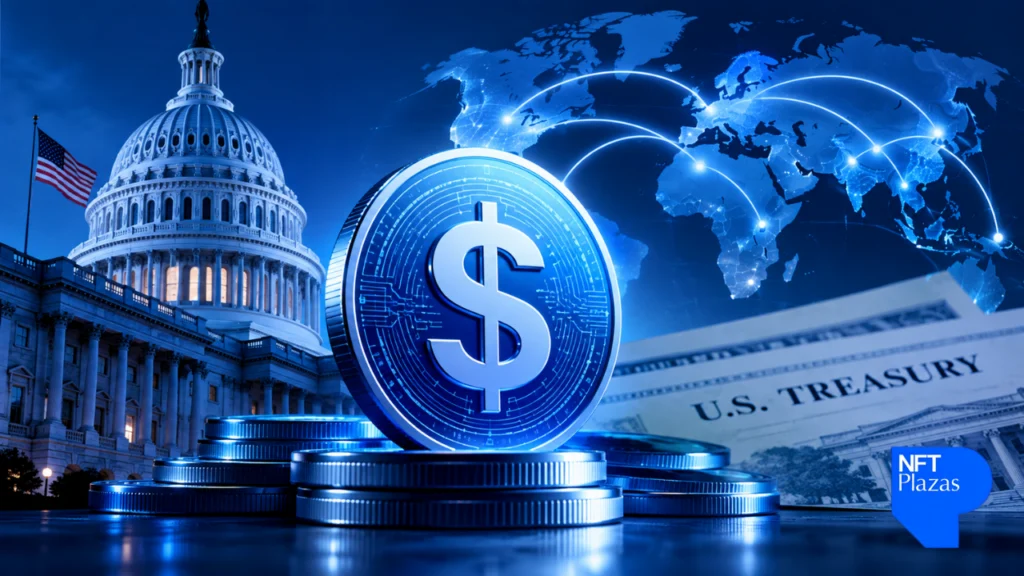
The Trump administration is actively considering a strategic initiative to promote U.S. dollar-backed stablecoins across international markets, a move that could significantly expand the dollar’s global influence through the rapidly evolving digital asset sector. This ambitious plan seeks to leverage the technological advancements of blockchain to reinforce the dollar’s status as the world’s leading reserve currency and concurrently generate additional demand for U.S. Treasury securities.
According to reports from Bloomberg, U.S. officials are deep in discussions about forging partnerships and joint ventures with private sector companies to actively encourage the adoption and deployment of stablecoin projects in foreign jurisdictions. This comprehensive endeavor is expected to involve key federal departments, including the Treasury Department, the State Department, and the U.S. International Development Finance Corporation (DFC), as confirmed by sources familiar with the ongoing deliberations. While the proposal remains under active consideration, its core objectives are clearly defined: to solidify the dollar’s unparalleled position in global finance and to create new channels for investment in U.S. government debt.
The Geopolitical Chessboard: Why Now?
This strategic pivot towards digital assets comes at a critical juncture in global finance, characterized by an accelerating race among major economic powers to define the future of digital money and financial infrastructure. The United States, keenly aware of the growing digital strategies of competitors like China and Europe, views dollar-backed stablecoins not merely as a technological innovation but as a vital instrument in its broader geopolitical and economic toolkit. By proactively shaping the global stablecoin landscape, Washington aims to ensure that the foundational currency of these new digital networks remains the U.S. dollar, thereby maintaining its leverage and economic soft power.
The discussions reflect a proactive stance by the Trump administration to integrate emerging financial technologies into its foreign policy and economic strategy. The underlying belief is that by extending the reach of a regulated, dollar-pegged digital asset, the U.S. can offer a compelling alternative in markets where traditional banking infrastructure is often inefficient, costly, or inaccessible, simultaneously bolstering its economic interests abroad.
Understanding Stablecoins: A Digital Dollar Bridge
Stablecoins are a class of blockchain-based digital assets meticulously designed to maintain a stable value relative to an external reference asset, most commonly the U.S. dollar. Unlike highly volatile cryptocurrencies such as Bitcoin or Ethereum, stablecoins are engineered to function as a reliable medium of exchange and store of value, akin to digital cash, enabling the seamless transfer of dollar-denominated value across various blockchain networks.
The stablecoin market has experienced explosive growth, surging past a combined market capitalization of $150 billion across various platforms, a figure that continues to climb rapidly. This market is overwhelmingly dominated by tokens linked to the U.S. dollar. Tether’s USDT and Circle’s USDC stand as the two largest stablecoins by market capitalization, collectively accounting for the vast majority of the sector’s total value. As of early 2024, USDT alone boasts a market cap well over $100 billion, with USDC frequently exceeding $30 billion.
Their utility extends far beyond mere cryptocurrency trading. Stablecoins are increasingly being adopted for critical financial functions, including cross-border transfers, international payments, and settlement processes. This is particularly prevalent in regions where conventional banking systems are slow, expensive, or subject to complex regulatory hurdles, offering a more efficient and cost-effective alternative.
A crucial aspect that underpins Washington’s interest is the direct structural link between stablecoin growth and demand for U.S. government debt. To maintain their dollar peg and instill user confidence, stablecoin issuers are required to hold reserves equivalent to the value of the tokens they issue. These reserves typically comprise highly liquid assets such as cash, bank deposits, and a significant portion of short-term U.S. Treasury securities. Consequently, as the supply and adoption of dollar-backed stablecoins expand globally, issuers become progressively larger institutional buyers of U.S. dollar assets, including a substantial volume of government debt. This symbiotic relationship presents a unique opportunity for the U.S. Treasury to attract additional, consistent demand for its securities.
Treasury Secretary Scott Bessent has previously articulated his view of stablecoins as a potent instrument for reinforcing the dollar’s already formidable global position. The dollar currently dominates international finance, accounting for nearly 90% of all foreign-exchange transactions, approximately 60% of global foreign exchange reserves, and over half of all international trade invoicing. Stablecoin issuers have already emerged as significant holders of U.S. government debt, with their Treasury holdings now approaching the scale of those held by some major sovereign investors, illustrating their growing influence on the U.S. bond market.
The GENIUS Act: Laying the Regulatory Foundation
The proposed overseas promotional push is significantly bolstered by the passage of the Groundbreaking Equitable New Innovations in USD Stablecoins (GENIUS) Act. Signed into law by President Donald Trump in 2025, this landmark federal stablecoin legislation established a robust regulatory framework specifically for "payment stablecoins." The GENIUS Act mandates stringent reserve requirements for issuers, stipulating that eligible reserve assets must include U.S. dollars and highly liquid, short-term U.S. Treasury securities.
For the U.S. government, this legislative framework is foundational. It provides a clear, consistent regulatory environment for dollar-backed stablecoins, thereby strengthening confidence in their ability to maintain their dollar peg and operate reliably. This regulatory clarity is crucial for fostering broader international adoption, as it mitigates concerns about asset backing, solvency, and operational integrity. By providing this stamp of regulatory approval, the U.S. aims to position its stablecoin ecosystem as a trustworthy and secure option in the global digital finance arena.
Critically, the GENIUS Act offers the U.S. a novel avenue to extend the dollar’s reach beyond the confines of traditional banking channels. If stablecoins achieve widespread adoption for international commerce, remittances, and digital payments, consumers and businesses abroad could gain direct, immediate access to dollar-denominated financial instruments through permissionless blockchain networks. This scenario could lead to a form of "digital dollarization," wherein the U.S. dollar becomes more deeply embedded and seamlessly integrated into everyday transactions outside the United States, circumventing reliance on conventional financial intermediaries.
Mechanisms of Promotion: A Public-Private Partnership Model
The proposed strategy involves a concerted effort from key U.S. government entities, each leveraging its unique capabilities. The Treasury Department, with its mandate over financial markets and international economic policy, would likely set the overarching strategic direction and engage with foreign governments on regulatory harmonization and adoption. The State Department, responsible for U.S. foreign policy, would play a crucial role in diplomatic outreach, advocating for stablecoin adoption as part of broader economic cooperation initiatives and promoting financial inclusion.
The U.S. International Development Finance Corporation (DFC), an independent agency that mobilizes private capital to address critical development challenges, would be particularly instrumental. The DFC, known for its investments in emerging markets across various sectors, could provide financing, risk guarantees, and technical assistance to private companies developing stablecoin infrastructure and use cases in developing nations. This could include supporting projects that build local stablecoin payment rails, foster merchant adoption, or facilitate cross-border remittance corridors.
Partnerships would likely target established stablecoin issuers like Circle (USDC) and Tether (USDT), as well as other fintech innovators and blockchain infrastructure providers. These collaborations could involve:

- Joint Ventures: Government entities and private companies co-investing in projects designed to expand stablecoin utility in specific foreign markets.
- Grant Programs: Funding for research, development, and pilot programs for stablecoin applications in developing economies.
- Technical Assistance: Providing expertise and resources to foreign central banks and financial regulators on how to integrate and regulate dollar-backed stablecoins responsibly.
- Diplomatic Advocacy: Actively promoting the benefits of dollar-backed stablecoins to foreign governments as a tool for economic development, financial stability, and efficiency.
Reinforcing Dollar Hegemony: A Strategic Imperative
The dollar’s preeminent position in global finance is undeniable, but it is not immutable. This initiative is a clear strategic move to future-proof that dominance in an increasingly digital world. Beyond the immediate benefit of driving demand for U.S. Treasuries, a global proliferation of dollar-backed stablecoins offers several profound advantages for the United States:
- Extended Financial Reach: It allows the U.S. to project its financial influence into economies and sectors where traditional banking might be limited or where local currencies are unstable.
- Enhanced Sanctions Efficacy: While stablecoins could theoretically be used to circumvent sanctions, a U.S.-backed and regulated stablecoin ecosystem would provide greater transparency and potential for oversight, potentially enhancing the efficacy of financial sanctions in a digital context.
- Leadership in Financial Innovation: By actively promoting and regulating stablecoins, the U.S. positions itself as a leader in the digital finance revolution, rather than merely reacting to it. This can attract talent, investment, and further innovation within its borders.
- Soft Power Projection: The widespread use of the dollar, even in digital form, reinforces U.S. economic and political soft power globally, embedding American financial standards and influence more deeply into daily transactions worldwide.
Digital Dollarization: Opportunities and Risks for Emerging Economies
While the U.S. initiative presents clear benefits for its own strategic interests, the implications for emerging economies are complex, presenting both opportunities and significant risks.
The International Monetary Fund (IMF) has articulated significant concerns regarding the widespread adoption of dollar-backed stablecoins. The IMF warns that these digital assets could accelerate "currency substitution" in countries already grappling with weak domestic currencies, rampant inflation, or restricted access to foreign exchange. For nations grappling with hyperinflation or chronic currency instability, the availability of a stable digital dollar could trigger rapid and widespread currency substitution, where households and businesses increasingly shift their savings and transactions away from local currencies into stablecoins. This phenomenon can erode the effectiveness of domestic monetary policy, making it harder for central banks to manage inflation, control interest rates, or stimulate economic growth.
Moreover, this pressure could intensify dramatically during periods of financial instability. Stablecoins, by their nature, can be transferred across blockchain networks with relative ease, often bypassing conventional banking channels and capital controls. This could enable large amounts of capital to flow across borders rapidly and anonymously, making it exceedingly difficult for central banks to monitor these flows or to effectively respond to sudden capital flight, potentially exacerbating financial crises.
The Bank for International Settlements (BIS) has echoed these warnings, cautioning that widespread use of dollar-denominated stablecoins could amplify existing financial vulnerabilities in emerging markets and further entrench the dollar’s dominance, potentially at the expense of national sovereignty over monetary policy.
However, stablecoins also offer compelling potential benefits for these economies. They can make cross-border transfers significantly faster and substantially reduce transaction costs, particularly for remittances from migrant workers to their families back home. In many developing nations, traditional financial services are expensive, inefficient, or entirely inaccessible. Stablecoins can provide greater access to dollar liquidity and financial services, fostering financial inclusion for underserved populations. For businesses engaged in international trade, stablecoins could streamline payments and reduce foreign exchange risks, thereby boosting efficiency. The ultimate impact will likely be highly dependent on each country’s specific economic conditions, including its monetary stability, the robustness of its existing financial infrastructure, and its current level of dollarization.
The Global Digital Currency Race: Competing Visions
The U.S. initiative is not occurring in a vacuum; it is part of a larger global competition for digital financial infrastructure. Other major economies are actively developing their own digital payment systems, each with distinct goals and underlying philosophies.
China, for instance, has been a leading proponent of central bank digital currencies (CBDCs) and has extensively participated in Project mBridge. This multi-central bank initiative, involving the BIS Innovation Hub and central banks from Hong Kong, Thailand, and the UAE, aims to develop a common platform for wholesale cross-border payments using CBDCs and distributed-ledger technology. China’s digital yuan (e-CNY) is already undergoing large-scale domestic trials, positioning Beijing to potentially offer an alternative digital currency for international trade and finance.
Meanwhile, the European Central Bank (ECB) is vigorously pursuing its own digital strategy through the digital euro project. This initiative focuses on developing a retail CBDC for the eurozone, aimed at ensuring European strategic autonomy in payments and fostering innovation while maintaining financial stability. Europe is also actively developing infrastructure to connect tokenized financial markets with central bank money, laying the groundwork for a future where digital assets are seamlessly integrated into the broader financial system.
The emerging competition is therefore far more profound than simply which digital assets consumers prefer. It is fundamentally about which national currencies become deeply embedded in the underlying networks through which global money moves, and consequently, which nations exert greater influence over the future architecture of international finance.
Historical Context of Dollar Dominance
The dollar’s journey to global dominance is rooted in post-World War II economic restructuring, solidified by the Bretton Woods agreement in 1944, which pegged major currencies to the dollar, and the dollar itself to gold. Although the gold standard was abandoned in 1971, the dollar’s supremacy endured, largely due to the sheer size and stability of the U.S. economy, its deep and liquid capital markets, and its role as the primary currency for invoicing international trade, particularly in oil ("petrodollar"). This historical context illustrates that maintaining a currency’s global standing requires continuous adaptation and strategic maneuvering in response to evolving economic and technological landscapes. The stablecoin initiative is the latest chapter in this ongoing effort to secure the dollar’s future preeminence.
Looking Ahead: The Stakes of Digital Financial Infrastructure
If Washington proceeds with this ambitious initiative, it could fundamentally redefine the role of stablecoins within the global financial system. They could transition from being primarily instruments within the cryptocurrency market to becoming a significant, regulated component of international finance, with the U.S. dollar firmly at their core.
For the United States, dollar-backed stablecoins offer a potent combination: expanding the digital reach of the dollar into new territories and use cases, while simultaneously creating a robust and consistent new source of demand for U.S. Treasury securities, underpinning the nation’s fiscal health. For emerging markets, the increased access to digital dollars presents a critical trade-off between the undeniable benefits of more efficient international payments and financial inclusion, against the potential risks of exacerbated currency substitution and challenges to domestic monetary sovereignty.
The unfolding scenario represents a high-stakes competition not just for technological supremacy, but for the fundamental architecture of the future global financial system. The Trump administration’s deliberations signal a clear intent to ensure that the U.S. dollar, in its new digital guise, remains the indispensable currency of the world.