admin
admin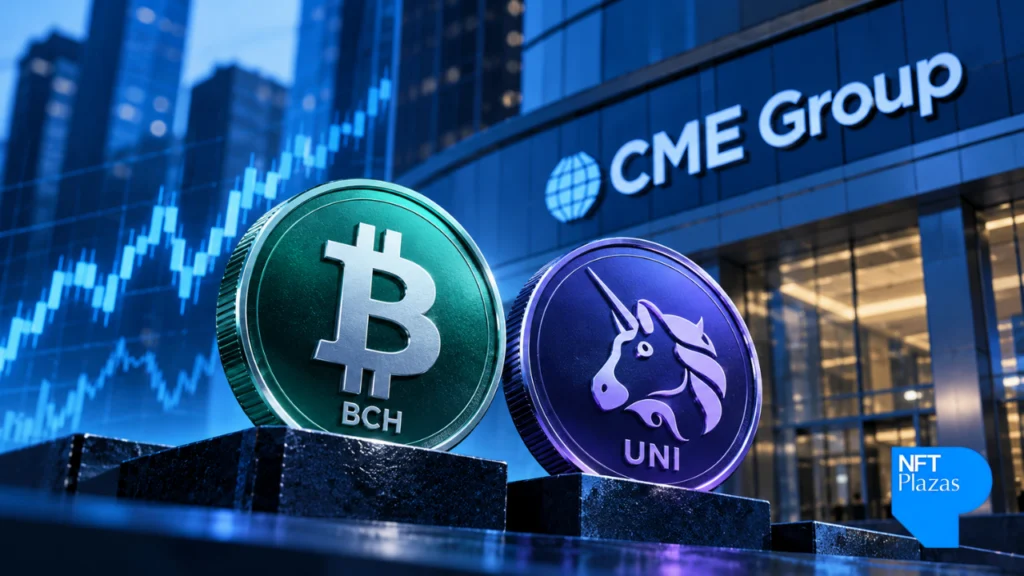
CME Group, the world’s largest derivatives marketplace, announced on September 22 that it plans to launch futures contracts for Bitcoin Cash (BCH) and Uniswap (UNI) on October 19, pending regulatory review. This strategic move marks a significant expansion of CME’s cryptocurrency derivatives suite, offering institutional investors regulated avenues to gain or hedge exposure to these two prominent altcoins. The announcement immediately catalyzed a sharp upward movement in the prices of both BCH and UNI across crypto markets, as traders interpreted the development as a strong signal of growing institutional interest and legitimization within the broader digital asset landscape.
This initiative does not involve Wall Street directly entering the spot markets for Bitcoin Cash or Uniswap. Instead, it provides a crucial bridge for professional investors, including banks, asset managers, and hedge funds, to interact with digital assets within a familiar and regulated framework. This distinction is paramount for institutions that often face stringent compliance requirements and restrictions on engaging with offshore, unregulated crypto exchanges. The introduction of these futures products is poised to deepen liquidity, enhance price discovery, and offer sophisticated risk management tools for a wider array of cryptocurrencies.
CME Group’s Strategic Expansion in the Digital Asset Arena
CME Group has been at the forefront of integrating digital assets into traditional finance since launching its first Bitcoin futures contracts in December 2017, followed by Ether futures in February 2021. The firm’s commitment to the crypto derivatives market has only accelerated, particularly throughout 2026. The first half of the year saw CME’s crypto futures and options business achieve remarkable growth, averaging 279,800 contracts per day, which translated to an approximate daily notional value of $8.3 billion. Furthermore, average open interest stood at 264,600 contracts, representing roughly $15.4 billion.
This robust performance underscores a clear and deliberate strategy by CME to expand its offerings beyond the two largest cryptocurrencies. Earlier in 2026, the exchange successfully launched futures for Cardano (ADA), Chainlink (LINK), Stellar (XLM), Avalanche (AVAX), and Sui (SUI), collectively generating over $1 billion in total notional value year-to-date. These additions paved the way for a more diversified product lineup, reflecting an evolving institutional appetite for a broader spectrum of digital assets. The inclusion of BCH and UNI now further solidifies CME’s single-asset futures suite, which also includes Bitcoin, Ether, XRP, and Solana (SOL).
Giovanni Vicioso, CME Group’s global head of cryptocurrency products, articulated the rationale behind these new offerings, stating that the contracts are a direct response to client demand for institutional-grade tools in liquid altcoin markets. He emphasized that these products are designed to help market participants manage digital-asset price risk while gaining exposure to the underlying networks through a regulated marketplace. This commitment to client-driven innovation within a compliant framework positions CME as a critical gateway for traditional finance to engage with the rapidly evolving crypto ecosystem.
Why Bitcoin Cash and Uniswap? A Deeper Dive into Asset Selection
The selection of Bitcoin Cash and Uniswap for regulated futures contracts highlights two distinct, yet equally significant, segments of the cryptocurrency market.
Bitcoin Cash (BCH): A Legacy Altcoin’s Renewed Relevance
Bitcoin Cash emerged from a contentious hard fork of the Bitcoin network in August 2017. The split was primarily driven by differing philosophies regarding Bitcoin’s scalability, with BCH proponents advocating for larger block sizes to facilitate more transactions and lower fees. While it has faced its share of market volatility and competition, BCH has consistently remained one of the longer-standing large-cap cryptocurrencies, maintaining a significant market presence and a dedicated community. Its inclusion in CME’s derivatives suite signifies a continued institutional acknowledgment of its liquidity and established market infrastructure. For a "legacy" altcoin like BCH, a regulated futures market offers institutional traders a sophisticated new avenue to express views on its price movements without direct reliance on potentially less regulated spot exchanges. This move could inject renewed interest and capital into an asset that has been part of the crypto landscape for several years.
Uniswap (UNI): The DeFi Flagship Enters Regulated Waters
Uniswap, on the other hand, represents the vanguard of the decentralized finance (DeFi) movement. As the governance token for Uniswap, one of crypto’s best-known and most dominant decentralized exchanges (DEXs), UNI is central to the functionality and growth of the DeFi ecosystem. Uniswap has revolutionized how digital assets are traded, facilitating billions of dollars in volume through automated market maker (AMM) protocols. The decision to list UNI futures is a strong indicator of growing institutional recognition of DeFi’s importance and its potential to reshape financial services. It provides a regulated pathway for traditional investors to gain exposure to the burgeoning DeFi sector, a segment of the crypto market that has previously been largely inaccessible to them due to regulatory and operational hurdles. This move reinforces UNI’s position as a critical asset within the decentralized finance sector and could pave the way for other significant DeFi tokens to follow suit.
The contrasting histories and functionalities of BCH and UNI underscore CME’s strategy to offer a diverse range of exposure options. BCH appeals to those interested in established, transaction-focused cryptocurrencies, while UNI offers a window into the innovative and rapidly expanding world of decentralized applications and protocols.
Understanding the Mechanics: How CME Futures Work for BCH and UNI
A futures contract is a standardized legal agreement to buy or sell an asset at a predetermined price at a specified time in the future. For institutional investors, this mechanism is invaluable for several reasons: it allows them to speculate on an asset’s future price, hedge existing positions to mitigate risk, and gain exposure without the complexities and custodial challenges of directly owning the underlying cryptocurrency.
The new BCH and UNI futures products will be available in two distinct sizes to cater to varying investment strategies and capital allocations:
- Bitcoin Cash (BCH) Futures:
- Standard Contract: Represents 250 BCH.
- Micro Contract: Covers 25 BCH.
- Uniswap (UNI) Futures:
- Standard Contract: Represents 10,000 UNI.
- Micro Contract: Covers 1,000 UNI.
At recent market prices, a standard contract for either asset would represent tens of thousands of dollars in notional exposure, making them suitable for larger institutional plays. The introduction of Micro contracts, however, is particularly significant. These smaller contract sizes are designed to provide greater flexibility and capital efficiency, allowing traders to take more granular positions or manage risk with finer precision within CME’s 24/7 cryptocurrency marketplace. This flexibility is crucial for portfolio managers looking to fine-tune their exposure to specific digital assets. The contracts will also be eligible for block trading, a common practice in institutional markets that allows large, privately negotiated transactions, and may offer margin efficiencies when combined with other cryptocurrency positions, further enhancing their utility for sophisticated multi-asset portfolios.

Immediate Market Reaction and the Psychology of Legitimacy
The immediate and sharp price reaction observed in both BCH and UNI following the CME announcement was less about the commencement of actual futures trading and more about the profound symbolic implications of the listing itself. For many market participants, particularly retail investors, the news served as a powerful validation. The inclusion on a globally recognized, regulated exchange like CME signifies a stamp of institutional approval and a leap towards mainstream acceptance.
This perception of legitimacy can drive significant speculative interest. Traders often interpret such developments as leading indicators of increased institutional capital flows, improved market infrastructure, and enhanced liquidity down the line. The immediate price surge reflects this anticipatory buying, driven by the belief that a regulated futures market will eventually attract a new class of investors who were previously unable or unwilling to engage with these altcoins in the unregulated spot market. This psychological effect, often termed "the listing pump," is a common phenomenon in cryptocurrency markets, where news of exchange listings or institutional product launches frequently precedes actual trading activity.
The Nuance of Derivatives: Futures Bring Both Buyers and Sellers
While the initial market reaction was overwhelmingly positive, it is crucial to understand that a futures listing does not automatically translate into sustained buying pressure for the underlying token. This is where the narrative becomes more complex and requires a nuanced perspective. Futures are inherently two-sided instruments; they facilitate both long positions (betting on a price increase) and short positions (betting on a price decrease).
Historically, the launch of regulated Bitcoin futures on CME in December 2017 provides a salient example. Bitcoin reached its all-time high for that cycle around the same period, only to experience a significant reversal shortly thereafter. Research from the Federal Reserve Bank of San Francisco later suggested that the timing of the futures launch and Bitcoin’s subsequent decline was consistent with futures making it easier for pessimistic traders to bet against the market. While this does not definitively prove that futures caused the 2017 crash – many other market forces were undoubtedly at play, and the historical relationship remains a subject of debate – the broader lesson is clear: regulated futures increase access to both sides of the market. They enable more sophisticated and efficient price discovery by allowing a wider range of market participants to express their views, whether bullish or bearish.
More recently, the experience with Cardano (ADA) futures on CME serves as another reminder. Despite CME adding around-the-clock Cardano futures to its product lineup, ADA traded at a five-year low in June 2026. This illustrates that while institutional access is a significant milestone, it does not guarantee higher prices. The value of futures lies in providing robust tools for risk management and speculative opportunities, not necessarily in acting as an automatic catalyst for price appreciation. For BCH and UNI, the true impact will depend on sustained institutional interest, market sentiment, and broader macroeconomic factors, not just the mere availability of derivatives.
Looking Beyond October 19: Key Metrics for Sustained Success
As October 19 approaches, the initial price reaction will undoubtedly attract considerable attention. However, the more meaningful data points for assessing the long-term success and impact of these new futures contracts will emerge in the weeks and months following their launch.
The paramount metric to watch will be open interest. This figure represents the total number of outstanding futures contracts that have not yet been closed or delivered. A sustained and growing level of open interest would indicate genuine and enduring engagement from professional investors, suggesting that they are actively utilizing these new products for hedging, speculation, and portfolio management, rather than merely reacting to the initial announcement. High open interest signals deep conviction and continuous participation.
Equally important will be trading volume. While initial volume might be high due to speculative fervor, sustained daily volume after the initial excitement fades will be critical. Consistent trading volume indicates active market participation and healthy liquidity, which are essential for efficient price discovery and the seamless execution of large institutional trades. If actual participation remains limited despite an initial rally, the market impact could quickly diminish.
Furthermore, observers will be keen to see whether the new contracts genuinely deepen liquidity across the broader crypto market for BCH and UNI. CME has stated that these products will be eligible for block trading and may offer margin efficiencies alongside other cryptocurrency positions. If these features are effectively utilized, they could make the futures more attractive and useful to sophisticated traders managing multi-asset portfolios, potentially leading to a more robust and interconnected market for these altcoins.
Broader Implications for the Crypto Ecosystem
The launch of Bitcoin Cash and Uniswap futures on CME carries profound implications for the wider cryptocurrency ecosystem:
- Enhanced Institutional Adoption: This move further legitimizes altcoins as investable assets for traditional financial institutions. It lowers barriers to entry by providing a regulated, familiar environment, which is crucial for compliance-conscious entities.
- Market Maturity and Risk Management: The availability of regulated derivatives provides sophisticated tools for risk management, allowing institutions to hedge against price volatility. This can contribute to a more mature and stable market environment by facilitating better price discovery and liquidity.
- Regulatory Evolution: CME’s continuous expansion of its crypto derivatives suite signals a growing comfort among regulators with these financial products, particularly when offered within established, regulated frameworks. This could indirectly pave the way for further regulatory clarity and product innovation in the digital asset space.
- Diversification of Exposure: By adding BCH and UNI, CME is signaling that institutional interest extends well beyond just Bitcoin and Ethereum. This diversification acknowledges the varied innovation within the crypto market, from legacy altcoins to cutting-edge DeFi protocols. It suggests that institutions are increasingly looking to gain exposure to different narratives and use cases within the digital asset landscape.
- Competitive Landscape: This move also places pressure on other traditional financial institutions and exchanges to innovate and offer similar regulated crypto products, potentially accelerating the integration of digital assets into mainstream finance.
In conclusion, the CME Group’s decision to launch Bitcoin Cash and Uniswap futures is best understood as a significant market-access milestone rather than a guaranteed price catalyst. It opens a vital new institutional trading channel for these two distinct altcoins, offering regulated exposure and sophisticated risk management tools. However, the true measure of success will not be the immediate price reaction on October 19, but rather the sustained open interest, trading volume, and genuine institutional engagement that follows. The important question will be whether institutions continue to allocate meaningful capital and risk-management activity behind BCH and UNI once the initial excitement inevitably subsides, signaling a lasting integration into the fabric of traditional finance.