admin
admin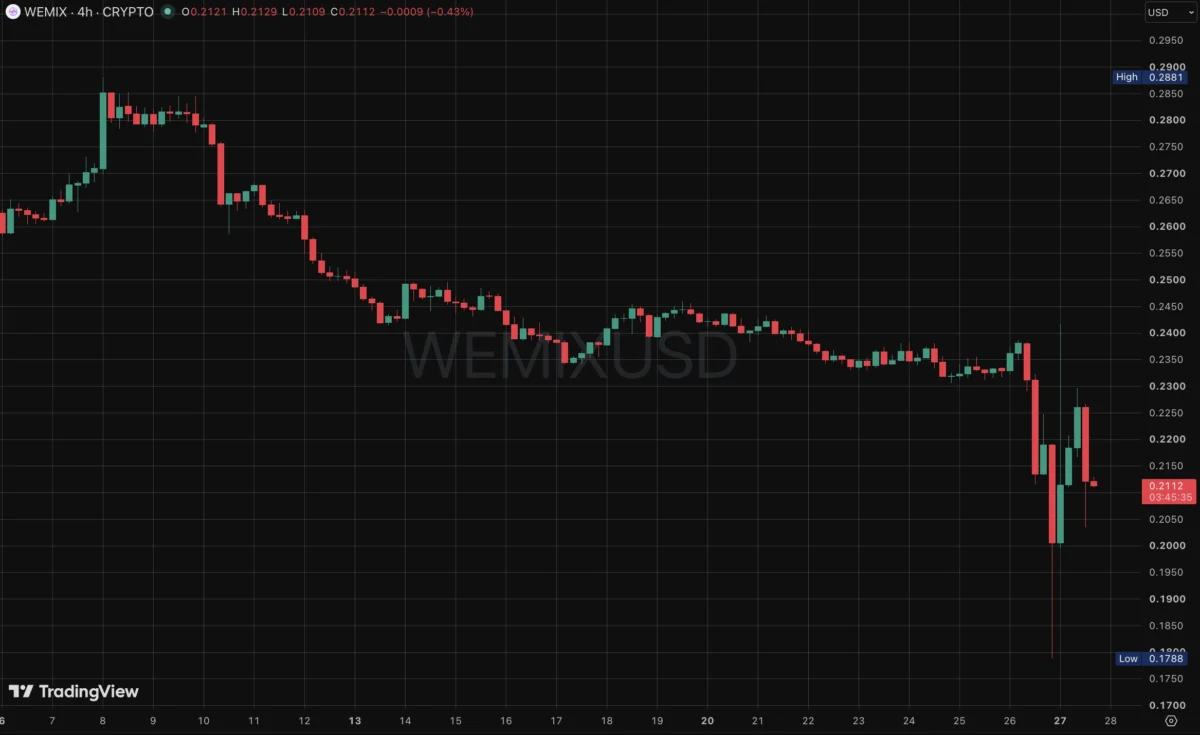
WEMIX, a prominent blockchain gaming platform, has initiated a comprehensive emergency response, including the suspension of all bridges connected to its WEMIX3.0 ecosystem, after detecting an unauthorized issuance of approximately 5,225,525 WEMIX$ tokens. The incident, publicly announced on July 27, 2026, stemmed from a compromise of contract ownership rights related to WEMIX$, leading to the illicit minting of tokens and the subsequent siphoning of assets out of the ecosystem. The abnormal transaction was first recorded at 18:17 UTC+9 on July 26, 2026, transforming the newly minted WEMIX$ into 30,736 WEMIX and 724,198.27 USDC.e before these funds were moved off-chain via various cross-chain routes.
Understanding WEMIX and Its Ecosystem
WEMIX operates as a multifaceted blockchain platform primarily focused on gaming, non-fungible tokens (NFTs), and decentralized finance (DeFi) services. At its core is WEMIX3.0, a high-performance EVM-compatible blockchain designed to support a scalable and robust ecosystem. The native utility token, WEMIX, facilitates transactions, governance, and staking within this environment. WEMIX$, on the other hand, functions as a stablecoin within the WEMIX ecosystem, intended to maintain a stable value, crucial for in-game economies and DeFi applications. The platform has garnered significant attention for its WEMIX PLAY gaming platform, PNIX DEX for decentralized exchanges, and its NFT marketplace, all of which contribute to a vibrant and interconnected digital economy. This incident marks a critical security challenge for a platform striving to bridge traditional gaming with the burgeoning world of blockchain.
The Anatomy of the Exploit: Unauthorized Minting and Asset Diversion
The core of the security breach did not involve a direct attack on the integrity of the cross-chain bridges themselves, but rather a compromise at a foundational level within the WEMIX$ smart contract. WEMIX reported that the "ownership rights" of a contract associated with WEMIX$ were compromised. In the context of smart contracts, ownership rights typically grant specific administrative privileges, such as the ability to mint new tokens, upgrade the contract, or modify critical parameters. The unauthorized acquisition of these rights allowed the attacker to bypass standard protocols and illicitly mint approximately 5.23 million WEMIX$.
Once the WEMIX$ tokens were minted, the attacker swiftly moved to convert these newly created, unauthorized assets into more liquid and transferable cryptocurrencies. Preliminary data indicates that the 5.23 million WEMIX$ were converted into a combination of 30,736 WEMIX tokens and 724,198.27 USDC.e. The USDC.e portion, representing a significant sum, was then channeled out of the WEMIX3.0 ecosystem using established cross-chain mechanisms. This rapid conversion and subsequent cross-chain transfer are characteristic of sophisticated exploits, where attackers aim to quickly obfuscate the trail and diversify assets across multiple networks to hinder recovery efforts. WEMIX emphasized that these figures represent initial findings and are subject to revision as their in-depth forensic investigation progresses.
A Chronology of the Incident
The timeline of the incident, as disclosed by WEMIX, highlights the swift execution of the exploit and the platform’s rapid emergency response:
- July 26, 2026, 18:17 UTC+9 (Korean Time): The abnormal transaction is first recorded. At this precise moment, the compromised ownership rights of the WEMIX$ contract were leveraged to initiate the unauthorized minting of approximately 5.23 million WEMIX$.
- Immediately Following Minting: The illicitly generated WEMIX$ tokens are converted into 30,736 WEMIX and 724,198.27 USDC.e within the WEMIX3.0 ecosystem.
- Shortly After Conversion: The 724,198.27 USDC.e begins its journey out of the WEMIX3.0 network via cross-chain routes, utilizing bridges like Chainlink CCIP and PLAY Bridge. These funds are transferred to external networks such as Ethereum and BNB Smart Chain.
- July 26, 2026 (Ongoing): WEMIX detects the abnormal activity and initiates immediate emergency measures. This includes suspending all connected bridges, freezing affected liquidity pools, and halting various ecosystem services.
- July 26, 2026 (Twitter Announcement): WEMIX (@WemixNetwork) publishes an update on X (formerly Twitter), confirming the security issue, the implementation of emergency measures, and the ongoing investigation and asset tracking.
- July 27, 2026: WEMIX issues a detailed official announcement on its website, providing specifics about the incident, the compromised contract, the amount of unauthorized issuance, and the response measures taken. This announcement also includes preliminary details of asset movement.
- Ongoing Investigation: WEMIX continues to track on-chain fund flows, identify attacker-related addresses, and coordinate with external entities for asset recovery.
Cross-Chain Fund Movement and Asset Tracking
Following the initial conversion, the stolen USDC.e embarked on a complex journey across multiple blockchain networks. WEMIX confirmed that the attacker utilized the ecosystem’s integrated cross-chain routes, specifically mentioning Chainlink CCIP and PLAY Bridge, to move the USDC.e portion to Ethereum and BNB Smart Chain. This strategic use of established bridges is common among attackers seeking to quickly fragment and distance stolen funds from their origin.

Once on these external networks, the assets were further swapped into other cryptocurrencies, primarily ETH and USDT, and then dispersed across a multitude of addresses. This technique, known as "peeling," aims to complicate tracking and make it harder for investigators to trace the full extent of the funds. Crucially, WEMIX has reported that a portion of these assets has been deposited into centralized exchanges (CEXs). This development is significant as CEXs maintain Know Your Customer (KYC) policies and have the capability to freeze accounts and funds upon request from law enforcement or project teams. WEMIX has proactively engaged with these exchanges, as well as stablecoin issuers, to request freezing related assets. While some exchanges have reportedly executed freezes, WEMIX has not yet disclosed the specific exchanges involved, the exact amount of assets frozen, or a comprehensive list of attacker-controlled wallets. The success of these freezing efforts hinges on the speed and degree of cooperation between WEMIX, the exchanges, and the stablecoin issuers.
WEMIX’s Comprehensive Response Measures
In the wake of detecting the exploit, WEMIX swiftly implemented a multi-pronged emergency response designed to mitigate further damage and protect user assets. The immediate actions included:
- Suspension of Bridges: All cross-chain bridges connected to WEMIX3.0, including Chainlink CCIP and PLAY Bridge, were immediately suspended. This critical measure aimed to cut off any further outflow of assets from the ecosystem and prevent the attacker from moving additional funds.
- Freezing of Liquidity Pools: Liquidity pools related to WEMIX$ were placed in a suspended state. Trading in these affected pools was halted, and liquidity provided by the WEMIX Foundation was strategically withdrawn. This action was crucial to reduce the risk of further loss, prevent market manipulation of WEMIX$, and limit the attacker’s ability to cash out additional illicitly obtained tokens.
- Temporary Suspension of Ecosystem Services: To facilitate a thorough security review and prevent any cascading effects, WEMIX temporarily suspended several key services within its ecosystem. This included the WEMIX$ Module, which governs the stablecoin’s operations, and PNIX DEX, the platform’s decentralized exchange. Additionally, certain in-game blockchain functions, NFT trading, and bidding activities on the NFT marketplace were restricted. These suspensions, while disruptive, are a standard protocol to ensure the integrity of the platform during a security incident.
- Coordination with External Entities: Beyond internal measures, WEMIX actively engaged with external stakeholders. This involved contacting centralized exchanges to request the freezing of addresses identified as belonging to the attacker. Furthermore, stablecoin issuers were notified, enabling them to potentially blacklist or freeze the compromised USDC.e tokens on their respective networks. WEMIX confirmed that some exchanges have indeed executed freezes, underscoring the importance of industry collaboration in asset recovery.
Broader Implications for WEMIX and the Ecosystem
The security incident carries significant implications for WEMIX, its users, and its position within the broader blockchain space. As a blockchain ecosystem deeply integrated with gaming, NFTs, and on-chain financial services, any compromise of core contracts can have far-reaching effects.
- Financial Impact: While the immediate monetary loss is quantifiable (approximately $724,198.27 in USDC.e and 30,736 WEMIX at the time of conversion), the incident can trigger a decline in the value of the native WEMIX token. On July 27, the WEMIX token was trading between $0.2115-$0.2116, with a 24-hour range from $0.1829 to $0.2387. Its market capitalization stood at approximately $105.4 million, with a Fully Diluted Valuation (FDV) around $118.2 million and a 24-hour trading volume of $2.55 million. Such an exploit can lead to investor uncertainty and a potential downturn in price, even if temporary. The integrity of WEMIX$, as a stablecoin, is also directly challenged, which could impact its utility and trust among users.
- Reputational Damage and User Trust: Security breaches inevitably erode user trust. For a platform like WEMIX, which relies heavily on user participation in gaming, NFT trading, and DeFi, maintaining a reputation for security and reliability is paramount. The suspension of services, while necessary, can inconvenience users and raise concerns about the safety of their assets. Rebuilding this trust will require transparent communication, successful recovery efforts, and demonstrable enhancements to security infrastructure.
- Operational Disruption: The temporary suspension of bridges, liquidity pools, and various WEMIX PLAY functions, including NFT trading and in-game blockchain interactions, significantly disrupts the normal operation of the ecosystem. This can affect asset withdrawals, token swaps, and the overall user experience, potentially leading to a decrease in platform activity. The timeline for reopening these services will depend entirely on the thoroughness and success of the security review.
- Precedent and Industry Scrutiny: This incident highlights the persistent vulnerabilities associated with smart contract ownership and administrative privileges in decentralized systems. When core contract ownership rights are compromised, the ability of an attacker to mint unauthorized tokens and manipulate ecosystem liquidity can cause damage that spreads much faster and more extensively than a typical transactional exploit. The event will likely draw increased scrutiny from industry analysts, regulators, and other blockchain projects regarding the security practices surrounding critical contract management.
The Wider Context of Bridge Security and Contract Ownership
The WEMIX incident, while primarily a smart contract compromise, underscores the broader challenges in the multi-chain ecosystem, particularly concerning the interaction between core contracts and cross-chain infrastructure. Bridge exploits have been a recurring and costly issue in the blockchain space, with billions of dollars lost to vulnerabilities in various cross-chain protocols. While WEMIX stated this was not a direct bridge attack, the bridges were instrumental in moving the stolen assets, highlighting their critical role as potential exit points in any ecosystem compromise.
The issue of "ownership rights" in smart contracts is a fundamental aspect of decentralized security. Projects often use multi-signature wallets or time-locked contracts for critical administrative functions to prevent single points of failure. The specific mechanism by which the WEMIX$ contract’s ownership rights were compromised remains a critical unanswered question. It could involve a compromised private key, a sophisticated social engineering attack, a vulnerability in a multi-sig setup, or a flaw in the contract’s design allowing unauthorized privilege escalation. The lack of clarity on this root cause prevents a full understanding of the attack vector and the implementation of specific preventative measures.
Uncertainties and the Road Ahead
As WEMIX navigates the aftermath of this exploit, several critical questions remain unanswered, shaping the path forward for the platform:
- Technical Root Cause: WEMIX has yet to publish a full, detailed technical root cause analysis. While the compromise of WEMIX$ contract ownership rights is confirmed, the precise method of this compromise – whether through private key theft, a smart contract vulnerability, or an internal operational lapse – has not been disclosed. A comprehensive post-mortem report will be crucial for transparency and for the wider blockchain community to learn from the incident.
- Asset Recovery Status: While WEMIX has reported that some exchanges have frozen related addresses, the exact amount of assets recovered or frozen remains undisclosed. The names of the cooperating exchanges and a comprehensive list of attacker-controlled wallets are also pending release. The percentage of stolen funds that are definitively unrecoverable is a key metric that will impact user confidence and potential compensation plans.
- Timeline for Service Restoration: The timing for the reopening of bridges, liquidity pools, and suspended services like PNIX DEX, the WEMIX$ Module, and the NFT marketplace has not been determined. Users are left in limbo regarding when normal operations will resume, which can impact their ability to access or trade their assets within the ecosystem. The restoration will likely depend on the completion of the security review, implementation of additional safeguards, and a thorough audit.
- Long-Term Security Enhancements: While WEMIX has taken immediate steps, the incident necessitates a deeper review of its security architecture, especially regarding critical contract ownership and administrative privileges. The platform will need to communicate clearly about new security measures, such as enhanced multi-signature requirements, stricter access controls, or independent security audits, to reassure its community.
The WEMIX security incident serves as a stark reminder of the ongoing security challenges in the blockchain space. Despite continuous advancements in cryptographic security, the human element, smart contract complexities, and the intricate web of cross-chain interactions continue to present avenues for exploitation. For WEMIX, the immediate focus is on asset recovery and restoring service integrity, but the long-term imperative will be to rebuild trust and fortify its defenses against future threats, ensuring the resilience and sustained growth of its vibrant blockchain ecosystem.