admin
admin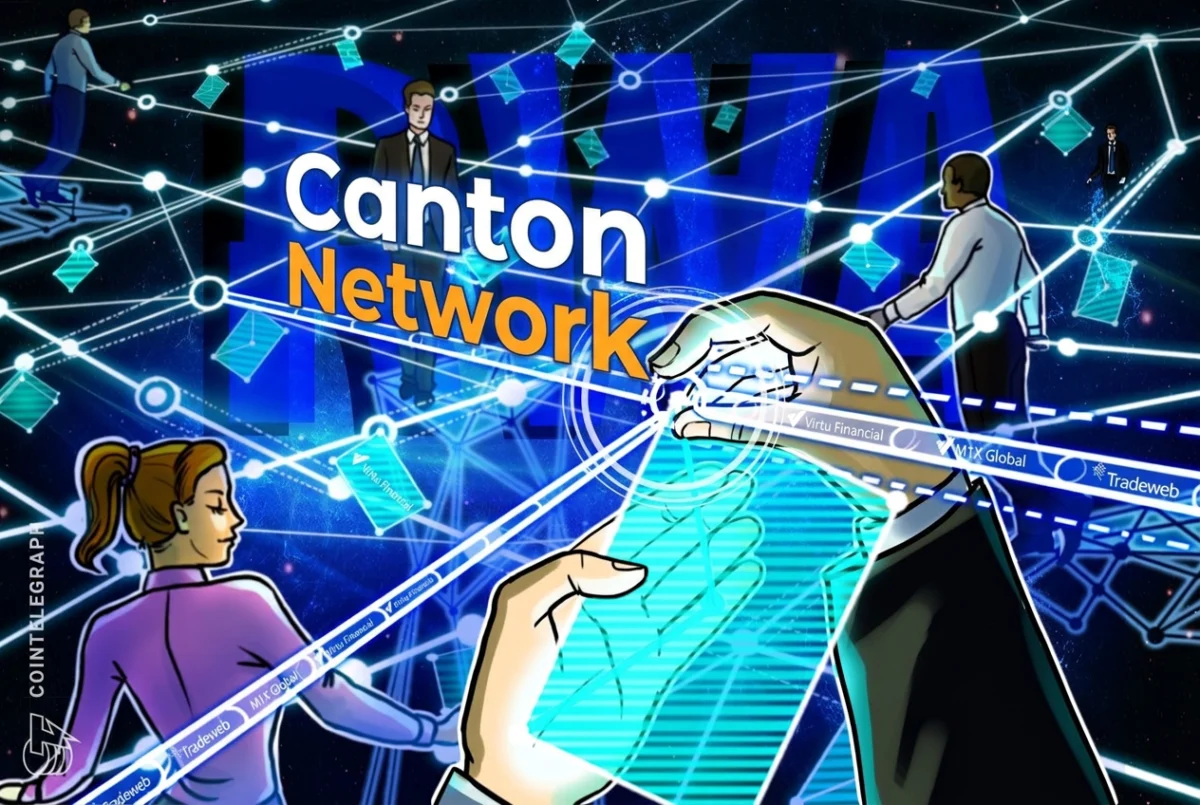
In a significant advancement for the convergence of traditional finance and blockchain technology, Virtu Financial, M1X Global, and Tradeweb have successfully completed an onchain repurchase agreement (repo) transaction. This pioneering deal utilized a sovereign digital bond as collateral, with the entirety of the transaction lifecycle, including settlement, executed on the Canton Network. The groundbreaking nature of this event lies in its unique combination of natively issued sovereign collateral with fully onchain atomic settlement, marking a crucial milestone in the institutional adoption of digital assets.
The collateral central to this transaction was USDM1, a US dollar-denominated sovereign bond. Uniquely structured, USDM1 is issued onchain by the Republic of the Marshall Islands and is meticulously backed 1:1 by short-term US Treasurys, ensuring a robust and stable underlying asset. Furthermore, the bond is designed to pay a coupon even while actively being used as collateral, a feature that enhances its utility in financing transactions. Legally, USDM1 is structured under New York law as a fully collateralized sovereign obligation, providing a familiar and trusted framework for institutional participants.
Representatives from both Virtu Financial and M1X Global, alongside Tradeweb, underscored the unprecedented nature of this repo, highlighting it as the first to seamlessly integrate natively issued sovereign collateral with a fully onchain, atomic settlement mechanism. The transaction, executed between regulated counterparties on Tradeweb’s sophisticated electronic trading platform, demonstrated remarkable efficiency, with the full repo and subsequent repurchase cycle concluded in an impressive timeframe of under 10 minutes. This speed stands in stark contrast to traditional repo settlements, which can often take hours or even days, involving multiple intermediaries and manual processes.
This development moves tokenized sovereign debt beyond mere issuance or trading, elevating it to a functional role as collateral in an institutional financing transaction. While acknowledged as an early-stage example, the successful execution of this transaction opens new avenues for liquidity management and collateral optimization within the vast institutional repo markets. The USDM1 bond itself is made accessible through the electronic trading platform Tradeweb, with its institutional custody needs securely met by leading digital asset custodians including Anchorage Digital, BitGo, and tZERO, ensuring the highest standards of security and compliance for participants.
Understanding the Repo Market and its Digital Transformation
To fully appreciate the significance of this transaction, it is essential to understand the mechanics and scale of the global repurchase agreement market. A repo is a form of short-term borrowing for dealers in government securities. The dealer sells government securities to investors, usually on an overnight basis, and buys them back the next day at a slightly higher price. For the party selling the security (and agreeing to repurchase it), it’s a collateralized loan; for the party buying the security (and agreeing to sell it back), it’s a collateralized lending. The repo market is a critical component of the global financial system, facilitating liquidity and money market operations, with daily volumes often reaching into the trillions of dollars.
Historically, repo transactions have been characterized by manual processes, significant counterparty risk, and multi-day settlement cycles. These inefficiencies have long prompted calls for modernization. The advent of blockchain technology and the concept of tokenized assets offer a compelling solution. Tokenized sovereign debt, such as USDM1, transforms traditional government bonds into digital tokens on a distributed ledger. This tokenization brings several benefits, including the potential for fractional ownership, enhanced transparency, programmability through smart contracts, and most critically, significantly faster and more efficient settlement.
The specific innovation here is the onchain nature of the entire transaction – from the digital bond collateral to the atomic settlement on the Canton Network. Atomic settlement means that the delivery of the asset and the payment for it happen simultaneously, eliminating the "delivery versus payment" risk that is inherent in traditional systems where these two actions might be separated in time. This instantaneous exchange drastically reduces counterparty risk and operational complexities, paving the way for a more resilient and efficient financial market infrastructure.
The Marshall Islands’ Visionary Step with USDM1
The Republic of the Marshall Islands (RMI) has emerged as a trailblazer in digital sovereignty with its issuance of USDM1. This initiative reflects a forward-thinking approach to national finance, leveraging blockchain to create a new class of digital asset that blends the security of sovereign debt with the efficiencies of distributed ledger technology. By backing USDM1 1:1 with short-term US Treasurys, the RMI ensures its stability and attractiveness to institutional investors, mitigating concerns often associated with nascent digital assets. The choice to structure it under New York law further enhances its appeal by providing a recognized and robust legal framework.
This move by the Marshall Islands is not merely a technical experiment; it represents a strategic effort to diversify economic opportunities and establish a leadership position in the burgeoning digital economy. For a small island nation, embracing such innovation can create new avenues for capital formation and participation in global financial markets. The ability for USDM1 to pay a coupon while being used as collateral is a key feature, maximizing its utility for institutions seeking to optimize their balance sheets and generate yield from otherwise dormant assets.
Canton Network: A Hub for Institutional Digital Finance
The Canton Network serves as the foundational infrastructure for this landmark transaction. Designed explicitly for institutional finance, Canton distinguishes itself through features critical for regulated environments: privacy and permissioning. Unlike public, permissionless blockchains, Canton ensures that only authorized participants can access specific transaction data, addressing stringent regulatory and confidentiality requirements. This design ethos is paramount for financial institutions operating under strict compliance mandates.
Canton is not merely a ledger; it is a network built to facilitate complex, multi-party financial agreements using Digital Asset’s powerful smart contract language, DAML. This enables the automation and enforcement of contractual terms directly on the blockchain, reducing errors and increasing efficiency. The network’s architecture is tailored to handle the high throughput and security demands of global financial markets, making it an ideal platform for sophisticated applications like onchain repo.
The recent Virtu Financial, M1X Global, and Tradeweb transaction is the latest in a series of significant institutional activities converging on the Canton Network, underscoring its growing prominence as a critical piece of the emerging digital financial infrastructure.
A Flurry of Institutional Activity on Canton Network: A Timeline
The onchain repo transaction follows a period of accelerated development and adoption for the Canton Network, highlighting its increasing role in connecting traditional finance with distributed ledger technology.
-
July Transaction: Tokenized US Treasury Transfer: Just prior to this latest development, Tradeweb facilitated another significant real-time transfer on Canton. This involved a tokenized US Treasury, moving from Franklin Templeton to Virtu Financial, with the transaction settling against USDCx (a tokenized representation of the US dollar). This earlier event demonstrated Canton’s capability to handle core institutional assets and settlement mechanisms, setting the stage for more complex transactions. It provided a proof-of-concept for the efficiency gains achievable through onchain settlement of traditional securities.
-
August Expansion: Cross-Chain Interoperability: Network activity further intensified in August with FalconX and Interstice launching a cross-chain swap engine. This innovative engine connects Canton with major public blockchains like Ethereum and Solana, as well as the emerging Robinhood Chain. This development is crucial for fostering interoperability between permissioned institutional networks and the broader digital asset ecosystem, allowing for the seamless transfer and exchange of value across different blockchain environments. Such bridges are vital for preventing fragmentation and maximizing liquidity in the digital asset space.
-
August Stablecoin Launch: World Liberty Financial’s USD1: Also in August, World Liberty Financial unveiled its USD1 stablecoin, launched natively on the Canton Network. The introduction of a new stablecoin directly on Canton signifies the network’s growing ecosystem and its appeal for issuing regulated, high-integrity digital currencies. Stablecoins are often seen as the "lubricant" for digital financial markets, providing a stable medium of exchange for onchain transactions, and USD1’s presence on Canton further enhances its utility for institutional participants.
-
August Future Pilot: Blockchain-Based Benefits Distribution: Further demonstrating Canton’s versatile application beyond capital markets, Digital Asset and the American Idea Foundation – founded by former US House Speaker Paul Ryan – announced plans for a 2027 pilot program. This ambitious initiative aims to utilize Canton to distribute state-administered benefits across three US states. This project highlights the potential of DLT to revolutionize public sector operations, improving efficiency, transparency, and traceability in the distribution of critical social services.
This chronology illustrates a concerted effort to build out a robust, interconnected, and highly functional ecosystem on the Canton Network, attracting a diverse range of institutional players and use cases.
Statements and Industry Reactions
While specific direct quotes are not available, the nature of this transaction and the parties involved allow for informed inferences regarding their perspectives:
A spokesperson for Virtu Financial would likely emphasize the firm’s commitment to leveraging cutting-edge technology to enhance market efficiency and reduce operational risk. "This onchain repo transaction represents a tangible step forward in integrating distributed ledger technology into core financial operations," the spokesperson might state. "By utilizing sovereign digital collateral and achieving atomic settlement, we are demonstrating how innovation can unlock new efficiencies, improve liquidity management, and strengthen market resilience for our clients and the broader financial ecosystem."
M1X Global, as a key facilitator of digital asset solutions, would undoubtedly highlight the transformative potential of tokenized sovereign debt. "The successful execution of this repo with USDM1 underscores the immense value proposition of sovereign digital bonds," a representative from M1X Global could remark. "We believe this transaction serves as a powerful proof point for how national entities can leverage blockchain to modernize their financial instruments, offer greater utility, and attract a broader base of institutional capital, paving the way for a more globally interconnected and efficient financial landscape."
Tradeweb, a leading operator of electronic trading venues, would likely focus on its role in providing the platform and infrastructure for such innovations. "Tradeweb is at the forefront of enabling the digital transformation of financial markets," a senior executive might comment. "Our platform facilitated this landmark onchain repo, demonstrating our capability to seamlessly integrate with cutting-edge DLT networks like Canton. This underscores our commitment to offering our clients access to innovative trading and settlement solutions that deliver superior speed, transparency, and risk management across diverse asset classes."
From the perspective of the Republic of the Marshall Islands, this transaction would be seen as a validation of their pioneering efforts. An official from the RMI might state, "The successful use of USDM1 as collateral in an institutional repo transaction is a proud moment for the Republic of the Marshall Islands. It reaffirms our vision to embrace digital innovation as a cornerstone of our economic development strategy, demonstrating the viability and robustness of our sovereign digital bond. We are confident that USDM1 will continue to serve as a model for other nations seeking to leverage blockchain for enhanced financial inclusion and global market participation."
The institutional custodians, Anchorage Digital, BitGo, and tZERO, would likely emphasize the critical role of secure, regulated infrastructure. A joint statement could highlight, "Providing institutional-grade custody for USDM1 ensures the highest standards of security, compliance, and operational integrity for this groundbreaking asset. Our participation underscores the imperative of building trusted, robust infrastructure to support the increasing adoption of digital assets within regulated financial markets, giving institutions the confidence to engage with these innovative instruments."
Digital Asset, as the builder of the Canton Network and DAML, would express optimism about the network’s impact. A spokesperson might convey, "The continued momentum on the Canton Network, culminating in this landmark onchain repo, validates our vision for a privacy-enabled, permissioned DLT ecosystem tailored for institutional finance. This transaction showcases the power of DAML-driven smart contracts to automate complex financial workflows, reduce friction, and unlock new opportunities for efficiency and risk reduction across capital markets globally."
Broader Impact and Implications
The successful onchain repo transaction carries profound implications for the future of financial markets, collateral management, and the broader adoption of blockchain technology in institutional finance.
-
Transforming Collateral Management: This transaction demonstrates a tangible pathway to revolutionize how collateral is managed. By enabling a sovereign digital bond to be used as collateral with atomic settlement, it creates the potential for greater liquidity unlocking. Assets that might otherwise sit idle can be more efficiently deployed, reducing capital costs and improving balance sheet optimization for financial institutions. The programmability of digital collateral also opens doors for automated collateral upgrades, substitutions, and margin calls, vastly increasing efficiency.
-
Enhancing Market Efficiency and Risk Mitigation: The under-10-minute settlement time achieved through atomic settlement on Canton is a game-changer. It drastically reduces settlement risk (including Herstatt risk) and operational costs associated with traditional multi-party, multi-day settlement processes. This efficiency could lead to significant cost savings across the industry and enable new trading strategies that require near-instantaneous collateral movements. Reduced counterparty risk, through the simultaneous exchange of assets and cash, builds greater trust and stability within the financial system.
-
Regulatory Considerations and the Path Forward: While this transaction was executed between regulated counterparties, it highlights the ongoing need for clear and comprehensive regulatory frameworks for tokenized securities and onchain transactions. Regulators globally are grappling with how to classify, oversee, and integrate digital assets into existing financial laws. The success of USDM1, structured under New York law, offers a practical example for how new digital financial instruments can be designed within recognizable legal parameters, potentially influencing future regulatory guidelines. It underscores the importance of collaboration between innovators, market participants, and regulatory bodies.
-
Future of Sovereign Debt and National Digital Currencies: The Republic of the Marshall Islands’ initiative with USDM1 could serve as a powerful blueprint for other nations considering the issuance of tokenized sovereign debt or even central bank digital currencies (CBDCs). As governments explore digital alternatives to traditional bonds and fiat, USDM1 provides a real-world example of a stable, functional, and institutionally viable digital asset backed by sovereign credit and traditional reserves. This could lead to a wave of similar innovations, reshaping how nations manage their finances and interact with global capital markets.
-
Interoperability and Ecosystem Growth: The Canton Network’s ability to connect with other blockchains (as demonstrated by the FalconX/Interstice initiative) and host various digital assets (like USDM1 and USD1) is crucial. The future of digital finance will likely be an interconnected ecosystem rather than a monolithic one. Canton’s design as a permissioned network that can interface with both traditional systems and public blockchains positions it as a vital bridge, enabling the flow of capital and information across diverse financial silos.
-
Scalability and Adoption Challenges: Despite the undeniable success of this transaction, it remains an early-stage example. Broader adoption across institutional repo markets will require overcoming several hurdles. These include educating a wider base of market participants, achieving regulatory clarity across multiple jurisdictions, ensuring the scalability of underlying DLT infrastructure to handle truly massive volumes, and continuing to build out the necessary legal and operational frameworks. However, each successful transaction like this one significantly chips away at these challenges, building confidence and momentum.
In conclusion, the onchain repo transaction executed by Virtu Financial, M1X Global, and Tradeweb using the Marshall Islands’ sovereign digital bond USDM1 on the Canton Network represents a watershed moment in the digital transformation of finance. It not only showcases the practical utility of tokenized sovereign debt as collateral but also validates the potential of purpose-built institutional blockchain networks to deliver unprecedented efficiency, risk reduction, and innovation to core financial markets. This event sets a new benchmark for how traditional finance can integrate distributed ledger technology, heralding a future where digital assets play an increasingly central role in the global financial architecture.