admin

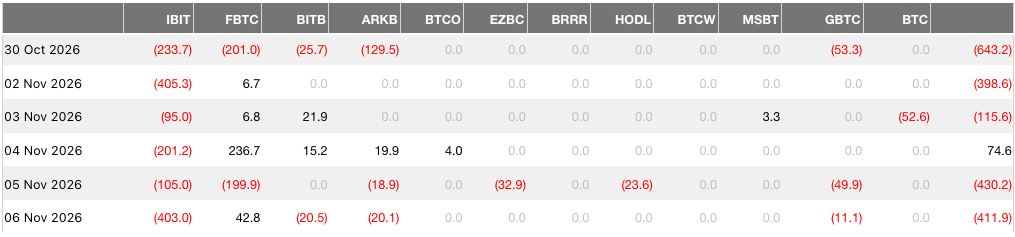
US spot Bitcoin exchange-traded funds (ETFs) experienced a substantial $1.28 billion in net outflows last week, marking their most significant weekly withdrawal since late June. This dramatic reversal of fortune for the nascent investment vehicles underscores a period of intensified market caution and risk aversion among institutional and retail investors alike. The pronounced outflows have brought the total net withdrawals for these funds year-to-date to approximately $919 million, according to data compiled by SoSoValue, indicating a challenging period that follows a previous dip of $515 million in net outflows recorded in October. The confluence of several influential factors, including a major security breach, political uncertainty, and a broader downturn in risk assets, appears to have driven this notable retreat from the digital asset market.
The Genesis and Initial Promise of Spot Bitcoin ETFs
The introduction of spot Bitcoin ETFs in the United States was heralded as a watershed moment for the cryptocurrency market. After years of fervent lobbying and numerous rejections by the Securities and Exchange Commission (SEC), these funds finally received regulatory approval, paving the way for mainstream investors to gain direct exposure to Bitcoin’s price movements without the complexities of direct cryptocurrency ownership. The promise was clear: enhanced liquidity, robust regulatory oversight, and the ability to integrate Bitcoin into traditional investment portfolios with ease.
Initial enthusiasm following the launch of these ETFs saw significant inflows, with investors anticipating that this new accessibility would unlock substantial capital from institutional players and drive Bitcoin’s price to new highs. Major financial institutions, including BlackRock, Fidelity, and others, quickly entered the fray, launching their own spot Bitcoin ETFs, transforming the competitive landscape. BlackRock’s iShares Bitcoin Trust (IBIT) rapidly emerged as a dominant force, becoming the world’s largest spot Bitcoin ETF by assets under management, a testament to its broad appeal and BlackRock’s extensive distribution network. The expectation was that these vehicles would provide a stable, regulated conduit for investment, mitigating some of the volatility traditionally associated with the crypto market. However, the recent cascade of outflows suggests that even these regulated products are not immune to broader market sentiment shifts and external shocks.
A Week of Significant Contraction: IBIT Leads the Retreat
The past week’s figures paint a stark picture of investor sentiment, with BlackRock’s IBIT at the forefront of the capital exodus. According to Farside Investors data, IBIT alone recorded a staggering $1.21 billion in net outflows last week. This figure represents approximately 95% of the total weekly withdrawals reported by SoSoValue, highlighting IBIT’s outsized role in the overall market contraction. The withdrawals extended IBIT’s losing streak to six consecutive trading sessions, a concerning trend that has seen approximately $1.44 billion pulled from the fund since October 30. This sustained period of redemptions from such a prominent fund signals a significant shift in investor confidence, at least in the short term.
While IBIT bore the brunt of the outflows, other funds experienced varying degrees of impact. Fidelity’s Wise Origin Bitcoin Fund (FBTC), for instance, managed to attract about $93 million in net inflows for the week, offering a slight counter-narrative to the dominant trend. However, even FBTC was not entirely immune to the selling pressure, experiencing nearly $200 million in net outflows on a single day (Thursday), indicating that while it may have recovered some ground, the underlying market anxieties were pervasive across the ETF landscape. The disparity in performance among these funds could be attributed to a variety of factors, including specific investor bases, fee structures, or the timing of capital deployment and withdrawal by large institutional clients.
Intertwined Catalysts: Unpacking the Market’s Unease

The sharp downturn in spot Bitcoin ETF performance and the corresponding dip in Bitcoin’s price below $76,000 last week can be attributed to a confluence of distinct yet interconnected events that rattled investor confidence across the digital asset and broader financial markets.
Firstly, the fallout from a reported $6.3 billion hack involving Binance, one of the world’s largest cryptocurrency exchanges, sent shockwaves through the crypto ecosystem. While the exact nature and full implications of the incident are still being digested by the market, any event that compromises the security or integrity of a major player like Binance inevitably erodes investor trust. Such incidents rekindle concerns about the inherent risks associated with digital asset custody and exchange vulnerabilities, prompting a flight to perceived safety and a re-evaluation of exposure to cryptocurrencies, even through regulated vehicles like ETFs. The sheer scale of the reported loss amplified these concerns, suggesting potential systemic risks that could impact market liquidity and stability.
Secondly, the uncertainty surrounding the US midterm elections played a significant role. While often seen as domestic political events, US elections can have profound implications for financial markets, especially for emerging sectors like cryptocurrency, which are heavily influenced by regulatory clarity and political will. The outcome of the midterms could shape the legislative agenda, potentially impacting discussions around cryptocurrency regulation, taxation, and innovation. A divided Congress or an unclear path forward on key digital asset policies can lead to investor apprehension, as regulatory ambiguity historically acts as a drag on market sentiment. Investors tend to prefer clear, predictable regulatory frameworks, and any perceived lack thereof can trigger cautious behavior and capital withdrawals.
Thirdly, a broader sell-off in technology stocks added further pressure. Cryptocurrencies, particularly Bitcoin, have increasingly shown a correlation with technology stocks, both often categorized as "risk-on" assets. When macroeconomic conditions or specific sector-related concerns lead to a downturn in the tech sector, it frequently spills over into the crypto market. Factors such as shifting expectations for US interest rates, persistent inflation concerns, and broader economic slowdown fears have weighed heavily on growth-oriented tech stocks. As investors de-risk their portfolios in response to these macro pressures, they often reduce exposure to assets perceived as more speculative or volatile, including both tech equities and cryptocurrencies. This interconnectedness highlights how traditional market dynamics can profoundly influence the performance of digital assets, even those held within regulated ETF structures.
Expert Perspectives and Market Indicators
Bitfire Research, a prominent analytical firm, offered insights into the prevailing market sentiment, underscoring the multifaceted pressures weighing on crypto markets. In a statement shared with Cointelegraph, Bitfire highlighted the confluence of shifting expectations for US interest rates, the lingering uncertainty post-midterm elections, and the persistent weakness in technology stocks as primary drivers of the downturn. These macro factors create an environment where investors are increasingly hesitant to allocate capital to higher-risk assets.
Moreover, Bitfire pointed to investor reassessments regarding the potential passage of the CLARITY Act by Congress before year-end. The CLARITY Act, aimed at providing regulatory clarity for digital assets, is viewed as crucial for fostering long-term stability and growth in the crypto sector. The perceived difficulty or delay in passing such legislation adds to regulatory uncertainty, which can deter new institutional investment and encourage existing investors to de-risk.
Supporting its analysis, Bitfire cited key market indicators. The Crypto Fear & Greed Index, a barometer of market sentiment, registered a reading of 25. This score places the market firmly in "Fear" territory, indicating widespread anxiety and a lack of confidence among participants. Historically, low readings on this index often precede market bottoms, but they also reflect the current depressive state of investor psychology.
Additionally, Bitfire noted a negative Coinbase Premium. The Coinbase Premium measures the price difference of Bitcoin on Coinbase Pro (a platform favored by institutional investors in the US) compared to other global exchanges. A negative premium indicates that Bitcoin is trading at a discount on Coinbase relative to its benchmark, suggesting stronger selling pressure from US-based institutional investors, who frequently use Coinbase for their transactions. This particular indicator often signals a lack of demand or an increase in supply from large players within the US market, reinforcing the narrative of institutional capital withdrawal.
Bitfire characterized the current market phase as a "breakdown and bottom-seeking phase." This assessment implies that the market is actively searching for a stable price floor, with significant downward pressure still present. The firm emphasized the critical importance of upcoming US inflation data and signals from the Federal Reserve, particularly regarding future interest rate policies. These macroeconomic announcements are expected to significantly influence market direction. Bitfire warned that a sustained break below the $74,400–$75,000 support range for Bitcoin could trigger further substantial selling pressure, leading to a deeper correction. As of publication, Bitcoin was trading at $74,049, having already breached the lower end of this crucial support range, marking a 5% decline over seven days and a 2.3% drop over 24 hours, according to CoinGecko. This breach of key technical levels suggests that the market’s "bottom-seeking" journey may indeed continue.
Broader Impact and Future Implications
The substantial outflows from US spot Bitcoin ETFs, particularly from a behemoth like BlackRock’s IBIT, carry significant implications for the cryptocurrency market and the broader financial landscape. Firstly, the immediate impact is evident in Bitcoin’s price action. The sustained selling pressure from these large, regulated funds directly contributes to price depreciation, as the market struggles to absorb the increased supply of Bitcoin being sold or redeemed. The psychological effect of seeing such prominent investment vehicles experience significant withdrawals can also dampen overall investor sentiment, leading to a self-reinforcing cycle of caution and selling across other crypto assets.
Secondly, these outflows challenge the narrative that spot Bitcoin ETFs would primarily serve as a source of consistent, unidirectional institutional capital inflow. While they have undeniably broadened access to Bitcoin, their performance during periods of market stress demonstrates that they are subject to the same ebb and flow of investor sentiment as other asset classes. This realization may temper some of the earlier, more optimistic projections regarding their long-term impact on Bitcoin’s price stability and growth trajectory. Institutional investors, despite their long-term horizons, are still reactive to macroeconomic shifts, regulatory developments, and security incidents.
Thirdly, the events of the past week underscore the ongoing interplay between macroeconomic conditions and the crypto market. The sensitivity of Bitcoin and other digital assets to factors such as interest rate expectations, inflation data, and tech stock performance highlights their integration into the broader financial system. As central banks navigate complex economic environments, their policy decisions will continue to exert a powerful influence on risk assets, including cryptocurrencies. For Bitcoin to achieve sustained growth, a more favorable macro environment, characterized by stable inflation and predictable monetary policy, may be necessary.
Looking ahead, the future trajectory of US spot Bitcoin ETFs, and by extension, the wider crypto market, hinges on several critical factors. Regulatory clarity remains paramount. The potential passage of legislation like the CLARITY Act could provide much-needed certainty, potentially attracting renewed institutional interest. A resolution to the geopolitical and economic uncertainties that are currently weighing on global markets would also be a significant catalyst. Should inflation stabilize and central banks signal a more accommodative monetary policy stance, risk assets like Bitcoin could experience a rebound as investors seek higher returns.
However, until such clarity and stability emerge, market observers suggest that volatility will likely persist. The current "breakdown and bottom-seeking phase" described by Bitfire Research indicates that the market is in a re-evaluation period. Investors will be closely monitoring upcoming economic data, particularly US inflation reports and statements from the Federal Reserve, for signals that could either confirm further downside risk or pave the way for a recovery. The performance of these ETFs in the coming weeks will serve as a crucial barometer of institutional confidence and the evolving maturity of Bitcoin as a mainstream investment asset. The significant outflows are not just a blip but a stark reminder that even regulated crypto products operate within a complex web of market forces, requiring vigilance and strategic adaptation from all participants.