admin
admin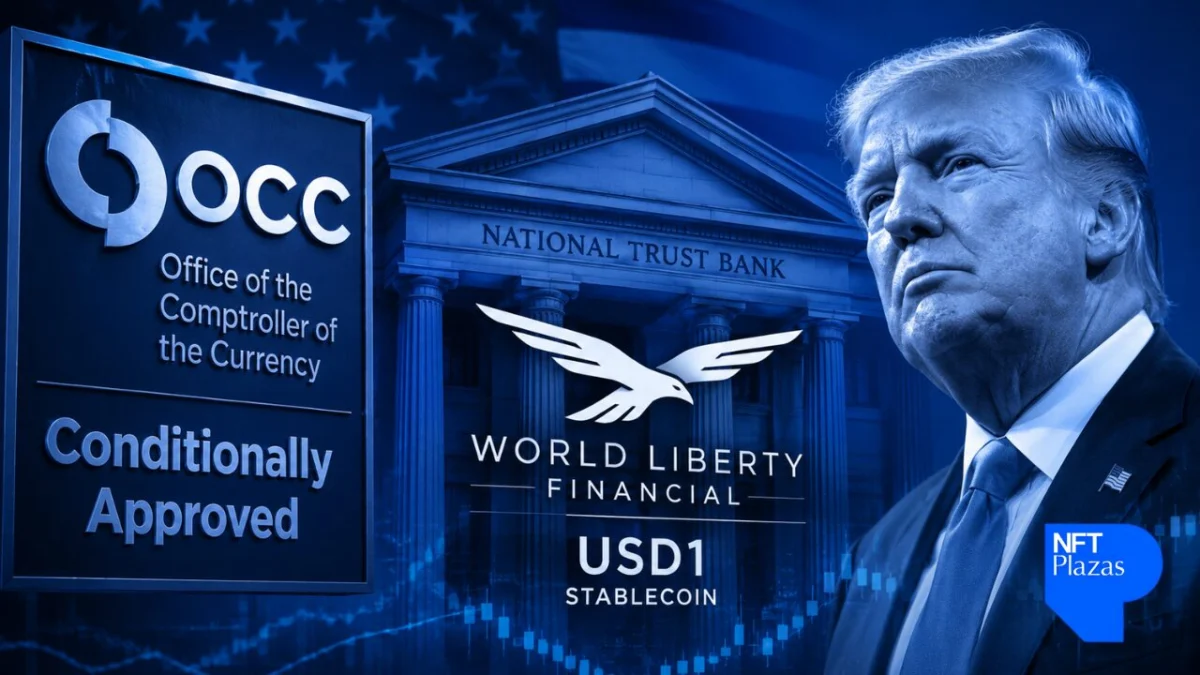
The decision, communicated in a public letter from the OCC, represents a significant regulatory milestone for World Liberty Financial and specifically for its flagship stablecoin, USD1. While not yet a fully operational bank, the conditional approval for World Liberty Trust Company paves the way for the firm to bring critical stablecoin infrastructure, including issuance, redemption, and reserve management, under direct federal oversight. This move is expected to enhance control, reduce reliance on third-party providers, and potentially open new avenues for revenue generation, but it also reignites intense debate surrounding conflicts of interest involving high-profile political figures and their commercial ventures.
The OCC’s Mandate and the Path to Conditional Approval
The Office of the Comptroller of the Currency (OCC) is an independent bureau within the U.S. Department of the Treasury that charters, regulates, and supervises all national banks and federal savings associations. Its primary mission is to ensure the safety and soundness of the national banking system, promote fair access to financial services, and ensure compliance with federal banking laws. In recent years, under various administrations, the OCC has grappled with how to integrate novel financial technologies, including cryptocurrencies and blockchain-based services, into the existing regulatory framework. This has led to the development of specific guidance and charter options for financial technology companies looking to operate under a federal umbrella.
World Liberty Financial’s application for a national trust bank charter began its formal journey, like many others in the crypto space, by navigating the OCC’s complex application process. The agency confirmed that the conditional approval for World Liberty Trust Company was granted on a recent Friday in August 2026, following an extensive review by career staff, underscoring the non-political nature of the assessment process according to the OCC. This preliminary approval is not a final green light; rather, it sets forth a series of rigorous conditions that World Liberty Financial must satisfy before the trust bank can commence operations. These conditions are standard for new charters and include requirements such as raising sufficient capital, establishing robust governance structures, implementing internal controls, and appointing qualified management, including an internal audit manager. Specifically, the OCC requires World Liberty Trust to maintain at least $20 million in capital to ensure financial stability and operational resilience.
Unpacking the National Trust Bank Charter
A federally chartered national trust bank, as envisioned for World Liberty Trust Company, operates distinctly from a conventional commercial bank. Unlike traditional banks that accept consumer deposits and extend loans, national trust banks are generally restricted from these core functions. Instead, their purview typically includes providing fiduciary services such as asset custody, payment settlement, wealth management, and other specialized financial services. For cryptocurrency companies, this type of charter is particularly appealing as it provides a federal regulatory framework for handling digital assets, offering a level of legitimacy and oversight that can be crucial for attracting institutional clients and navigating complex compliance landscapes.
For World Liberty Financial, the most compelling benefit of this charter lies in its potential to internalize the operational infrastructure for its USD1 stablecoin. Currently, World Liberty relies on third-party providers, such as BitGo, for certain stablecoin services, which introduces external dependencies and potential costs. By establishing World Liberty Trust, the company aims to directly issue and redeem USD1, as well as custody the underlying assets backing the token. This vertical integration is designed to grant the company greater control over its stablecoin infrastructure, enhance security protocols, streamline operations, and potentially unlock new revenue streams associated with these core services. Furthermore, operating under federal supervision can instill greater confidence among users and institutional partners regarding the stability and regulatory compliance of USD1.
USD1: The Cornerstone of World Liberty’s Strategy
USD1, launched in March 2025, is a dollar-backed stablecoin meticulously designed to maintain a one-to-one peg with the U.S. dollar. Its reserves are purportedly backed by highly liquid assets, primarily U.S. Treasury instruments, a common practice among leading stablecoin issuers. Since its inception, USD1 has experienced rapid growth, achieving a market capitalization of approximately $4 billion within just over a year. This significant scale underscores its importance to World Liberty Financial’s overall business strategy and highlights the company’s ambition to become a major player in the stablecoin market.

The market for stablecoins has exploded in recent years, with total market capitalization globally reaching hundreds of billions of dollars. These digital currencies play a crucial role in the broader cryptocurrency ecosystem, acting as a bridge between volatile cryptocurrencies and traditional fiat currencies, facilitating trading, lending, and remittances. However, their rapid growth has also attracted intense regulatory scrutiny, particularly concerning the transparency and liquidity of their reserves. Bringing USD1’s operations under the direct supervision of a federally chartered trust bank is a strategic move to address these concerns head-on. It provides an institutional framework for demonstrating the integrity of USD1’s reserves and the robustness of its operational controls, which could be a significant differentiator in an increasingly competitive and regulated market. This could not only strengthen USD1’s infrastructure but also reduce the company’s reliance on external providers, thereby mitigating counterparty risk and potentially improving profit margins.
Regulatory Hurdles and Ongoing Scrutiny
Despite the celebratory tone from World Liberty Financial, the conditional approval is far from a final carte blanche. The OCC’s approval letter specifies several stringent requirements that World Liberty Trust Company must meet before it can fully open its doors. Beyond the $20 million capital requirement, the company must also demonstrate that it has established robust governance and internal control frameworks that meet federal banking standards. This includes, but is not limited to, developing comprehensive risk management policies, anti-money laundering (AML) and know-your-customer (KYC) compliance programs, and an independent internal audit function led by a qualified manager. The OCC will also require the company to notify regulators of any major changes to its business plan, ensuring continuous oversight.
Zach Witkoff, president and chairman of World Liberty Trust, publicly welcomed the OCC’s decision, characterizing the charter as a "milestone" for the company. He emphasized World Liberty’s commitment to operating under regulatory oversight, stating that the new structure would bring USD1’s issuance, custody, and reserve management directly under OCC supervision. This public affirmation of willingness to embrace continued regulatory scrutiny is crucial for building trust with both regulators and the broader market.
An additional layer of regulatory scrutiny addressed by the OCC concerned the composition of World Liberty Financial’s investor base, particularly non-U.S. investors. To mitigate potential influence over the future bank’s operations, several investors, including an investment vehicle affiliated with the Trump family involving Eric Trump, signed "passivity agreements." These agreements legally bind investors not to seek control or exert undue influence over the bank’s operational decisions, aiming to safeguard the independence and regulatory compliance of World Liberty Trust.
Political Fallout and Ethical Concerns Intensify
The conditional approval for World Liberty Financial has inevitably amplified existing political concerns, particularly regarding potential conflicts of interest involving President Donald Trump, his administration, and his family’s expanding crypto businesses. World Liberty Financial explicitly states that 38% of the company is owned by an entity affiliated with Donald Trump and certain family members, including his sons, Donald Trump Jr. and Eric Trump, who were instrumental in launching the venture in 2024.
Senator Elizabeth Warren (D-MA), a vocal critic of the cryptocurrency industry and a staunch advocate for stricter financial regulation, has been at the forefront of this opposition. Prior to this approval, Senator Warren had publicly urged the OCC to reject World Liberty’s application unless President Trump fully divested his interests in the company. Following the conditional approval, she wasted no time in condemning the decision, labeling it an "unprecedented conflict of interest." Senator Warren further announced her intention to introduce legislation, in conjunction with other lawmakers, aimed at preventing sitting presidents and senior government officials from owning or controlling banks, highlighting the perceived ethical quandary presented by this charter.
The OCC, in anticipation of such criticism, has maintained that its review process was entirely impartial and driven by career staff. The agency also assured the public that the future bank would be supervised by non-political examiners, reinforcing its commitment to independent oversight. However, critics argue that the optics alone create a challenging precedent, raising questions about the potential for undue influence or the appearance thereof, regardless of the OCC’s internal review processes. This development places World Liberty Financial squarely at the nexus of financial innovation, regulatory policy, and high-stakes political ethics.

A Wider Trend: Crypto’s Push into Traditional Banking
World Liberty Financial’s conditional approval is not an isolated event but rather indicative of a broader and accelerating trend within the cryptocurrency industry: the concerted effort by digital asset companies to gain direct access to the U.S. banking system. The OCC has witnessed a significant uptick in bank charter applications since 2025, receiving 40 such requests, a marked increase from previous administrations, with many directly linked to crypto projects. This reflects a strategic pivot by major digital asset firms seeking to legitimize their operations and integrate more deeply with traditional finance.
Other prominent players in the digital asset space, such as Ripple and Circle, have also received preliminary approval for national trust bank charters, signaling a growing acceptance by federal regulators that certain crypto activities can operate within established banking frameworks. For these crypto firms, securing a federal charter offers a robust regulatory framework for crucial services like custody, payment settlement, and other financial offerings across the entire country. This not only streamlines compliance but also makes it significantly easier to engage with institutional customers, who often require the assurance of operating with regulated entities.
For World Liberty Financial, given the rapid expansion of USD1, this opportunity is particularly transformative. Bringing the entire lifecycle of USD1—from issuance and custody to reserve management—under a single, federally supervised entity is expected to significantly strengthen the stablecoin’s infrastructure. This move promises to enhance its credibility, reduce operational risks, and potentially increase its appeal to a broader base of users, including large institutional investors who prioritize regulatory certainty.
A Significant Step, Not the Finish Line
The OCC’s decision represents an important regulatory foothold for World Liberty Financial, signifying a critical validation of its business model and its commitment to operating within a regulated environment. However, it is crucial to reiterate that this is not the conclusion of the bank chartering process. World Liberty Trust Company must diligently satisfy all remaining conditions imposed by the OCC, including maintaining the required capital levels, implementing robust operational controls, and passing a final, comprehensive examination. Only upon successful completion of these rigorous hurdles will World Liberty Trust be granted full operational status as a federally chartered national trust bank.
Should World Liberty Financial successfully navigate these final stages, the Trump-linked venture will join a growing cohort of crypto companies making significant inroads into regulated financial services. This development not only underscores the maturation of the digital asset industry but also positions World Liberty Financial at the epicenter of several ongoing national debates: the future of stablecoin regulation, the evolving relationship between innovative digital assets and traditional financial systems, and the complex interplay between political power and private sector business interests. For World Liberty, however, the immediate focus remains clear: to meticulously fulfill all regulatory requirements and transform this preliminary approval into a fully operational national trust bank, thereby cementing USD1’s position under direct federal supervision and within the broader financial ecosystem.