Dwi Wanna
The global cryptocurrency mining landscape is undergoing a fundamental structural transformation as major operators redirect billions of dollars and vast quantities of scarce power capacity toward artificial intelligence. This strategic pivot comes as Bitcoin’s recent price stagnation and the mathematical realities of the 2024 halving push mining profitability toward historic lows. While the move into high-performance computing (HPC) offers a lucrative alternative for energy-rich companies, industry analysts are beginning to warn that this migration may be occurring at the most inopportune moment in the market cycle, potentially leaving miners unable to capitalize on a future Bitcoin recovery.
The Economic Squeeze: Why Bitcoin Mining is Under Pressure
The primary catalyst for this shift is a dual-pronged economic contraction. First, the April 2024 Bitcoin halving event reduced the block subsidy from 6.25 BTC to 3.125 BTC, effectively doubling the production cost for every new coin. Second, the market price of Bitcoin has struggled to maintain its momentum, trading around the $64,000 mark—roughly 50% below its October peak when adjusted for the intensity of network competition.
Data provided by CryptoSlate and VanEck indicates that miner revenue has deteriorated significantly. Daily revenues for the sector have declined by nearly 40% year-over-year, now averaging approximately $28.5 million over a 30-day period. This decline is exacerbated by a "hashprice" that has cratered to approximately $30 per petahash per second (PH/s) per day. Hashprice is a critical industry metric that measures the expected value of 1 TH/s of hashing power per day; when this figure drops, older and less efficient mining rigs often fall below the break-even point, rendering them liabilities rather than assets.
Faced with these margins, the appeal of AI infrastructure is rooted in the reliability and premium pricing of data-center contracts. Unlike Bitcoin mining, which relies on the volatile price of a digital asset and fluctuating transaction fees, AI colocation involves long-term contracts with technology firms. These customers are often willing to pay a significant premium for guaranteed uptime and access to high-voltage power grids—assets that Bitcoin miners spent years acquiring.
A Chronology of the AI Pivot
The transition from pure-play Bitcoin mining to diversified AI and HPC operations has accelerated throughout 2024. The timeline of this shift highlights a growing consensus among the industry’s largest players that power, rather than the Bitcoin itself, is their most valuable product.
In early 2024, as the halving approached, several firms began signaling a change in capital expenditure. Core Scientific, once the world’s largest publicly traded Bitcoin miner, emerged from a restructuring process with a radically different outlook. By the second quarter of 2026, the company reported that its colocation revenue—providing space and power for other firms’ hardware—had surged to $136.7 million, up from just $10.6 million the previous year. This represented 83% of the company’s total revenue, while self-mining Bitcoin dropped to a mere 13%.
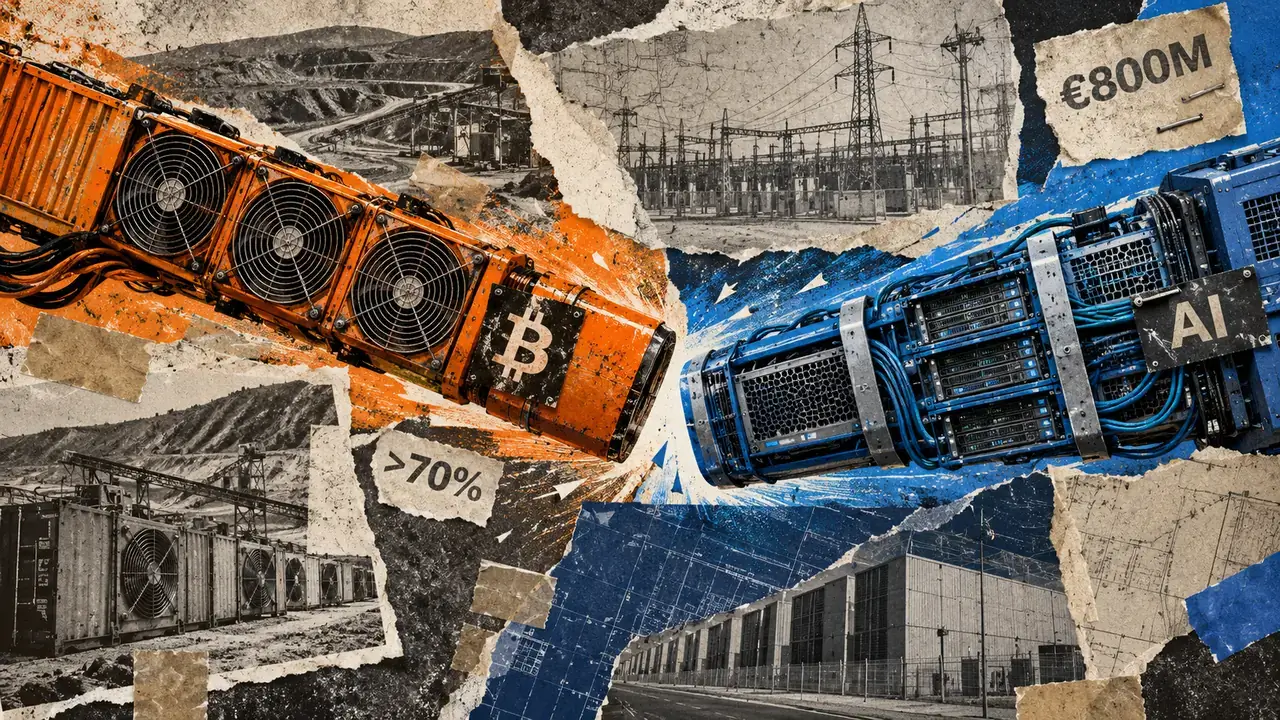
Following this lead, MARA Holdings (formerly Marathon Digital) and other entities began exploring similar paths. MARA CEO Fred Thiel recently noted that the revenue "per electron" is substantially higher when powering AI workloads compared to securing the Bitcoin network. This sentiment is echoed across the public sector; CoinShares reports that publicly listed miners have announced more than $70 billion in cumulative AI and HPC contracts. By the end of 2026, it is estimated that these miners could derive as much as 70% of their total revenue from non-crypto computing.
The Infrastructure Barrier: Costs and Technical Realities
It is important to note that this pivot does not involve a simple software update. The hardware used for Bitcoin mining—Application-Specific Integrated Circuits (ASICs)—is purpose-built for the SHA-256 hashing algorithm and cannot be repurposed for AI. To enter the AI market, miners must invest in entirely new fleets of Graphics Processing Units (GPUs), such as those manufactured by NVIDIA.
Furthermore, the physical infrastructure requirements for AI are significantly more demanding. Bitcoin mining is often "interruptible," meaning miners can shut down their machines during peak demand to balance the grid. AI workloads, conversely, require 99.99% uptime, advanced liquid cooling systems, and redundant fiber-optic connections.

The capital requirements reflect this complexity. Industry estimates suggest that Bitcoin mining infrastructure costs between $700,000 and $1 million per megawatt (MW) to build. In contrast, Tier 3 or Tier 4 data centers suitable for AI workloads require an investment of $8 million to $15 million per megawatt. This represents a massive increase in capital intensity, locking miners into long-term debt or equity-heavy financing rounds to fund the expansion.
The Risk of Miscalculated Timing
Despite the immediate financial incentives, some researchers suggest that the "AI escape plan" may be a strategic blunder. André Dragosch, head of research at Bitwise Europe, has voiced concerns that miners are pivoting at the wrong point in the macro cycle. Dragosch argues that the massive expectations for AI compute demand—particularly that driven by autonomous agents and large language models—may take much longer to materialize than the current investment boom suggests.
There is a historical precedent for this skepticism. The technology sector frequently undergoes "hype cycles" where infrastructure build-out outpaces actual commercial utility. The Bank for International Settlements (BIS) has warned that the five largest tech "hyperscalers" could spend over $1 trillion on AI-related capital expenditure through 2026. If the revenue generated by AI applications fails to justify this spending, a "compute glut" could occur, leading to a crash in the very colocation prices that miners are currently chasing.
Simultaneously, Dragosch believes Bitcoin is nearing the end of its cyclical downturn. If Bitcoin prices recover over the next 12 to 18 months, the "hashprice" would likely rebound, making Bitcoin mining highly profitable once again. Miners who have committed their power capacity and capital to long-term AI contracts would find themselves unable to pivot back to Bitcoin, effectively missing out on the high-margin rewards of a bull market.
Broader Market Implications and Network Security
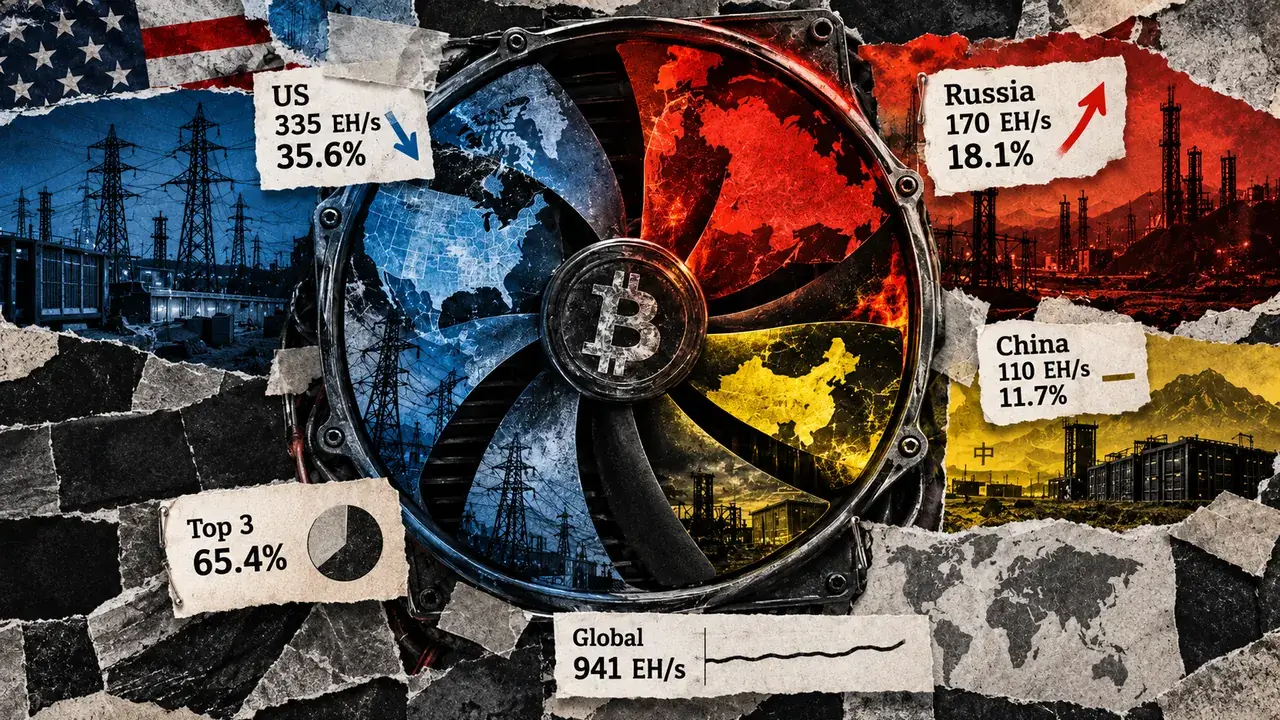
The migration of power from Bitcoin to AI has significant implications for the security of the Bitcoin network. The "Hashrate"—the total computational power securing the blockchain—is a primary indicator of network health. While the hashrate remains near all-time highs due to the deployment of more efficient ASICs, a sustained exodus of large-scale operators could lead to a plateau or decline in network security.
However, some analysts see a "survival of the fittest" scenario. As larger, diversified firms move toward AI, the remaining pure-play Bitcoin miners may face less competition, allowing them to capture a larger share of the block rewards. This could lead to a two-tier market: high-overhead, diversified "compute giants" and lean, specialized "Bitcoin purists."
From an energy perspective, the pivot is also drawing scrutiny from grid operators. Bitcoin miners have long argued that they provide a "balancing" service to the grid by consuming excess renewable energy. AI data centers, which require constant power, do not offer this same flexibility. This could lead to increased friction with regulators and utility companies, particularly in energy-constrained regions like Texas and the Nordic countries.
Conclusion: A High-Stakes Gamble on Future Demand
The decision to pivot to AI is ultimately a gamble on the longevity of the current tech boom versus the recovery of the digital asset market. For companies like Core Scientific and MARA Holdings, the move provides a much-needed hedge against the volatility of Bitcoin and the harsh economics of the halving. By securing multi-year contracts, they are transforming from speculative crypto plays into essential infrastructure providers for the broader digital economy.
Yet, the warnings from Bitwise and other analysts suggest that the grass may not be greener on the other side. The massive capital requirements of AI infrastructure create a "one-way door" effect; once a miner spends $15 million per megawatt to build an AI-ready facility, they cannot easily return to the low-cost, flexible model of Bitcoin mining. If AI demand cools just as Bitcoin enters a new parabolic phase, the current rush toward GPUs may be remembered as a classic case of buying at the top and selling at the bottom. For now, the industry remains in a state of high-stakes transition, with billions of dollars hanging on the question of which technology will dominate the next decade of global computing.