admin
admin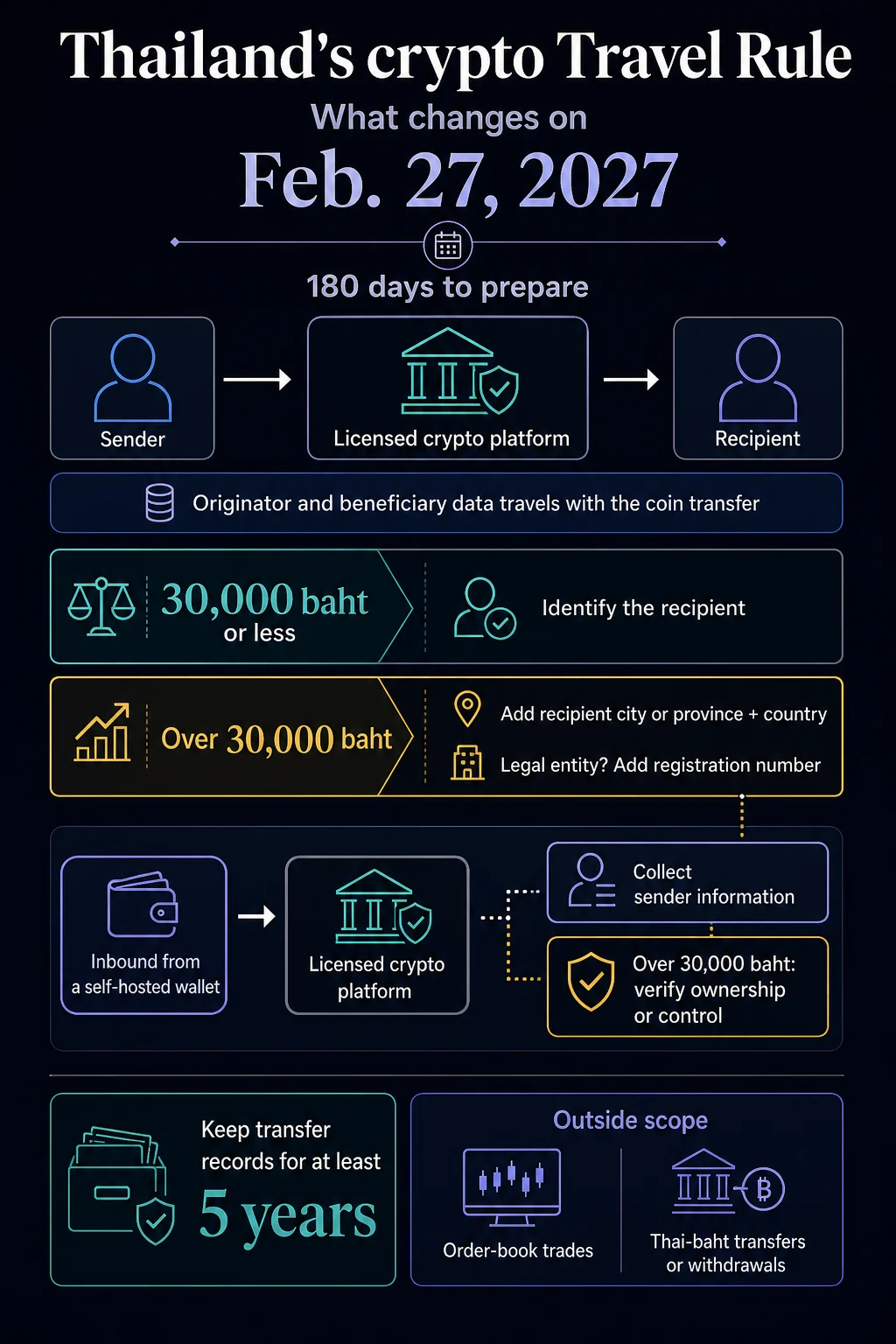
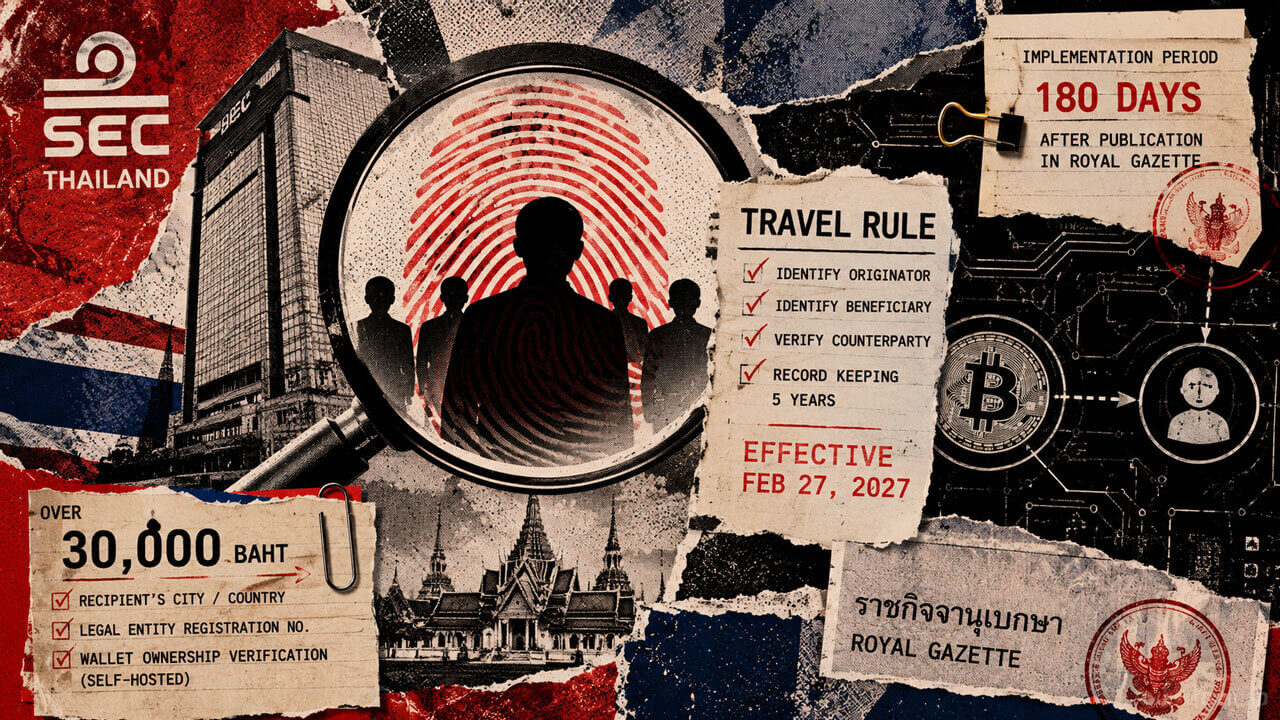
Thailand’s Securities and Exchange Commission (SEC) has enacted a significant regulatory shift, introducing a comprehensive "Travel Rule" that mandates licensed cryptocurrency operators to meticulously collect and transmit identifying information for all digital asset transfers. This move, announced on September 2, 2026, and officially dated August 25, 2026, signals a substantial enhancement of oversight in the nation’s burgeoning crypto landscape. The rule is slated to take effect on February 27, 2027, following a 180-day preparatory period after its publication in the Royal Gazette, allowing industry participants ample time to integrate the necessary system upgrades and procedural adjustments.
This regulatory initiative aligns Thailand with a growing global trend towards increased transparency and anti-money laundering (AML) and counter-terrorist financing (CTF) measures within the digital asset space. The Financial Action Task Force (FATF), an international standard-setter for AML/CFT, has long advocated for the application of the Travel Rule to virtual asset service providers (VASPs), requiring them to share originator and beneficiary information on crypto transfers exceeding certain thresholds. Thailand’s proactive implementation demonstrates a commitment to adhering to these international best practices and bolstering the integrity of its financial system.
Enhanced Scrutiny on Crypto Transactions
The core of the new regulation requires SEC-supervised digital-asset operators to gather detailed information about both the sender and the recipient involved in any coin transfer. This extends beyond mere transaction amounts, necessitating the collection of identifying data for individuals or entities. Furthermore, operators will be responsible for verifying the qualifications of any digital-asset service providers or intermediaries that play a role in the transfer chain. This multi-layered verification process aims to create a robust audit trail for all crypto movements.
A critical component of the rule is the obligation for sending operators to transmit this originator and beneficiary information to the receiving operator. These records must be maintained for a minimum of five years, providing a substantial historical data repository for regulatory review and potential investigations.
Tiered Information Requirements Based on Transfer Value
The extent of information required from customers will vary based on the value of the cryptocurrency being transferred. For transfers originating from a wallet held with a regulated platform, customers will be obligated to identify the recipient regardless of the transaction amount. This means even small transfers will require basic recipient identification.
However, for transfers exceeding 30,000 Thai Baht (approximately $820 USD, based on current exchange rates), the information requirements escalate. In these instances, customers must provide not only the recipient’s basic identification but also their province or city and country of residence. If the recipient is a legal entity, its registration number will also be mandatory. This tiered approach aims to strike a balance between facilitating everyday transactions and imposing stricter scrutiny on higher-value movements that may pose a greater risk from a regulatory perspective.
Addressing Self-Hosted Wallets and Offshore Transfers
A significant aspect of the new Travel Rule targets transactions involving self-hosted wallets. When cryptocurrency arrives at a regulated platform’s wallet from a self-hosted wallet, the platform must collect sender information akin to any other transfer. Crucially, if the transaction value surpasses the 30,000 Baht threshold, the platform will be required to verify that the sender indeed owns or controls the self-hosted wallet. This verification process is a vital step in preventing illicit actors from using self-custody solutions to circumvent regulatory requirements. The exact methods of verification are expected to be detailed in subsequent guidance from the SEC, but could involve multi-factor authentication or other secure validation procedures.
The rule also has direct implications for offshore crypto transfers. Licensed Thai operators engaging in international transfers will need to ensure they are compliant with the information-sharing requirements for both originating and receiving entities, irrespective of their jurisdictional location, provided the Thai entity is involved. This aims to close potential loopholes that could be exploited by entities seeking to move assets across borders without adequate transparency.
Operational Adjustments and Implementation Timeline
The SEC has emphasized that the 180-day implementation period is crucial for operators to prepare their systems. This includes developing or integrating software capable of exchanging transfer data securely, implementing robust transaction checking mechanisms, and establishing protocols for requesting and verifying the necessary customer information. The SEC’s customer-facing question-and-answer (Q&A) document, published alongside the announcement, provides further clarification on the operational aspects of the rule, assuring that most transfers should proceed smoothly if customers provide complete information and platforms are adequately prepared.
However, the regulator has also indicated that certain types of transactions may experience delays. These include high-value transfers requiring additional verification, cases where essential data is missing, or transactions that necessitate enhanced wallet ownership checks. This suggests that while the rule aims for seamless operation, there will be instances where a more thorough review process is implemented.
Scope and Exclusions
It is important to note that the new data checks will not encompass all platform activities. The Travel Rule specifically governs coin transfers. Therefore, activities such as trading on an operator’s order book will remain unaffected by these new data collection requirements. Similarly, transfers and withdrawals of Thai Baht will also be excluded, as the regulation is focused on the movement of digital assets. This targeted approach allows the SEC to concentrate its regulatory efforts on the specific risks associated with cryptocurrency transactions.
Background and Context
The implementation of the Travel Rule in Thailand is not an isolated event but rather a component of a broader global push towards regulating the digital asset industry. As cryptocurrencies have gained mainstream adoption, so too have concerns about their potential misuse for illegal activities. International bodies like the FATF have been instrumental in shaping global AML/CFT standards for VASPs, and countries are increasingly adopting these frameworks into their national legislation.
Thailand has been actively developing its digital asset regulatory framework since the enactment of the Royal Decree on Digital Asset Businesses B.E. 2561 (2018). This has included licensing requirements for exchanges, brokers, dealers, and other digital asset service providers, along with ongoing efforts to enhance consumer protection and market integrity. The introduction of the Travel Rule represents a significant maturation of this framework, moving beyond basic licensing to address the complex dynamics of asset movement.

Potential Implications and Analysis
The new Travel Rule is expected to have several significant implications for the Thai cryptocurrency market and its participants.
Increased Compliance Costs: Licensed operators will incur costs associated with upgrading their technological infrastructure, training staff, and potentially hiring compliance officers to manage the new requirements. This could disproportionately affect smaller operators.
Enhanced Security and Trust: By increasing transparency and enabling better tracking of funds, the rule aims to reduce the risk of illicit activities, thereby fostering greater trust in the digital asset ecosystem among both regulators and the general public. This could, in turn, encourage further institutional adoption.
Impact on Privacy-Focused Services: Services that prioritize user privacy, such as certain decentralized exchanges or privacy coin mixers, may face challenges operating within Thailand if they cannot comply with the information-sharing mandates. This could lead to a bifurcated market or a push for more privacy-preserving technological solutions.
Cross-Border Operations: For international users transacting with Thai platforms, the rule means they will also be subject to these information-gathering requirements, potentially impacting the ease of cross-border crypto movements for individuals.
Innovation and Adaptation: The rule will likely spur innovation in compliance technology and secure data-sharing protocols within the Thai crypto industry. Operators will need to adapt and find efficient ways to meet these new obligations.
The SEC’s move underscores Thailand’s commitment to creating a regulated and secure environment for digital assets. While the implementation presents operational challenges, it is a necessary step to align with global standards and mitigate the risks associated with an increasingly digitalized financial landscape. The success of this initiative will depend on clear guidance from the SEC, effective implementation by operators, and continued dialogue to ensure the regulatory framework supports both innovation and security.