admin
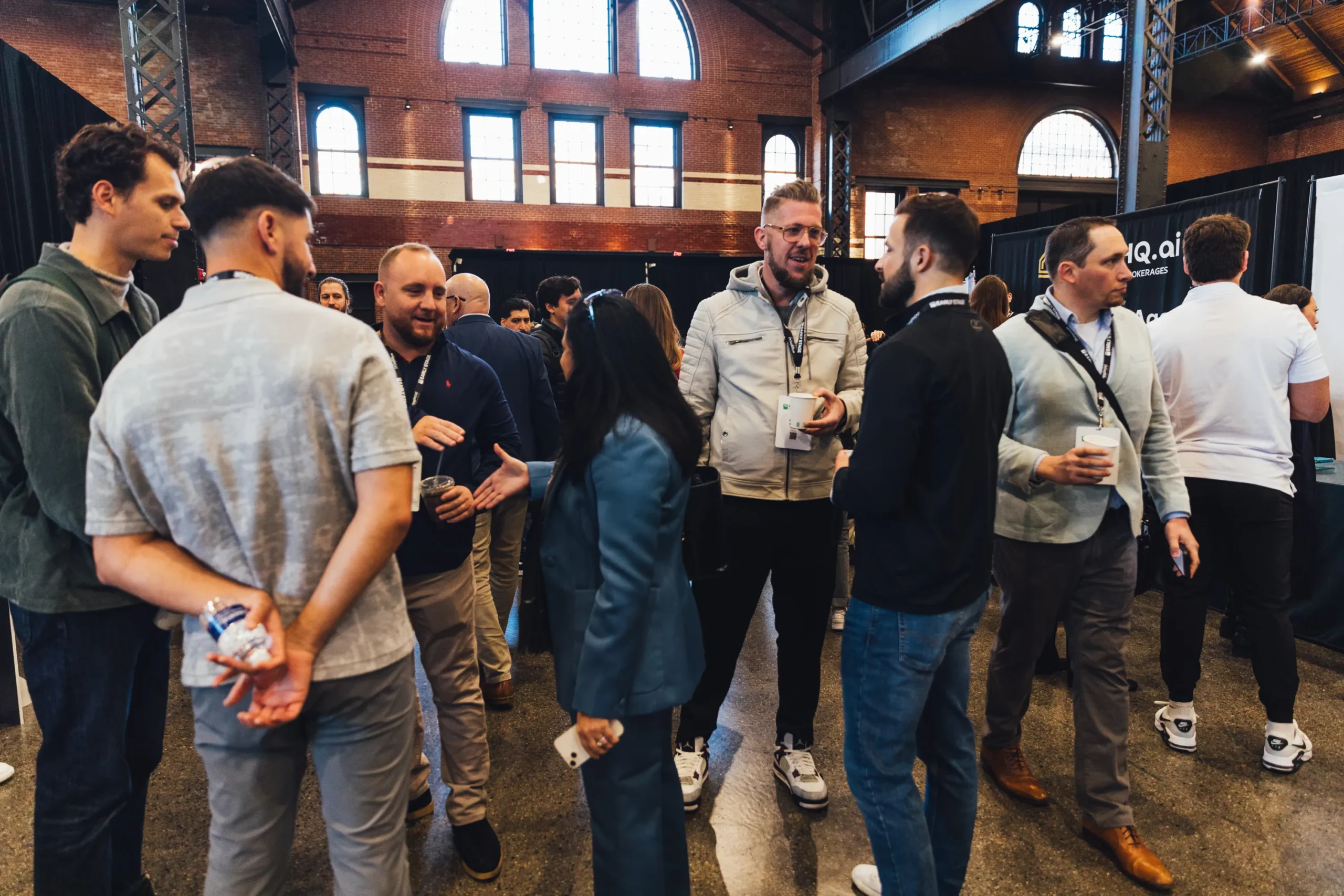
The TechCrunch Founder Summit 2026 officially commences on November 4 at the historic SoWa Power Station in Boston, marking a pivotal gathering for the international startup community. This one-day intensive event is designed to bridge the gap between high-level venture capital theory and the grueling, day-to-day realities of building a scalable enterprise. By bringing together a curated group of founders, institutional investors, and industry operators, the summit aims to facilitate a high-density exchange of practical knowledge. The 2026 iteration of the summit arrives at a critical juncture for the technology sector, as founders navigate a landscape defined by rapid artificial intelligence integration, shifting interest rate environments, and a renewed emphasis on sustainable unit economics over unbridled growth.
The Strategic Importance of the Boston Innovation Hub
The selection of Boston as the host city for the 2026 Founder Summit reflects the region’s enduring status as a premier global hub for deep tech, life sciences, and enterprise software. Unlike the consumer-heavy focus often found in Silicon Valley, the Boston ecosystem is historically rooted in academic excellence and industrial application, driven by proximity to institutions such as MIT and Harvard. Data from recent industry reports indicate that Massachusetts consistently ranks among the top states for venture capital investment per capita, with a particular dominance in Series B and Series C rounds within the robotics and biotechnology sectors.
The venue, SoWa Power Station, serves as a symbolic backdrop for the event. Once the world’s largest power plant of its kind, the architectural landmark now hosts innovation-centric gatherings, representing the transition from industrial-age infrastructure to the digital-age knowledge economy. For the 2026 summit, the space has been partitioned into specialized zones—The Build Stage, The Impact Stage, and dedicated Roundtable areas—to accommodate various learning modalities ranging from keynote addresses to intimate peer-to-peer problem-solving sessions.
A Chronological Roadmap: From Foundational Building to Scaled Impact
The summit is structured to mirror the lifecycle of a startup, beginning with the granular mechanics of early-stage development and progressing toward the complexities of late-stage scaling and market dominance.

The Build Stage: Tactical Execution and Market Entry
The morning sessions at the Build Stage are dedicated to the "mechanics of the start." In an era where technological barriers to entry are lowering due to generative AI and low-code platforms, the focus has shifted from "can we build it?" to "how do we win the market?" Hunter Worland of NEA opens the discourse by addressing distribution as a primary competitive moat. In the current 2026 market, industry analysts observe that superior technology no longer guarantees customer acquisition; instead, the integration of product-led growth (PLG) with sophisticated sales development is what separates successful startups from those that stagnate in the "seed-stage trap."
Following this, Kristen Craft of Fidelity Private Shares provides a data-driven overview of the current fundraising environment. Following the volatility of the mid-2020s, the 2026 venture landscape has stabilized, but investors are demanding higher levels of transparency and more robust cap table management. Craft’s session offers founders a look into how institutional expectations have evolved, particularly regarding the path to profitability.
The technicalities of storytelling are addressed by Dave Balter of True Ventures. His session, "Does Your Pitch Earn the Next Conversation?" moves away from the aesthetics of pitch decks to the core psychology of investor relations. Balter emphasizes that in a crowded market, the primary goal of an initial pitch is not to close the round, but to secure the due diligence phase by demonstrating a profound understanding of the problem space.
The Impact Stage: Scaling, Leadership, and Long-Term Viability
As the day progresses, the focus shifts to the Impact Stage, which addresses the challenges faced by companies that have achieved initial product-market fit. This segment of the summit is designed for founders who are transitioning from "builders" to "leaders."
Steve Fredette, co-founder and president of Toast, provides a keynote perspective on the Boston Founder Playbook. Toast’s journey from a local startup to a dominant public entity in the restaurant technology space serves as a blueprint for scaling in complex, fragmented industries. Fredette’s presence highlights a core theme of the summit: the ability to build world-class companies outside of the traditional San Francisco bubble.

Rudina Seseri, founder and managing partner of Glasswing Ventures, tackles the "Scaling Paradox." Her analysis focuses on the tension between aggressive expansion and the need to protect the core business. Seseri argues that in 2026, the most successful founders are those who know when to "hit the brakes" to fix operational inefficiencies before they become catastrophic at scale. This is supported by recent venture data suggesting that mid-stage failures in 2025 were frequently attributed to "premature scaling" rather than a lack of capital.
Kent Bennett of Bessemer Venture Partners adds to this by examining the signals of true product-market fit. He encourages founders to look beyond vanity metrics—such as registered users or gross merchandise volume—and instead focus on cohort retention and net revenue expansion.
Specialized Roundtables: Deep Dives into 2026’s Technical Challenges
While the main stages provide a broad perspective, the afternoon Roundtables are designed for specific, high-intensity problem solving. These sessions are limited in size to ensure that participants can engage directly with experts and peers.
AI Integration and Enterprise Trust
A significant portion of the roundtable sessions is dedicated to the practical application of artificial intelligence. Shishir Tewari of Procore Technologies leads a technical deep dive into reducing AI hallucinations within enterprise contexts. As businesses move past the "hype" phase of AI, the 2026 market demands reliability. Tewari’s session focuses on Retrieval-Augmented Generation (RAG) and the importance of proprietary data sets in building trustworthy enterprise tools.
Global Market Entry and Lean Operations
Merve Kitapci of ADIN.AI provides a tactical roadmap for landing global enterprise customers before a Series A raise. This session is particularly relevant for founders in the B2B SaaS space who are looking to shorten sales cycles. Simultaneously, Linden Tibbets, founder of IFTTT, explores how AI-driven productivity is redefining the "ideal" team size. The concept of the "lean unicorn"—a company with a billion-dollar valuation but a fraction of the traditional headcount—is a recurring topic of debate at the 2026 summit.

Interactive Learning: "So You Think You Can Pitch?"
The summit features a live "pitch laboratory" titled "So You Think You Can Pitch?" This session serves as a real-time test of the advice dispensed throughout the day. Founders present their business models to a panel of seasoned investors, including Simran Suri of Maveron and Chirag Shah of Define Ventures.
The value of this format lies in the transparency of the feedback loop. Attendees observe exactly where pitches lose momentum and which questions investors prioritize in 2026. Common themes in this year’s competition include the defensibility of AI applications, the sustainability of margins in a competitive labor market, and the clarity of the exit strategy.
Intentional Networking and the Braindate Ecosystem
Recognizing that many of the most valuable insights occur during informal interactions, the summit has integrated the "Braindate" networking model. This platform allows attendees to schedule specific one-on-one or small-group discussions based on shared challenges. Instead of traditional "blind" networking, Braindate enables a targeted approach. For instance, a founder struggling with international compliance can specifically seek out a peer who has recently navigated the same hurdle.
The day concludes with a closing reception hosted by Fidelity Private Shares. This final segment provides a space for the synthesis of the day’s lessons. Observers of previous TechCrunch events note that these closing sessions often result in the formation of "founder cohorts"—informal support networks that persist long after the event concludes.
Broader Impact and Industry Implications
The TechCrunch Founder Summit 2026 reflects a broader shift in the technology industry toward "radical pragmatism." The era of speculative "moonshots" funded by zero-interest-rate policies has been replaced by a more disciplined approach to venture building.

Data-Driven Trends Observed at the Summit:
- Geographic Decentralization: The heavy representation of East Coast and international speakers underscores the reality that innovation is no longer geographically centralized.
- Efficiency over Headcount: Sessions by Linden Tibbets and others suggest that the "successful" startup of the late 2020s will likely be significantly leaner than its predecessors.
- AI Maturity: The conversation has moved from AI as a "feature" to AI as the "foundational infrastructure," with a heavy focus on data security and enterprise-grade reliability.
Participation and Access
The summit continues to offer incentives for collaborative participation, including "buy one, get one free" passes to encourage co-founders to attend together. This strategy acknowledges that the burden of scaling a company is rarely a solo endeavor and that shared learning between executive partners can accelerate organizational growth.
As the event draws to a close, the materials and session recordings will be made available to participants, ensuring that the tactical advice provided on stages like the Build and Impact stages can be integrated into company workflows immediately. The TechCrunch Founder Summit 2026 stands as a testament to the resilience of the startup ecosystem and its ability to adapt to a rapidly changing global economy. For the founders gathered at SoWa Power Station, the day is less about inspiration and more about the rigorous, data-backed preparation required to build the next generation of industry leaders.