admin
admin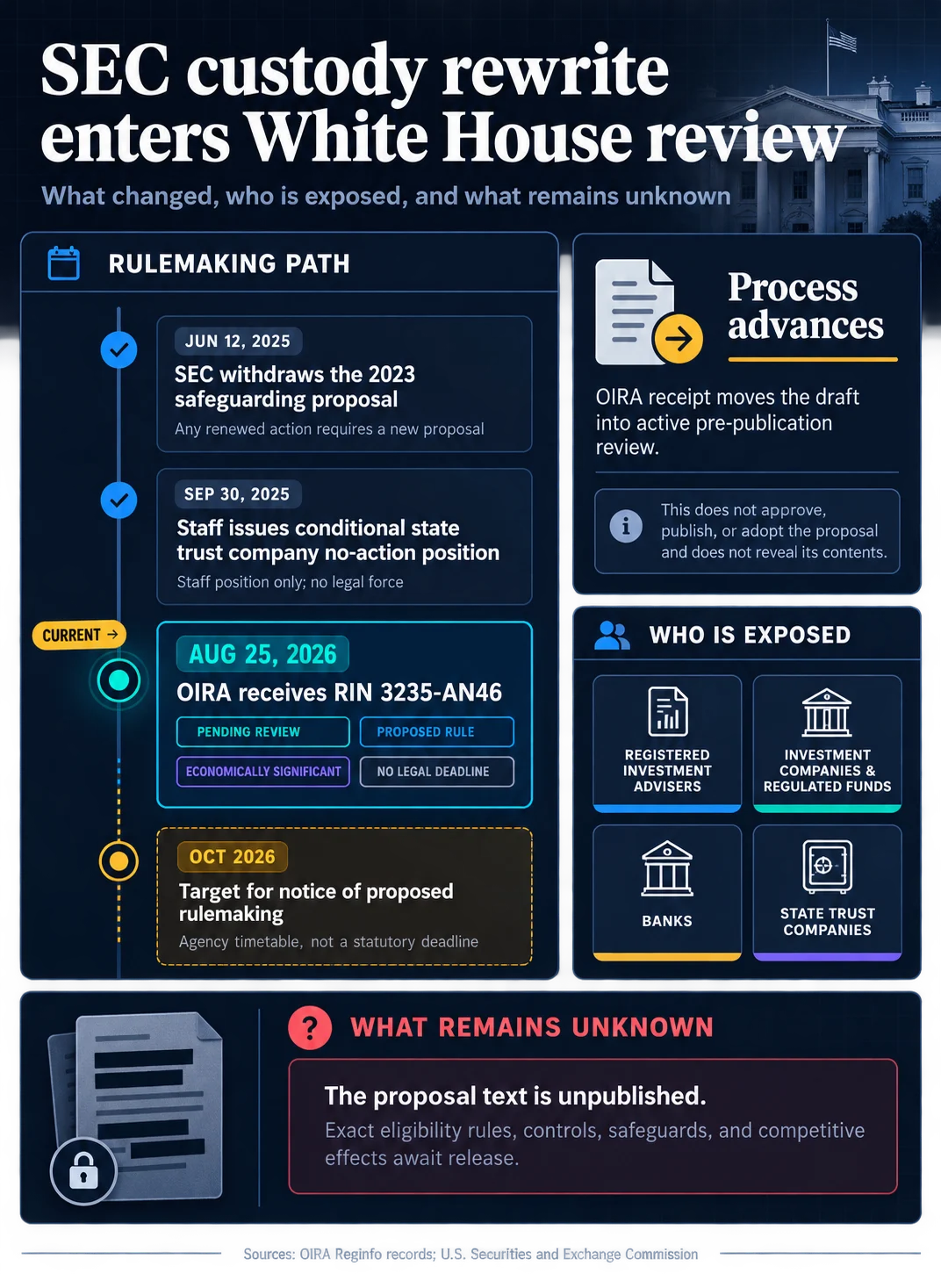
The U.S. Securities and Exchange Commission’s (SEC) proposed amendments to its custody rules for investment advisers and funds, specifically concerning the handling of cryptocurrency assets, have formally entered the White House review process. This significant development, marked by its entry into the Office of Information and Regulatory Affairs (OIRA) review on August 25th, signals an active pre-publication assessment of a proposal that could have substantial economic implications for financial institutions and investors alike. The move initiates a critical phase in the rulemaking journey, with potential consequences for registered investment advisers, investment companies, and the custodians entrusted with their assets.
Advancing the Rulemaking Process
The OIRA’s public record confirms the SEC’s "Amendments to the Custody Rules" are under review at the proposed-rule stage. While no explicit legal deadline has been set for this review, its placement within OIRA signifies that the proposal has successfully navigated initial internal agency assessments and is now undergoing executive branch scrutiny. OIRA’s role is to coordinate the review of significant draft regulations emanating from executive branch agencies before they are officially published for public comment. The submission to OIRA is a crucial step, advancing the rulemaking process beyond internal deliberation and toward public engagement.
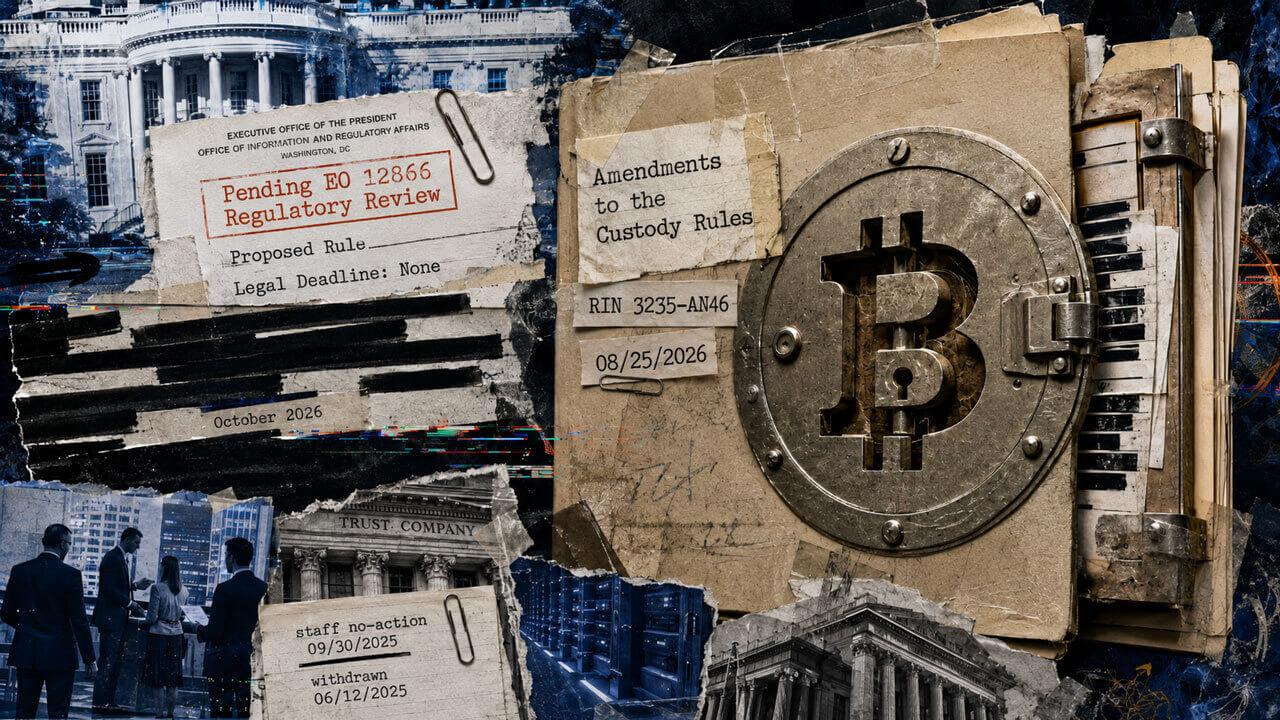
The SEC’s Unified Agenda entry further elaborates on the scope of these potential changes, indicating that the commission is considering modifications pertaining to the safeguarding of client assets held by investment advisers and assets managed by investment companies, with a particular focus on digital assets. The current planning target for a notice of proposed rulemaking is October 2026. This date serves as an internal agency aspiration, distinct from the OIRA record which does not impose a definitive legal deadline. The regulatory process is thus entering a pivotal, albeit lengthy, phase.
Impact on Key Financial Players
Registered investment advisers and investment companies are positioned at the forefront of this regulatory initiative. Their current custody arrangements are intrinsically linked to institutions that must meet stringent federal requirements. Consequently, this rulemaking directly involves banks and state-chartered trust companies, placing them squarely within the commercial considerations of the SEC’s proposed changes. Critically, the publicly available records offer no specific language outlining the proposed amendments. This lack of detail leaves the precise nature of any alterations to eligibility criteria, operational controls, or safeguarding measures for crypto assets unresolved, creating a period of uncertainty for affected entities.
A Reset in Regulatory Approach
This current rulemaking proceeding represents a distinct regulatory reset, diverging from previous SEC efforts. In June 2025, the SEC officially withdrew its 2023 proposal concerning the safeguarding of advisory client assets. This withdrawal effectively terminated the path toward finalizing that particular measure, with the commission indicating that any future regulatory action in this domain would necessitate an entirely new proposal. Therefore, the draft currently under OIRA review is not a resurrection of the prior proposal’s requirements but rather the initiation of a fresh rulemaking process. This distinction is crucial as it means the current review will not build directly upon the specific provisions or public comments received for the earlier, now-withdrawn, proposal.

The Role of the No-Action Letter
In the interim period, a more targeted approach from SEC staff has influenced the market’s operational landscape. On September 30, 2025, staff within the SEC’s Division of Investment Management issued a no-action letter. This pronouncement indicated that the staff would not recommend enforcement action against registered investment advisers or regulated funds that treated certain state trust companies as qualified custodians for cryptocurrency assets, provided that specific conditions were met. This temporary measure provided a degree of clarity and operational guidance in the absence of a comprehensive rule.
The conditions stipulated in the no-action letter were extensive, covering aspects such as the custodian’s authorization, robust safeguarding policies, audited financial statements, independent control reports, clear custody contracts, comprehensive risk disclosures, and a fiduciary determination that the use of the custodian aligned with the best interests of clients and funds. Specifically, custody agreements were required to segregate client or fund assets and prohibit lending, pledging, or rehypothecation without explicit prior written consent. Furthermore, advisers and funds were obligated to disclose material risks associated with the custody arrangement and confirm that engaging such a custodian served their clients’ and shareholders’ best interests.
From Staff Guidance to Formal Rulemaking
While the no-action letter served as a practical baseline for market participants, it is important to note that such letters represent staff enforcement positions and do not possess the force of law. They provide a practical framework but do not establish binding regulatory requirements. The SEC’s current crypto custody rewrite, now in OIRA review, aims to transition this guidance into a formal rulemaking process. The forthcoming release of the SEC’s proposed rule language is anticipated to transform the current procedural signal into a substantive debate. This debate will likely center on critical questions regarding which types of institutions will be permitted to custody crypto assets and the specific safeguards they will be mandated to implement. The outcome of this rulemaking process will undoubtedly shape the future landscape of digital asset custody for regulated financial entities in the United States. The implications extend beyond mere compliance, potentially influencing the growth and adoption of digital assets within the traditional financial system. The clarity and robustness of the final rules will be paramount in fostering investor confidence and ensuring the integrity of the markets.