admin
admin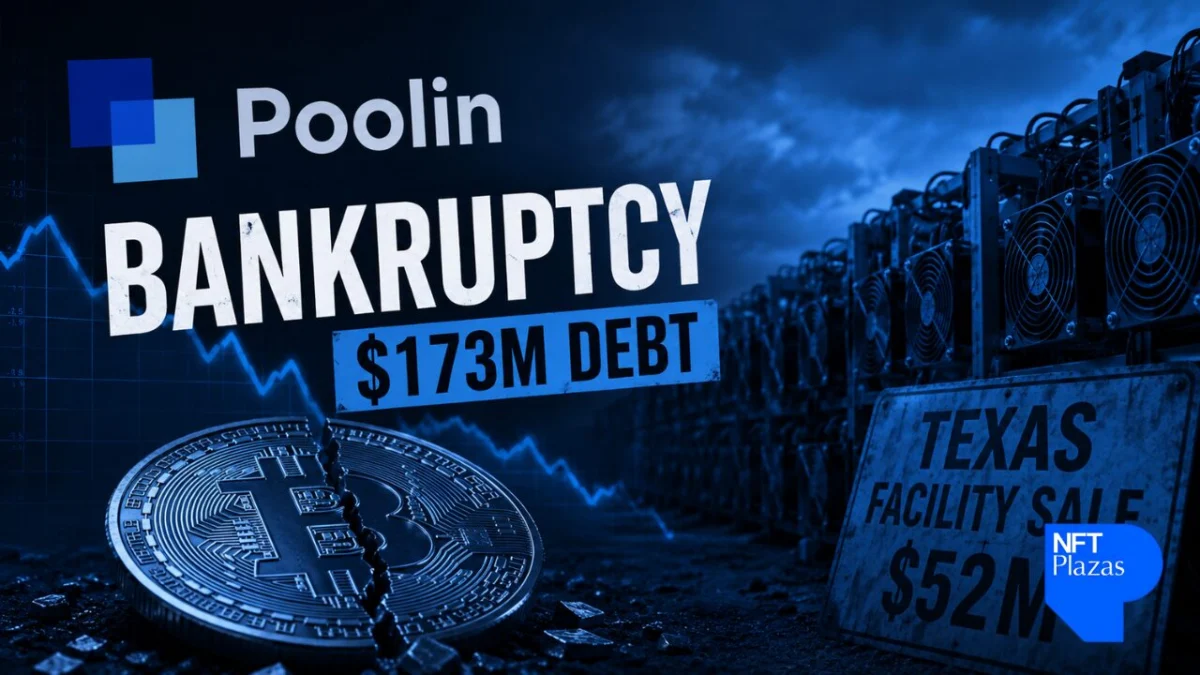
Poolin, once revered as the world’s largest Bitcoin mining pool, has formally initiated Chapter 11 bankruptcy proceedings in the United States, a pivotal move that underscores the persistent financial distress reverberating through the cryptocurrency sector since the tumultuous market crash of 2022. The Singapore-based entity, through its court filings, has disclosed a staggering $173.1 million in liabilities, signaling the culmination of a protracted struggle against dwindling liquidity and an overleveraged expansion strategy. This filing, submitted on July 22, 202X, in the U.S. Bankruptcy Court for the District of New Jersey, encompasses Poolin Technology and its American subsidiaries, Lonestar Dream and Lonestar Taproot, marking another high-profile casualty in the industry’s ongoing consolidation and shakeout. The company’s remaining mining assets, primarily located in Texas, are slated for sale, a critical step in the arduous process of repaying a multitude of creditors.
The Genesis of Insolvency: Frozen Wallets and Mounting Debts
The core of Poolin’s substantial financial burden can be traced directly to a critical decision made in September 2022, amidst the deepening crypto winter: the freezing of withdrawals from its Poolin Wallet. This drastic measure left thousands of users in limbo, unable to access their digital assets, and laid the foundation for the overwhelming majority of the company’s current liabilities. Court documents meticulously detail that approximately $163.7 million of the total debt comprises unsecured IOUs issued to these stranded wallet users. An estimated 11,700 customers, each holding balances exceeding $100, found their funds inaccessible, receiving in exchange promissory notes that represented future, yet uncertain, repayment claims. This episode not only eroded user trust but also ignited a wave of legal actions, with affected customers reportedly pursuing recourse in both U.S. and Singaporean jurisdictions.
The liquidity crisis at Poolin was not an isolated incident but rather a direct consequence of the broader contagion that swept through the cryptocurrency market in 2022. A series of catastrophic events, starting with the spectacular collapse of the Terra-LUNA ecosystem in May, quickly cascaded into the insolvencies of major industry players. June saw the implosion of the crypto hedge fund Three Arrows Capital (3AC), followed swiftly by the bankruptcy filing of lending platform Voyager Digital in July. These seismic events sent shockwaves across the market, triggering a precipitous decline in digital asset prices and exposing the fragility of highly leveraged crypto businesses. By November, the collapse of FTX, one of the largest cryptocurrency exchanges, further intensified the market downturn, creating an environment where even established entities like Poolin found it impossible to meet their obligations. As digital asset prices plummeted, the value of collateral backing Poolin’s substantial borrowings evaporated, pushing the company into an untenable position.
From Market Leader to the Brink: A Chronology of Poolin’s Rise and Fall
Poolin’s journey began in China in 2017, a period characterized by burgeoning interest in Bitcoin mining and the rapid expansion of industrial-scale operations. Leveraging the nation’s abundant and inexpensive energy resources, the company quickly ascended the ranks of the global mining landscape. By 2019, Poolin had cemented its position as the world’s largest Bitcoin mining pool, surpassing established competitors such as F2Pool and BTC.com. Its technological prowess and competitive fee structures attracted a vast network of miners, solidifying its status as a dominant force in the decentralized verification of Bitcoin transactions.
However, this trajectory of exponential growth faced an insurmountable obstacle in 2021 when the Chinese government enacted a sweeping ban on cryptocurrency mining. This policy shift fundamentally reshaped the global mining map, forcing countless operations, including Poolin, to seek new homes overseas. For Poolin, this meant a significant and costly relocation of much of its business to the United States, specifically to Texas, a state renowned for its deregulated energy market and perceived crypto-friendly environment. This forced migration necessitated massive investments in new mining infrastructure, a strategic pivot that, while necessary, significantly strained the company’s financial resources.
In its aggressive pursuit of establishing a formidable presence in Texas, Poolin embarked on a substantial borrowing spree. Court filings reveal that the company secured approximately $213 million in loans, collateralized by customer digital assets that, at their peak, were valued at nearly $356 million. This financing was earmarked to fuel the construction of new mining facilities, acquire cutting-edge equipment, facilitate customer withdrawals, and cover essential operating expenses. The inherent risk in using volatile digital assets as collateral became tragically apparent when crypto prices began their precipitous decline in 2022. As the market plummeted, the value of the pledged collateral eroded rapidly, triggering margin calls and ultimately leading to lenders liquidating much of the crypto assets. This cascading effect exacerbated Poolin’s liquidity crisis, transforming a challenging market environment into an existential threat.
Costly Expansion and Operational Hurdles in Texas

Beyond the broader crypto market downturn, Poolin’s ambitious and, in hindsight, overzealous expansion strategy played a significant role in its eventual collapse. The company had initially projected securing up to 600 megawatts (MW) of electricity for its Texas operations, a massive undertaking that would have solidified its position as a major player in North American mining. Based on these projections, Poolin placed large orders for mining equipment, anticipating the vast power capacity needed to run them.
However, the reality on the ground diverged sharply from these optimistic forecasts. Poolin reportedly only managed to secure approximately 100 MW of power capacity, a mere fraction of its anticipated needs. This significant shortfall left the company with a substantial surplus of expensive mining rigs that could not be deployed. Forced to offload this excess equipment, Poolin incurred considerable losses, recording approximately $8.8 million in losses from disposing of surplus hardware between 2023 and 2025. This operational miscalculation not only drained capital but also underscored the complexities and risks associated with large-scale infrastructure development in a rapidly evolving industry. The mismatch between anticipated and actual power availability proved to be a critical misstep, highlighting the challenges of scaling operations in a highly capital-intensive sector.
Interestingly, court documents also highlight a potential silver lining for Poolin’s remaining power infrastructure. In the current technological landscape, this infrastructure may hold greater value for artificial intelligence (AI) and high-performance computing (HPC) operators than for traditional Bitcoin mining. The burgeoning demand for robust data centers to power AI models and complex computations could attract additional, perhaps more lucrative, interest during the bankruptcy auction process, potentially offering a better recovery for creditors than if the assets were solely valued for crypto mining.
The Path Forward: Asset Sales and Creditor Recovery
As part of the Chapter 11 bankruptcy process, Poolin is actively seeking court approval to divest its two primary Bitcoin mining facilities located in West Texas. The company has provisionally agreed to a minimum sale price of $52 million for these assets. The proposed buyer, Thor CALAP LLC, has entered into "stalking-horse" agreements, covering Poolin’s facilities situated in Pyote and Tarbush. A stalking-horse bid sets a floor price for the assets, aiming to maximize their value for creditors by encouraging higher competing bids during the subsequent auction process. This sale will proceed under Section 363 of the U.S. Bankruptcy Code, a provision designed to facilitate the rapid and efficient sale of assets free and clear of liens, allowing for competitive bidding to ensure the best outcome. The proceeds generated from these sales will be crucial for the repayment of creditors through the structured bankruptcy process.
In preparation for this liquidation, Poolin permanently ceased all mining and hosting operations on July 10, 202X, prior to the bankruptcy filing. A small core team has been retained to manage the security of the remaining equipment and to provide essential support for the court-supervised asset sale. The outcome for Poolin’s creditors, particularly the 11,700 wallet users holding IOUs, will largely hinge on the final value realized from the Texas asset sale and the efficacy of the Chapter 11 proceedings in distributing these funds equitably. The process is often lengthy and complex, with various classes of creditors vying for their share of the diminished asset pool.
Broader Implications: Reshaping the Bitcoin Mining Landscape
Poolin’s bankruptcy serves as a stark reminder that the ripple effects of the 2022 crypto crisis continue to reshape the mining sector, even amidst Bitcoin’s price recovery in subsequent periods. The industry remains under significant pressure from several fronts: elevated operating costs, particularly for energy, which has become a volatile global commodity; reduced block rewards following the latest Bitcoin halving event in April 2024, which slashed miner revenues by 50%; and intensifying competition from more efficient, well-capitalized players.
The strategic pivot observed among many mining companies, exploring opportunities to repurpose their robust power infrastructure for AI data centers, is a testament to the search for more stable and predictable revenue streams outside the inherently volatile crypto mining space. This trend indicates a maturation of the infrastructure supporting digital assets, where underlying physical assets might find utility in adjacent, high-growth technological sectors. For the broader Bitcoin mining ecosystem, Poolin’s collapse underscores an ongoing trend of consolidation. Smaller, less efficient, or financially precarious operations are being squeezed out, leading to a more concentrated industry dominated by a few large-scale, institutionally backed players. This shift could have implications for the decentralization of Bitcoin’s hash rate, a core tenet of its security and censorship resistance.
The fall of Poolin, from its zenith as the world’s preeminent Bitcoin mining pool to its current state of insolvency, offers profound lessons for the entire cryptocurrency industry. It highlights the critical importance of robust risk management, the perils of aggressive expansion without commensurate operational capacity, and the devastating consequences of inadequate liquidity planning in the face of extreme market volatility. While Bitcoin’s price has shown resilience, the operational realities for miners remain challenging, demanding innovation, efficiency, and a diversified strategy to navigate the complexities of a rapidly evolving digital economy. The saga of Poolin will undoubtedly be studied as a case study in how quickly market leaders can falter when ambitious growth collides with unforeseen market downturns and mounting financial pressures.