admin
admin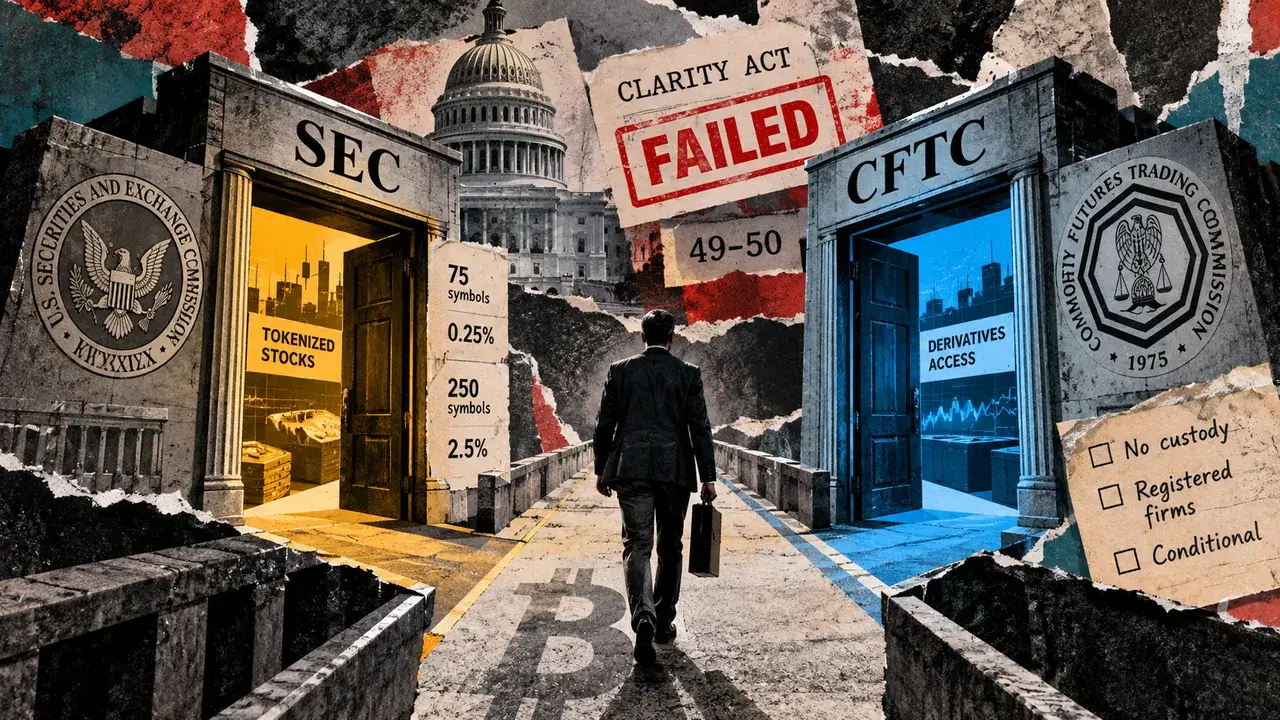
Two days after the United States Senate’s procedural failure to advance the CLARITY Act, a comprehensive legislative effort aimed at defining the regulatory landscape for digital assets, federal regulators have proactively carved out two narrower, albeit conditional, routes for crypto-linked market participation under existing legal frameworks. These actions by the Securities and Exchange Commission (SEC) and the Commodity Futures Trading Commission (CFTC) represent a pragmatic, albeit interim, approach to fostering innovation while awaiting more definitive congressional action.
SEC Paves Way for Tokenized Stock Trading Through a Five-Year Innovation Exemption
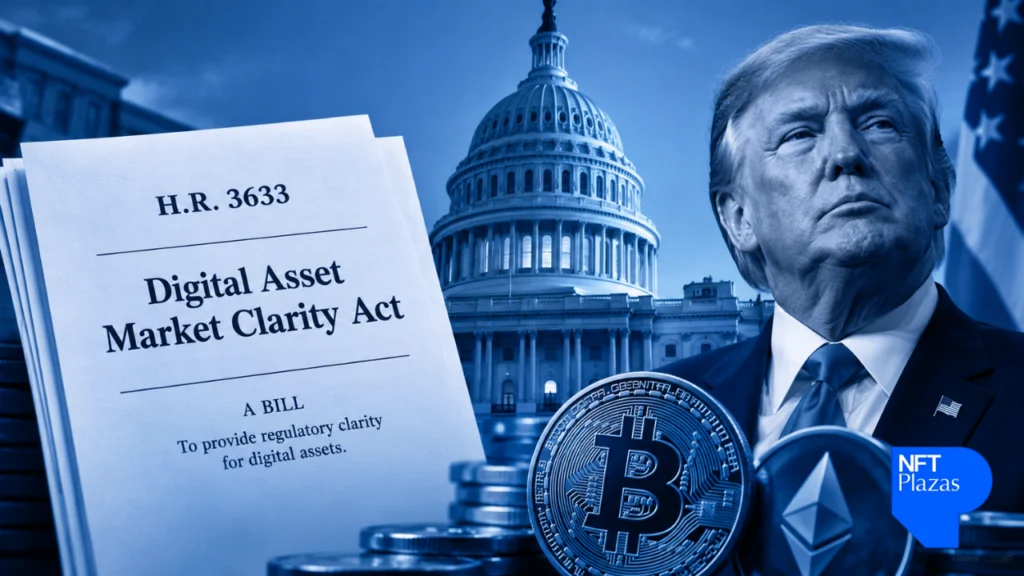
On September 17, 2026, the Securities and Exchange Commission unveiled a novel five-year pathway designed to permit permissioned trading venues to facilitate the exchange of tokenized U.S. stocks. This initiative, framed as an "Innovation Exemption," allows for the operation of Automated Market Makers (AMMs) within these specialized venues, operating under specific, carefully delineated conditions. The move comes just two days after the Senate’s cloture vote on September 15, 2026, on H.R. 3633, which ultimately failed to advance the CLARITY Act, marking a significant procedural setback for broad legislative reform in the digital asset space.
SEC Chairman Paul Atkins, in a statement accompanying the exemption, directly linked the agency’s action to the congressional impasse. He emphasized that the Commission was acting within its existing statutory authority, characterizing the exemption as a "bridge toward durable rulemaking." This suggests that while the current measures are temporary, they are intended to provide a testing ground for future, more permanent regulatory structures.
The SEC’s order establishes a new category of regulated entity: a "Tokenized Securities Venue" (TSV). Qualifying TSVs will be able to bring together buyers and sellers of tokenized U.S. equities through permissioned AMM liquidity pools without being classified as a traditional exchange under the Securities Exchange Act of 1934. Furthermore, certain firms that originate tokenized stocks from their proprietary accounts may also receive conditional relief from dealer registration requirements for those specific activities.
The duration of these exemptions is set to expire on September 17, 2031, unless modified by the SEC. Crucially, these provisions are not a broad liberalization of market access but rather a deliberately constrained experiment. The limitations are designed to manage risk and observe market dynamics. For "Tier 1" stocks, which generally represent the largest and most liquid companies, a TSV and its affiliates are capped at trading a maximum of 75 unique symbols. Furthermore, trading volume for any single Tier 1 stock is restricted to no more than 0.25% of its average daily share volume from the preceding month. For "Tier 2" stocks, the limits are slightly broader, allowing for up to 250 symbols and 2.5% of average daily share volume.
To ensure investor protection and maintain the integrity of the underlying assets, eligible tokenized stocks must meticulously preserve the economic and governance rights associated with their traditional counterparts, including dividend and voting rights. Notably, synthetic exposure tokens, rights, warrants, primary issuances, and initial offerings are explicitly excluded from this exemption.
A significant control point for issuers is also incorporated into the SEC’s framework. Before a TSV can list and trade stock tokenized by an unaffiliated third party, the venue must formally notify the issuer. A mandatory 30-day waiting period follows this notification, during which the issuer has the opportunity to object to the listing. If an objection is lodged within this window, the tokenized stock is prohibited from trading on that particular TSV. This provision grants issuers a degree of oversight and veto power, aligning with traditional securities market practices.
While the underlying blockchain technology may be public and permissionless, the market operations within a TSV are strictly permissioned. TSVs are mandated to establish robust access standards, implement rigorous participant verification processes (including wallet addresses), and clearly disclose any circumstances under which access might be denied or limited. Smart contracts governing these operations must be publicly auditable, and the venue retains responsibility for any delegated verification tasks.
The SEC’s order substitutes full exchange oversight with a tailored set of conditions, rather than removing market safeguards altogether. TSVs are required to publish transaction data, maintain comprehensive records, cease trading if the underlying stock is halted on its primary exchange, disclose operational risks, and report any significant systems events. Furthermore, existing securities laws, including federal antifraud and antimanipulation rules, sanctions compliance, and potential applicability of SEC, self-regulatory organization (SRO), and anti-money laundering (AML) duties for participants, remain in full force. The exemption is specifically confined to the defined TSV model and does not extend to other forms of securities activity.
CFTC Broadens Staff Relief, Enabling Smoother Access to Derivatives Markets
In parallel, on the same day as the SEC’s announcement, the Commodity Futures Trading Commission’s (CFTC) Market Participants Division issued Letter 26-25. This letter generalizes and expands upon prior staff no-action relief previously granted to a specific firm, Phantom, in March 2026 (Letter 26-09). The new relief, available to qualifying passive software providers on substantially similar terms, is not limited to cryptocurrency wallets and aims to facilitate user connectivity to regulated derivatives markets without requiring these providers to register as introducing brokers for the covered activities.
This broadened relief allows eligible software providers to display market and position data, market specific derivatives contracts and registered firms, solicit users, receive revenue sharing or transaction-based fees, and transmit user-directed orders. These functionalities, without the relief, could otherwise trigger registration requirements as an introducing broker or associated person under CFTC regulations.
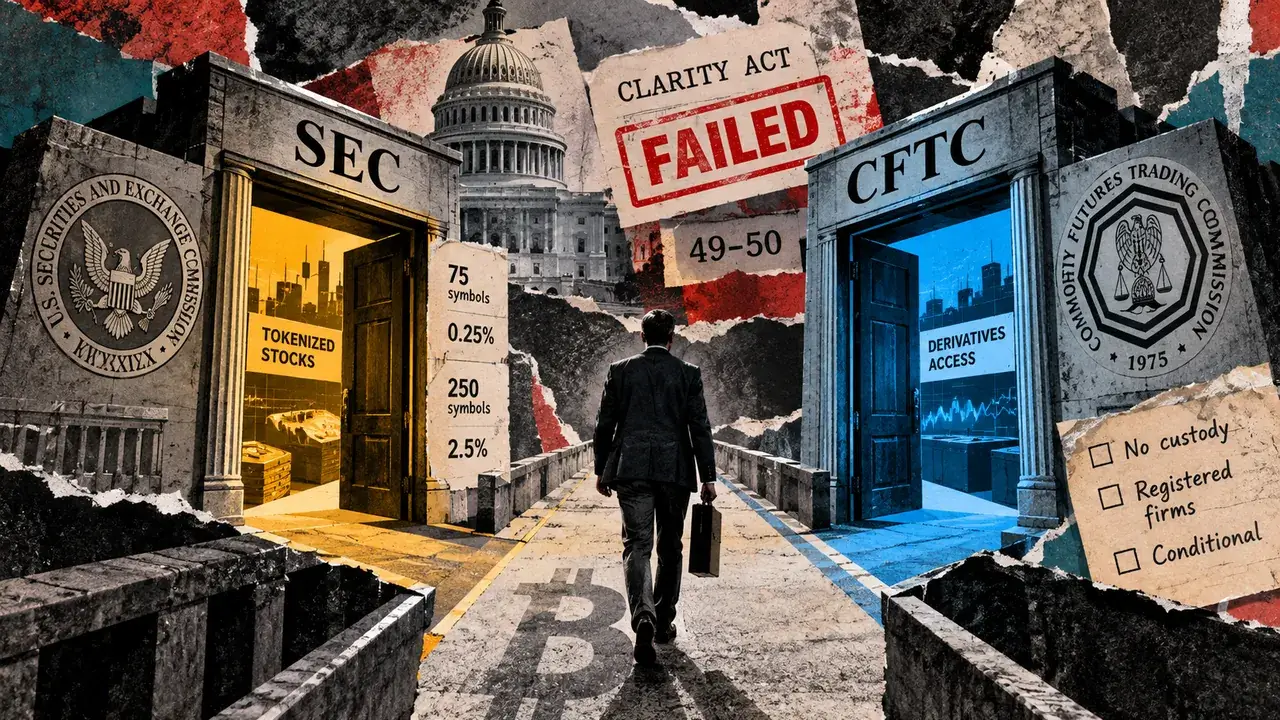
However, the relief is narrowly tailored. Crucially, the software provider is prohibited from holding customer assets, generating explicit buy or sell signals, or exercising discretion over order routing or execution. Letter 26-25 specifically addresses the division’s recommendation against enforcement for failure to register as an introducing broker or associated person for the defined activities. It does not offer a blanket exemption from other registration categories or broader legal obligations.
A key component of the CFTC’s approach is that users must be onboarded directly with a designated contract market (DCM), futures commission merchant (FCM), or introducing broker. Users must maintain the ability to reach these registered entities independently of the software provider. Furthermore, funds securing derivatives positions remain securely held with a derivatives clearing organization (DCO) and/or a clearing-member FCM.
The software provider operating under this relief must also adhere to stringent conditions. These include comprehensive conflict of interest and risk disclosures, marketing controls modeled on National Futures Association (NFA) rules, robust recordkeeping, adherence to regulatory notices, and shared liability with each participating registrant for violations connected to the covered activity.
This framework effectively delineates a clearer role for digital wallets and other user interfaces without shifting core regulated market functions into the software layer. A provider can enhance the discoverability and accessibility of derivatives products, but the designated market remains responsible for trading execution, registered firms handle user onboarding, and a DCO or FCM maintains custody of collateral.
The legal foundation of the CFTC’s action is arguably less durable than the SEC’s time-limited Commission order. Letter 26-25 represents the views of a single division within the CFTC, is not binding on the Commission itself, and is subject to modification, suspension, or termination. Unless superseded by relevant Commission rulemaking or guidance, its operational lifespan is tied to those future regulatory developments.
Analysis: Conditional Pathways Versus Legislative Certainty
The concurrent actions by the SEC and CFTC represent a significant development in the ongoing effort to integrate digital assets into the existing financial infrastructure. While these regulatory moves address distinct registration challenges, their common thread is the creation of conditional operating space without establishing universal market-wide rights.
For tokenized equities, market access is contingent upon a TSV’s adherence to permissioning standards, strict symbol and volume caps, the absence of issuer objections, and continuous compliance with the SEC’s order. In the derivatives space, the interface provider must maintain a passive role, with users, collateral, and execution remaining firmly within established registered market infrastructure.
These carefully crafted pathways offer a degree of utility for controlled product launches. Companies can now develop and test innovative solutions within specified parameters, rather than waiting indefinitely for congressional action. Users may benefit from more streamlined access to tokenized securities and regulated derivatives, while regulators gain valuable real-world data to inform future rulemaking.
However, the inherent design of these measures also introduces uncertainty. Neither action definitively settles the broader jurisdictional allocation between the SEC and CFTC regarding digital assets. Crucially, neither grants an unconditional right for any venue, wallet, or user to participate in these markets. All other applicable federal and state regulatory obligations remain outside the scope of this narrow relief, and future agency interpretations could significantly alter the economic viability of relying on these conditional pathways.
As of the announcement, no specific companies have publicly committed to launching operations under these new September 17 pathways. The CFTC letter indicates that inquiries were made by unnamed, similarly situated providers and their legal counsel following the initial Phantom relief, suggesting potential interest.
The true test of these initiatives will lie in tangible, public commitments and observable market behavior. For the SEC’s route, this will involve formal notices from operators willing to accept the stringent caps, disclosure duties, and the issuer-objection process, followed by evidence that sufficient liquidity can develop within these constraints. On the CFTC side, it will require software providers to forge agreements with registered derivatives firms, submit the necessary undertakings, and demonstrably offer an interface that remains passive in practice.
Ultimately, market dynamics will reveal whether these conditional access points can scale and evolve into durable market channels or remain confined to the realm of regulatory experiments. While the SEC and CFTC have effectively demonstrated that U.S. market access for digital assets can expand without immediate legislative intervention, they have not yet provided the certainty, uniformity, or jurisdictional clarity that comprehensive legislation could deliver. The path forward remains a complex interplay of regulatory agility and the persistent demand for clear, predictable market structures.