admin
admin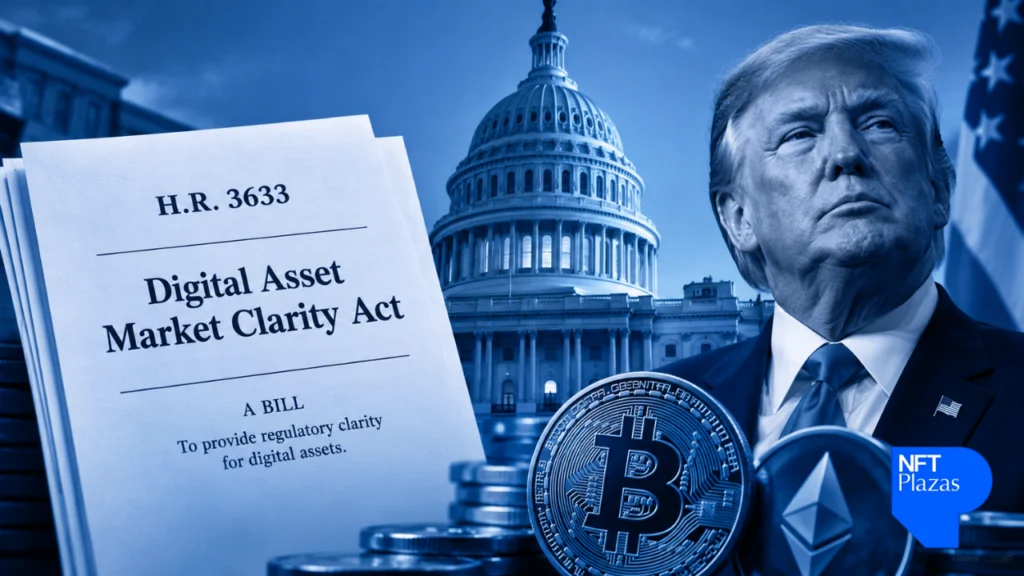
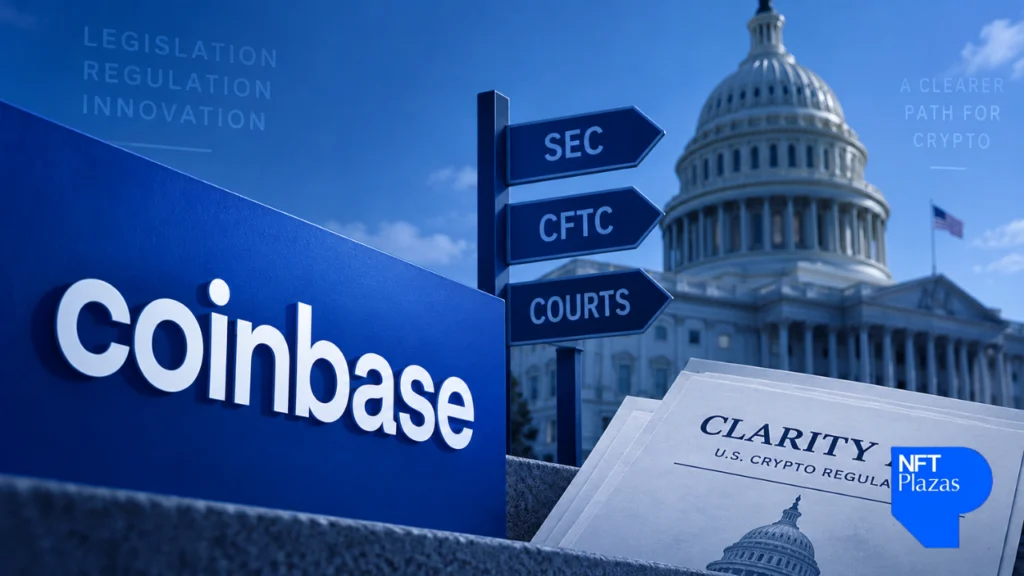
Senate Republicans have released what they are terming the "final" draft of the CLARITY Act, initiating a renewed and urgent push to advance the long-anticipated cryptocurrency market structure bill before Congress enters the final, critical stretch of the 2026 legislative calendar. This comprehensive, 635-page proposal, unveiled late Sunday by Senators Cynthia Lummis (R-WY), John Boozman (R-AR), and Tim Scott (R-SC), represents the culmination of over a year of intense bipartisan negotiations, notably incorporating 126 substantive changes specifically requested by Senate Democrats. The timing is crucial, preceding a key procedural cloture vote scheduled for Tuesday, September 15, which will determine the bill’s immediate future.
The Quest for Regulatory Clarity: A Long-Awaited Framework
For years, the United States digital asset market has operated under a patchwork of regulations, often characterized by "regulation by enforcement" from agencies like the Securities and Exchange Commission (SEC) and the Commodity Futures Trading Commission (CFTC). This ambiguity has been a persistent source of frustration for innovators, investors, and traditional financial institutions alike, leading to calls for a clear, comprehensive federal framework. The CLARITY Act (Cryptocurrency and Ledger Assets Regulatory Integrity Act) aims to provide precisely that, delineating jurisdictional lines, establishing consumer protections, and fostering responsible innovation.
The genesis of this legislative effort can be traced back to growing recognition within Congress of the burgeoning crypto economy, which, by early 2026, commanded a global market capitalization exceeding $3 trillion. Despite this rapid expansion, the U.S. risked falling behind other jurisdictions, such as the European Union with its MiCA (Markets in Crypto-Assets) regulation, in establishing a coherent legal environment. Senators Lummis and Boozman, both long-time advocates for sensible crypto regulation, initially introduced earlier versions of the bill, aiming to classify most digital assets as commodities under CFTC oversight while providing clear rules for stablecoins and exchanges. The inclusion of Senator Tim Scott, a prominent voice on financial services, underscores the Republican leadership’s commitment to seeing this bill through. The journey has been fraught with challenges, including ideological divides, jurisdictional turf wars between regulatory bodies, and concerns over illicit finance and consumer protection. This "final" draft, therefore, represents a significant attempt to bridge these gaps through extensive compromise.
Key Amendments: Navigating Political and Economic Divides
The revised CLARITY Act addresses several contentious issues, reflecting the intricate dance of legislative compromise. These include significant provisions related to ethics for public officials, the regulation of stablecoin rewards, and the scope of protections for blockchain developers.
Addressing Executive Ethics: The Trump Factor
Perhaps one of the most politically charged aspects of the negotiations revolved around ethics provisions, particularly concerning the involvement of federal officials and their families in the cryptocurrency space. Former President Donald Trump, who has been actively involved in various cryptocurrency ventures since leaving office, became a central figure in this debate. Reports from his financial disclosures indicated substantial crypto-related income, exceeding $1.4 billion in 2025 alone, derived from entities such as World Liberty Financial, a USD1 stablecoin project, and the TRUMP memecoin. These revelations raised significant questions about potential conflicts of interest, especially as his administration grappled with shaping cryptocurrency policy.

To mitigate these concerns, the revised CLARITY Act now incorporates most of a bipartisan ethics proposal championed by Senators Thom Tillis (R-NC) and Ruben Gallego (D-AZ). This framework extends ethics restrictions to federal public officials and employees, including the President, Vice President, members of Congress, and their spouses. Specifically, these provisions would aim to prevent conflicts of interest arising from direct financial ties to the crypto industry. Senator Lummis stated that President Trump had "voluntarily agreed" to these new restrictions, framing it as a major concession that should pave the way for Democratic support. "Democrats got what they wanted; now they need to take yes for an answer," Lummis asserted, signaling a belief that this issue, a significant political obstacle, had been overcome.
However, a critical observation remains: the language of the bill does not extend these same restrictions to other family members, notably the children of public officials. This omission leaves a potential loophole, as family members could still engage in crypto-related businesses, potentially creating indirect conflicts or the appearance of impropriety. While the inclusion of the Tillis-Gallego framework, which also provides a role for state attorneys general in enforcing conflict-of-interest rules, was a crucial condition for many Democrats, the narrowed scope regarding other family members could still be a point of contention for some lawmakers committed to broader ethical safeguards.
Stablecoin Stability: Banking Concerns and a New Circuit Breaker
Another major point of contention has been the regulation of stablecoins, particularly concerning rewards offered on these digital assets. The cryptocurrency industry has increasingly used stablecoin rewards – often akin to interest payments or staking incentives – to attract users and encourage the adoption of their platforms. However, traditional banking groups, including the powerful American Bankers Association (ABA), have vehemently argued that such incentives could draw substantial deposits away from conventional banks, particularly community banks. These banks often rely on local deposits to fund local lending initiatives, making them vital to regional economies. The ABA has consistently pushed lawmakers to close what it describes as a "stablecoin interest loophole," asserting that unregulated rewards could destabilize the traditional financial system.
In response to these concerns, the latest CLARITY Act draft introduces a significant provision: it empowers the Treasury Secretary with the authority to impose an 18-month "circuit breaker" on certain stablecoin rewards. This measure would be triggered if payment stablecoins cause "substantial deposit outflows" from the banking system. While the legislation generally prohibits platforms from paying interest on idle payment stablecoins, rewards tied to active stablecoin use would typically remain permitted. The circuit breaker is designed as an emergency safeguard, providing a temporary mechanism to address potential systemic risks rather than imposing a permanent ban on all rewards. This compromise aims to balance innovation in the stablecoin market with the stability concerns of the traditional banking sector, potentially garnering support from lawmakers wary of the disruptive potential of digital assets on established financial institutions. For the crypto industry, while a temporary restriction is not ideal, it may be viewed as a necessary evil to achieve broader regulatory clarity.
Balancing Innovation and Oversight: Developer Protections and Market Integrity
The CLARITY Act also redefines the scope of protections for blockchain developers under what was previously known as the Blockchain Regulatory Certainty Act. Earlier iterations sought to provide broad legal certainty for developers building decentralized technologies. However, the revised language significantly narrows these protections, focusing primarily on matters involving the Bank Secrecy Act (BSA) and civil enforcement actions.
Crucially, Republicans removed broader language that might have shielded developers from certain federal criminal charges, specifically prosecutions under 18 U.S.C. 1960. This particular statute has been a potent tool for U.S. prosecutors in cases involving developers associated with privacy-focused cryptocurrency services, such as Tornado Cash and Samourai Wallet, which authorities have linked to money laundering and illicit finance. The narrowing of these protections reflects a legislative effort to strike a balance: to provide a degree of regulatory certainty for legitimate blockchain development while ensuring that the law enforcement community retains critical tools to combat criminal activity within the digital asset space. While this change might be a disappointment for some in the privacy-focused crypto community, it is a pragmatic concession aimed at securing broader legislative support by addressing national security and anti-money laundering concerns.
Furthermore, the bill includes tightened provisions from the Agriculture Committee, introducing additional guardrails targeting affiliate trading, conflicts of interest, and vertical integration involving digital commodity exchanges, brokers, and dealers. These measures aim to enhance market integrity and prevent potential abuses or manipulations that could arise from entities controlling multiple facets of the digital asset trading ecosystem. The legislation also clarifies when state consumer-protection laws can apply to digital asset businesses, further refining the jurisdictional landscape and ensuring that consumers are protected across different levels of governance.

The Perilous Path Through Congress: A Race Against the Clock
Despite these significant compromises and the bipartisan effort invested, the CLARITY Act faces a remarkably narrow and challenging path to passage through Congress. The immediate hurdle is the cloture vote scheduled for Tuesday, September 15. A cloture vote is a procedural mechanism in the Senate designed to end debate and bring a measure to a vote. It requires a supermajority of 60 senators to pass.
The current political arithmetic in the Senate presents a daunting challenge. Republicans hold 53 seats, meaning they would need at least seven Democrats or independents to cross the aisle and support the motion, assuming every Republican votes in favor. This is a substantial ask, especially on a bill that, despite its compromises, still touches on ideologically sensitive areas and evokes differing views on financial regulation and technological innovation.
A successful cloture vote, while a critical victory, would not immediately send the bill to the House. Instead, it would merely initiate the formal debate process in the Senate. Following this, senators would still need to navigate potential amendments, further negotiations, and another procedural vote before the bill could achieve final passage in the upper chamber. Should it pass the Senate, the CLARITY Act would then move to the House of Representatives, where it would either be considered in its Senate-approved form or reconciled with the House’s own potential legislation on digital assets. Only after successful passage through both chambers could the measure reach the President’s desk for signature into law.
Time is rapidly becoming the most significant constraint. The Senate’s tentative schedule includes a state work period commencing October 5, effectively pausing legislative activity. More critically, Election Day is set for November 3, just weeks later. House leaders have also reportedly canceled scheduled work weeks later in September, further constricting the legislative window. This compressed timeline leaves lawmakers with only a limited opportunity to complete such a complex and far-reaching piece of legislation. Senator Lummis has previously issued a stark warning: if the CLARITY Act fails to pass during the current Congress, lawmakers could be forced to wait until 2030 for another opportunity, given the cyclical nature of legislative priorities and the difficulty of building such bipartisan consensus from scratch.
Industry Reactions and Future Outlook
The release of the latest draft and the renewed push have undeniably improved market expectations, albeit cautiously. Prediction markets, often seen as a barometer of political probabilities, have adjusted the likelihood of the bill becoming law this year to roughly one-third, a notable increase from the low-20% range prior to the draft’s release. This uptick reflects a recognition that the bipartisan compromises, particularly on ethics and stablecoins, have made the bill more palatable to a broader spectrum of lawmakers.
For the cryptocurrency industry, Tuesday’s cloture vote transcends a mere procedural hurdle. It represents the clearest and most significant test yet of whether the protracted months of negotiations over market structure, stablecoin regulation, developer protections, and political ethics have genuinely produced a compromise capable of winning the necessary bipartisan support. A successful vote would signal a tangible path forward for comprehensive federal rules governing the U.S. digital asset market, potentially unlocking further institutional investment and fostering greater innovation by reducing regulatory uncertainty. Conversely, a failure to secure the required 60 votes would likely plunge the industry back into a state of prolonged limbo, delaying clarity for years and potentially ceding leadership in the global digital asset space to more proactive jurisdictions.
The CLARITY Act, in its latest iteration, embodies a critical juncture for digital asset regulation in the United States. Its fate hinges on the ability of a deeply divided Congress to coalesce around a framework that balances innovation with oversight, and political realities with economic necessities. The coming days will reveal whether this "final" push can indeed bring long-awaited clarity to the complex world of cryptocurrency.