admin
admin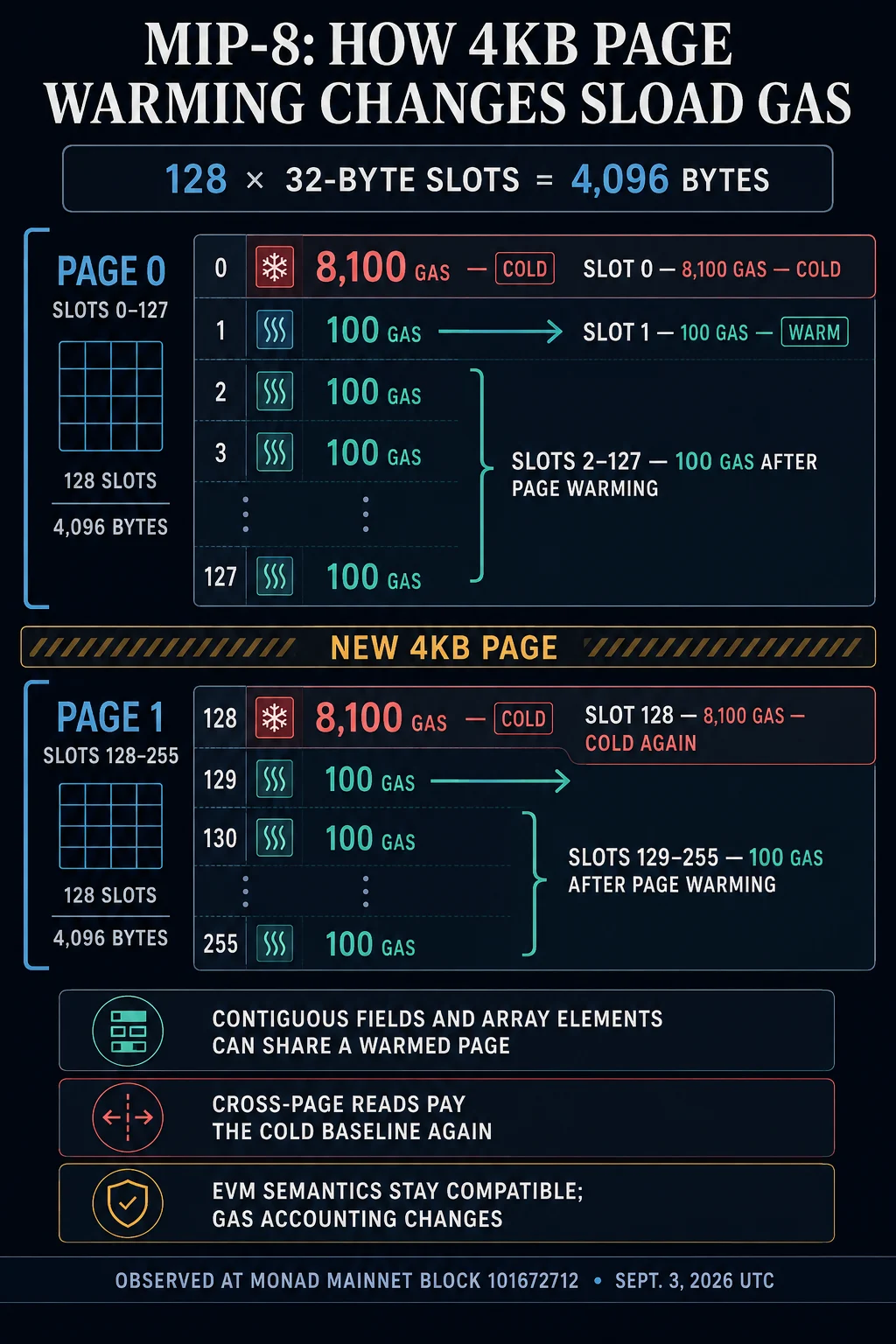
Monad, an Ethereum Virtual Machine (EVM)-compatible blockchain, successfully activated its MonadTen revision on its mainnet at 14:30 UTC on September 2nd. This significant upgrade, known as MIP-8, fundamentally alters the network’s charging mechanism for smart contracts when reading data from storage. The key change involves shifting from a "slot-by-slot warming" approach to a more efficient system that groups 128 consecutive storage slots together for charging purposes. This optimization promises to dramatically reduce the cost of data access for developers and users on the Monad network.
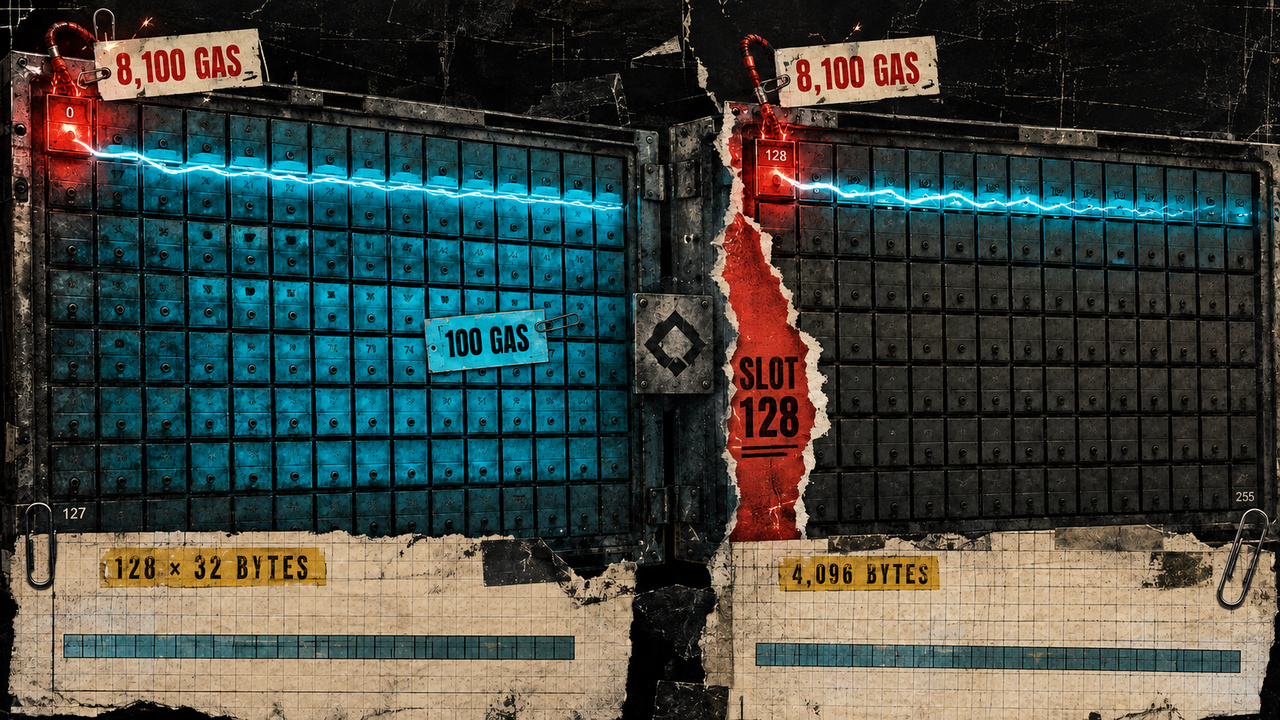
The immediate impact of this upgrade was vividly demonstrated in the network’s mainnet block 101672712. This block recorded an initial gas cost of 8,100 for reading slot 0. Subsequently, reading slot 1, which resides on the same "storage page," incurred a drastically reduced cost of only 100 gas. This stark contrast highlights the new efficiency. The cost then reset to 8,100 gas for slot 128, marking the beginning of the next storage page, reinforcing the page-based cost model. The official MonadTen release notes confirm the activation timestamp as Unix timestamp 1788359400, indicating that prior to this precise moment, the network operated under the rules of MonadNine.
The Evolution of Storage Costing: From Individual Reads to Page-Based Efficiency
The technical specification for MIP-8, detailed in its final form, defines a "storage page" as a contiguous block of 128 words, with each word being 32 bytes. This equates to a total of 4,096 bytes per storage page. The core principle of the new model is that the first read operation (SLOAD) performed on any part of a storage page incurs the standard, higher gas fee of 8,100. However, any subsequent read operations within that same warmed page during the same transaction are significantly cheaper, costing only 100 gas. This "warming" effect, however, is subject to rollback if the execution context of the call frame reverts, ensuring data integrity and predictable transaction behavior.
To illustrate the dramatic shift, consider the previous MonadNine model. Under that system, accessing two distinct, previously untouched storage slots, even if they were adjacent, would each incur the full 8,100 gas cost. This meant that developers often faced high fees for simply reading related pieces of data stored sequentially. With the implementation of MIP-8 and its new opcode pricing, the same pair of adjacent, untouched slots would now cost 8,100 gas for the first read, and then a mere 100 gas for the second read, provided both slots fall within the same 128-slot page boundary. This represents a potential cost reduction of up to 98.76% for accessing related data within a single page.
Optimizing for Developer Efficiency and Cost Savings
The implications for smart contract development are substantial. Many common data structures in Solidity, such as sequential state variables, fields within a struct, and elements of an array, naturally occupy consecutive storage slots. The MIP-8 upgrade directly benefits these common patterns, as repeated reads of such contiguous data are now highly likely to remain within a "warmed" page, thereby qualifying for the reduced 100 gas fee. This creates a strong economic incentive for developers to structure their smart contracts in a way that maximizes data locality.
While accessing a mapping key typically resolves to a dispersed storage location, potentially on a different page, the data within a struct stored under that mapping key still benefits from the page-level discount. This means that even in more complex data arrangements, developers can still leverage the cost efficiencies for related fields.
It is important to note that the MIP-8 upgrade does not entirely eliminate the higher gas costs. Reads that span across different storage page boundaries will still incur the 8,100 gas fee for each new page accessed. Similarly, storage access patterns that are intentionally hashed or unaligned, which were already subject to Monad’s "cold baseline" gas costs, will continue to experience these higher fees. The savings achieved by MIP-8 are directly proportional to the number of storage slots a transaction touches and how effectively those slots cluster within the same 128-slot page boundaries.
Technical Considerations and Compatibility
The MIP-8 specification is designed to preserve the core EVM execution semantics, ensuring a high degree of compatibility with existing Ethereum tooling and development practices. However, it does necessitate adjustments in how certain tools operate. For instance, access list generation (as defined in EIP-2930) will now need to consider these storage pages, as entries in access lists will effectively "warm" entire pages. Similarly, the formats used for generating storage proofs will need to be adapted to accurately represent this new page-based storage model.
The Monad development team has identified contracts that hardcode storage-opcode gas costs directly within their logic as the primary class of compatibility risk. Such contracts might not dynamically account for the new page-warming mechanism, potentially leading to inaccurate gas estimations or unexpected execution costs if not updated. Developers are strongly advised to review their smart contracts and any associated tooling to ensure they are compatible with the MonadTen changes.
A Strategic Move Towards Scalability and Affordability
The introduction of MIP-8 is a strategic move by Monad to enhance its scalability and affordability. By optimizing data storage access, Monad aims to lower transaction costs, making its platform more attractive for decentralized applications (dApps) that are data-intensive. This is particularly relevant in the current blockchain landscape, where high gas fees on other networks continue to be a significant barrier to widespread adoption.
The timeline of Monad’s development indicates a consistent focus on performance and cost-efficiency. The transition from MonadNine to MonadTen, culminating in the MIP-8 upgrade, represents a mature step in the network’s evolution. The rigorous testing and eventual mainnet activation suggest a high level of confidence in the upgrade’s stability and effectiveness.

Expert and Community Reactions (Inferred)
While specific public statements from third-party entities immediately following the upgrade are not detailed in the provided information, the nature of such an optimization typically elicits positive reactions from the developer community. Developers actively building on or considering Monad would likely view this as a significant improvement, directly impacting their ability to build performant and cost-effective dApps. The reduction in data access costs can translate into lower operational expenses for dApps, potentially leading to lower fees for end-users.
Industry analysts often point to such protocol-level optimizations as key differentiators for blockchain networks. The ability to offer significantly lower transaction costs for common operations can attract a larger user base and foster innovation. The emphasis on developer experience and cost reduction is a recurring theme in the growth strategies of many Layer-1 and Layer-2 blockchain solutions.
Broader Implications for the Blockchain Ecosystem
The success of MIP-8 on Monad could serve as a blueprint for other EVM-compatible blockchains seeking to optimize their storage mechanisms. The concept of grouping data for more efficient access is not entirely new, but the specific implementation and the magnitude of cost reduction achieved by Monad are noteworthy. This upgrade highlights the ongoing innovation within the EVM ecosystem, demonstrating that even foundational aspects like storage access can be significantly improved.
Furthermore, the focus on data locality as a driver for cost savings encourages a more mindful approach to smart contract design. Developers will likely be incentivized to refactor their code to take advantage of these optimizations, leading to more efficient and performant dApps across the board. This, in turn, can contribute to a more sustainable and scalable blockchain infrastructure.
The Monad network’s commitment to iterative improvements, as evidenced by the MonadTen upgrade and MIP-8, positions it as a contender in the competitive Layer-1 space. By directly addressing a common pain point – the cost of data access – Monad is not just enhancing its own platform but also contributing to the broader ecosystem’s quest for greater efficiency and affordability. The long-term impact will be observed as more developers leverage this cost advantage to build increasingly sophisticated and accessible decentralized applications.