admin
admin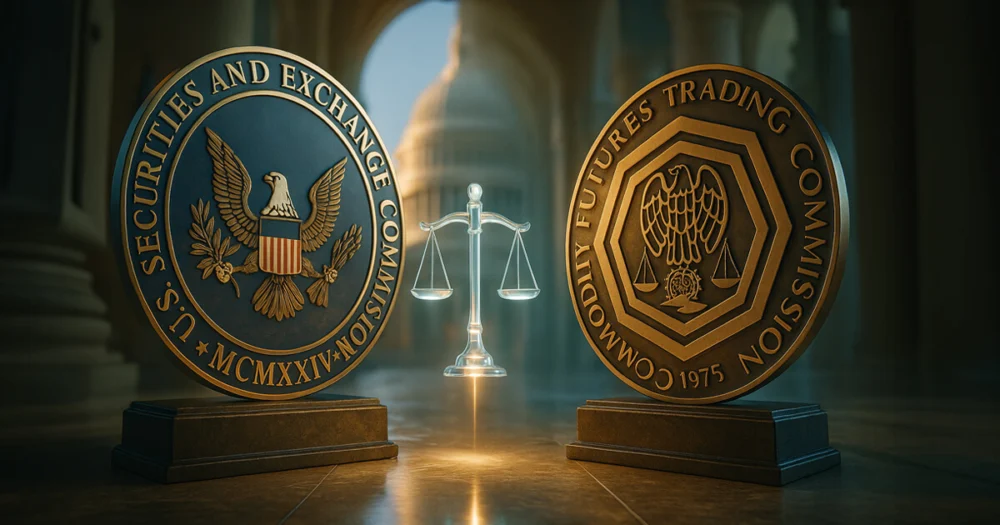
Washington’s long-standing debate over regulatory authority for digital assets is intensifying as two competing Senate drafts emerge, each proposing a distinct path forward for the classification and oversight of cryptocurrencies. These legislative proposals, released by the Senate Agriculture Committee and the Senate Banking Committee, signal a pivotal moment for the U.S. digital asset market, potentially reshaping everything from spot Bitcoin trading to Ethereum disclosures and the rulebooks governing cryptocurrency exchanges. The outcome of this legislative tug-of-war could redefine the jurisdictional landscape, impacting market participants, investors, and the broader trajectory of innovation in the blockchain space.
The current regulatory environment in the United States has been characterized by a degree of ambiguity, with the Securities and Exchange Commission (SEC) and the Commodity Futures Trading Commission (CFTC) often at odds over which agency holds primary jurisdiction. This has led to a complex and often challenging environment for businesses operating in the digital asset sector, fostering uncertainty and stifling potential growth. The House of Representatives took a significant step earlier this year by passing the Digital Asset Market Clarity Act of 2025, a bipartisan effort aimed at providing a clearer framework. However, the Senate’s inaction on this bill, coupled with the recent emergence of these two distinct drafts, indicates that the legislative journey is far from over and that a consensus may be difficult to achieve.
The Agriculture Committee Draft: Expanding CFTC Authority Over Digital Commodities
One of the most significant proposals comes from the Senate Agriculture Committee, championed by Senators John Boozman and Cory Booker. This draft advocates for a substantial expansion of the CFTC’s purview, designating it as the primary regulator for "digital commodities" and their associated spot markets. This approach aligns with the CFTC’s existing mandate over traditional commodity markets, suggesting a desire to apply established regulatory principles to the burgeoning digital asset space.
Under this proposed framework, entities operating as exchanges, brokers, and dealers in digital commodities would be required to register with the CFTC. This registration process would necessitate adherence to a set of rules designed to ensure market integrity, akin to those governing agricultural futures or precious metals. A key tenet of the draft is the mandate for intermediaries to utilize qualified custodians and to segregate customer assets. This measure is intended to safeguard investor funds and prevent potential conflicts of interest that could arise from affiliated entities operating within the same ecosystem.
The draft also acknowledges the potential for overlapping jurisdictions and proposes a mechanism for joint rulemaking between the CFTC and the SEC. This would allow for coordinated oversight of entities or activities that may fall under the purview of both agencies. However, complex and decentralized areas, such as Decentralized Finance (DeFi), are explicitly deferred for future deliberation, indicating a pragmatic approach to tackling the most intricate aspects of the digital asset landscape.
This bill builds upon the foundation laid by the House Clarity Act, aiming to bring the trading of digital assets like Bitcoin on U.S. spot platforms under the direct oversight of the CFTC. Such a shift would necessitate these platforms to register as digital-commodity exchanges, comply with new capital and custody requirements, and implement enhanced protections for retail investors. The standardization of data sharing across trading venues, a crucial element for market surveillance, would also be a likely outcome, potentially benefiting participants such as ETF issuers who rely on comprehensive market data. While ETFs themselves would remain under SEC jurisdiction, the underlying spot markets could see a significant regulatory shift.
The implications of moving Bitcoin spot oversight to the CFTC are profound. It would steer exchanges towards a regulatory logic more aligned with commodity markets, emphasizing transparent reporting and robust market surveillance over the detailed investor disclosures typically required by securities regulations. This could lead to a more accessible and understandable market for analysts and traders, fostering greater confidence in market quality and liquidity. Despite the CFTC’s expanded role, the SEC would retain authority over securities-based instruments and crypto futures, meaning that a dual oversight framework would persist, albeit with a clearer delineation of responsibilities.
The Banking Committee Draft: Defining "Ancillary Assets" and a Path to Decentralization
In contrast, the Senate Banking Committee, under the leadership of individuals like Senator Sherrod Brown, has put forth its own legislative proposal, the Responsible Financial Innovation Act. This draft adopts a different philosophical approach, focusing on the nuanced nature of digital assets that can occupy a gray area between securities and commodities. A central innovation of this bill is the introduction of the term "ancillary asset," defined as a "fungible digital commodity" distributed through an arrangement that also constitutes an investment contract.

This framework grants the SEC explicit authority to oversee these "ancillary assets." Issuers would be required to provide comprehensive disclosures regarding token distributions, governance structures, and associated risks. Crucially, the draft allocates approximately two years for the SEC to finalize a formal rule defining what constitutes an "investment contract" in the context of digital assets. This mandate aims to address the long-standing ambiguity surrounding the Howey Test and its application to cryptocurrencies.
Furthermore, the Banking Committee’s draft introduces a novel "decentralization certification process." This mechanism would allow a digital asset project to transition out of securities treatment once network control falls below certain predefined thresholds. This "escape hatch" is designed to accommodate the evolution of blockchain projects, particularly those with strong ties to active development and community governance, such as Ethereum. A token could initially be subject to SEC oversight, including disclosure requirements and investor protections, but could subsequently "graduate" to a different regulatory status as its governance becomes sufficiently decentralized.
This structured approach addresses a critical gray area that has plagued the industry since the early days of projects like the DAO. It compels the SEC to articulate, in writing and through a formal rulemaking process, its understanding of decentralization in practice, rather than relying on case-by-case enforcement actions. This provides greater predictability for developers and entrepreneurs.
Under this model, practical distinctions would become sharper. Bitcoin, widely considered a decentralized digital commodity, would likely continue to fall under the CFTC’s purview. Tokens with clear ties to specific enterprises or development teams, however, would likely remain within the SEC’s "ancillary asset" regime until they demonstrate sufficient decentralization. Centralized exchanges would find themselves navigating both regulatory frameworks. They would need to register with the CFTC as digital-commodity exchanges for their spot crypto operations while simultaneously adhering to SEC oversight for any listed securities.
The combined effect of such a regime could necessitate U.S. platforms to adopt dual registration, implement stricter capital reserves, and enhance the transparency of their trading books. The Banking Committee’s draft also imposes specific deadlines for rulemaking, injecting a sense of urgency into the regulatory process.
Navigating the Unknowns: Timing, Coordination, and Opposition
While both Senate drafts aim to bring much-needed clarity, significant unknowns remain. The timing of implementation is a major factor. The Agriculture Committee’s draft leaves key questions regarding rulemaking and consultation periods less defined, whereas the Banking Committee’s proposal includes more concrete timelines. Both legislative efforts, however, are contingent on future coordination rules and public consultations before any regulations take effect.
The House version of the Clarity Act has already navigated its chamber, but the Senate proposals are still very much in the discussion phase. Opposition from various stakeholders, including industry groups concerned about the burden of compliance and those advocating for different regulatory approaches, has already begun to surface. Political divides within both parties could also complicate the path to legislative consensus.
These two Senate drafts currently serve as an essential, albeit preliminary, guide for market participants. They offer a glimpse into how U.S. spot trading venues might evolve under a CFTC-led regime. They also illustrate potential pathways for token projects to transition away from securities classification and how exchanges might need to restructure their internal compliance and operational firewalls. While these drafts do not yet deliver the definitive clarity their titles suggest, they undeniably map out the next critical phase in the ongoing regulatory contest.
In a market where the classification of an asset can profoundly influence its liquidity, custody arrangements, and compliance obligations, understanding which agency will ultimately draw the regulatory lines first could prove to be as valuable as any sophisticated on-chain analytical signal. The decisions made in Washington over the coming months will have far-reaching consequences, shaping the future of digital asset regulation in the United States and potentially influencing global regulatory trends. The path forward will likely involve intricate negotiations, compromise, and a continued dialogue between policymakers and the industry itself.