admin
admin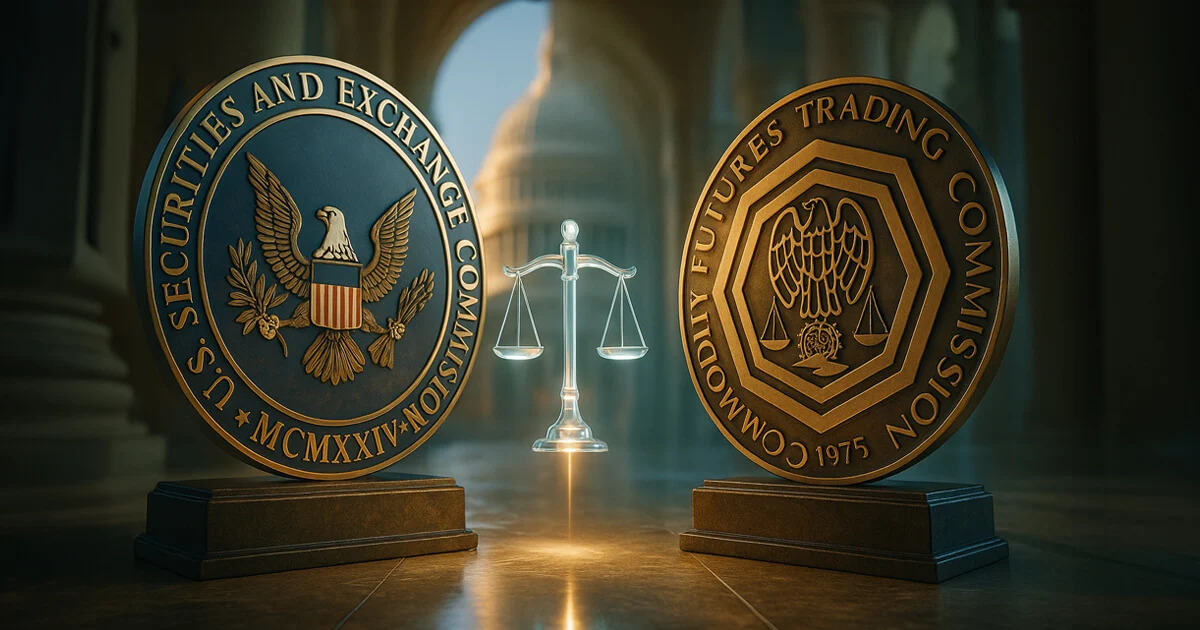
Washington’s protracted deliberation over the appropriate regulatory framework for digital assets has reached a pivotal moment, with two distinct legislative proposals emerging from the Senate. While the House of Representatives passed the Digital Asset Market Clarity Act of 2025 earlier this summer, its journey through the Senate remains incomplete. Now, in a significant development, two Senate committees have unveiled competing discussion drafts, each aiming to usher in an era of regulatory order for the burgeoning digital asset market. These proposals are poised to fundamentally reshape the landscape, impacting everything from the trading of Bitcoin spot markets and the disclosure requirements for Ethereum to the operational rulebooks of cryptocurrency exchanges.
The divergence in approach is stark. One draft, originating from the Senate Committee on Agriculture, Nutrition, and Forestry, champions an expansion of the Commodity Futures Trading Commission’s (CFTC) oversight. Conversely, the Senate Committee on Banking, Housing, and Urban Affairs has put forth a version that carves out new authority for the Securities and Exchange Commission (SEC) over what it terms "ancillary assets," while simultaneously clarifying the circumstances under which tokens may transition out of securities classification. For all stakeholders within the cryptocurrency ecosystem, the implications of this legislative choice are profound, with the potential to redefine asset custody, classification, and disclosure practices, thereby redrawing the boundaries of the U.S. digital asset market.
The Agriculture Committee Draft: Elevating the CFTC’s Role in Digital Commodities
Spearheaded by Senators John Boozman and Cory Booker, the discussion draft from the Senate Agriculture Committee proposes a significant empowerment of the CFTC. This proposal seeks to grant the commission explicit authority over "digital commodities" and their corresponding spot markets. To achieve this, the draft outlines a comprehensive registration framework for exchanges, brokers, and dealers operating within this space, mirroring the existing oversight structures the CFTC applies to traditional commodity markets.
A key tenet of this approach is the mandate for intermediaries to utilize qualified custodians and to segregate customer assets. This measure is designed to mitigate potential conflicts of interest that could arise from affiliated entities operating within the same ecosystem. Furthermore, the bill includes provisions for joint rulemaking between the CFTC and the SEC, specifically addressing entities that may fall under overlapping jurisdictions or require dual registration. However, certain complex areas, such as the regulatory challenges posed by Decentralized Finance (DeFi), are deferred for future debate, signaling an incremental approach to comprehensive regulation.
This legislative path builds upon the foundation laid by the House’s Clarity Act, with a clear objective: to bring the oversight of cryptocurrency spot markets under the purview of the CFTC. Under this framework, U.S.-based Bitcoin trading platforms would be required to register as digital commodity exchanges. This registration would necessitate adherence to new capital requirements, stringent custody rules, and the implementation of enhanced protections for retail investors.
Beyond individual platform requirements, the Agriculture draft suggests the standardization of data sharing across various trading venues. This enhancement would bolster market surveillance capabilities, a critical component for entities like Exchange-Traded Fund (ETF) issuers seeking regulatory approval. While ETFs themselves would remain under the jurisdiction of the SEC, the underlying spot market data would benefit from more robust oversight.
The impact of this proposed shift extends beyond administrative burdens. Reassigning oversight of Bitcoin spot markets to the CFTC would compel exchanges to operate under commodity exchange principles. This would likely lead to an increased emphasis on clear reporting mechanisms and comprehensive market surveillance, potentially at the expense of the detailed investor disclosures that are a hallmark of securities regulation. Such a recalibration could provide market analysts and traders with a more granular understanding of market quality and liquidity. Despite the expanded role for the CFTC, the SEC would retain its authority over security-based instruments and crypto-related futures contracts, indicating a continued, albeit adjusted, dual oversight regime.
The Banking Committee Draft: Defining "Ancillary Assets" and the Path to Decentralization
In parallel, the Senate Committee on Banking, Housing, and Urban Affairs has introduced its own discussion draft, titled the Responsible Financial Innovation Act. This legislation adopts a different strategy, focusing on digital assets that occupy a gray area between traditional securities and commodities. A central concept introduced by this draft is the definition of an "ancillary asset." This term is defined as a "fungible digital commodity" that is distributed through an arrangement that also constitutes an investment contract.
This framework explicitly grants the SEC the authority to oversee these "ancillary assets." Issuers would be subject to rigorous disclosure requirements pertaining to token distributions, project governance, and associated risks. Significantly, the draft provides the SEC with approximately two years to finalize a formal rule defining what constitutes an "investment contract" within the digital asset space. Furthermore, it introduces a novel "decentralization certification process." This mechanism would allow a digital asset project to transition out of securities treatment once network control and governance fall below predefined thresholds, signifying a move towards genuine decentralization.
This approach offers a conditional pathway for digital assets that are initially linked to "active projects," such as Ethereum. Under this model, a token could commence its lifecycle under SEC oversight, benefiting from investor protections and disclosure requirements. However, it would possess the potential to "graduate" to a non-securities classification as its governance structure becomes sufficiently distributed. This innovation directly addresses a persistent ambiguity that has plagued the industry since the SEC’s early pronouncements following the DAO hack, compelling the agency to articulate clear, written criteria for decentralization rather than relying on case-by-case enforcement actions.
This structured approach promises to sharpen practical distinctions within the digital asset market. Bitcoin, with its established track record and decentralized nature, would likely be categorized as a digital commodity under the CFTC’s purview. Tokens with clear ties to specific corporate or enterprise entities would remain within the SEC’s ancillary-asset regime until they demonstrably achieve a significant level of decentralization. Centralized exchanges, a critical nexus in the market, would find themselves navigating both regulatory frameworks. They would need to register with the CFTC as digital commodity exchanges for their spot crypto operations, while simultaneously remaining subject to SEC oversight for any listed securities. The cumulative effect of these requirements could necessitate U.S. platforms adopting dual registration protocols, implementing more stringent capital reserves, and enhancing the transparency of their trading books.
Navigating the Uncertainties: Timing, Coordination, and the Road Ahead
A significant point of divergence between the two Senate drafts lies in their approach to timing and regulatory certainty. The Banking Committee’s draft imposes specific deadlines for rulemaking, aiming to expedite the establishment of clear regulatory parameters. In contrast, the Agriculture Committee’s proposal leaves several key questions regarding implementation and scope open for further discussion. Both drafts, however, underscore the necessity of future coordination rules and extensive public consultations before any of their provisions can be enacted into law.
The legislative journey for digital asset regulation in the U.S. has been a lengthy and complex one. The House’s passage of the Digital Asset Market Clarity Act represented a significant step forward, but the Senate’s deliberations have introduced a new layer of complexity. The current Senate proposals, though in the discussion phase, represent crucial working documents for industry participants. They offer a glimpse into how U.S. spot trading venues might evolve under a CFTC-led regime and illustrate potential pathways for token projects to transition from securities classification. Moreover, they highlight the significant operational adjustments exchanges might need to undertake, particularly in fortifying internal firewalls between different regulatory jurisdictions.
While these drafts may not deliver the immediate and comprehensive clarity suggested by their titles, they undeniably map out the next phase of the ongoing regulatory tug-of-war. The classification of digital assets carries profound implications for market liquidity, custody arrangements, and overall compliance costs. In this dynamic and often opaque market, understanding which agency will ultimately draw the definitive regulatory lines could prove to be as valuable as any on-chain analytical signal. The coming months will be critical as policymakers grapple with these competing visions, with the ultimate outcome poised to shape the future of digital finance in the United States.
Supporting Data and Context
The debate over digital asset regulation is not occurring in a vacuum. The global cryptocurrency market capitalization has fluctuated significantly, reaching trillions of dollars at its peak. This immense economic activity underscores the urgency for clear regulatory frameworks that can foster innovation while protecting investors and maintaining financial stability. For instance, the market capitalization of Bitcoin, the flagship digital asset, alone has often surpassed that of major multinational corporations. Ethereum, the second-largest cryptocurrency by market capitalization, has seen its ecosystem expand to encompass a vast array of decentralized applications (dApps), from DeFi protocols to non-fungible tokens (NFTs), further complicating regulatory approaches.
Historically, the U.S. regulatory approach has been characterized by a "regulation by enforcement" model, particularly by the SEC, which has often asserted that many cryptocurrencies are indeed securities. This has led to numerous enforcement actions against token issuers and exchanges, creating an environment of uncertainty for businesses and investors alike. The Commodity Futures Trading Commission (CFTC), on the other hand, has generally viewed certain digital assets, like Bitcoin, as commodities. This existing dichotomy is precisely what the current Senate proposals aim to resolve, albeit through diverging paths.
The Digital Asset Market Clarity Act of 2025, passed by the House, sought to establish a clear framework by defining digital assets and assigning regulatory authority. Its Senate counterparts are now attempting to refine this vision, offering distinct blueprints for the future. The Senate Agriculture Committee’s draft reflects a pragmatic approach to integrating digital commodities into existing commodity market structures, drawing parallels to the oversight of agricultural commodities and energy futures. The Senate Banking Committee’s draft, conversely, grapples with the nuanced nature of digital assets that possess characteristics of both commodities and securities, proposing a more adaptive framework that acknowledges the evolving nature of blockchain technology and decentralized networks.
Broader Impact and Implications
The passage of either of these Senate drafts would have far-reaching consequences for the digital asset industry. For exchanges, the implications extend to their operational models, requiring significant investments in compliance infrastructure, personnel, and technology to meet new registration and reporting requirements. Custodial services would need to adapt to stricter asset segregation and qualified custodian mandates, enhancing security and trust within the ecosystem.
For token issuers and project developers, the clarity provided by either framework, particularly the Banking draft’s "ancillary asset" definition and decentralization pathway, could significantly de-risk future development and investment. The ability for tokens to potentially "graduate" from securities status based on demonstrated decentralization could unlock new avenues for growth and adoption, reducing the chilling effect of perpetual regulatory uncertainty.
Investors, both retail and institutional, stand to benefit from enhanced consumer protections, increased market transparency, and potentially greater liquidity as regulatory clarity reduces perceived risk. The standardization of data sharing and market surveillance could lead to more efficient price discovery and a reduction in market manipulation.
However, the potential for a bifurcated regulatory landscape remains a concern. If the two chambers of Congress or the respective committees cannot reconcile their differing approaches, the digital asset market could face continued fragmentation and uncertainty. This could disadvantage U.S.-based businesses competing with entities in jurisdictions that have adopted more cohesive regulatory frameworks.
Ultimately, the success of any new legislation will depend on its ability to strike a delicate balance: fostering innovation and economic growth in the digital asset sector while safeguarding investors and maintaining the integrity of the financial system. The ongoing deliberations in the Senate represent a critical juncture in this endeavor, and the choices made in the coming weeks and months will undoubtedly shape the trajectory of digital assets in the United States for years to come.