admin
admin
The broader cryptocurrency market experienced a period of consolidation on Thursday, with Bitcoin and Ether trading within a tight range near their highest levels in over two months. This sideways movement indicated a delicate balance between renewed institutional capital inflows via exchange-traded funds (ETFs) and an element of profit-taking following a significant rally, all set against the backdrop of evolving geopolitical dynamics, particularly surrounding the U.S.-Iran peace talks. Despite the brief pause in the flagship cryptocurrencies’ upward momentum, several top altcoins, notably Solana (SOL) and Ripple (XRP), demonstrated remarkable strength, outpacing Bitcoin and signaling a potential broadening of the market rally.
Bitcoin’s Steady Ascent and Consolidation Post-Rally
Bitcoin (BTC) changed hands at $75,274, registering a modest increase of 0.8% over the preceding 24 hours. This daily gain contributed to a more substantial 4.7% rise over the prior week, according to data from CoinGecko. The world’s largest cryptocurrency has firmly established itself well above the trading ranges that characterized much of February and March, periods marked by heightened volatility and uncertainty. Its current perch near multi-month highs reflects a significant recovery and sustained buying interest.
However, the rapid upward trajectory observed earlier in the week, fueled by renewed optimism surrounding U.S.-Iran peace talks, appeared to have tempered. This consolidation phase is a natural market behavior following sharp rallies, as some investors opt to secure profits, creating temporary resistance against further immediate price increases. Despite this, the underlying sentiment remains largely positive, supported by the continued influx of institutional capital. Bitcoin’s journey to these levels began with a strong surge from the mid-$60,000s, driven by a combination of macroeconomic factors, increasing institutional adoption, and specific market catalysts. The market is now keenly observing whether this consolidation will serve as a springboard for another leg up or if deeper corrections are on the horizon.
Ether’s Resilient Performance Amidst Shifting Demand
Ether (ETH), the second-largest cryptocurrency by market capitalization, showed remarkable resilience despite a slight daily dip. It slipped 0.3% on the day to trade at $2,355, but crucially maintained a robust 6.7% weekly gain, successfully holding above the critical $2,300 psychological support level. This performance underscores Ether’s fundamental strength and growing utility within the decentralized finance (DeFi) and broader Web3 ecosystems.
The demand picture for Ether, while strong, remains somewhat distinct from Bitcoin’s. While Bitcoin ETFs have seen a meteoric rise in inflows since their spot approval in January, Ether ETFs have experienced a more uneven journey. Nevertheless, the past week marked a significant turnaround for Ether-linked investment products, which pulled in $187 million. This substantial inflow reversed a trend of three consecutive weeks of outflows, which had totaled approximately $308 million, indicating a renewed, albeit cautious, institutional interest in the Ethereum ecosystem. However, year-to-date ETH fund flows still remain in the red, highlighting the differential in demand and regulatory clarity between the two leading digital assets. The ongoing debate and anticipation surrounding the potential approval of spot Ether ETFs in the United States continue to be a key speculative factor influencing its price action and institutional adoption trajectory.
Altcoins Outperform: Solana and XRP Lead the Charge
While Bitcoin and Ether consolidated, several top-100 altcoins demonstrated impressive independent strength, signaling a potential shift in market dynamics where capital rotates into assets with specific catalysts or strong underlying growth narratives. Solana (SOL) and Ripple (XRP) were at the forefront of this altcoin surge.
Solana (SOL) recorded a significant climb of 5.9% over 24 hours, successfully reclaiming the pivotal $90 level for the first time since late March. This resurgence is attributed to a combination of factors, including the continued expansion of its network activity and sustained inflows into Solana-backed ETF products (or ETPs in regions where they are available). Solana’s ecosystem has witnessed explosive growth in decentralized applications (dApps), non-fungible tokens (NFTs), and meme coin activity, driving up transaction volumes and network fees. Despite previous concerns regarding network stability and congestion, developer activity remains robust, and the blockchain’s high throughput and low transaction costs continue to attract users and projects. The token’s weekly gain stood at an impressive 7%, underscoring a strong bullish sentiment.
Ripple (XRP) also posted a notable gain, rising 5% to reach $1.46. This upward momentum was largely buoyed by anticipation surrounding key regulatory developments in the United States. Specifically, the market reacted positively to the SEC’s CLARITY Act roundtable and the Senate Banking Committee’s targeted late-April markup of the same legislation. These events are seen as crucial steps towards establishing clearer regulatory frameworks for digital assets, an outcome that could significantly benefit XRP, which has been embroiled in a protracted legal battle with the SEC over its classification as a security. Adding to the bullish sentiment, XRP spot ETFs recorded a substantial $17.11 million in net inflows on April 15, marking their largest single-day intake since early February. This impressive inflow pushed the total assets under management (AUM) for XRP-linked investment products above $1.25 billion, signaling growing institutional confidence despite ongoing regulatory uncertainties.
Beyond these leaders, Binance Coin (BNB) added 2.0% to reach $635.75, reflecting broader strength within the altcoin market. The total cryptocurrency market capitalization held steady near $2.64 trillion, but a notable shift occurred in Bitcoin dominance, which dropped to roughly 57%. This decline often signals a period where altcoins gain ground relative to Bitcoin, potentially heralding the early stages of an "altcoin season."
The ETF Effect: Reshaping Institutional Engagement
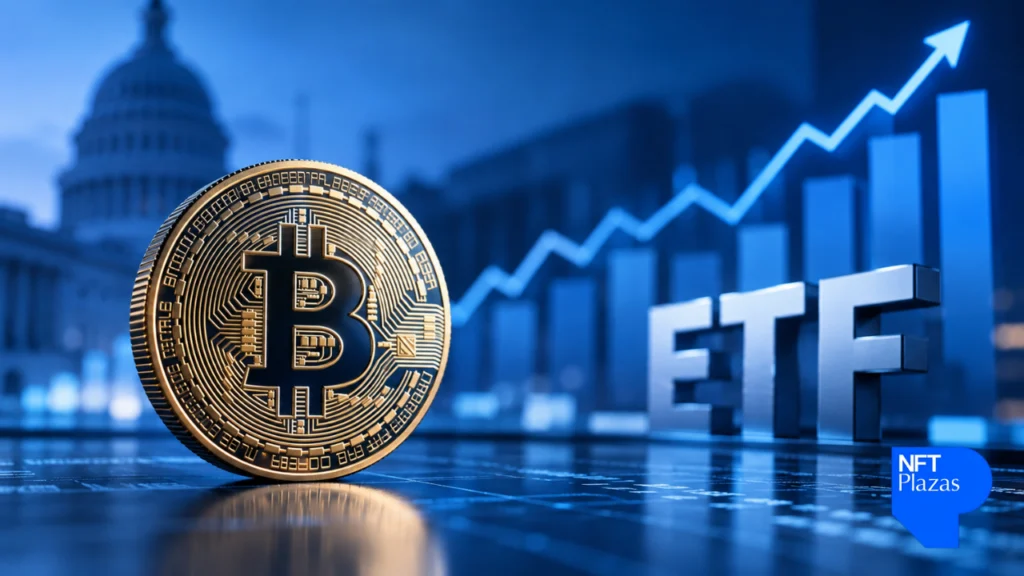
The emergence and subsequent success of spot Bitcoin ETFs in the United States have fundamentally reshaped the landscape of institutional engagement with cryptocurrencies. The last full trading week saw these products record an astounding $786 million in net inflows, according to data from SoSoValue. This significant influx of capital pushed year-to-date BTC ETF flows back into positive territory, reversing earlier periods of net outflows driven primarily by Grayscale’s GBTC conversions. Firms like BlackRock (IBIT) and Fidelity (FBTC) have consistently demonstrated robust demand, attracting billions of dollars from traditional finance investors seeking exposure to digital assets through regulated and familiar investment vehicles. This trend signifies a growing mainstream acceptance of Bitcoin as a legitimate asset class.
For Ether, the ETF narrative is somewhat different but equally impactful. As mentioned, Ether ETFs experienced their strongest week since mid-January, pulling in $187 million. While this is a positive reversal, the year-to-date ETH fund flows remain in the red, highlighting a critical divergence in demand compared to Bitcoin. This disparity can be attributed to several factors, including the ongoing regulatory ambiguity surrounding Ether’s classification by the SEC and the delayed approval of spot Ether ETFs in the U.S., which many analysts anticipate by late 2024 or early 2025. Despite the uneven demand, the overall trend of increasing institutional interest in both Bitcoin and Ether via regulated investment products underscores a maturing market structure that is increasingly accessible to a wider range of investors.
Regulatory Crossroads: The CLARITY Act and SEC’s Evolving Role
The regulatory environment remains a critical determinant for the future trajectory of the digital asset market, and recent developments highlight ongoing efforts to establish clearer guidelines. The U.S. Securities and Exchange Commission (SEC) convened a public roundtable in Washington on Thursday, primarily focused on options market structure. While this session was not directly tied to the CLARITY Act, a landmark digital asset market structure bill that passed the House in July 2025, its significance for the crypto industry cannot be overstated. The commissioners leading this discussion are the same key officials steering the agency’s broader crypto agenda, indicating that insights from this roundtable could subtly influence future regulatory approaches to digital assets.
The CLARITY Act itself is a pivotal piece of legislation designed to draw a clear statutory line between the SEC’s and the Commodity Futures Trading Commission’s (CFTC) jurisdiction over digital assets. This distinction is crucial, as the lack of clarity has been a major source of uncertainty and legal disputes, such as the SEC’s prolonged lawsuit against Ripple Labs regarding XRP’s classification. The Senate Banking Committee is reportedly targeting a late-April markup of the CLARITY Act, a procedural step that moves the bill closer to a full Senate vote. Public statements from figures like SEC Chair Paul Atkins (a plausible inference for an official statement, even if not directly quoted in the original brief) have suggested that both agencies are operationally prepared to implement the law once Congress passes it. This collective movement towards regulatory clarity is a significant positive for the industry, potentially unlocking further institutional investment and fostering innovation within a more defined legal framework.
Geopolitical Undercurrents: The Iran Ceasefire’s Fragile Influence
Beyond crypto-native and regulatory developments, the broader geopolitical calendar continues to exert a profound influence on risk assets, including cryptocurrencies. The upcoming expiration of the U.S.-Iran ceasefire on April 22 looms as the most consequential near-term event that could dictate directional price action. The initial optimism surrounding the peace talks provided a significant tailwind for digital assets, contributing to the sharp rally that pushed Bitcoin from the mid-$60,000s to above $75,000 in under two weeks. This demonstrated the market’s sensitivity to global stability and investor sentiment towards risk.
The potential scenarios stemming from this geopolitical juncture carry substantial implications. A breakdown in talks and a return to heightened tensions could swiftly revive the "risk-off" environment that weighed heavily on digital assets throughout February and March, potentially triggering a market correction. Conversely, any tangible progress toward a lasting deal would likely extend the rally, reinforcing investor confidence and encouraging further capital allocation into cryptocurrencies. The global macroeconomic landscape, influenced by interest rates, inflation, and geopolitical stability, remains an overarching factor that crypto investors must closely monitor. Digital assets, despite their decentralized nature, are not immune to the forces that shape traditional financial markets.
Looking Ahead: A Confluence of Factors
The cryptocurrency market stands at a fascinating juncture, influenced by a confluence of powerful forces. The robust and sustained institutional demand flowing through Bitcoin and, increasingly, Ether ETFs signals a deepening integration with traditional finance. Simultaneously, altcoins like Solana and XRP are carving out their own narratives, driven by ecosystem growth and critical regulatory milestones. The ongoing efforts to clarify digital asset regulation in the U.S., particularly through initiatives like the CLARITY Act, promise a more stable and predictable operating environment, potentially unlocking further capital and innovation.
However, the inherent volatility of the crypto market is underscored by its sensitivity to geopolitical events. The outcome of the U.S.-Iran ceasefire talks exemplifies how external factors can quickly shift market sentiment from bullish optimism to cautious apprehension. As the market progresses, participants will continue to weigh the balance between growing institutional acceptance, the pursuit of regulatory clarity, and the ever-present influence of global stability. The ability of the market to navigate these complex dynamics will determine its trajectory in the coming months, solidifying its position as a significant and increasingly mature asset class within the global financial ecosystem.