admin
admin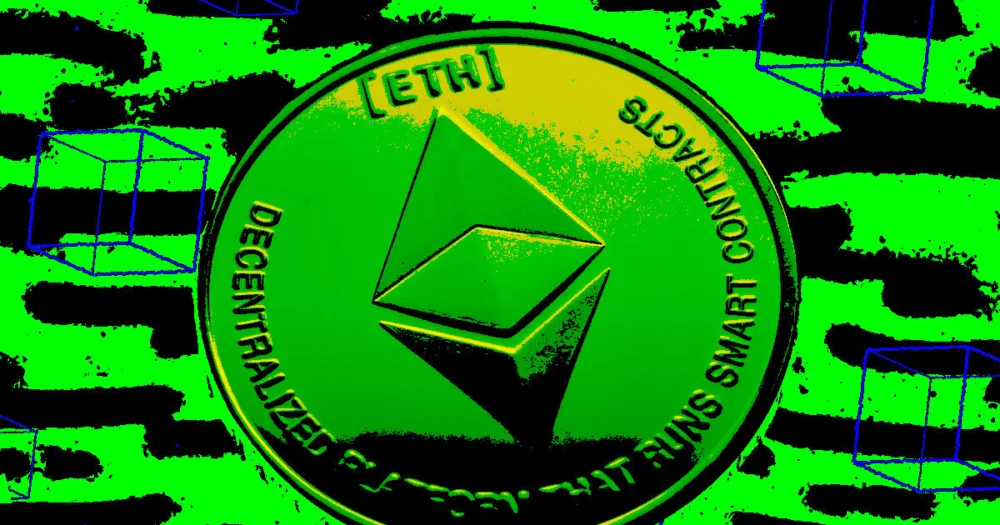
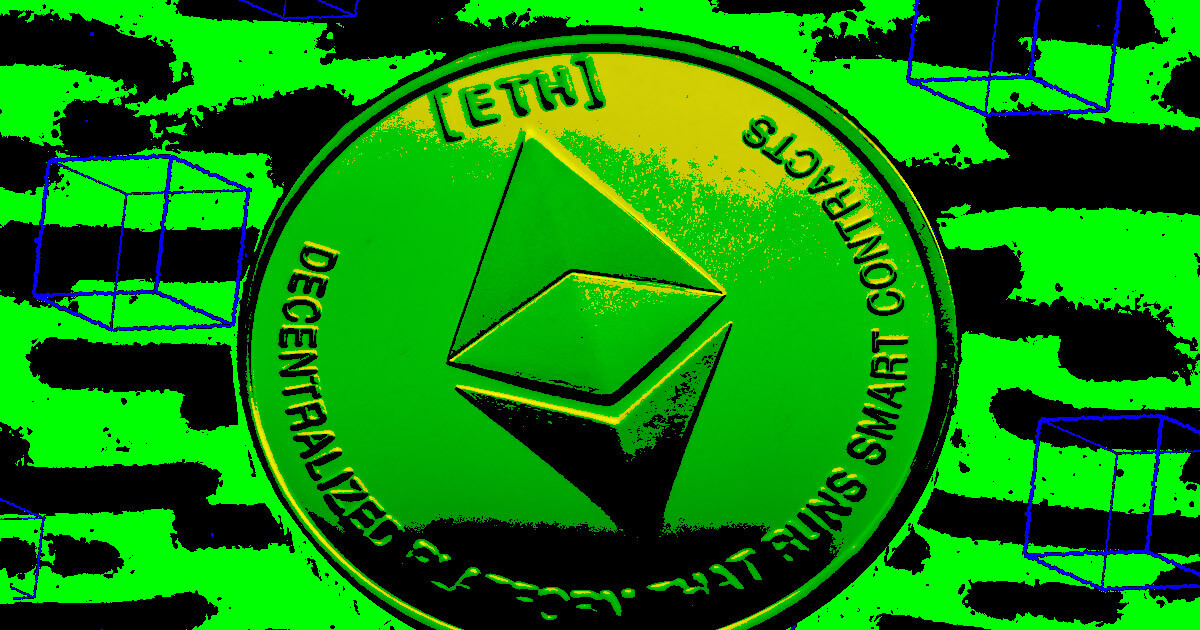
In a significant milestone for the digital asset ecosystem, Ethereum (ETH), the world’s leading smart-contract platform, has officially ascended into the ranks of the top 50 most valuable global assets by market capitalization. This shift follows a period of intense price volatility and a subsequent bullish breakout that saw the cryptocurrency’s valuation surpass several of the world’s most established multinational corporations, including Cisco Systems, Alibaba Group, AstraZeneca, and T-Mobile.
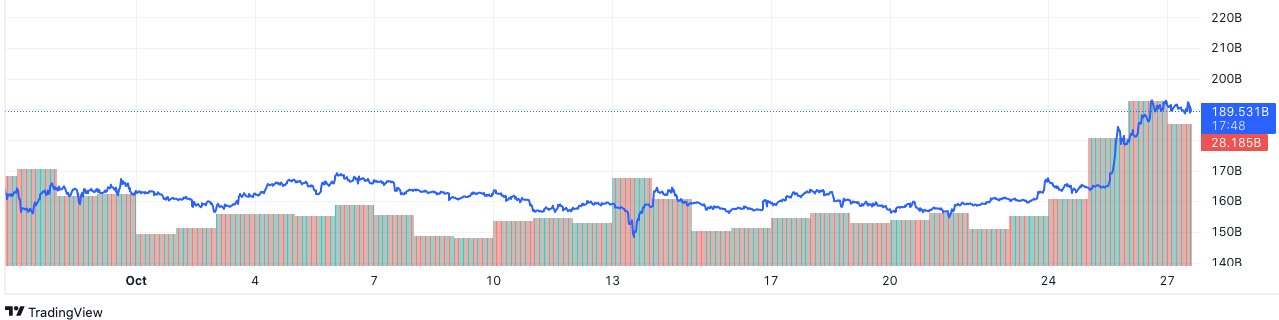
The transition marks a pivotal moment in the institutionalization of decentralized finance, as a protocol governed by code now commands a market valuation comparable to industrial titans with decades of corporate history. As of the latest market data, Ethereum’s market capitalization has climbed to approximately $190 billion, firmly securing its position as the second cryptocurrency to ever breach the top 50 global asset leaderboard.
The October Breakout: From Consolidation to Momentum
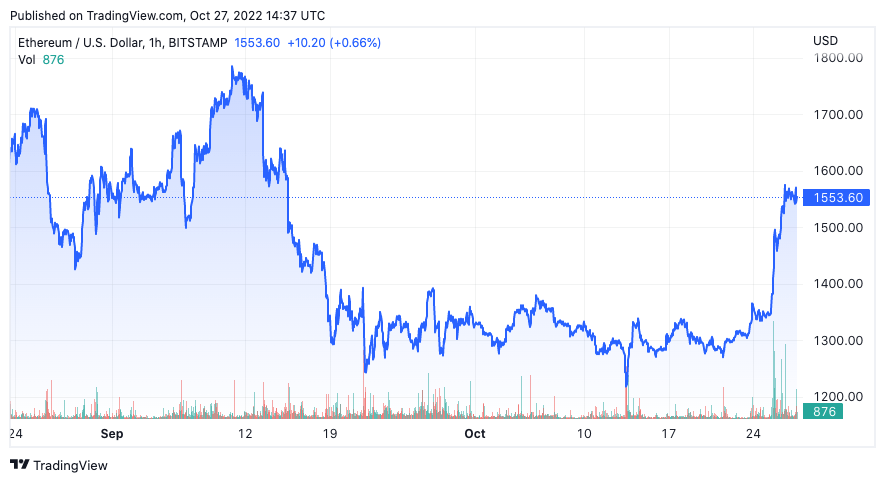
The recent ascent of Ethereum follows nearly a month of stagnant price action, during which the asset remained range-bound between $1,250 and $1,350. This period of consolidation, characterized by low trading volume and diminished volatility, led many market observers to speculate on the next major directional move. The stalemate was decisively broken during a 48-hour window in late October, when ETH experienced a sharp vertical spike.
Prices surged from the $1,300 support level to a high of $1,560, representing a nearly 20% increase in less than two days. This momentum was fueled by a combination of factors, including a massive wave of short liquidations on derivative exchanges and a broader recovery in risk-on assets. As Ethereum’s price climbed, its total market valuation expanded by billions of dollars, allowing it to leapfrog legacy companies in the global rankings.
Market analysts point to the exhaustion of sellers following the "Merge"—Ethereum’s transition from Proof of Work to Proof of Stake in September—as a primary driver for this technical breakout. While the immediate aftermath of the Merge saw a "sell-the-news" event, the long-term structural changes to Ethereum’s supply dynamics began to manifest in October, providing the fundamental backdrop for the price appreciation.
Surpassing Global Giants: A Comparative Analysis
Ethereum’s entry into the top 50 puts it in direct competition with some of the most recognizable brands in the world. By reaching a $190 billion market cap, Ethereum has overtaken Cisco, the backbone of global internet hardware; Alibaba, the Chinese e-commerce behemoth; AstraZeneca, the pharmaceutical giant; and T-Mobile, a leader in telecommunications.
Currently, Ethereum stands head-to-head with the likes of Toyota Motor Corporation and The Walt Disney Company, both of which possess market capitalizations hovering around the $195 billion mark. The fact that a decentralized network, which operates without a CEO, a board of directors, or a physical headquarters, has reached the same valuation as these industrial pillars highlights the shifting paradigm of value in the digital age.
To put this into perspective, Cisco Systems has been a cornerstone of the S&P 500 for decades, providing the routing and switching infrastructure that powers the modern web. Alibaba, despite regulatory headwinds in Asia, remains one of the largest retail and cloud computing entities globally. Ethereum’s ability to surpass these entities suggests that investors are increasingly valuing the "utility" of the Ethereum Virtual Machine (EVM) as a foundational layer for future financial systems.
The Role of the "Merge" and Supply Dynamics
The fundamental catalyst underpinning Ethereum’s valuation is its recent architectural overhaul. On September 15, 2022, the network completed the Merge, eliminating the need for energy-intensive mining and reducing the network’s energy consumption by over 99.9%. Beyond the environmental implications, the move introduced a "triple halving" effect on Ethereum’s issuance.
Under the new Proof of Stake consensus mechanism, the daily issuance of new ETH dropped significantly. When combined with EIP-1559—the fee-burning mechanism introduced in 2021—the network now has the potential to become deflationary during periods of high activity. During the October price spike, increased on-chain activity led to a surge in burned fees, further tightening the circulating supply and providing upward pressure on the price.
Institutional investors, particularly those with strict Environmental, Social, and Governance (ESG) mandates, have reportedly taken a second look at Ethereum following the Merge. The removal of the carbon footprint associated with Proof of Work has cleared a major hurdle for corporate balance sheet inclusion and the development of institutional-grade investment products.
Bitcoin Remains the Standard-Bearer
While Ethereum’s achievement is historic, it remains second to Bitcoin in the hierarchy of digital assets. Bitcoin currently holds the 14th position among the world’s most valuable assets, with a market capitalization exceeding $395 billion. This places the "digital gold" in a tight race with global financial leaders like Visa and retail giants like Walmart.
At a current trading price of approximately $20,700, Bitcoin has also surpassed the total market value of palladium. However, current valuations are still far below the heights reached during the 2021 bull market. In mid-October 2021, Bitcoin’s market cap peaked at $1.23 trillion. At that valuation, Bitcoin was more valuable than Alphabet (Google’s parent company) is today and exceeded the current $1.10 trillion market cap of silver.
The gap between Bitcoin and Ethereum remains significant, but Ethereum’s faster recovery in late October has led to renewed discussions regarding the "flippening"—a hypothetical event where Ethereum’s market cap eventually exceeds that of Bitcoin. Proponents of this theory argue that Ethereum’s utility as a platform for decentralized applications (dApps), non-fungible tokens (NFTs), and stablecoins gives it a higher ceiling for long-term growth.
Institutional Reactions and Market Sentiment
The reaction from the broader financial community has been one of cautious optimism. While the "crypto winter" of 2022 saw many retail investors exit the market, institutional engagement has remained resilient. The entry of Ethereum into the top 50 assets serves as a validation for those who view crypto not merely as a speculative vehicle, but as a new asset class.
Industry insiders suggest that the stabilization of Ethereum’s price above the $1,500 mark could signal a bottoming process. "The fact that Ethereum is now outperforming major tech stocks like Meta or Netflix in terms of year-to-date resilience—and now market cap ranking—is a testament to the network’s Lindy Effect," noted one quantitative analyst. The Lindy Effect suggests that the longer a technology or idea survives, the longer it is likely to persist in the future.
Furthermore, the growth of Layer-2 scaling solutions like Arbitrum and Optimism has increased the throughput of the Ethereum ecosystem, allowing it to handle more transactions without the prohibitive gas fees seen in 2021. This technological maturity is believed to be a contributing factor to the sustained investor confidence that propelled the asset into the top 50.
Macroeconomic Headwinds and Future Outlook
Despite the recent gains, Ethereum and the wider cryptocurrency market continue to face significant macroeconomic challenges. The 2022 fiscal year has been defined by high inflation and aggressive interest rate hikes by the U.S. Federal Reserve. These conditions have generally been unfavorable for "risk-on" assets, leading to a strong correlation between Ethereum and the Nasdaq 100.
However, the recent decoupling—where Ethereum rose while some traditional tech stocks remained flat or declined—suggests that the market may be beginning to price Ethereum based on its unique internal fundamentals rather than just macro liquidity.
The implications of Ethereum becoming a top 50 global asset are far-reaching. It increases the likelihood of the asset being included in broader "total market" indices and could pave the way for a spot Ethereum Exchange-Traded Fund (ETF) in the United States, following the footsteps of Bitcoin futures-based products.
As Ethereum continues to hover near the valuations of Toyota and Disney, the next psychological barrier for the asset will be the $200 billion market cap mark. Reaching this level would require a price point of approximately $1,650 per ETH. Should the current momentum hold, Ethereum may soon find itself contending for a spot in the top 40, potentially surpassing companies like Shell or Novartis.
In conclusion, the rise of Ethereum to the 50th largest asset in the world is more than a price milestone; it is a reflection of the growing integration of blockchain technology into the global financial fabric. While volatility remains a constant companion of the crypto markets, the structural shifts following the Merge and the resilience of the Ethereum network suggest that its presence in the upper echelons of global wealth is becoming increasingly permanent. For now, Ethereum sits as a bridge between the experimental world of decentralized finance and the established world of global capital, proving that code-based assets can indeed compete with the industrial giants of the 20th century.