Dwi Wanna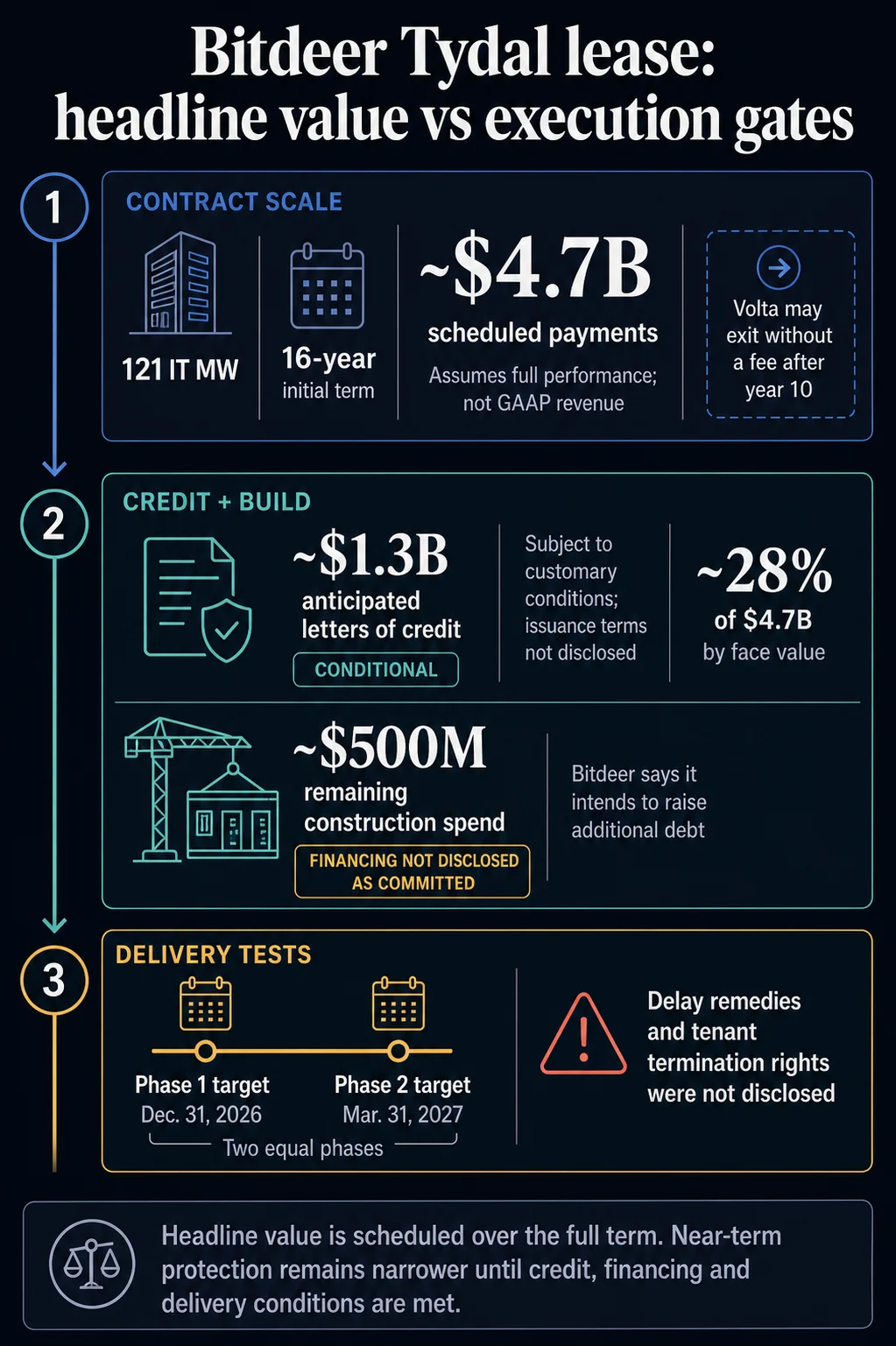
In a definitive move to diversify its revenue streams and pivot toward the burgeoning artificial intelligence sector, Bitdeer Technologies Group has finalized a landmark 16-year agreement to provide massive computing capacity to the AI industry. The deal, valued at approximately $4.7 billion over its initial term, involves the company’s Tydal Data Center subsidiary and underscores a broader trend of cryptocurrency mining firms reinventing themselves as high-performance computing (HPC) powerhouses. However, the realization of this multi-billion-dollar windfall is contingent upon Bitdeer meeting a rigorous construction schedule, requiring a $500 million capital investment and a critical delivery deadline of December 31, 2026.
The agreement, announced on August 4, 2026, establishes a partnership between Bitdeer and Volta, a specialized infrastructure intermediary. Under the terms of the contract, Bitdeer will provide 121 megawatts (MW) of computing capacity at its campus in Tydal, Norway. This capacity will be utilized to house cutting-edge hardware, including Nvidia-designed chips and Dell Technologies computing systems. While the official announcement referred to the end user as a "leading AI laboratory," industry reports and financial analysts have identified the ultimate customer as Anthropic, the high-profile AI startup backed by Amazon and Google and known for its Claude large language model series.
The Financial Architecture of the Agreement
The financial structure of the deal represents a significant departure from the volatile, reward-based economics of Bitcoin mining. Bitdeer expects to generate average annual revenue of approximately $2.4 million for every megawatt delivered to Volta. Across the full 121 MW commitment, this translates to roughly $290 million in annual revenue. To account for inflation and operational cost increases, the contract includes a 3% annual payment escalator.
The $4.7 billion headline figure reflects the total scheduled payments over the 16-year lifespan of the agreement. It is important to note that this represents a long-term revenue backlog rather than immediate cash flow. The contract also provides Volta with a degree of flexibility, including a clause that allows for termination after 10 years without a penalty fee. Conversely, if the partnership proves successful, an optional eight-year extension could be triggered, potentially boosting the total contract value to approximately $8 billion.
To safeguard the financial viability of the project, the agreement is supported by robust credit guarantees. Approximately $1.3 billion in letters of credit have been arranged through affiliates of JPMorgan Chase and another major financial institution. These guarantees serve as a backstop for Volta’s payment obligations, though they remain subject to customary conditions and the achievement of specific project milestones.
Infrastructure and Technical Specifications
The Tydal Data Center in Norway is central to Bitdeer’s transition strategy. Norway has become an increasingly attractive destination for data center operators due to its abundance of renewable energy—primarily hydropower—and its cool climate, which significantly reduces the energy costs associated with cooling high-density server racks.
The 121 MW build-out will be distributed across four specialized data halls. The technical specifications are tailored for the intensive demands of AI model training and inference. Nvidia, the global leader in AI hardware, will provide the underlying chip architecture, while Dell Technologies will supply the integrated computing systems and server enclosures. This "AI Factory" approach ensures that the infrastructure is optimized for the massive parallel processing tasks required by modern generative AI models.
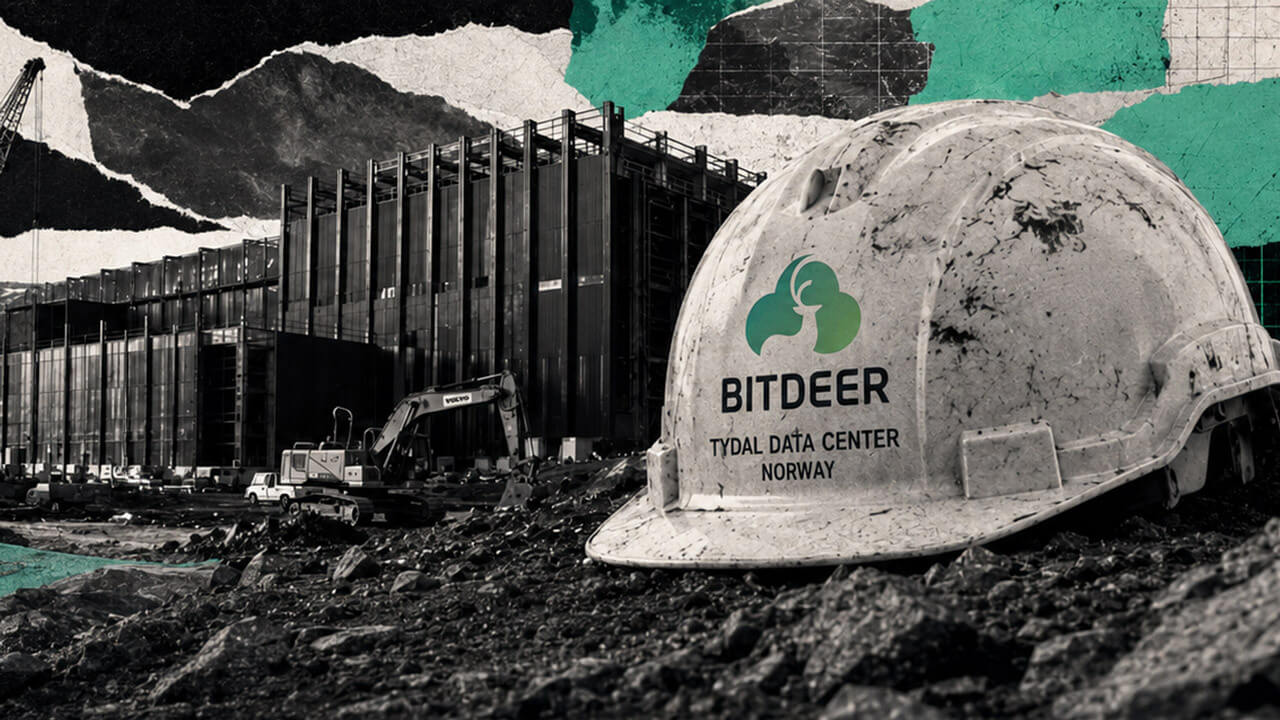
Bitdeer’s role is primarily that of an infrastructure provider and landlord. The company will retain full ownership of the Tydal campus and the physical facilities, while the clients provide the specialized compute hardware. This model allows Bitdeer to leverage its existing expertise in power procurement and data center management without the risk of owning rapidly depreciating GPU hardware.
A Strategic Pivot from Bitcoin Mining
The shift into AI infrastructure comes at a critical juncture for the cryptocurrency mining industry. Following the most recent Bitcoin "halving" events, which reduce the block rewards granted to miners, many firms have found their profit margins squeezed. Bitdeer, originally spun off from the mining giant Bitmain and led by industry veteran Jihan Wu, has been proactive in seeking more stable, predictable revenue sources.
AI data centers offer a "fixed-rent" model that is highly attractive to institutional investors. Unlike Bitcoin mining, where revenue depends on the fluctuating price of the asset and the global network hash rate, AI leases provide long-term contracted cash flows. This transition has been mirrored by other industry players, such as Core Scientific and Northern Data, who have also signed massive deals with AI cloud providers.
For Bitdeer, the Tydal project represents a diversification of its geographical and operational footprint. By moving into the HPC space, the company is positioning itself as a vital link in the global AI supply chain, catering to the insatiable demand for compute power that has characterized the tech sector since the launch of ChatGPT.
The $500 Million Capital Challenge and Timeline
Despite the optimistic revenue projections, Bitdeer faces a significant execution risk. The company must complete a $500 million build-out to prepare the Tydal facility for its new tenants. This equates to a construction cost of roughly $4 million per megawatt, a figure that reflects the high complexity of AI-ready data centers compared to traditional crypto-mining setups.
The project is divided into two phases:
- Phase One: 60.5 MW of capacity must be operational by December 31, 2026.
- Phase Two: The remaining 60.5 MW is scheduled for delivery by March 31, 2027.
Meeting the December 31 deadline is paramount. Failure to deliver the first phase on time could trigger penalty clauses or allow the counterparty to terminate the agreement. To fund this massive undertaking, Bitdeer has announced plans to raise new debt. The company has engaged several financial institutions to lead the financing round. Notably, Bitdeer has opted for debt rather than equity to avoid diluting current shareholders, reflecting management’s confidence in the project’s ability to service its obligations through future cash flows.
Implications for the AI and Data Center Markets
The deal between Bitdeer, Volta, and Anthropic highlights the extreme scarcity of power-ready data center space. As AI companies race to build larger and more capable models, the bottleneck has shifted from software and talent to physical infrastructure and electricity.

Anthropic’s involvement, though indirect through Volta, signals the company’s aggressive pursuit of compute parity with rivals like OpenAI. By securing a 16-year commitment, Anthropic is insulating itself against future capacity shortages and price volatility in the spot market for cloud computing.
For the data center industry, this agreement sets a new benchmark for the value of "power-ready" land. Bitdeer’s ability to convert a mining site into a multi-billion-dollar AI hub demonstrates the hidden value in the power permits and electrical infrastructure held by crypto miners. It also signals a maturation of the sector, as formerly niche mining companies integrate into the mainstream financial and technological ecosystem.
Risks and Market Reaction
While the market has generally viewed the deal as a transformative win for Bitdeer, analysts remain cautious regarding the financing and construction risks. The $500 million in required debt has not yet been finalized, and the global supply chain for electrical components—such as transformers and high-density cooling units—remains strained. Any delays in equipment delivery could jeopardize the December 31 deadline.
Furthermore, the "10-year break" clause provides Volta with an exit strategy if the AI landscape shifts or if their compute needs change. This introduces a degree of long-term uncertainty, though the 3% annual escalator and the potential for an $8 billion total contract value provide a significant upside.
Bitdeer has emphasized that it will maintain full operational control over the Tydal site, ensuring that it benefits from the long-term appreciation of the asset. The company’s decision not to issue warrants or shares as part of the Volta agreement has been particularly well-received by investors, as it keeps the future profits concentrated among existing stakeholders.
Conclusion
The $4.7 billion lease agreement marks the beginning of a new chapter for Bitdeer Technologies Group. By successfully pivoting from the volatile world of Bitcoin mining to the high-growth sector of AI infrastructure, the company is attempting to secure its place in the next generation of the digital economy. The success of this transition now rests on the company’s ability to execute a complex $500 million construction project under a tight deadline. If Bitdeer delivers the Tydal facility by the end of 2026, it will have transformed a 121 MW power allocation into one of the most valuable infrastructure assets in Northern Europe, providing a stable foundation for growth in the decades to come.