admin
admin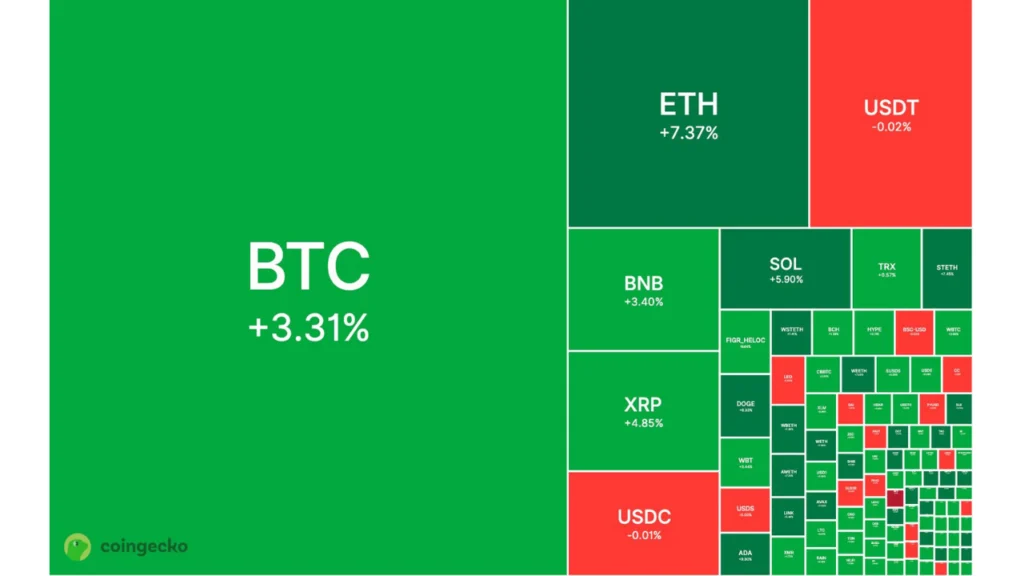
This remarkable streak is particularly noteworthy given its rarity and the current complex global economic environment. Bitcoin had not recorded such a prolonged run of daily gains since early 2024, a period that largely preceded a broader market expansion and significant shifts in institutional interest. Now, against a backdrop of geopolitical uncertainty, fluctuating inflation expectations, and a nascent debate over energy competition from artificial intelligence, the latest rally is undergoing intense scrutiny from seasoned traders, financial analysts, and market commentators worldwide. The collective question remains: is this a fleeting surge driven by short-term market dynamics, or does it signal a more profound shift in Bitcoin’s trajectory?
The Technical Catalyst: A Decisive Breakout and Short Squeeze
At the heart of this impressive price ascent lies a decisive technical breakout that fundamentally altered market sentiment. For several weeks leading up to this rally, Bitcoin had faced formidable resistance, repeatedly struggling to breach the crucial $72,500 level. This price point had acted as a stubborn ceiling, consistently capping upward momentum and frustrating bullish attempts. The inability to overcome this barrier had led to a period of consolidation, creating an environment ripe for either a significant correction or a powerful breakout.
When this long-standing resistance finally gave way, the reaction across derivatives markets was immediate and dramatic. The breach triggered a rapid cascade of short liquidations, a phenomenon where traders who had placed bets on Bitcoin’s price declining were forced to buy back their positions to cover losses. This forced buying amplified the upward pressure on Bitcoin’s price. In total, approximately $143 million in Bitcoin short positions were liquidated within a short timeframe, contributing significantly to the rally. The effect was even broader across the wider cryptocurrency market, where over $200 million in various crypto short positions were wiped out, further fueling a general bullish sentiment.
This cascade of forced buying created a classic "short squeeze," accelerating Bitcoin’s climb from the high $60,000s toward and beyond the $74,000 range. While such squeezes are not uncommon in the volatile cryptocurrency markets, the scale, speed, and persistence of this particular move suggested that more than just mechanical liquidations were at play. It indicated a deeper underlying shift in market dynamics and a readiness among buyers to step in once the technical barrier was overcome.

Beyond the Squeeze: The Underpinning Role of Institutional Demand
While the short squeeze provided the initial explosive thrust, the sustained nature of the rally points to improving underlying demand, particularly from institutional players. One of the clearest and most compelling signals comes from the significant inflows into Spot Bitcoin Exchange-Traded Funds (ETFs) in the United States.
Following their highly anticipated launch in January 2024, these ETFs experienced an initial surge of interest, followed by a period of profit-taking and some outflows as early investors realized gains. However, March has witnessed a substantial reversal, with these U.S.-based Spot Bitcoin ETFs recording approximately $1.3 billion in net inflows so far this month. This figure represents a robust recommitment from large investors who appear to be re-entering the market after a period of hesitation and careful evaluation.
These institutional inflows are generally associated with longer-term positioning rather than short-term speculative plays. Unlike retail investors who might be swayed by daily price swings, institutional funds typically conduct extensive due diligence and deploy capital with a strategic outlook. Their sustained interest suggests a growing conviction in Bitcoin’s long-term value proposition and its increasing integration into traditional financial portfolios. This growing institutional presence is playing a crucial role in stabilizing the market, providing deeper liquidity, and potentially laying the groundwork for a more sustained upward trend that extends beyond transient technical breakouts. The continuous absorption of available supply by these large entities acts as a significant demand floor, making dramatic downward price movements less likely in the short to medium term.
Bitcoin’s Unwavering Resilience Amidst Global Turmoil
Bitcoin’s recent performance during periods of heightened geopolitical turmoil has significantly strengthened its narrative among a broader spectrum of investors, positioning it as a unique asset class. The end of February saw a notable escalation of tensions in the Middle East, which sent ripples of concern across global financial markets. In response, Bitcoin initially experienced a sharp decline, falling to around $63,000 as risk-off sentiment prevailed and investors sought perceived safe-havens or liquidated riskier assets.
However, what followed was a swift and decisive recovery that underscored Bitcoin’s remarkable resilience. Within just two weeks of the initial dip, Bitcoin had rebounded by roughly 17%, not only recouping its losses but also outperforming several traditional assets, including major equity indices and even some traditional commodities, during the same volatile period. This rapid recovery challenged conventional perceptions of Bitcoin solely as a high-beta risk asset, suggesting an evolving role in investor portfolios.

More importantly, a discernible pattern has emerged: each subsequent sell-off or price correction has found robust support at progressively higher levels. For instance, price points that once saw Bitcoin dipping comfortably below $65,000 are now holding steadfastly above $70,000. This formation of "rising lows" is a classic technical indicator often associated with strengthening market structure, signaling that buyers are increasingly stepping in earlier during periods of weakness, demonstrating persistent underlying demand and a growing confidence in the asset’s trajectory. This behavior contrasts sharply with previous market cycles where significant downturns often led to prolonged periods of weakness and lower lows, indicating a maturing market with a more resilient base of committed holders.
Macroeconomic Tailwinds and Shifting Correlations
Broader macroeconomic conditions have also played a crucial role in fostering the environment conducive to Bitcoin’s recent rally. Global financial markets have been buoyed by easing concerns surrounding persistent inflation, particularly reflected in moderating oil prices. This, coupled with improving economic signals—such as better-than-expected manufacturing data and hints of potential interest rate cuts from central banks like the Federal Reserve later in the year—has helped to restore overall risk appetite among investors.
This renewed willingness to embrace risk has seen capital flow back into growth-oriented assets, including equities and, notably, cryptocurrencies. Bitcoin’s recent strong correlation with U.S. tech stocks, particularly those within the Nasdaq composite, reflects this broader market shift. Both asset classes are responding to similar macroeconomic drivers, including expectations around economic growth, technological innovation, and the future path of monetary policy. This alignment with traditional risk assets highlights Bitcoin’s evolving role within the global financial system, moving from a niche, uncorrelated asset to one increasingly integrated into the mainstream narrative of global macro investing. Its performance is now often analyzed in conjunction with broader market trends, rather than in isolation, underscoring its growing legitimacy and acceptance.
A Market Still Proceeding with Caution
Despite the undeniable strength of the recent price action and the eight consecutive green candles, sentiment among professional traders and institutional players remains surprisingly cautious. This disconnect between observable price momentum and underlying market conviction creates an unusual and intriguing dynamic.
Data from derivatives markets provides several key insights into this cautious stance. Futures premiums, which typically rise significantly in a robust bull market, are still below what would be considered typical bullish levels. This suggests that while there is buying, it’s not accompanied by an aggressive speculative fervor. Furthermore, options positioning continues to reflect a notable demand for downside protection, with many traders purchasing put options to hedge against potential declines. This indicates that participants are actively preparing for the possibility of a reversal or a significant correction, even as prices climb.

Compounding this cautious outlook, funding rates—the periodic payments made by traders in perpetual futures markets—remain negative or only marginally positive in some segments. Negative funding rates imply that short sellers are still paying long holders to maintain their positions, indicating that a significant portion of the market is still positioned for potential declines.
This divergence between the rising spot price and the measured or even bearish sentiment in derivatives markets is a peculiar situation. In some instances, such conditions can actually provide further fuel for a rally. If the upward trend continues, this existing bearish positioning could be forced to unwind, leading to another wave of short covering and further upward pressure, as those betting against the market are compelled to reverse their positions. However, it also signifies that the rally lacks universal conviction, making it potentially vulnerable to sudden shifts in sentiment or macroeconomic data.
The AI Debate: A New Dimension to Mining Concerns
Adding another layer of complexity to the future outlook of Bitcoin is a growing debate surrounding the economic viability of Bitcoin mining in the rapidly evolving age of artificial intelligence. Some prominent industry figures and analysts are increasingly arguing that AI infrastructure is emerging as a formidable competitor for energy resources, offering significantly higher returns per megawatt of power consumed compared to traditional Bitcoin mining operations.
As a direct consequence of this perceived shift in economic efficiency, several large-scale mining firms, historically dedicated solely to Bitcoin, have begun exploring or actively transitioning their focus toward AI infrastructure development. This pivot has naturally raised concerns among some observers about potentially declining network participation in Bitcoin mining, which could, in theory, impact the network’s decentralization and overall security over the long term. If a substantial portion of mining hash rate shifts to AI, it could concentrate power among fewer participants.
However, a significant counter-argument exists, with many experts dismissing these fears as overstated. They point to Bitcoin’s ingeniously designed, built-in difficulty adjustment mechanism. This system automatically recalibrates mining conditions approximately every two weeks, ensuring that the network remains functional, secure, and economically viable regardless of how many participants enter or exit. If miners leave, the difficulty drops, making it easier for remaining miners to find blocks and maintain profitability, thus incentivizing participation.

Furthermore, supporters emphasize Bitcoin mining’s inherent flexibility, particularly its ability to utilize surplus or stranded energy sources that are often uneconomical for other industrial applications. This includes tapping into excess renewable energy, flared natural gas, or off-grid power generation. This unique characteristic may limit direct, head-to-head competition with AI, which often requires highly stable and consistent power supplies in specific geographic locations. The ability of Bitcoin mining to act as a "buyer of last resort" for otherwise wasted energy could ensure its long-term sustainability and distinct niche in the global energy landscape.
The Enduring Appeal: Why Bitcoin Keeps Recovering
Bitcoin’s consistent ability to recover quickly and decisively from recent shocks has become a defining characteristic of the current market cycle. Unlike previous cycles, where significant downturns often led to prolonged periods of weakness, deep capitulation, and protracted bear markets, the latest corrections have proven to be relatively short-lived. Each dip in price has been met with renewed buying interest, often from both retail and institutional segments, suggesting that underlying demand is quietly and persistently building beneath the surface.
This demonstrable resilience has prompted some leading financial analysts and market strategists to describe Bitcoin not merely as a traditional safe-haven asset like gold, but rather as a "24/7 global liquidity instrument." This perspective posits that Bitcoin, with its always-on, permissionless, and globally accessible nature, reacts almost immediately to external geopolitical or macroeconomic events and subsequently stabilizes faster than most traditional markets. Its inherent transparency and continuous trading allow for rapid price discovery and efficient absorption of shocks, preventing the prolonged paralysis often seen in markets with limited trading hours or gatekeepers. This liquidity and immediate responsiveness make it an attractive option for capital seeking agile movement in uncertain times.
Key Technical Levels and the Road Ahead
As Bitcoin continues to hover near the $74,000 mark, attention is now acutely focused on the critical $72,000 to $75,000 range. This zone has rapidly emerged as a pivotal battleground for determining the cryptocurrency’s immediate market direction. Holding firmly above this range would significantly reinforce the case for a sustained uptrend, providing a strong technical foundation for further advances. Conversely, a decisive breach and sustained move above $75,000 would represent a significant psychological and technical milestone, potentially opening the door to retesting and surpassing previous all-time highs and venturing into uncharted price territory.
However, failure to maintain current levels and a subsequent dip below $72,000 could reveal the recent rally as primarily driven by short-term factors, such as the short squeeze, rather than lasting fundamental demand. Technical indicators, as illustrated by recent analyses, show Bitcoin’s Relative Strength Index (RSI) firmly above 60, signaling strong buying momentum without being excessively overbought, and the formation of higher lows further supporting the recovery narrative. Yet, it remains crucial to note that Bitcoin is still below its 200-day Exponential Moving Average (EMA) on some longer-term charts, which often serves as a key indicator of long-term trend health. Sustaining above this EMA would provide further confirmation of a robust bullish trend.

Conclusion: A Market in Motion
Bitcoin’s impressive eight-day winning streak has undoubtedly provided a powerful signal of renewed market vitality, but it has simultaneously highlighted the multifaceted complexity of the current cryptocurrency landscape. On one hand, compelling factors such as strong technical breakouts, consistent institutional inflows via ETFs, and improving macroeconomic conditions collectively point toward growing bullish momentum and increasing mainstream acceptance. The asset’s demonstrated resilience in the face of geopolitical shocks further bolsters its unique value proposition.
On the other hand, lingering cautious positioning among professional traders, evidenced by derivatives market data, alongside ongoing structural debates surrounding Bitcoin mining’s future in an AI-dominated energy market, suggest that a degree of uncertainty and internal skepticism persists. Whether this period marks the definitive beginning of a new, enduring bullish phase or merely represents a temporary surge driven by a confluence of short-term catalysts will largely depend on how the market behaves in the crucial days and weeks ahead. For now, one thing is unequivocally clear: Bitcoin is moving decisively again, and the entire financial world is watching closely, keenly anticipating its next major move.