admin
admin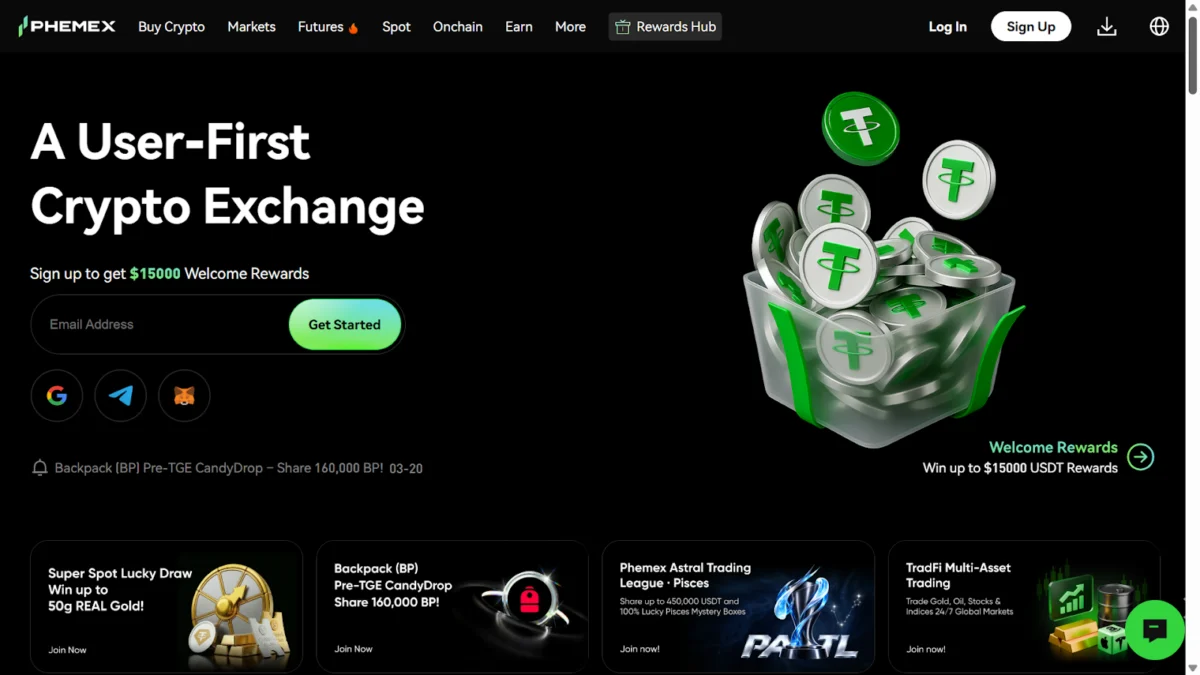
The year 2026 marks a pivotal moment in the cryptocurrency market, characterized by increased regulatory clarity, institutional maturation, and continuous technological innovation. For investors and traders seeking to engage with digital assets, selecting the optimal crypto exchange is more critical than ever, balancing factors such as security, fee structures, asset diversity, and user experience. This guide delves into the top platforms poised to lead the industry in 2026, offering an expert-reviewed analysis to inform investment decisions.
The journey of cryptocurrency exchanges from niche platforms in the early 2010s to sophisticated financial hubs by 2026 reflects the broader evolution of the digital asset space. Initially, exchanges were rudimentary, often facing significant security challenges and regulatory ambiguities. The mid-2010s saw the rise of major centralized exchanges (CEXs) like Binance and Coinbase, which professionalized the trading experience, introduced broader asset listings, and began grappling with compliance frameworks. The DeFi boom of the early 2020s catalyzed the growth of decentralized exchanges (DEXs) like Uniswap, emphasizing user control and permissionless trading, fundamentally altering the landscape. By 2026, the market has matured significantly, with exchanges operating under increasingly defined legal frameworks across major jurisdictions, and a clear distinction emerging between highly regulated, feature-rich CEXs and innovative, community-governed DEXs. This period has also witnessed a substantial increase in institutional participation, driving demand for robust security, high liquidity, and specialized financial products, which exchanges have rapidly developed to meet.
Top Crypto Exchanges at a Glance (2026 Snapshot)

| Exchange | Primary Strength | Supported Coins | Trading Fees (Spot, Standard) | US Available |
|---|---|---|---|---|
| Binance | Altcoin variety and deep liquidity | 500+ coins | 0.10% maker/taker (lower with BNB) | No (via Binance.US) |
| Coinbase | Beginner-friendly interface & compliance | 350+ | 0.40%–0.60% (Advanced); 1.49% (Simple) | Yes |
| OKX | Advanced trading tools & global reach | 300+ | 0.08%–0.35% (US: 0.20%–0.35%) | Yes (since Apr 2025) |
| Kraken | Security-focused platform | 200+ (Pro) | 0.16%–0.26% (Pro); 1% + spread (App) | Yes |
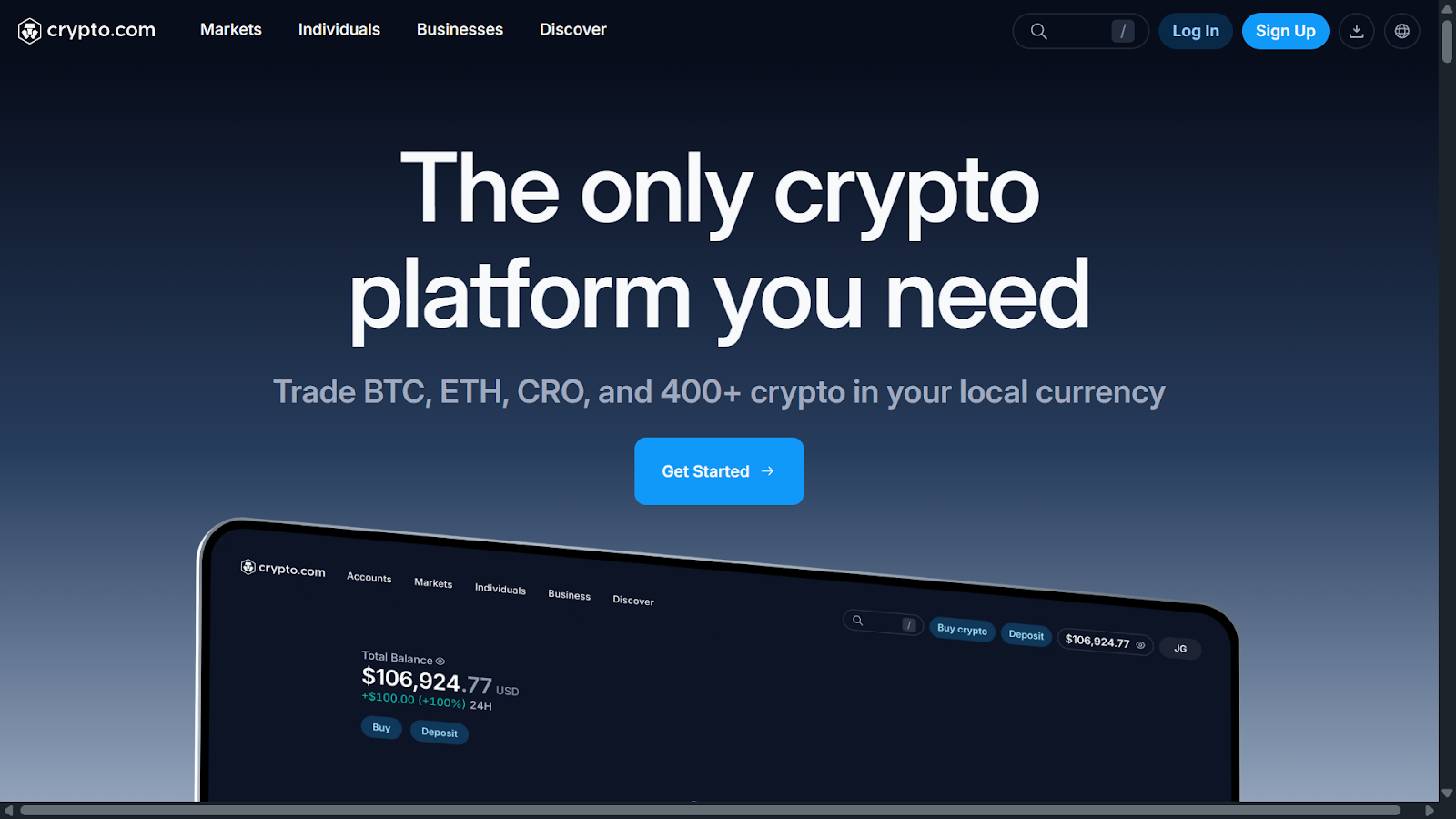
| Crypto.com | Mobile-first & rewards ecosystem | 400+ | 0.25%/0.50% base; lower with CRO | Yes |
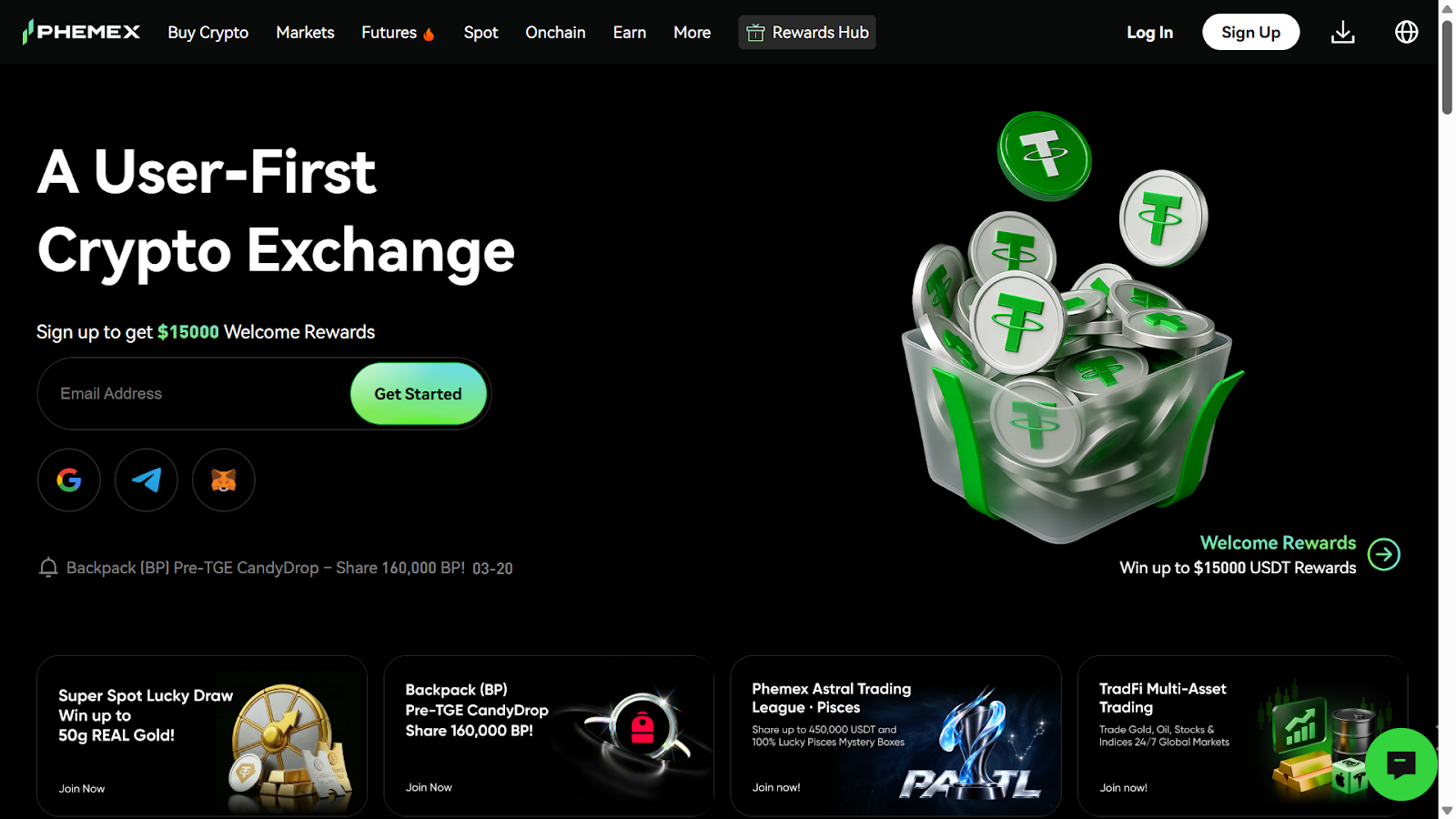
| Phemex | Low fees for derivatives | 200+ | Spot: 0.10%; Contracts: 0.01%–0.06% | Yes (check local rules) |
| Gemini | High security & regulatory compliance | 90+ | 0.20%/0.40% (ActiveTrader); 2.49% (Instant) | Yes |
| Bybit | Futures & leverage options | 650+ spot | 0.01%–0.06% (contracts); 0.10% spot | No (restricted in US) |
| Uniswap | Decentralized exchange for DeFi tokens | Unlimited (ERC-20) | 0.05%–1% (LP fee); 0% interface fee | Yes (no KYC) |
| Uphold | Multi-asset (crypto, stocks, metals) | 250+ | 0.20%–0.40% spread; $0.99 if < $250 | Yes |
10 Best Crypto Exchanges in 2026: Expert-Reviewed and Ranked
1. Binance: Global Leader in Altcoin Variety and Deep Liquidity
Binance maintains its dominant position in 2026 as the world’s largest cryptocurrency exchange by trading volume, largely due to its unparalleled selection of altcoins and robust liquidity across thousands of trading pairs. Founded in 2017 by Changpeng Zhao (CZ) and Yi He, Binance has expanded its reach to over 180 countries, solidifying its role as a cornerstone of the global crypto economy. Its reported daily trading volume often exceeds $40 billion, a testament to its market depth and user trust. The platform’s resilience in navigating various regulatory landscapes, including the establishment of regional entities like Binance.US, underscores its strategic adaptability. For traders prioritizing access to an expansive market and efficient execution, Binance remains the benchmark.
Binance’s appeal extends beyond its vast asset offerings. It provides a comprehensive ecosystem including staking, savings products, futures and margin trading, and a popular Launchpad for new token offerings. The Binance Coin (BNB) ecosystem has matured, offering users reduced trading fees and participation in various platform features. While its interface can appear complex to novice users, its advanced charting tools and customizable dashboards cater to seasoned professionals. The exchange’s continuous innovation in product development, coupled with its ability to attract and retain a massive user base, positions it as a critical player in the 2026 crypto market, despite ongoing regulatory scrutiny in some regions which it actively addresses through localized compliance efforts.

2. Coinbase: The Gateway for Beginners and Compliant US Trading
Coinbase, headquartered in the USA and publicly listed since 2021, continues to be the preferred choice for new cryptocurrency investors and institutions in 2026, primarily due to its beginner-friendly interface and unwavering commitment to regulatory compliance. With assets under management reportedly exceeding $90 billion, Coinbase has cultivated a reputation for security and ease of use, making it an accessible entry point into the digital asset market. Its adherence to stringent US financial regulations offers a significant level of assurance to users, a factor increasingly valued in the maturing crypto space.
The platform is designed with simplicity in mind, offering a streamlined process for buying, selling, and managing cryptocurrencies. Beyond its intuitive interface, Coinbase provides extensive educational resources, empowering new users to understand various digital assets and blockchain technology. While its standard trading fees are generally higher than some competitors, its Coinbase Advanced Trading platform offers more competitive rates for experienced users. Coinbase’s consistent focus on user protection, including robust insurance policies and cold storage solutions, reinforces its status as a trusted custodian of digital assets. Its active engagement with policymakers further cements its position as a compliant and forward-thinking exchange.
3. OKX: A Powerhouse for Advanced Trading Tools and Global Reach

OKX, established in 2017 by Star Xu, has firmly established itself by 2026 as a premier destination for traders seeking advanced tools and a wide array of financial instruments. With a global footprint spanning over 100 countries and operational hubs in strategic locations like Singapore and Silicon Valley, OKX has successfully blended innovation with accessibility. The exchange caters specifically to those who demand sophisticated trading capabilities, including complex derivatives, margin trading, and automated strategies. Its expansion into the US market in April 2025 further diversified its user base and market influence.
OKX’s platform is characterized by its comprehensive suite of features: perpetual swaps, futures, options, and a robust spot market. It supports a diverse range of cryptocurrencies and actively integrates new DeFi and Web3 functionalities. The exchange’s commitment to high liquidity and rapid execution is crucial for its target demographic of active traders. While the complexity of its offerings might be daunting for absolute beginners, OKX provides extensive documentation and tutorials to help users navigate its advanced functionalities. Its competitive fee structure, especially for higher-volume traders, coupled with a focus on technological innovation, ensures its continued relevance for advanced participants in the 2026 market.
4. Kraken: The Epitome of Security-Focused Cryptocurrency Trading
Kraken, founded in 2011, stands as a bastion of security and trust in the 2026 cryptocurrency landscape. With a history largely free of major security breaches and a steadfast commitment to regulatory compliance across over 190 countries, Kraken appeals strongly to traders who prioritize asset protection above all else. Its platform supports a substantial number of crypto assets (over 200 on its Pro platform) and has facilitated more than $2 trillion in total transaction volume, demonstrating its reliability and scale.

The exchange’s security measures are industry-leading, encompassing advanced encryption, multi-factor authentication, rigorous third-party audits, and substantial cold storage for customer funds. Kraken is also known for its proactive engagement with regulatory bodies, ensuring that its operations adhere to the highest standards. Beyond security, Kraken offers a robust trading experience with features like staking rewards, institutional-grade APIs, and diverse funding options. While its app might have higher fees for simple trades, its Kraken Pro platform provides competitive rates for more active traders. For investors who view the safety of their digital assets as paramount, Kraken remains an unparalleled choice in 2026.
5. Crypto.com: Best for Mobile-First Experience and Comprehensive Rewards
Crypto.com continues its ascent in 2026 as a top-tier mobile-first cryptocurrency exchange, celebrated for its user-friendly app and extensive rewards ecosystem. Catering to a global audience, the platform supports over 400 cryptocurrencies, integrating seamless trading with an attractive suite of earning opportunities. Its aggressive marketing strategies and user-centric design have cultivated a large, engaged community, particularly among those who manage their crypto portfolios on the go.
The Crypto.com app is renowned for its intuitive interface, allowing users to effortlessly buy, sell, stake, and spend cryptocurrencies. A key differentiator is its tiered rewards program, often tied to its native token, CRO, which offers benefits such as reduced trading fees, cashback on its crypto debit cards, and enhanced staking yields. While the base trading fees can be higher for non-staking users, the incentives for holding CRO can significantly reduce costs. Its global availability and diverse product offerings, including an NFT marketplace and DeFi wallet integration, make it a versatile platform. For users who prioritize convenience, a rich rewards program, and mobile accessibility, Crypto.com remains a compelling option in 2026.

6. Phemex: Leading with Low Fees for Derivatives Trading
Phemex has carved out a significant niche in the 2026 crypto market, particularly for derivatives traders seeking ultra-low fees and high-performance execution. With support for over 200 cryptocurrencies and a focus on both spot and futures markets, Phemex appeals to cost-conscious traders who demand efficiency and advanced trading options. Its competitive fee structure, especially for contracts, sets it apart in the derivatives landscape.
The exchange is engineered for speed, boasting a high-speed trading engine capable of processing a massive volume of orders with minimal latency. This makes it ideal for algorithmic traders and those engaging in high-frequency strategies. Phemex provides a suite of advanced trading tools, including customizable charts, various order types, and trading bots, catering to sophisticated users. Its commitment to security, evidenced by regular proof-of-reserves audits, instills confidence in its user base. While its fiat deposit options may be more limited compared to larger, older exchanges, its focus on performance and low fees for derivatives trading ensures its continued relevance for a specific segment of the crypto market in 2026.
7. Gemini: The Gold Standard for High Security and Regulatory Compliance

In 2026, Gemini stands out as a top-tier cryptocurrency exchange for users who place an absolute premium on security, regulatory compliance, and institutional-grade trust. Founded by the Winklevoss twins, Gemini has meticulously built its reputation as a highly regulated and secure platform, particularly within the stringent US market. This makes it an especially attractive choice for cautious buyers, long-term holders, and institutional clients seeking a highly structured and compliant trading environment.
Gemini’s commitment to security is exemplified by its comprehensive measures, including insurance coverage for digital assets held online, robust cold storage solutions, and SOC 2 Type 2 certification, signifying the highest standards of data protection and operational integrity. Its active collaboration with regulatory bodies ensures full compliance with US financial laws, offering unparalleled transparency. While its instant trade fees might be higher, its "ActiveTrader" platform provides more competitive rates for experienced users. Gemini’s focus on a curated selection of over 90 cryptocurrencies, emphasizing quality and compliance over sheer quantity, appeals to a specific demographic. For investors for whom trust and asset protection are non-negotiable, Gemini remains a leading choice in 2026.
8. Bybit: The Premier Platform for Futures and Leverage Options
Bybit continues to dominate the futures and leverage trading landscape in 2026, solidifying its position as a go-to platform for experienced traders seeking high-risk, high-reward opportunities. Supporting an impressive 650+ spot assets and over 2,500 total trading pairs, Bybit offers a vast array of derivative products, including perpetual swaps and futures contracts. Its rapid growth and innovation have made it a preferred choice for advanced traders globally, though it remains restricted in the US market due to regulatory complexities.

Bybit’s competitive fee structure for contracts, often among the lowest in the industry, combined with its high liquidity across trading pairs, enables efficient and cost-effective execution of complex strategies. The platform provides an extensive suite of advanced trading tools, including sophisticated charting capabilities, various order types, and integrated trading bots. Its robust infrastructure is designed to handle high trading volumes and volatile market conditions, ensuring reliable performance. While it primarily focuses on derivatives and does not offer extensive staking or rewards programs, its specialization in this segment and continuous product enhancement make Bybit a critical player for professional derivatives traders in 2026.
9. Uniswap: The Leading Decentralized Exchange for DeFi Tokens
Uniswap, as one of the pioneers and leading decentralized exchanges (DEXs) in 2026, continues to redefine how users interact with digital assets. Operating without intermediaries and supporting an unlimited number of ERC-20 tokens, Uniswap offers users the ability to swap assets directly from their self-custodial wallets. This decentralized nature ensures unparalleled transparency, censorship resistance, and user control over funds, making it a cornerstone of the DeFi ecosystem.
Uniswap’s appeal lies in its permissionless access to a vast array of tokens, including newly launched and niche assets that may not yet be available on centralized platforms. Its automated market maker (AMM) model, driven by liquidity pools, ensures deep liquidity for many trading pairs. While users benefit from direct wallet integration and no KYC requirements, they must contend with Ethereum network gas fees, which can fluctuate significantly during periods of high congestion. The ongoing development of Uniswap, including its various versions (V1, V2, V3, and potential future iterations), reflects its continuous innovation in optimizing capital efficiency and providing advanced features for liquidity providers. For DeFi enthusiasts and those prioritizing privacy and direct asset control, Uniswap remains the definitive choice in 2026.

10. Uphold: The Versatile Multi-Asset Trading Platform
Uphold distinguishes itself in 2026 as a uniquely versatile multi-asset trading platform, catering to investors looking to diversify beyond traditional cryptocurrencies. Supporting over 250 assets, including a broad range of cryptocurrencies, fractional US stocks, and precious metals, Uphold offers a singular platform for managing a diverse portfolio. Its user-friendly interface and transparent fee structure make it an accessible option for those venturing into multi-asset investing.
Uphold’s "Anything-to-Anything" trading model allows users to seamlessly convert between different asset classes, providing unparalleled flexibility. This feature is particularly attractive for investors who appreciate the convenience of managing both digital and traditional assets from a single account. While Uphold’s fees can be higher for smaller trades due to its spread-based model, its transparency ensures users are aware of the costs upfront. The platform emphasizes ease of use, making it suitable for beginners, while its comprehensive asset selection appeals to more experienced investors seeking diversification. For those aiming to build a truly diversified portfolio spanning multiple asset classes, Uphold presents a compelling and integrated solution in 2026.
Navigating the Digital Asset Landscape: How to Choose the Best Crypto Exchange in 2026
The decision of which crypto exchange to utilize in 2026 is complex, given the market’s maturity and the diverse offerings available. A thorough evaluation of several critical factors is essential to align the platform with individual trading styles and investment goals.
Trading Fees and Fee Structure:
By 2026, fee structures have become increasingly sophisticated. Traders must scrutinize maker and taker fees, withdrawal fees, deposit fees, and any hidden charges. Many exchanges offer tiered fee reductions based on trading volume or holdings of their native tokens (e.g., BNB for Binance, CRO for Crypto.com). For high-frequency traders or those engaging in margin and futures, even small percentage differences can significantly impact profitability. Understanding the distinction between spot, derivatives, and instant buy fees is paramount.
Security and Regulation:
Security remains the paramount concern. In 2026, robust security protocols are standard for reputable exchanges. This includes mandatory two-factor authentication (2FA), cold storage for a significant portion of assets, regular third-party security audits (e.g., SOC 2 Type 2 certification for Gemini), and insurance policies covering certain types of losses. Furthermore, regulatory compliance is crucial. Exchanges operating under licenses from financial authorities (e.g., US state money transmitter licenses, MiCA regulations in the EU) provide an added layer of protection and legitimacy. Users should verify an exchange’s regulatory status in their specific jurisdiction.
Supported Cryptocurrencies and Liquidity:
The range of available cryptocurrencies is a key differentiator. While major coins like Bitcoin and Ethereum are ubiquitous, access to a diverse array of altcoins, new project tokens, and emerging asset classes like tokenized real-world assets (RWAs) can be vital for diversification and capturing new opportunities. High liquidity across trading pairs is equally important, ensuring that trades can be executed quickly and efficiently without significant price slippage, especially for larger orders.

User Interface and Ease of Use:
A well-designed user interface (UI) and intuitive user experience (UX) are crucial for both novices and seasoned traders. Beginners benefit from simplified dashboards and clear guidance, while advanced traders require customizable charts, sophisticated order types, and responsive mobile applications. A cluttered or overly complex interface can lead to errors and frustration, regardless of the underlying features.
Deposit and Withdrawal Options:
The flexibility and security of deposit and withdrawal methods are practical considerations. Exchanges supporting preferred fiat payment options (bank transfers, credit/debit cards, e-wallets) with competitive fees and rapid processing times enhance convenience. For crypto-to-crypto transfers, efficient and secure wallet integration is essential. The implementation of secure payment gateways and clear withdrawal limits are also important factors.
Customer Support Quality:
Responsive and effective customer support is invaluable. In 2026, top exchanges typically offer 24/7 support through multiple channels, including live chat, email, and sometimes phone. Multilingual support and comprehensive FAQ sections or knowledge bases are also indicators of a user-centric platform that can resolve issues promptly and efficiently.
Broader Market Implications and Regulatory Landscape in 2026
The regulatory landscape in 2026 has significantly matured compared to previous years. Jurisdictions like the European Union, with its Markets in Crypto-Assets (MiCA) regulation, have established comprehensive frameworks for crypto-asset service providers (CASPs), including exchanges. This has led to increased compliance costs but also greater investor protection and institutional confidence. In the United States, a more fragmented but evolving regulatory environment has pushed exchanges like Coinbase and Gemini to prioritize compliance, often leading to a more limited selection of assets but higher security assurances for US residents. The implications include a clear bifurcation of exchanges into highly regulated entities catering to mainstream and institutional clients, and more agile, often offshore platforms offering broader access to nascent assets but potentially with higher regulatory risk.
Technological advancements, particularly in Layer 2 scaling solutions and interoperability, have also reshaped exchanges. Many platforms now integrate or directly support Layer 2 networks to offer faster and cheaper transactions, alleviating congestion on mainnets like Ethereum. The growing intersection of AI and blockchain is also influencing exchange operations, from enhanced fraud detection and security protocols to personalized trading insights and automated customer support. The increasing institutional adoption of digital assets has further driven exchanges to develop sophisticated prime brokerage services, custody solutions, and advanced APIs to cater to hedge funds, family offices, and traditional financial institutions. This push towards institutionalization also means a greater focus on environmental, social, and governance (ESG) factors, with some exchanges actively promoting sustainable blockchain initiatives and transparency in energy consumption.
Conclusion
The year 2026 presents a sophisticated and dynamic cryptocurrency exchange ecosystem. The choice of platform hinges critically on individual needs, encompassing trading style, risk tolerance, and investment objectives. While platforms like Binance and OKX cater to diverse trading needs and advanced strategies, Coinbase and Gemini remain ideal for beginners and those prioritizing regulatory compliance and security. Decentralized exchanges such as Uniswap offer unparalleled control for DeFi enthusiasts, and specialized platforms like Uphold provide unique multi-asset diversification. An informed decision, based on a careful evaluation of fees, security, supported assets, and user experience, is paramount to maximizing potential and safeguarding investments in this evolving digital frontier.

FAQs
Which exchange is best for beginners?
Coinbase is widely considered the best exchange for beginners due to its intuitive interface, simplified trading processes, and extensive educational resources.
Which crypto exchange has the lowest fees?
Phemex and Binance are known for offering some of the lowest trading fees, particularly for derivatives and high-volume spot trading, respectively. Their fee structures are often tiered and can be further reduced by holding native tokens.
What is the safest crypto exchange in 2026?
Gemini and Kraken are consistently ranked as the safest crypto exchanges in 2026, primarily due to their rigorous security measures, comprehensive insurance policies, and strong adherence to regulatory compliance.

Can US residents use Binance?
No, US residents cannot use the global Binance platform. They can, however, use Binance.US, which is a separate entity specifically designed to comply with US regulations.
What is the difference between a CEX and a DEX?
A CEX (Centralized Exchange) is operated by a company that acts as an intermediary, managing user funds and facilitating trades. A DEX (Decentralized Exchange) operates without a central authority, allowing users to trade directly from their personal wallets, offering greater privacy and control over assets.
Is it better to keep crypto on an exchange or a wallet?
For long-term storage, it is generally better to keep cryptocurrency in a personal wallet (hardware or software) where you control your private keys, as this offers superior security and control compared to leaving assets on an exchange. Exchanges are best for active trading.