admin
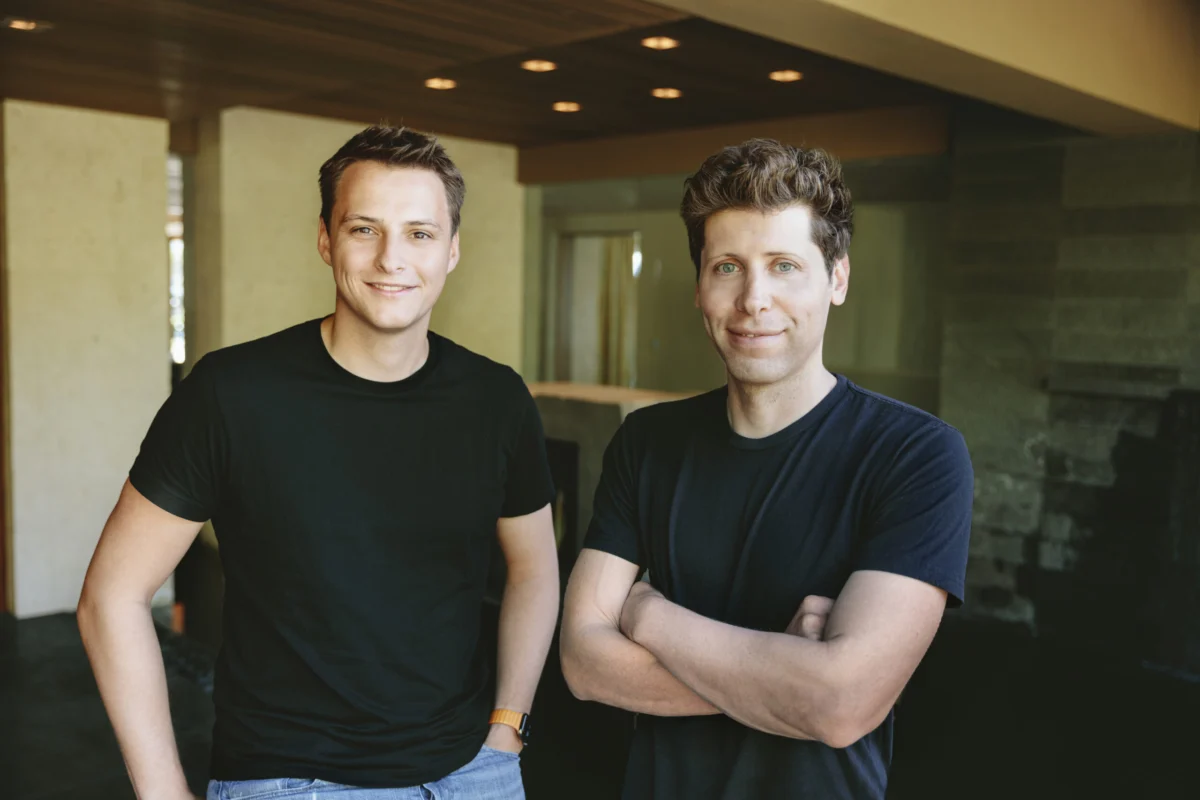
World, the digital identity and verification initiative co-founded by OpenAI Chief Executive Officer Sam Altman and Alex Blania, has successfully concluded a $52.5 million funding round through a targeted sale of its native WLD tokens. The capital raise, which involved several high-profile venture capital firms and strategic partners, marks a significant milestone for the project as it attempts to solidify its presence in the burgeoning "proof of personhood" sector. The transaction was structured as a private token sale with a mandatory 12-month lockup period, a move designed to ensure long-term alignment between the investors and the project’s overarching mission.
The lead participant in the round was Pantera Capital, a prominent investment firm specializing in blockchain technology and digital assets. Joining Pantera were Eightco Holdings, Bain Capital Crypto, Susquehanna Crypto, and Selini Capital, among other strategic investors. According to a press release issued by the company, the year-long lockup period serves as a testament to the investors’ commitment to the sustained growth and utility of the World ecosystem. The proceeds from this sale are slated for the World Foundation, a non-profit entity based in the Cayman Islands that is tasked with overseeing the development and decentralization of the network.
The Evolution of World: From Worldcoin to a Global Identity Standard
The project, which is managed operationally by San Francisco-based Tools for Humanity (TFH), was originally launched under the name "Worldcoin." Its primary objective is to solve one of the most pressing challenges of the artificial intelligence era: distinguishing between human users and automated agents or "bots." As generative AI continues to flood the internet with synthetic content, the ability to verify a "proof of human" status has become a critical requirement for social networks, financial services, and digital marketplaces.
The rebranding from Worldcoin to simply "World" occurred earlier this year, signaling a strategic shift away from being perceived solely as a cryptocurrency project. While the WLD token remains a central component of the ecosystem’s incentive structure and governance, the company has pivoted its messaging to focus on the broader utility of its "World ID" system. This digital passport is intended to provide a secure, anonymous way for individuals to prove their humanity online without revealing sensitive personal information, such as their legal name or physical address.
Technical Architecture and the Role of the Orb
At the heart of World’s verification process is the "Orb," a proprietary hardware device shaped like a metallic sphere. The Orb utilizes advanced biometric technology to scan a user’s iris, creating a unique cryptographic identifier known as an "IrisCode." This code is then compared against a global database to ensure that the individual has not already registered, preventing the creation of duplicate accounts. Once the scan is complete and the identity is verified, the user is issued a World ID.
The company has deployed these Orbs in various major cities and through partnerships with retail locations globally. While the use of biometric data has raised significant privacy concerns in several jurisdictions, Tools for Humanity maintains that the system is designed with privacy-preserving cryptography. The company asserts that images of the iris are deleted by default unless a user explicitly opts into "Data Custody," and that the resulting IrisCode cannot be reverse-engineered to reconstruct the original image.
Chronology of Development and Regulatory Hurdles
The journey of World has been marked by rapid technological advancement alongside intense regulatory scrutiny. Since its emergence from stealth mode, the project has followed a complex timeline:
- 2019–2021: Conceptualization and Prototyping. Sam Altman and Alex Blania founded Tools for Humanity with the vision of creating a global financial and identity network. The first Orb prototypes were developed during this period.
- 2022: Global Beta Testing. The project began field-testing the Orbs in diverse markets, including parts of Africa, Southeast Asia, and Europe, garnering both interest and criticism regarding its data collection practices in developing nations.
- July 2023: Official Launch of Worldcoin. The project officially launched its WLD token and expanded its Orb deployments. This launch was met with immediate regulatory pushback in countries like Kenya, where the government suspended the project’s operations over data protection concerns.
- Early 2024: Strategic Pivots and Rebranding. Facing a "crypto winter" and increased skepticism toward digital assets, the project rebranded to "World." It also introduced "World Chain," a dedicated blockchain designed to prioritize human-verified transactions.
- April 2024: Integration and Expansion. World announced integrations with major platforms such as Tinder, Zoom, and DocuSign, allowing these services to use World ID for user verification.
- June 2024: Operational Restructuring. Tools for Humanity conducted a round of layoffs, which the company described as a necessary step to streamline operations and focus on long-term scalability.
- Current Status: $52.5 Million Capital Injection. The latest token sale provides the financial runway needed to continue hardware production and global expansion.
Market Context and Investor Confidence
The $52.5 million investment comes at a time when the venture capital landscape for crypto-related projects remains cautious. However, the involvement of Pantera Capital and Bain Capital Crypto suggests that institutional investors see significant value in the "proof of personhood" narrative. Ryan Barney, a partner at Pantera Capital, has previously noted that the rise of AI-generated identities makes World’s mission more relevant than ever.
From a market perspective, the WLD token has experienced significant volatility since its inception. Like many utility tokens, its value is closely tied to the perceived adoption of the underlying network. By securing a 12-month lockup from its latest investors, World effectively reduces immediate sell pressure on the token, which could help stabilize its market price as the project seeks to onboard more users and corporate partners.
Data from the company indicates that several million individuals have already verified their identities via an Orb. However, the challenge remains in scaling this number to the hundreds of millions or billions required for the network to function as a truly global standard. The high cost of manufacturing and deploying physical hardware (the Orbs) remains a significant bottleneck compared to software-only verification methods.
Regulatory and Ethical Implications
The expansion of World has not been without controversy. Data protection authorities in the European Union, specifically in Spain and Germany, have launched investigations into whether the project complies with the General Data Protection Regulation (GDPR). The primary concerns revolve around the legal basis for processing sensitive biometric data, the transparency of the consent process, and the rights of users to have their data deleted.
In response to these challenges, World has introduced several "Privacy-First" updates. These include "Personal Custody," which allows users to store their own encrypted data on their mobile devices rather than in the company’s cloud, and "Unverify," a feature that allows users to permanently delete their IrisCodes. Despite these efforts, the project remains banned or under investigation in several key markets, highlighting the friction between centralized biometric collection and decentralized privacy ideals.
Broader Impact and Future Outlook
The success or failure of World could have profound implications for the future of the internet. If World ID becomes a dominant standard, it could significantly reduce the prevalence of spam, fraud, and misinformation by ensuring that every account is tied to a unique human being. It could also pave the way for a more equitable distribution of resources, such as a universal basic income (UBI), by providing a mechanism to distribute funds directly to individuals without the need for traditional banking infrastructure.
Conversely, critics argue that the project creates a "biometric moat" that could be exploited by governments or corporations for surveillance. The centralized nature of the Orb production and the initial data collection phase remains a point of contention for decentralization purists.
As Tools for Humanity utilizes the newly raised $52.5 million, the focus will likely shift toward two main areas: hardware iteration and ecosystem growth. The company is reportedly working on a next-generation Orb that is easier to mass-produce and less intimidating in appearance. Simultaneously, the World Foundation will likely use the funds to incentivize developers to build applications on the World Chain, creating more "real-world" use cases for the World ID.
In the words of CEO Alex Blania, the project is engaged in a race against the rapid advancement of AI. The goal is to build the infrastructure of trust before the distinction between human and machine becomes indistinguishable. With the backing of Sam Altman’s vision and a fresh infusion of capital from strategic investors, World is positioned to remain at the center of the debate over digital identity in the 21st century. Whether the global population will embrace iris-scanning as the price of digital citizenship, however, remains an open question.