
 admin

Binance, the world’s largest cryptocurrency exchange by trading volume, has been rocked by an unprecedented security breach resulting in the theft of approximately $6.3 billion in digital assets. This colossal sum marks the largest cryptocurrency theft on record, sending shockwaves through the global crypto markets and reigniting critical debates surrounding the security vulnerabilities inherent in centralized exchanges. Blockchain analytics firms have swiftly pointed to North Korea, identifying its notorious state-linked hacking group, TraderTraitor, as the likely perpetrator. In the immediate aftermath, Binance moved to reassure its vast user base, with Co-CEO Richard Teng pledging to cover all losses and confirming active collaboration with industry partners to trace and recover the stolen funds.
The sophisticated attack unfolded on October 29, 2026, commencing with meticulous preparations that stretched over at least 36 hours. According to detailed analysis by TRM Labs, the hackers initiated their covert operations with small, seemingly innocuous withdrawals from Tornado Cash, a cryptocurrency mixing service often utilized to obfuscate transaction trails. This was followed by a series of tests involving malicious code, signaling a methodical approach to validate their attack vectors before launching the primary assault. The main breach itself was executed with chilling efficiency, with the bulk of the $6.3 billion theft occurring within a mere 20-minute window. During this brief period, attackers systematically siphoned funds from Binance-controlled hot wallets across an astonishing 10 distinct blockchain networks, transferring them to addresses under their direct control.
A Detailed Account of the Multi-Chain Infiltration
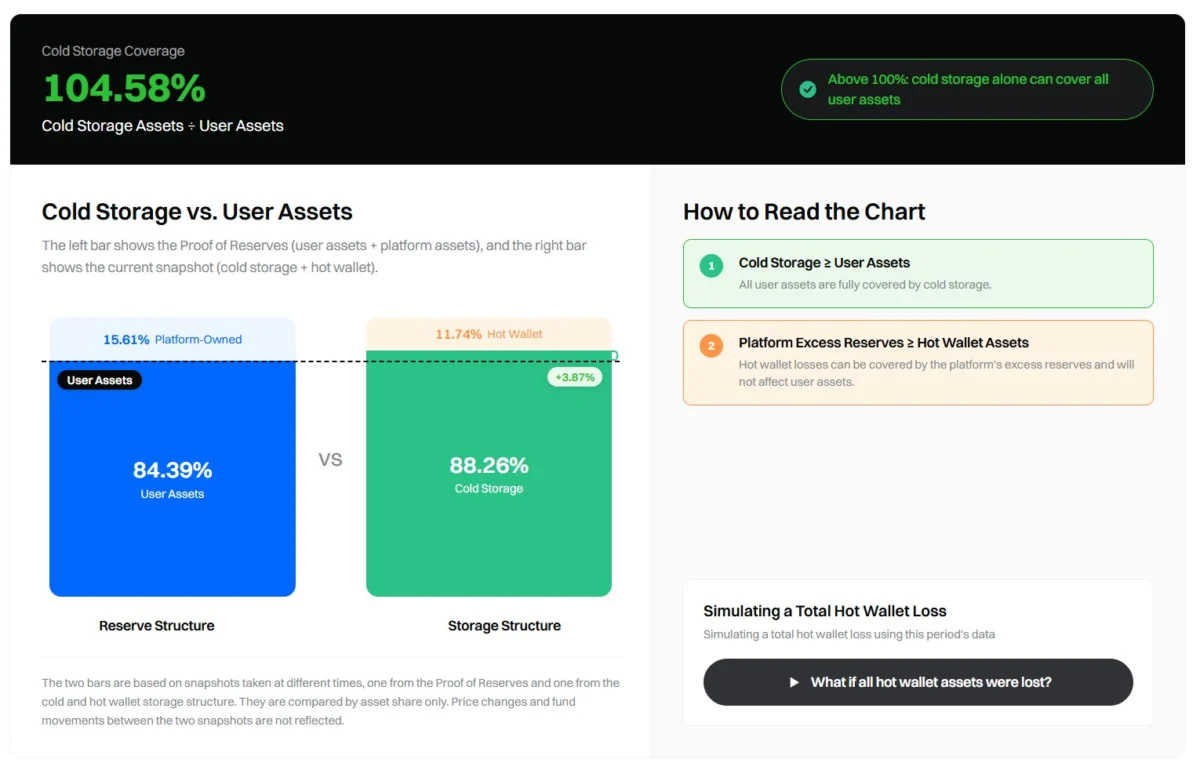
Initial investigations into the root cause of the breach have suggested a highly insidious entry point: a compromised laptop belonging to a Binance engineer. This critical breach of an internal system may have granted the attackers privileged access to Binance’s sophisticated internal infrastructure, specifically those systems responsible for authorizing high-value transactions. TRM Labs’ findings further substantiate this theory, indicating a broader compromise that extended to Binance’s hot wallet signing infrastructure. Hot wallets, by their nature, are internet-connected cryptocurrency wallets essential for facilitating rapid transactions and withdrawals on exchanges. While their accessibility is crucial for liquidity and trading operations, it inherently exposes them to elevated cybersecurity risks compared to offline cold storage solutions.
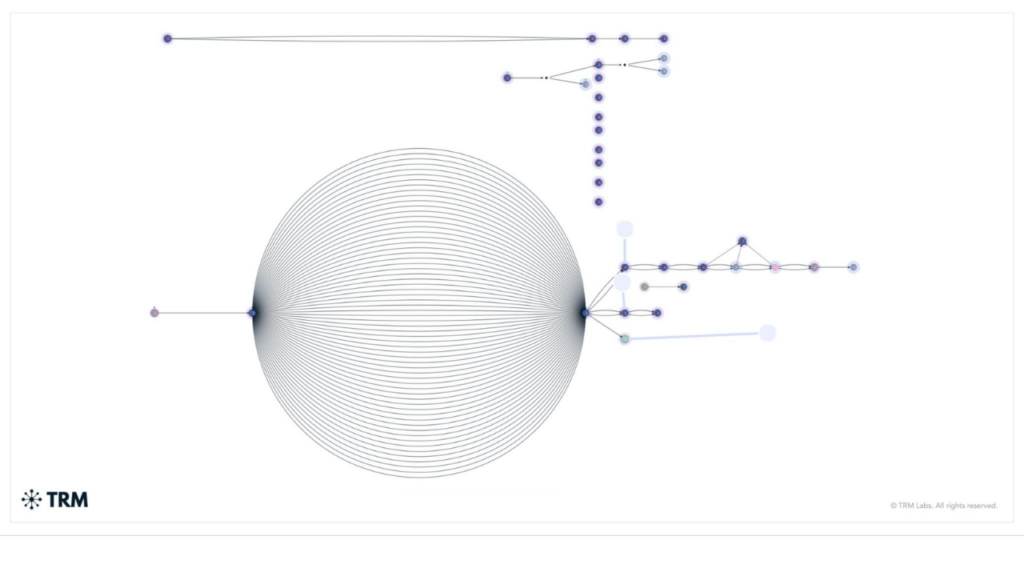
The attackers demonstrated an advanced understanding of blockchain mechanics and exploited specific vulnerabilities. On the Ethereum network, a significant portion of the theft was facilitated by exploiting EIP-7702. This Ethereum Improvement Proposal is a feature that allows a wallet to delegate transaction execution to smart contract code through a signed authorization. The hackers meticulously prepared an arsenal of 50 such authorizations in advance, strategically increasing the probability that at least one would remain valid and active when submitted. Once activated, the compromised Binance wallet effectively became a puppet, capable of executing a contract controlled by the attackers, thereby enabling them to drain its assets systematically.

The scale of this technical maneuver was staggering. The operation saw approximately 167,464 ETH, alongside dozens of other tokens, swiftly moved from the affected Ethereum-based wallet. Further demonstrating the attackers’ real-time control, any additional funds that subsequently arrived in these compromised wallets were immediately swept into attacker-controlled addresses. The breach was not confined to a single blockchain; its tentacles reached across Bitcoin, Tron, Solana, XRP Ledger, Arbitrum, Avalanche, Optimism, Base, and Polygon. The simultaneous movement of such vast sums across diverse networks strongly suggests that the attackers had achieved a deep level of access to Binance’s core transaction-signing infrastructure, allowing them to orchestrate a coordinated, multi-front assault. While Binance’s internal investigation remains ongoing, a definitive, publicly disclosed explanation of the incident’s precise root cause is still pending.
The Shadow of TraderTraitor: North Korea’s Proven Track Record
The swift and confident attribution of the attack to North Korea by leading blockchain analytics firms TRM Labs and Chainalysis is not without precedent. Both firms expressed "high confidence" in their assessment, identifying TraderTraitor, also known as the Lazarus Group, as the likely perpetrator. This state-sponsored hacking group has a long and documented history of engaging in large-scale cybercrime, particularly targeting cryptocurrency platforms, to generate illicit revenue for the Pyongyang regime.
TRM Labs highlighted striking similarities between the Binance hack and previous high-profile attacks attributed to North Korean hackers. Notably, the $1.5 billion Bybit hack in February 2025, which the US Federal Bureau of Investigation (FBI) directly linked to Pyongyang, shares operational characteristics with the recent Binance incident. These similarities often include the sophisticated pre-attack reconnaissance, the use of mixing services like Tornado Cash to obscure origins, the exploitation of internal system vulnerabilities, and the rapid, multi-chain movement of stolen assets.
North Korea has faced repeated accusations from international authorities and sanctions bodies for employing cyberattacks as a primary means to circumvent stringent international sanctions and generate crucial funds for its illicit weapons of mass destruction (WMD) programs. These cyber-enabled financial operations represent a significant and evolving threat to global financial security. Despite overwhelming evidence and consistent attribution from intelligence agencies worldwide, Pyongyang has steadfastly denied any involvement in such activities, maintaining a posture of non-culpability. The Binance incident further solidifies the perception of North Korea as a formidable and persistent cyber threat actor in the digital asset space.
Rapid Response and the Fight for Asset Recovery
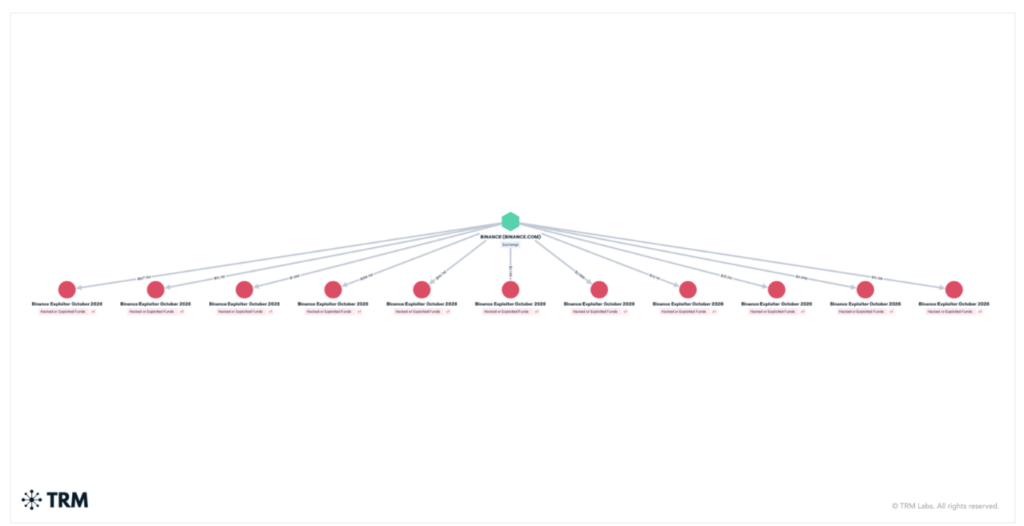
In a testament to the growing cooperation within the cryptocurrency ecosystem, a rapid and coordinated response from various cryptocurrency companies and blockchain networks played a crucial role in mitigating the full extent of the damage. This collective action helped to prevent a substantial portion of the stolen assets from being fully laundered and moved beyond the reach of recovery efforts.
According to TRM Labs’ post-incident analysis, an estimated $2.7 billion in stolen assets was successfully frozen. This impressive figure is a direct result of the swift actions taken by major stablecoin issuers and several blockchain operators. Tether, the issuer of the largest stablecoin USDT, led these efforts by freezing approximately $1.77 billion in USDT. Circle, the issuer of USDC, blocked around $825 million in its stablecoin. Ripple, a prominent player in the crypto space, managed to freeze approximately $40.5 million in RLUSD. Additionally, World Liberty Financial contributed to the recovery by freezing approximately $27.8 million in its USD1 stablecoin. Beyond stablecoins, the Arbitrum Security Council, demonstrating decentralized governance in action, intervened to remove approximately $30 million in ETH and ARB tokens from the attacker’s control, preventing further illicit movement.
However, the hackers, in their characteristic agility, moved with speed to convert some of the stolen stablecoins into assets that cannot be directly frozen by centralized issuers. TRM Labs identified large and rapid transactions involving decentralized exchanges (DEXs), market makers, and various lending protocols, including Aave. These conversions illustrate the inherent challenges of asset recovery in a truly decentralized environment, where assets, once moved, become much harder to control or seize. Following these complex movements and the collective recovery efforts, the attackers are still estimated to retain a significant portion of the loot: more than 420,000 ETH and 18,270 BTC, collectively valued at approximately $2.4 billion. The task of tracing and recovering these remaining funds presents a formidable and ongoing challenge for investigators and law enforcement agencies globally.
Market Tremors: A Fragile Ecosystem Under Renewed Pressure
The Binance breach ignited a palpable sense of panic across already fragile cryptocurrency markets. Investors, grappling with the sheer scale of the theft, immediately reassessed the inherent risks associated with holding digital assets on centralized exchanges. The market reaction was swift and decisive. Bitcoin, the leading cryptocurrency, plunged to $76,368, marking its lowest level in six weeks. Ethereum, the second-largest cryptocurrency, also suffered, falling more than 3% to approximately $2,178. Binance’s native exchange token, BNB, experienced a notable decline of around 5% over 24 hours, settling at $709.70, according to data from CoinGecko.
The ripple effects extended beyond the direct cryptocurrency markets. Shares of publicly traded cryptocurrency companies also felt the pressure. Coinbase Global, a major US-based exchange, saw its stock fall by 4.8%. MicroStrategy, a prominent corporate holder of Bitcoin, experienced a nearly 6% decline in extended US trading, reflecting broader investor anxiety.
Market analysts were quick to weigh in on the implications. Tim Sun, a senior researcher at Hong Kong-based HashKey Group, articulated the prevailing sentiment, stating that the breach could significantly dampen investor risk appetite. He warned that the incident would likely prompt market participants to critically reassess the safety and security of assets held on centralized exchanges, potentially accelerating a shift towards self-custody or diversified storage solutions. The timing of this record-breaking hack is particularly challenging for the entire industry, which has already been contending with significant headwinds, including elevated US interest rates that typically reduce speculative investment, and a softer global demand for cryptocurrency investment products. The incident serves as a stark reminder of the volatility and inherent risks that continue to characterize the nascent but rapidly evolving digital asset landscape.
Binance Under Renewed Security Scrutiny: Promises and Challenges
Binance, a behemoth in the crypto world, boasts approximately 335 million registered users globally and, according to its 2025 annual report, held an astounding $162.8 billion in assets under custody. To safeguard its vast user base, the exchange maintains a Secure Asset Fund for Users (SAFU), a dedicated emergency insurance fund designed to protect customers against losses arising from security incidents. This fund holds approximately $1 billion in Bitcoin.
However, the sheer scale of the latest theft, at $6.3 billion, significantly exceeds the current value of the SAFU fund. This discrepancy immediately placed intense scrutiny on Binance’s overall financial resources and its unwavering commitment to fully compensating all affected users. Co-CEO Richard Teng moved to quell fears, explicitly stating that the company would utilize its own substantial funds, in conjunction with existing protection mechanisms like SAFU, to cover all losses incurred by users. While this pledge offers a crucial layer of reassurance, the incident undoubtedly raises broader questions about the adequacy of existing safeguards in an era of increasingly sophisticated cyber threats.
The Binance breach vividly underscores the escalating security challenges confronting the entire cryptocurrency industry. TRM Labs estimated that approximately $2.9 billion in digital assets was stolen across nearly 150 attacks during 2025 alone, indicating a persistent and growing threat landscape. While the successful freezing of billions of dollars in stolen assets demonstrates the critical importance of rapid, coordinated cooperation between exchanges, stablecoin issuers, and blockchain networks, the substantial remaining portion of stolen assets presents an ongoing and complex challenge for investigators.
As the full extent of the investigation continues to unfold, the Binance breach is poised to intensify scrutiny of fundamental aspects of exchange security. This includes a deep dive into wallet management strategies (e.g., hot vs. cold storage ratios), transaction authorization systems, and the overall robustness of cybersecurity protocols. Beyond Binance, the incident raises broader, existential questions for the industry: Can existing safeguards adequately protect the rapidly growing volume and value of digital assets entrusted to centralized platforms? What new technological innovations and regulatory frameworks are needed to fortify the defenses against state-sponsored actors and increasingly sophisticated criminal enterprises? The answers to these questions will undoubtedly shape the future trajectory of the cryptocurrency ecosystem.