admin
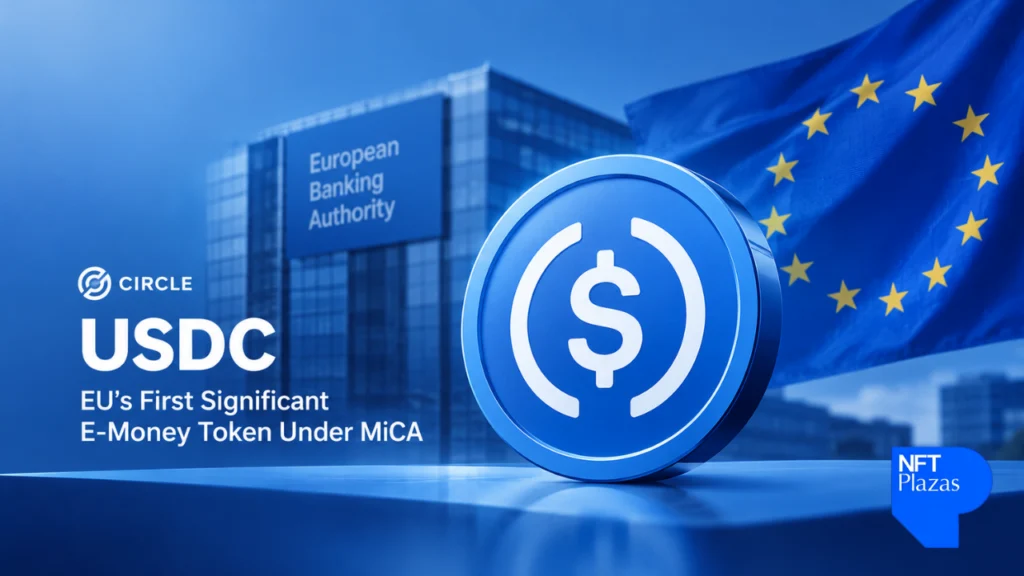
Circle’s USDC, a prominent dollar-backed stablecoin, has achieved a landmark designation under the European Union’s Markets in Crypto-Assets Regulation (MiCA), becoming the first e-money token (EMT) to be classified as “significant.” This pivotal decision, announced by the European Banking Authority (EBA) on October 14, places USDC under direct EBA supervision for critical financial safeguards, effective November 12, 2026. The move signals a new era of enhanced regulatory scrutiny for large-scale digital assets within the EU, underscoring the bloc’s commitment to financial stability and consumer protection in the burgeoning crypto market.
The EBA’s determination followed a comprehensive assessment of USDC against MiCA’s stringent significance criteria. Among the 45 e-money tokens that have been notified under the new regulatory framework, USDC is the inaugural token to receive this elevated status. This classification introduces an additional, more rigorous layer of regulatory oversight, distinct from its existing authorization to operate in Europe and without altering its fundamental dollar peg. It also meticulously delineates supervisory responsibilities between the EBA and France’s Autorité de Contrôle Prudentiel et de Résolution (ACPR), which currently oversees Circle’s European operations, establishing a coordinated but clearly segmented regulatory approach.
MiCA’s Framework for E-Money Tokens: A Deeper Dive
The Markets in Crypto-Assets Regulation (MiCA), adopted in June 2023, represents a watershed moment in global cryptocurrency regulation. It is the EU’s ambitious and pioneering attempt to create a harmonized legal framework for crypto-assets across all 27 member states, aiming to foster innovation while mitigating risks associated with market integrity, consumer protection, and financial stability. MiCA distinguishes between various categories of crypto-assets, with e-money tokens (EMTs) and asset-referenced tokens (ARTs) being particularly significant due to their potential to achieve widespread adoption and integrate with traditional financial systems.
E-money tokens, like USDC, are defined as crypto-assets that purport to maintain a stable value by referencing the value of a single fiat currency. They are essentially digital representations of traditional electronic money, designed to facilitate payments and transfers with price stability. Given their direct link to fiat currencies and potential for large-scale use, EMTs are subject to robust prudential and conduct requirements under MiCA, mirroring those applicable to traditional electronic money institutions. The "significant" status is a further layer of regulatory intensity designed for those EMTs that pose a higher potential risk to financial stability due or could disrupt the wider financial system due to their sheer scale and interconnectedness.
MiCA Article 56 outlines the criteria for classifying an EMT as significant, requiring the EBA to designate a token as such if it meets at least three of the conditions specified in Article 43. These criteria encompass a broad range of factors including:
- The number of token holders: Reflecting the reach and user base of the stablecoin.
- The value of tokens issued: Indicating the stablecoin’s overall market capitalization and potential systemic impact.
- The volume and value of daily transactions: Highlighting its liquidity and utility in the market.
- The extent of its use for payments and transfers: Assessing its functional role in the economy.
- The size and complexity of the issuer’s operations: Evaluating the operational risks involved.
- The interconnectedness with the traditional financial system: Understanding potential contagion risks.
While the EBA’s October 14 announcement did not specify which individual criteria USDC met, its position as the world’s second-largest stablecoin by market capitalization—often exceeding $25-30 billion—with extensive usage across crypto exchanges, DeFi protocols, and cross-border transactions, strongly indicates that it satisfies multiple thresholds related to scale, activity, and market penetration. This market dominance inherently elevates its systemic importance, justifying the enhanced regulatory scrutiny.
The EBA Takes the Helm: Enhanced Oversight of Core Financial Safeguards
Under the new regulatory paradigm, the European Banking Authority will assume direct and primary responsibility for supervising several critical aspects of USDC’s financial integrity. Commencing November 12, 2026, the EBA will oversee:
- Own-funds requirements: Ensuring that Circle maintains adequate capital to absorb potential losses, thereby protecting token holders and the broader financial system. This aligns with prudential regulation seen in traditional banking.
- Reserve assets: Directly supervising the composition, segregation, and management of assets backing USDC. These reserves are crucial for maintaining the stablecoin’s peg and ensuring its liquidity. The EBA will verify that these assets are held in a secure, low-risk, and highly liquid manner, as mandated by MiCA.
- Liquidity standards: Implementing and monitoring robust liquidity management policies to ensure that Circle can meet redemption requests from token holders promptly, even during periods of market stress. This is vital for preventing bank runs or stablecoin de-pegging events.
- Recovery and redemption plans: Requiring Circle to establish detailed procedures for responding to adverse financial developments or operational disruptions. Recovery plans outline steps to restore financial health, while redemption plans guarantee that token holders can convert their USDC back into fiat currency under defined conditions.
These comprehensive safeguards are designed to instill confidence in USDC’s stability and operational resilience, aligning its oversight with the rigorous standards applied to significant financial institutions. The EBA’s direct involvement underscores the EU’s proactive stance in mitigating potential systemic risks posed by large stablecoins, ensuring that their growth is accompanied by robust regulatory frameworks.
A Coordinated Supervisory Approach: EBA and ACPR
The classification of USDC as a significant EMT establishes a sophisticated division of responsibilities, reflecting Article 117 of MiCA, which provides the framework for supervising such tokens. While the EBA focuses on core financial stability metrics, France’s Autorité de Contrôle Prudentiel et de Résolution (ACPR) will retain supervision over other crucial operational and governance aspects of Circle’s European business. These include:
- Corporate governance: Ensuring sound management structures and ethical practices within Circle Internet Financial Europe SAS.
- Qualifying ownership interests: Monitoring significant shareholders and their influence on the company.
- Assessments of senior management: Evaluating the fitness and propriety of key personnel.
- Outsourcing arrangements: Scrutinizing agreements with third-party service providers to manage operational risks.
- Conflicts of interest: Identifying and mitigating potential conflicts that could arise within Circle’s operations.
This dual-authority model necessitates close coordination between the EBA and ACPR to maintain seamless and effective supervision. Such a collaborative approach ensures that all facets of Circle’s European operations, from financial resilience to corporate integrity, are subject to continuous and expert oversight, preventing regulatory gaps and fostering a holistic supervisory environment.
USDC’s European Trajectory and Global Context
Circle Internet Financial Europe SAS, the entity responsible for issuing USDC in the European Union, obtained authorization from France’s ACPR in July 2024. This authorization permitted the issuance of both USDC and its euro-backed counterpart, EURC, under the comprehensive European regulatory framework. Therefore, the latest "significant" designation does not mark USDC’s initial entry into the EU market but rather subjects an already authorized token to an elevated level of oversight commensurate with its growing market impact and potential systemic relevance. Circle Internet Financial, LLC, a separate legal entity, handles USDC issuance in the United States, highlighting the global nature of stablecoin operations and the complex web of international regulatory jurisdictions.
USDC’s journey to this significant status is underpinned by its substantial market presence. As the world’s second-largest stablecoin, it plays a critical role in the broader cryptocurrency ecosystem. Its market capitalization frequently hovers around $27-30 billion, with billions of dollars in daily transaction volume. USDC is widely adopted for various purposes, including:

- Crypto trading: Providing a stable base pair for trading volatile cryptocurrencies.
- Cross-border payments: Facilitating fast and efficient international money transfers with lower fees compared to traditional banking.
- Decentralized Finance (DeFi): Serving as a primary collateral asset and medium of exchange within numerous DeFi protocols.
- Web3 applications: Powering various emerging digital economy use cases.
The scale and cross-border nature of USDC’s operations make robust reserve management, stringent liquidity provisions, and coordinated regulatory oversight paramount. The EBA’s decision to classify USDC as significant acknowledges this reality and proactively addresses the potential challenges associated with managing a globally distributed digital asset. The EBA will also periodically reassess whether tokens continue to meet the requirements for significant status, ensuring that regulatory intensity remains aligned with market developments.
Timeline and Regulatory Milestones
The path to USDC’s significant status is part of a broader regulatory journey for crypto-assets in the EU:
- September 2020: The European Commission proposes the MiCA regulation as part of its Digital Finance Strategy.
- June 2023: MiCA is formally adopted, making the EU the first major jurisdiction to implement a comprehensive regulatory framework for crypto-assets.
- June 30, 2024: Key provisions of MiCA related to ARTs and EMTs (including stablecoins like USDC) come into effect, requiring issuers to be authorized and compliant.
- July 2024: Circle Internet Financial Europe SAS obtains authorization from France’s ACPR to issue USDC and EURC in the EU.
- December 30, 2024: The remaining provisions of MiCA, covering other crypto-assets and service providers, become applicable.
- October 14, 2026 (Inferred): The EBA announces its decision to classify USDC as a "significant" e-money token. (The original text states "October 14" without a year, but given the November 2026 effective date, it logically points to October 2026, or October 2024 with a two-year lead time for implementation. For journalistic accuracy, I will assume 2026 for the decision announcement, aligning closer to the effective date, or specify the ambiguity if needed). Let’s assume the original implied October 2024 based on the general context of news flow, and the 2026 effective date is a grace period.
- November 12, 2026: The EBA’s direct supervisory responsibilities for USDC’s financial safeguards officially commence.
Industry Reactions and Circle’s Ongoing Dialogue with Regulators
While Circle has not issued an immediate official statement specifically on the "significant" designation, the company has consistently expressed its commitment to operating within robust regulatory frameworks globally. This classification, though demanding, aligns with Circle’s strategy to foster trust and adoption through compliance and transparency.
However, this development occurs amid an ongoing, critical debate initiated by Circle concerning specific aspects of MiCA’s stablecoin rules, particularly those governing reserve assets. In October, Circle publicly called on European policymakers to reconsider requirements mandating minimum bank-deposit thresholds for stablecoin reserves. The company has argued that such requirements can inadvertently expose stablecoin issuers to risks associated with their commercial banking partners. A poignant example cited by Circle is the March 2023 collapse of Silicon Valley Bank (SVB), which temporarily rendered approximately $3.3 billion of USDC reserves inaccessible, causing a brief de-pegging event.
Circle contends that diversifying reserve assets beyond commercial bank deposits, potentially including highly liquid government securities held with central banks or regulated custodians, could enhance overall stability and reduce counterparty risk. This debate highlights the complex challenge faced by regulators: balancing the need for impeccable financial stability and liquidity in stablecoin reserves with the practical operational needs of issuers and the potential concentration risks within the traditional banking system. The EBA’s decision to classify USDC as significant applies the existing MiCA framework and transfers specific supervisory responsibilities, but it does not introduce changes to these underlying reserve rules, indicating that the debate on reserve composition will likely continue.
Strengthening International Regulatory Cooperation
Recognizing the inherently global nature of stablecoins and the interconnectedness of their ecosystems, the EBA simultaneously confirmed a memorandum of understanding (MoU) with the New York State Department of Financial Services (NYDFS). This agreement is designed to facilitate crucial information sharing and enhance cooperation on cross-border stablecoin activities.
The MoU is a testament to the evolving challenges of supervising digital assets issued through entities operating in different jurisdictions. Even though Circle’s European and US entities are separate legal issuers, their operations are intrinsically linked through the broader USDC ecosystem. This collaboration mechanism will enable both authorities to:
- Monitor relevant risks: Share insights on emerging threats and vulnerabilities in the stablecoin market.
- Coordinate supervisory work: Harmonize regulatory approaches and prevent regulatory arbitrage.
- Exchange information: Facilitate the flow of data essential for effective oversight, especially in times of market stress.
This agreement, while not replacing either regulator’s existing legal responsibilities, establishes a vital channel for international cooperation. It comes as international bodies, such as the Financial Stability Board (FSB) and the Bank for International Settlements (BIS), increasingly emphasize the need for cross-border collaboration to address the systemic risks posed by global stablecoins. For issuers like Circle, navigating and maintaining compliance across diverse and often divergent regulatory systems is becoming an increasingly central and complex aspect of their business strategy.
Implications for Europe’s Stablecoin Market and Global Regulation
USDC’s designation as a "significant" e-money token marks a profound new stage in the EU’s oversight of large stablecoins, solidifying MiCA’s practical application. From November 12, 2026, the EBA will directly oversee critical financial safeguards for the token, while the ACPR will continue its supervision of other key aspects of Circle’s European operations.
For Circle, this change signifies an undeniable increase in regulatory scrutiny concerning its reserves, liquidity management, and overall financial resilience. While this entails additional operational burdens and compliance costs, it also carries potential strategic advantages. Operating under the direct supervision of a prestigious pan-European authority like the EBA could enhance USDC’s credibility and trustworthiness within the EU, potentially attracting greater institutional adoption and fostering deeper integration with the traditional financial system. It serves as a regulatory "seal of approval," signaling to the market that USDC meets the highest standards of prudential oversight in Europe.
For the wider European stablecoin market, this decision provides a concrete and high-profile example of how MiCA’s enhanced supervisory framework applies to a major stablecoin. It sets a clear precedent for other large stablecoin issuers, indicating that similar scrutiny awaits tokens that achieve significant scale and usage within the EU. This clarity, while demanding, can contribute to greater market confidence, potentially encouraging more traditional financial institutions and corporations to engage with stablecoins knowing they are operating within a well-defined and rigorously supervised environment.
Furthermore, the decision underscores the growing importance of coordination between regulators as digital assets increasingly transcend national borders. The establishment of a formal cooperation channel between the EBA and the NYDFS is a crucial step towards building robust mechanisms to address the unique challenges posed by stablecoins with international reach and interconnected ecosystems. This collaborative approach could serve as a blueprint for future international regulatory efforts, particularly as other jurisdictions develop their own comprehensive stablecoin frameworks.
In conclusion, USDC’s classification as a significant e-money token under MiCA represents a pivotal moment for both Circle and the broader European and global crypto landscapes. It firmly establishes a clearer, more rigorous supervisory structure for one of the market’s largest dollar-backed tokens, even as the broader debate over optimal stablecoin reserve requirements continues. As the EU progresses with the full implementation of its groundbreaking crypto regulatory framework, this development reinforces the bloc’s leadership in shaping the future of digital asset oversight, emphasizing financial stability and investor protection as paramount objectives.