admin
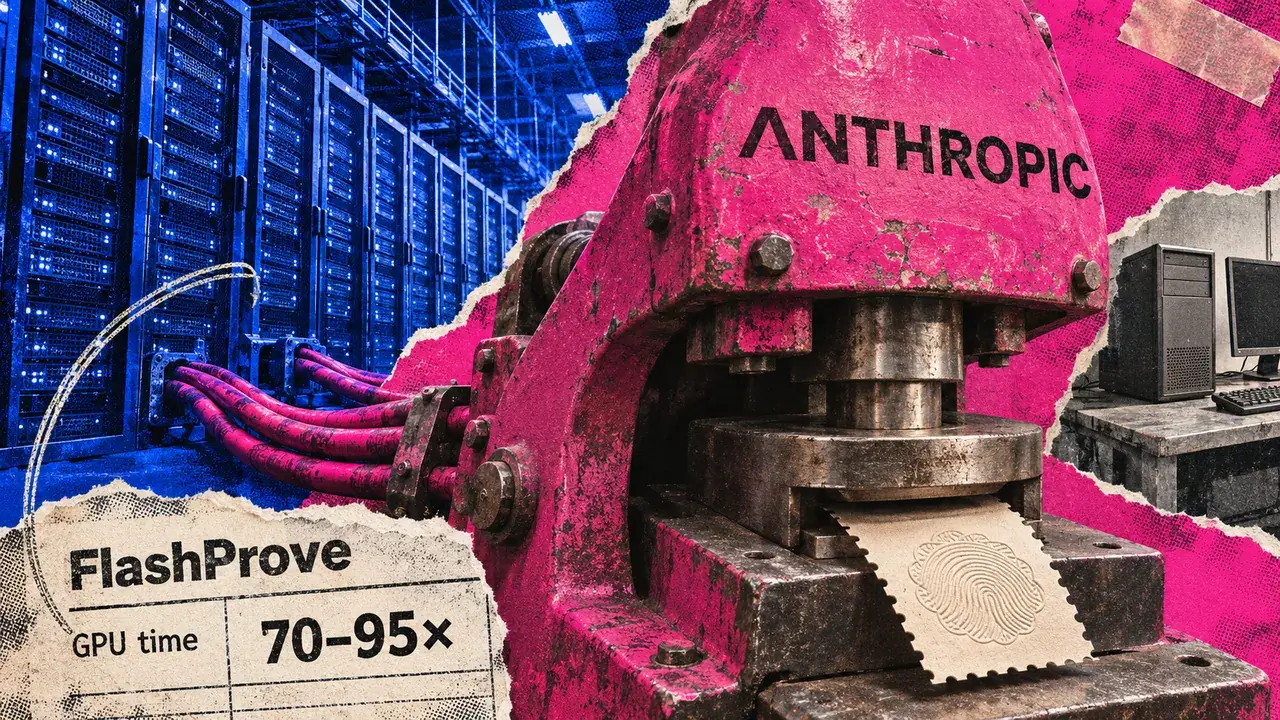
The ability to definitively verify which artificial intelligence model produced a specific output remains a significant challenge in the burgeoning AI landscape. While a sophisticated response might suggest a powerful model was employed, it doesn’t resolve the fundamental question for consumers and businesses: did the premium AI service they paid for actually perform the computation, or was a less capable model substituted? Anthropic’s recent research release, "FlashProve," introduced on November 2, presents a novel cryptographic approach designed to address this very issue. It allows for the verification of model computation without necessitating the disclosure of the AI’s proprietary weights – the complex parameters that dictate its behavior. However, the current implementation demands a substantial computational overhead, requiring approximately 70 to 95 times the GPU resources of standard inference, according to Anthropic’s benchmarks.
This groundbreaking research positions FlashProve as a potential safeguard for entities relying on third-party AI services. Nevertheless, the technology is still in its nascent stages and faces considerable hurdles before widespread adoption becomes feasible. The initial demonstration leverages Meta’s Llama 4 Maverick model, a widely recognized large language model, but it is crucial to note that this is a research prototype and not a feature currently being integrated into Anthropic’s commercially available Claude models for end-users.
The intricate process initiated by FlashProve begins long before a user receives an answer. At its core, the system relies on a cryptographic commitment to the model’s weights, akin to a digital fingerprint. This commitment, published by the AI provider, fixes the specific set of weights that subsequent proofs must correspond to, while crucially keeping these sensitive parameters confidential. Following this commitment, the provider generates a proof asserting that the designated, committed model, when presented with a given input, produced a specific output. The remarkable aspect of this proof is that a verifier can independently confirm its validity without ever needing to download the model’s weights or re-run the computation itself.
For those familiar with the principles of blockchain technology, FlashProve utilizes a similar family of zero-knowledge proof techniques. These methods are instrumental in verifying computations within blockchain layer-2 solutions, allowing for the confirmation of operations without revealing the underlying private information. In the context of AI, this property is invaluable, enabling the verification of a model’s computational integrity without exposing its proprietary architecture.
However, an inherent "identity question" arises at the very inception of the process. Anthropic’s publicly available repository for FlashProve explicitly states that the commitment ID must originate from a party trusted by the user, rather than from the server being checked or the files accompanying the proof. This is a critical distinction: a proof validated against an arbitrary, untrusted fingerprint would not conclusively establish that the fingerprint belongs to the premium model that the user ostensibly contracted for.
Furthermore, even a successful verification of computation does not inherently guarantee the truthfulness or safety of the AI’s output. A model can meticulously execute its programmed computations and still generate factually inaccurate information or provide hazardous advice. FlashProve’s current capability is focused on validating the computational process behind an output; assessing the inherent quality and factual accuracy of that output remains a distinct and separate challenge.
The Prohibitive Cost of Assurance: Pre-Verification Computation
The significant hurdle for FlashProve’s widespread adoption lies in the substantial computational resources required for generating proofs, a process that occurs before any verification takes place. Anthropic’s demonstration employed a publicly accessible, 4-bit quantized version of the massive 400-billion-parameter Llama 4 Maverick model. The proof generation system itself operates on a single H100 GPU, a high-performance computing unit. In stark contrast, a user can verify a generated proof using only a standard CPU, without the need for specialized GPU hardware.
The resulting proofs are relatively compact, measuring approximately 19 megabytes per request. The verification process is also reasonably swift, taking about 17 seconds when distributed across 24 CPU threads, or 21 seconds on a single thread. While these verification hardware and time requirements are considerably less demanding than running the full AI model, the generation of the proof remains an exceptionally resource-intensive undertaking.
Anthropic’s technical report provides a detailed comparison of the proving work per GPU against vLLM, a widely used inference engine. In this benchmark, the FP8 version of the Llama 4 Maverick model was run on eight H100 GPUs. The reported overhead of 70 to 95 times is a specific comparison between these particular implementations and highlights the significant discrepancy in computational demands.
Even the headline throughput figures warrant careful interpretation. The reported speed of 110 tokens per second encompasses all tokens processed within each 1,024-token request. In Anthropic’s main benchmark scenario, each proof is generated to authenticate a single subsequent output token. Therefore, this figure describes the overall processing throughput rather than an independent authentication of 110 new tokens per second.
FlashProve also possesses the capability to operate retrospectively, recomputing finished transcripts to generate proofs. This "after-the-fact" approach allows for the separation of the computationally intensive proving work from the real-time delivery of an AI’s response. However, this separation introduces a delay in providing assurance. As the technical report clarifies, detecting tampering after the fact does not prevent a user from initially receiving an altered or incorrect response.
Technical Limitations and Future Trajectory
Several technical limitations currently constrain FlashProve’s immediate applicability. The system’s context window is capped at 1,024 tokens, which restricts the scope of verifiable conversation history. Furthermore, FlashProve proves the exact integer choices of a greedy model, meaning it authenticates the highest-ranked next tokens. This can lead to discrepancies when compared to ordinary floating-point computations or sampled responses, which might deviate from these precise choices.
Additional implementation gaps also exist. While Anthropic has provided formal security statements in Lean, a sophisticated system for verifying mathematical proofs, the fast executable code has not yet been formally proven to be equivalent to this rigorous protocol. The technical report also notes that zero-knowledge properties have not yet been formally established for requests processed in batches. Reflecting its developmental status, the GitHub repository explicitly labels the release as an "unmaintained research artifact."
Despite these current limitations, the path toward enhanced protection for AI consumers and businesses is becoming more concrete. The ideal scenario involves a trusted commitment that unequivocally identifies the advertised model, comprehensive proofs that cover the relevant outputs, and a verifier capable of reliably checking these proofs. FlashProve, in its current research iteration, effectively demonstrates crucial components of this envisioned future while simultaneously illuminating the significant challenges that must be overcome before its routine implementation. The potential implications for AI transparency, particularly in enterprise settings where the integrity of AI-generated data is paramount, are substantial. As the technology matures, it could fundamentally alter how users engage with and trust AI services, moving beyond mere output assessment to verifiable computational assurance.