admin
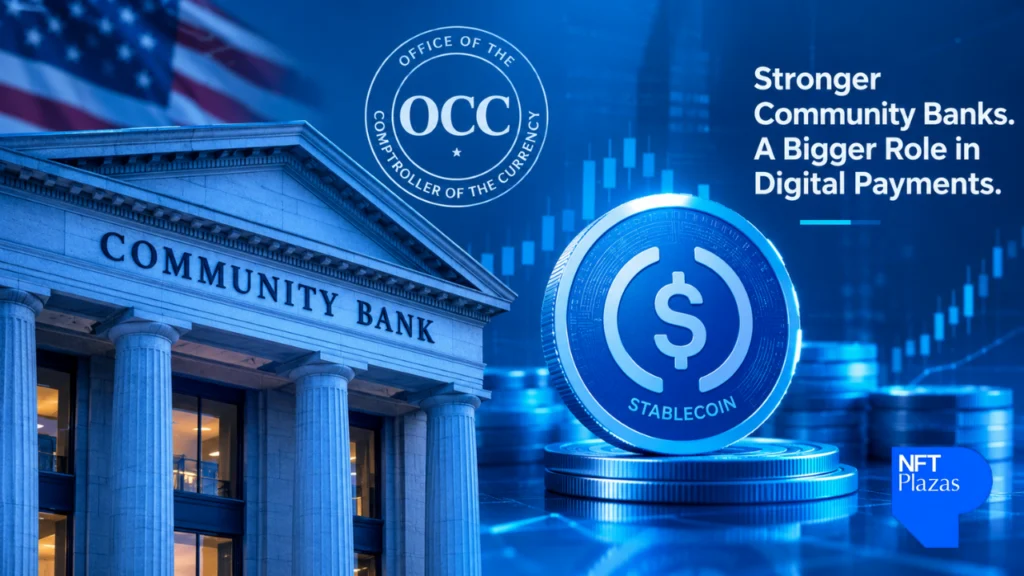
The U.S. Office of the Comptroller of the Currency (OCC) is actively encouraging community banks to participate in the burgeoning stablecoin market, extending an invitation for smaller lenders to apply for authorization to issue their own dollar-pegged tokens. This proactive stance precedes the full implementation of a comprehensive new federal regulatory framework scheduled for January 2027, marking a pivotal moment in the integration of digital assets into mainstream finance.
In a formal statement released on Monday, October 26, the federal regulator specifically urged community banks to submit applications, either directly or through established subsidiaries, to become authorized payment stablecoin issuers. This initiative falls under the ambit of the Guiding and Establishing National Innovation for U.S. Stablecoins (GENIUS) Act, a landmark piece of legislation designed to bring clarity and structure to the rapidly evolving stablecoin landscape. The OCC articulated that this move is intended to empower community banks, enabling them to play a crucial role in shaping the future trajectory of payments within the nation. Furthermore, it aligns seamlessly with the OCC’s broader "Community Bank Comeback" initiatives, which are meticulously designed to tailor regulatory and supervisory approaches, fostering growth and competitiveness among smaller lenders, thereby ensuring their continued ability to serve their local communities effectively.
This strategic encouragement from the OCC arrives amidst a significant shift in the financial sector, where stablecoins are rapidly gaining traction as a preferred mechanism for digital payments. Simultaneously, traditional banking institutions are grappling with intensifying competition from innovative cryptocurrency companies and agile fintech firms that have rapidly carved out niches in the digital asset space. The OCC’s overture is thus a clear signal that federal regulators envision a future where traditional banks, particularly those deeply embedded in local economies, are not merely observers but active participants in the digital finance revolution.
The Regulatory Cornerstone: The GENIUS Act and Its Framework
The foundation for this new era of regulated stablecoin activity was laid on July 18, 2025, when President Donald Trump signed the Guiding and Establishing National Innovation for U.S. Stablecoins (GENIUS) Act into law. This comprehensive legislation marked a crucial turning point, establishing a robust federal regulatory framework specifically for payment stablecoins. Prior to the GENIUS Act, the regulatory landscape for stablecoins was fragmented and often ambiguous, leading to uncertainty for both innovators and traditional financial institutions. The Act’s core tenets address critical aspects such as issuer authorization, the maintenance of adequate reserve assets, and the establishment of clear regulatory oversight, aiming to foster trust and stability within the digital asset ecosystem.
Following the legislative enactment, the OCC diligently worked to translate the Act’s principles into actionable regulations. The agency finalized its implementing regulations in October 2026, setting the stage for these rules to officially take effect on January 18, 2027. Under this meticulously crafted framework, prospective stablecoin issuers, including community banks, will be required to demonstrate unequivocally their capacity to maintain sufficient reserves to back their tokens, meet redemption obligations promptly and reliably, and effectively manage a spectrum of financial and operational risks inherent in digital asset operations. The requirements extend beyond these core principles, encompassing stringent standards for capital adequacy, liquidity management, corporate governance, independent auditing, and comprehensive regulatory reporting, ensuring a high degree of transparency and accountability.
While the regulatory groundwork is firmly in place, the OCC has indicated that it has not yet commenced accepting formal applications. The application process is pending approval of the necessary federal paperwork by the Office of Management and Budget, a standard administrative step. For existing stablecoin issuers, the GENIUS Act framework offers potential transitional relief. Those who submit substantially complete applications by the January 2027 deadline may request temporary waivers, allowing them to continue their operations while regulators conduct thorough reviews of their submissions. The OCC has expressed its general expectation to grant such waivers when deemed appropriate, recognizing the need for a smooth transition for established entities.
For community banks, the GENIUS Act and the OCC’s invitation present a significant pathway into a market that has historically been dominated by cryptocurrency companies and larger, globally-active financial institutions. This framework offers a regulated environment, potentially mitigating some of the perceived risks associated with the broader crypto market. However, any applicant, regardless of its institutional background, must demonstrate unequivocally that it possesses the requisite technological systems, robust financial resources, and sophisticated risk controls necessary to operate as an authorized stablecoin issuer under these new, stringent federal standards. The commitment required extends beyond mere interest, demanding significant investment in infrastructure, talent, and compliance protocols.
Banking Sector Apprehensions: The Persistent Deposit Drain Concern
The OCC’s encouraging invitation to community banks is not without its complexities, emerging amidst an ongoing and often contentious dispute between traditional banks and the burgeoning cryptocurrency industry, particularly concerning stablecoin rewards. Banking groups across the nation have consistently urged lawmakers to impose restrictions on stablecoin yields, expressing profound concerns that attractive rewards offered by certain stablecoin platforms could incentivize customers to transfer substantial sums of money from conventional bank accounts to cryptocurrency platforms. Such large-scale transfers, they warn, could significantly weaken banks’ core deposit bases, thereby reducing the vital funds available for lending to households and businesses, potentially impacting broader economic activity.
The GENIUS Act directly addresses one facet of this concern by explicitly prohibiting payment stablecoin issuers from paying interest or yield solely for holding their tokens. This provision aims to prevent stablecoins from directly competing with traditional savings products on an interest-bearing basis at the issuer level. However, a critical distinction, and a major point of contention, lies in the fact that the Act does not automatically prohibit every reward program offered by cryptocurrency exchanges or other third-party platforms. Banking groups argue vehemently that these third-party incentives, even if not directly from the issuer, could still render stablecoins highly attractive alternatives to traditional savings products, effectively circumventing the spirit of the Act’s prohibition on issuer-paid interest.
This concern holds particular significance for community banks, which are inherently reliant on stable, local deposits to finance their lending activities to local households and businesses. If customers increasingly opt to hold stablecoins through cryptocurrency platforms, smaller lenders could face heightened competition for funding, potentially driving up their cost of capital or restricting their ability to lend. The dilemma for community banks is acute: embracing stablecoin issuance could allow them to participate in and adapt to digital payments, potentially mitigating customer attrition. However, merely entering the market does not automatically safeguard their existing deposit base or guarantee new, stable revenue streams.
Adding another layer of complexity, the OCC’s final rules under the GENIUS Act do not mandate that stablecoin issuers hold their reserves at community banks. Furthermore, community banks are not required to accept deposits from stablecoin issuers. The regulator has candidly acknowledged that deposits backing stablecoins could exhibit greater volatility compared to traditional deposits, particularly during the nascent stages of the market’s development. This inherent uncertainty adds a crucial consideration for lenders evaluating the potential benefits against the inherent risks and operational demands of issuing digital tokens. The decision to enter this market thus requires a meticulous assessment of commercial viability, technological readiness, and a clear understanding of the evolving risk profile.

Navigating Regulatory Scrutiny: OCC’s Broader Crypto Stance
The OCC’s proactive encouragement for community banks to engage with stablecoins comes at a time when the agency itself is facing considerable legal and political scrutiny regarding its broader approach to cryptocurrency companies. This scrutiny underscores the complex balancing act regulators must perform between fostering financial innovation and ensuring systemic stability and consumer protection.
A prominent example of this tension is the lawsuit filed on October 2, 2026, by the Independent Community Bankers of America (ICBA) against the OCC. The ICBA accused the regulator of exceeding its legal authority by granting national trust bank status to several crypto-focused firms. The core argument put forth by traditional banking representatives is that such approvals could inadvertently allow cryptocurrency companies to offer a range of financial services, including digital asset custody, without being subjected to the same comprehensive regulatory requirements and oversight applicable to conventional banks. This, they contend, creates an uneven playing field and could introduce systemic risks.
The OCC has sought to distinguish these trust charter approvals for crypto-focused entities from its current initiative to encourage community banks in stablecoin issuance. The regulator emphasizes that crypto-focused trust institutions often operate under distinct business models and may not provide the same breadth of services as traditional community banks, suggesting a differentiated regulatory approach is warranted.
Adding to the regulatory spotlight, Senator Elizabeth Warren has also voiced significant concerns regarding the OCC’s approval of nine crypto-focused institutions. Her arguments center on the premise that some of these entities may not fully meet existing federal requirements and could, therefore, pose unforeseen risks to the broader financial system. Consumer protection remains a paramount concern in these debates. A national trust bank charter, for instance, does not automatically extend federal deposit insurance coverage to customers’ digital assets. This necessitates clear, unambiguous disclosures about the scope and limits of regulatory protections, ensuring consumers are fully informed of the risks involved. These ongoing disputes vividly illustrate the formidable challenge confronting regulators: how to effectively support and integrate financial innovation while simultaneously maintaining appropriate oversight, safeguarding systemic stability, and robustly protecting consumers in a rapidly evolving digital landscape.
Implications for Community Banks: Opportunities and Challenges
The OCC’s invitation presents a multifaceted proposition for community banks, laden with both significant opportunities and formidable challenges. On the opportunity front, issuing stablecoins could open new revenue streams, allowing these banks to capture a share of the growing digital payments market. It represents a chance to modernize their payment infrastructure, offering faster, cheaper, and more efficient transaction services to their customers. By embracing stablecoins, community banks could retain existing customers who might otherwise gravitate towards crypto platforms for digital asset services, and potentially attract new, tech-savvy clientele. This localized innovation could also provide a competitive edge against larger national banks and fintech entities, reinforcing their role as essential financial pillars within their communities. Furthermore, by participating early in this regulated environment, community banks can contribute to the development of best practices and help shape the future of digital finance in a way that is aligned with traditional banking principles.
However, the path to stablecoin issuance is fraught with challenges. The most immediate concern is the substantial compliance costs associated with adhering to the GENIUS Act’s stringent requirements, coupled with the significant technological investment needed to build or integrate robust, secure, and scalable stablecoin issuance platforms. Operational risks, including cybersecurity threats, smart contract vulnerabilities, and the complexities of managing digital asset reserves, will require new expertise and sophisticated risk management frameworks. Talent acquisition presents another hurdle, as banks will need to recruit or upskill employees with specialized knowledge in blockchain technology, cryptography, and digital asset compliance. Competition from established cryptocurrency firms, many of whom have years of experience in the digital asset space, will be intense. Community banks will also need to carefully manage the liquidity implications of stablecoin reserves and educate their customer base about these new financial products. The commitment required is not merely financial but also strategic, demanding a fundamental shift in operational paradigms and a proactive embrace of new technologies.
The Path Forward: A Multi-Agency Effort
The OCC’s finalized GENIUS Act regulations represent a crucial piece of the puzzle, but the broader federal framework for stablecoins is still very much under development, involving a collaborative effort across multiple federal agencies. The Federal Deposit Insurance Corporation (FDIC), for instance, is actively working on establishing specific standards for stablecoin issuers falling within its jurisdiction, particularly concerning deposit insurance and resolution planning. Simultaneously, the Federal Reserve is seeking input from stakeholders on proposed requirements and approval procedures for banks that express interest in issuing stablecoins, focusing on monetary policy implications and systemic risk. The Treasury Department is also playing a significant role, contributing to the development of comprehensive authorization and supervisory rules that will ensure the financial stability and integrity of the stablecoin ecosystem.
Beyond these foundational regulatory elements, separate requirements covering critical aspects such as customer identification (KYC) and anti-money laundering (AML) will further define and shape how stablecoin issuers operate. These measures are vital for preventing illicit financial activities and maintaining the integrity of the financial system. For community banks, the OCC’s invitation, while significant, is merely an initial step. It presents a tangible opportunity to explore the realm of digital payments within a clearer regulatory environment. Dollar-pegged tokens could indeed offer novel services and unlock new revenue streams, but lenders must meticulously weigh these potential benefits against the substantial compliance costs, the significant operational demands, and the intense competition they will undoubtedly face.
The upcoming January 18, 2027, implementation date will serve as a key milestone, signaling the official commencement of the new regulatory regime and marking a period of intense preparation for banks considering this venture. Whether smaller lenders will ultimately embrace stablecoin issuance on a widespread basis remains uncertain. Their decisions will be heavily influenced by a confluence of factors: demonstrable customer demand for these new digital products, a clear assessment of commercial viability and profitability, and their inherent ability to meet the rigorous federal standards for technology, security, and compliance.
Nevertheless, the OCC’s message is unequivocal and strategically significant: community banks are strongly encouraged to actively consider entering the stablecoin market. The implicit warning is equally clear: to cede the future of digital payment innovation solely to cryptocurrency companies and larger financial institutions would be to risk irrelevance in an increasingly digitized global economy. This initiative represents a concerted effort to ensure that the bedrock institutions of local finance remain central to the nation’s evolving payment landscape.