admin
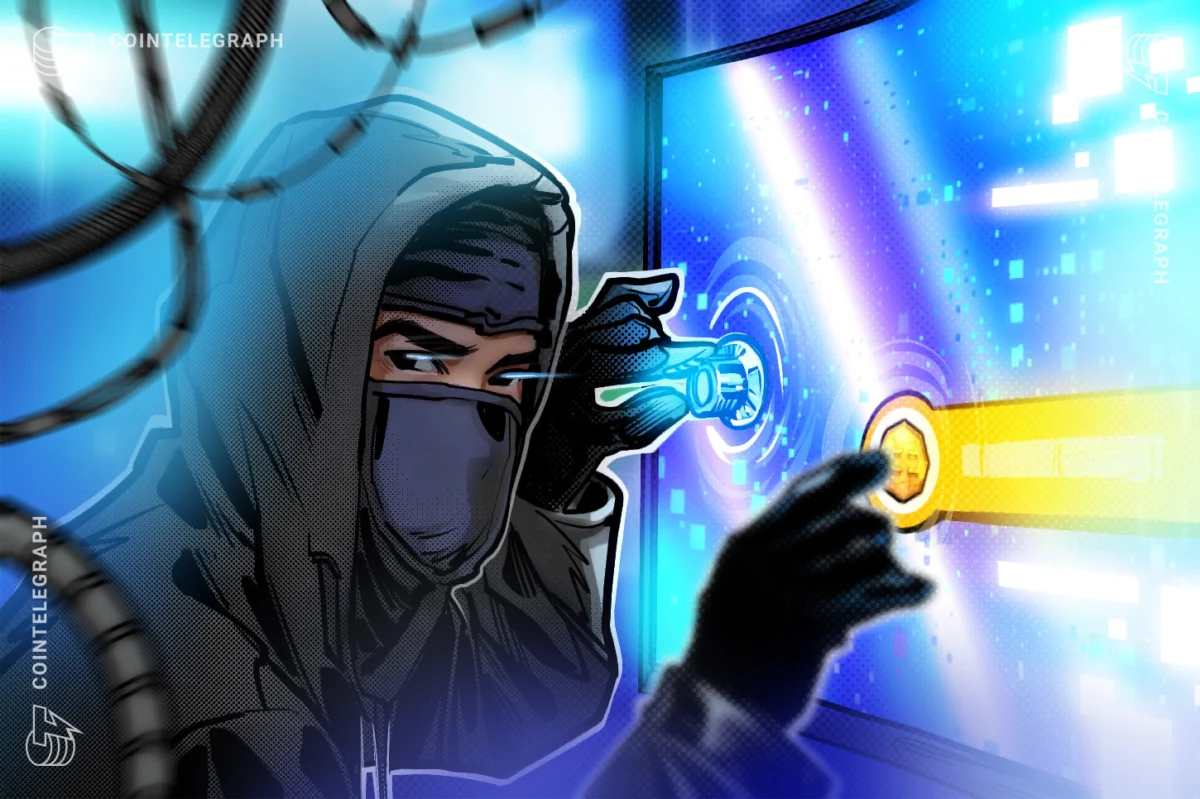
The cryptocurrency world was sent reeling on October 29 when Binance, the globe’s largest centralized crypto exchange, disclosed a multi-billion dollar security breach. Initial estimates placed the stolen funds at approximately $6.3 billion, an unprecedented figure that triggered a cascade of urgent responses from stablecoin issuers, blockchain analytics firms, and other major players in the digital asset ecosystem. While Binance swiftly initiated measures to contain the damage and pledged to cover all losses from its SAFU (Secure Asset Fund for Users) and company reserves, the incident has cast a long shadow over centralized exchanges and reignited debates about security protocols and the resilience of the broader crypto infrastructure. Early investigations and analysis from multiple security experts have converged on a significant lead: the likely involvement of TraderTraitor, a notorious North Korean state-sponsored hacking group with a track record of sophisticated cyber-attacks targeting the crypto industry.
The Anatomy of a Complex Attack
Binance co-CEO Richard Teng provided crucial insights into the nature of the breach, emphasizing that it was not a simplistic "one-click" exploit. In an X post on October 30 at 07:37 am UTC, Teng detailed a "more complex attack process," ruling out a scenario where a single engineer’s permissions were solely leveraged. While investigations remained ongoing and responsibility had not been attributed to any specific individual, preliminary findings strongly suggested a compromised DevOps engineer’s laptop as the initial point of entry. This breach, Teng explained, likely granted the attacker access to an internal service, enabling the submission of unauthorized withdrawal transactions. Crucially, Binance’s internal investigation found no evidence of a wallet private-key leak, suggesting a sophisticated manipulation of the exchange’s transaction-signing infrastructure rather than direct theft of cryptographic keys. This aligns with a preliminary assessment by Blockaid co-founder and CEO Ido Ben-Natan, who posited that the attack likely involved "key misuse," where attackers trick a signing system into authorizing malicious transactions without actually extracting the private key.
The Specter of North Korea’s TraderTraitor
Almost immediately, the attention of blockchain intelligence firms and onchain investigators turned towards a familiar and formidable adversary: North Korea. Chainalysis co-founder and CEO Jonathan Levin, in an X post on October 30 at 05:01 am UTC, publicly linked the Binance hack to TraderTraitor, citing strong connections to a previous high-profile exploit. Levin, whose firm is a leading authority in tracking illicit crypto flows, estimated the total theft at $6.4 billion, slightly exceeding Binance’s initial $6.3 billion figure. He also confirmed that industry partners had already frozen approximately $3 billion of the stolen funds, with Chainalysis actively continuing to trace the remaining assets.
Further corroborating this attribution, onchain investigator ZachXBT noted that funds stolen from the Binance attack and an earlier Bitget exploit were commingled in the same address, having been routed through THORChain. "This indicates the same actor is likely behind both incidents," ZachXBT stated, adding that the Bitget exploit had previously been attributed to the DPRK-linked TraderTraitor group, which also showed overlaps with other prior exploits like the one targeting Kelp DAO. Blockaid’s Ido Ben-Natan, speaking to Cointelegraph, echoed the sentiment, observing that the attack’s sophisticated onchain preparations, the use of a customer sweeper contract, and multiple authorizations bore the hallmarks of North Korean cyber operations. TRM Labs, another prominent blockchain intelligence firm, also attributed the attack to TraderTraitor with "high confidence," based on what they described as "robust on and off-chain intelligence." The FBI has previously identified TraderTraitor as the group behind the ByBit hack in February of the previous year, underscoring the group’s persistent and evolving threat to the cryptocurrency sector.
Unprecedented Industry-Wide Response and Fund Freezes
The sheer scale of the Binance hack triggered an extraordinary coordinated response across the cryptocurrency industry, with stablecoin issuers and protocols moving swiftly to freeze stolen assets. Binance itself reported on October 30 at 12:52 am UTC that the verified amount of frozen assets had reached $3 billion, a figure that was expected to rise as its teams collaborated with law enforcement, issuers, and blockchain intelligence firms.
Among the earliest and most significant actions were those taken by the two largest stablecoin issuers:
- Tether: CEO Paolo Ardoino announced on October 29 that the company had frozen over $1.567 billion in USDT linked to the potential exploit, emphasizing their priority in protecting the industry and partners.
- Circle: CEO Jeremy Allaire confirmed that Circle had frozen more than $800 million in USDC in coordination with law enforcement, pledging continued support for the investigation.
Beyond these giants, other stablecoin issuers and decentralized protocols also took decisive action:
- First Digital: CEO Vincent Chok confirmed on October 30 at 02:21 am UTC that FDUSD stolen in the attack had been frozen, highlighting their commitment to protecting FDUSD holders.
- Ripple: Jack McDonald, the company’s senior vice president of stablecoins, announced on October 29 at 11:40 pm UTC that Ripple was "actively freezing affected funds" in its dollar-pegged RLUSD stablecoin.
- World Liberty Financial: Co-founder and CEO Zach Witkoff disclosed on October 29 at 10:36 pm UTC that the company had frozen $27 million in its USD1 stablecoin and $2 million worth of WLFI, collaborating with BitGo to secure the stolen assets.
- Arbitrum Security Council: On October 30 at 12:52 am UTC, the Arbitrum Security Council executed a transaction to freeze $30.5 million from the exploit, involving 74.6 million Arbitrum (ARB) and 8,425 Ether (ETH). These funds were moved to an intermediary frozen wallet, accessible only by further action of the Security Council or a vote of Arbitrum DAO governance.
- Aave Protocol: The decentralized lending protocol Aave proactively froze markets across its V3 and V4 deployments as a precautionary measure on October 29 at 10:32 pm UTC. This followed reports from risk service provider LlamaRisk that the exploiter had deposited 60 million USDT and borrowed 19,762 Wrapped Ether (WETH), worth approximately $44.6 million at the time. While existing positions could still be managed (withdrawals, loan repayments, liquidations), new deposits and borrowing were halted to mitigate further risk.
Market Tremors and Investor Jitters
The news of the Binance hack sent immediate ripples through the cryptocurrency markets, triggering a broad sell-off and a noticeable shift in investor sentiment. On October 30 at 01:19 am UTC, Bitcoin (BTC) was trading near $76,937, marking a 4.9% decline over 24 hours. Binance’s native token, BNB, bore a more significant brunt, falling 8% to approximately $693. Ether (ETH) also saw a decline of 5.7% to about $2,211.
The impact wasn’t limited to major cryptocurrencies. DeFi tokens, often more susceptible to market fear, experienced sharper drops, with AAVE down 11.3% and Uniswap’s UNI down 10.7% over the same period. The Bitcoin Fear and Greed Index, a key indicator of market sentiment, plummeted to a score of 30, signaling "fear" – a level not observed since August, reflecting a palpable loss of confidence among investors. This market reaction underscores the fragility of investor trust in centralized entities and the profound impact that major security breaches can have on asset valuations.
Binance’s Containment, Recovery, and Long-Term Outlook
Binance moved quickly to address the crisis, prioritizing containment and outlining its recovery strategy. On October 29 at 10:33 pm UTC, the exchange announced a temporary suspension of withdrawals, followed shortly by a halt on deposits on October 30 at 12:07 am UTC, to conduct thorough security checks, freeze funds, and coordinate with law enforcement. Binance also temporarily suspended Binance Alpha trading.
Richard Teng reiterated Binance’s commitment to user protection, confirming that all losses would be covered using the exchange’s SAFU fund and additional company funds. The SAFU fund, established in 2018, is an emergency insurance fund designed to protect users in extreme cases like security breaches, holding a percentage of trading fees in a separate cold wallet. This commitment is a cornerstone of Binance’s strategy to maintain user trust amidst the crisis.
On October 30 at 4:17 am UTC, Binance provided an update on its recovery timeline, stating that withdrawals were expected to resume within 48 hours, following a comprehensive security revamp of its withdrawal service and related addresses. Deposits, however, were reported to be operating normally by this time. The exchange pledged to share a full post-mortem report once the investigation was complete, emphasizing its dedication to transparency and continuous improvement of its security posture.
Broader Implications for Centralized Exchanges and the Crypto Landscape
The Binance hack, irrespective of its immediate resolution, carries significant long-term implications for the cryptocurrency industry, particularly for centralized exchanges (CEXs). Standard Chartered’s global head of digital assets research, Geoffrey Kendrick, posited on October 30 at 03:49 am UTC that the breach could accelerate a shift in crypto trading towards decentralized exchanges (DEXs). Kendrick, who maintained a $100 price target for Uniswap’s UNI token by 2030, suggested that the hack provided "another reason why that forecast may end up being too low." He encouraged investors to "re-engage with Uniswap," highlighting the DEX’s pristine security record and arguing that the breach at the largest CEX would likely bolster the ratio of DEX to CEX trading. This analysis is supported by CoinGecko research, which showed the top 10 spot DEX-to-CEX ratio climbing to 23.5% in the second quarter of 2026, an increase of 2.1 percentage points from the first quarter.
The incident serves as a stark reminder of the inherent risks associated with centralized custodianship of digital assets. While CEXs offer convenience and liquidity, they also present a single point of failure, making them attractive targets for sophisticated attackers like TraderTraitor. This event is likely to intensify the ongoing debate about self-custody versus exchange custody, push for more robust regulatory frameworks for CEXs, and spur further innovation in decentralized security solutions. For Binance, the task ahead involves not only recovering stolen funds and restoring full operational capacity but also rebuilding trust through enhanced security measures and transparent communication, ensuring its continued leadership in a rapidly evolving and increasingly scrutinized digital asset landscape. The incident underscores the perpetual arms race between exchange security teams and determined malicious actors, highlighting the critical need for continuous vigilance and adaptation in the face of evolving cyber threats.