admin
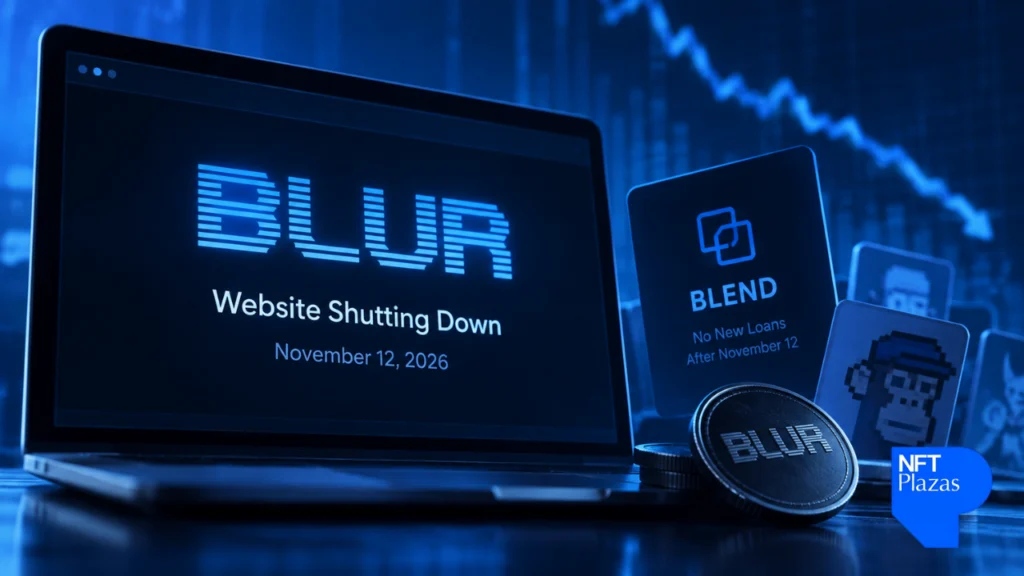
Ethereum NFT marketplace Blur, once a dominant force in the digital collectibles trading landscape, has announced its intention to shut down its primary website, blur.io, and discontinue new lending activities through its Blend platform on November 12, 2026. This significant development marks a pivotal moment for a platform that aggressively challenged incumbents and rapidly ascended to the top of NFT trading volumes, now facing the harsh realities of a prolonged market contraction. The announcement, disseminated via the platform’s official X account on October 12, arrives amidst a severe downturn in overall NFT market activity and follows closely on the heels of the closure notice for Blast, an Ethereum layer-2 network developed by the same founding team, just ten days prior.
The impending closure of Blur’s user-facing website signals a retreat from its direct engagement with NFT collectors and professional traders, who have relied on its interface for faster transactions, bulk purchasing capabilities, and, initially, zero marketplace fees. While the underlying marketplace protocol, comprising immutable smart contracts on the Ethereum blockchain, is set to remain operational, the withdrawal of the official frontend raises significant questions about accessibility for general users. Furthermore, Blend, Blur’s innovative peer-to-peer NFT lending platform, will cease matching new loans on the same November 12 deadline, requiring existing borrowers to settle outstanding positions or face potential default and loss of collateralized NFTs.
A Swift Rise and Precipitous Decline
Blur’s trajectory from its launch in October 2022 to its current state of retrenchment has been remarkably swift and illustrative of the volatile nature of the Web3 space. The platform emerged as a formidable challenger to OpenSea, the then-dominant NFT marketplace, by strategically targeting professional traders. Its competitive edge was built on several pillars: enhanced speed, advanced trading tools, and crucially, a zero-fee model that directly undercut its rivals. The momentum surged following the highly anticipated launch of its native BLUR token in February 2023, accompanied by an extensive airdrop and a robust rewards program designed to incentivize trading activity.
This aggressive, incentive-driven strategy proved incredibly effective in the short term. By March 2023, Blur had captured an astounding market share, controlling over 70% of the Ethereum NFT trading volume and recording approximately $1.43 billion in monthly transactions. This period represented the zenith of its influence, solidifying its position as a major player. Expanding its ecosystem, Blur introduced Blend in May 2023, a peer-to-peer lending platform that allowed users to borrow ETH against their digital collectibles, further integrating financial primitives into the NFT market.
However, the sustainability of such an incentive-heavy model proved fragile. As speculative demand waned and the broader NFT market entered a prolonged bear phase, Blur’s trading volumes experienced a precipitous collapse. By March 2026, monthly trading volume had plummeted to below $7 million, representing a staggering decline exceeding 99.5% from its peak performance. This drastic reduction in activity, combined with its continued adherence to a zero-fee model for a significant period, meant that direct marketplace revenue was severely constrained. Data from Token Terminal indicates no recorded protocol revenue from trading fees over the past three years, although this figure does not account for potential earnings from lending or other ancillary activities.
Critics had previously raised concerns that Blur’s aggressive rewards system might have encouraged speculative wash trading rather than genuine demand, potentially contributing to the broader decline in NFT prices. While trading data alone cannot definitively disentangle genuine interest from incentive-driven activity, the dramatic fall in volume suggests that the underlying market interest was insufficient to sustain the platform’s initial growth trajectory once the initial allure of rewards diminished. Blur has not publicly attributed its website shutdown to specific operating losses, though the implications of such a severe drop in volume are clear.

Chronology of Key Events Leading to Blur’s Retreat
To understand the full scope of Blur’s journey and its current decision, a timeline of significant events provides crucial context:
- October 2022: Blur launches, positioning itself as a professional-grade NFT marketplace with zero fees and advanced features, immediately challenging OpenSea.
- February 2023: The BLUR token officially launches, accompanied by a highly anticipated airdrop and an aggressive rewards program, fueling a rapid surge in trading activity.
- March 2023: Blur achieves its peak market dominance, capturing over 70% of Ethereum NFT trading volume and recording approximately $1.43 billion in monthly transactions.
- May 2023: Blend, Blur’s peer-to-peer NFT lending platform, is introduced, allowing users to leverage their digital assets.
- Early 2024: Blast, an Ethereum layer-2 network founded by Tieshun Roquerre (Pacman), the same visionary behind Blur, launches its mainnet, having attracted over $2.3 billion in deposits through a yield-generating mechanism and user rewards.
- March 2026: Blur’s monthly trading volume falls below $7 million, marking a decline of over 99.5% from its peak, signaling profound challenges to its operational model.
- October 2, 2026: Blast announces its impending closure, citing unsustainable operating costs that have exceeded revenue. Users are given until October 26 to withdraw their funds.
- October 12, 2026: Blur announces its decision to shut down its blur.io website and cease new Blend lending operations by November 12, 2026. The news sends the BLUR token plummeting.
- November 12, 2026: Scheduled date for the official discontinuation of blur.io website access and the cessation of new loan matching on Blend. Existing Blend borrowers must have repaid their loans or face default.
Broader NFT Market Struggles and Ecosystem Challenges
Blur’s decline is not an isolated incident but rather a stark reflection of the broader struggles plaguing the NFT industry. The exuberant trading activity witnessed during the 2021-2022 boom has largely evaporated, replaced by a prolonged bear market that has tested the sustainability of numerous projects. According to CryptoSlam, monthly NFT sales dramatically fell to $167.2 million in September 2026, a significant drop from $554.8 million a year prior and a staggering decrease from the $1.78 billion recorded in December 2023.
Statista projections for the global NFT market revenue in 2026 hover around $318.3 million, indicating a stagnation from the previous year. While DappRadar reports suggest that lower NFT prices have paradoxically supported transaction counts, the overall sales volume continues to decline. This data points to a crucial shift in market dynamics: while NFTs still attract buyers, activity is increasingly concentrated on lower-priced assets, rather than the high-value collections that characterized the market’s peak. This shift presents an existential challenge for platforms like Blur, which were heavily reliant on high trading volumes and token incentives to sustain their operations.
The closure of Blast, the Ethereum layer-2 network developed by Blur’s founding team, just prior to Blur’s announcement, underscores the systemic pressures. Blast had garnered significant attention and over $2.3 billion in deposits ahead of its mainnet launch in February 2024, largely through attractive yield opportunities and user rewards. However, its assets reportedly dwindled to approximately $32 million by the time the closure was announced. The team behind Blast explicitly stated that operating costs had exceeded revenue, rendering continued operations unsustainable. This direct financial explanation from a related project provides a strong inferred context for Blur’s own decision, highlighting the difficulties in maintaining incentive-heavy ecosystems during a market downturn.
Market Reactions and Security Considerations
The announcement of Blur’s impending website shutdown triggered an immediate and sharp selloff of its native BLUR token. Within 24 hours of the October 12 announcement, the token’s price plummeted by over 33%, dropping to approximately $0.012, and its market capitalization contracted to around $38 million. This rapid devaluation reflects investor concerns about the platform’s future viability and the broader implications for its ecosystem.

Beyond price volatility, the news also brought renewed attention to security considerations, particularly concerning NFT permissions previously granted to Blur’s smart contracts. Blockchain researcher 0xQuit issued a cautionary note, stating that while no existing vulnerabilities had been identified, upgradeable contracts inherently carry risks if administrative controls are compromised or misused. This warning prompted prominent figures in the NFT space, including Yuga Labs CEO Figge and Pudgy Penguins CEO Luca Netz, to endorse precautionary measures, advising users to review and revoke any unnecessary token approvals through tools like Revoke.cash. Such advice underscores the importance of proactive security hygiene in a rapidly evolving and sometimes precarious decentralized ecosystem.
Amidst the uncertainty, a glimmer of potential interest emerged from SushiSwap, a prominent decentralized exchange. A representative from SushiSwap publicly expressed interest in acquiring Blur, although no formal negotiations or concrete agreement have been confirmed. Such an acquisition, if it were to materialize, could potentially offer a new lifeline or integration pathway for Blur’s underlying protocol, though its feasibility and strategic implications remain speculative at this stage.
Implications for the Future of NFT Trading and Decentralized Platforms
The distinction between Blur’s website closure and the continued operation of its underlying Ethereum protocol is critical. While the smart contracts enabling NFT transactions will technically remain functional, the loss of blur.io – its primary user interface – will undeniably make trading less accessible for the average user. This shift places a greater burden on the community or third-party developers to create alternative interfaces for interacting with the protocol, potentially fragmenting liquidity and user experience. BLUR token holders will retain governance rights over the protocol’s fee mechanism, theoretically allowing them to introduce trading fees in the future, but the relevance of this control without a widely adopted frontend remains questionable.
The winding down of Blend also raises concerns for the nascent NFT-backed lending sector. While existing loans will run their course, the cessation of new loan matching removes a significant source of liquidity and utility for NFT holders seeking to leverage their assets. Blur has indicated it will provide a separate tool for users to withdraw eligible assets from Blend after the deadline, but the long-term impact on confidence in such financial primitives within the NFT space remains to be seen.
Ultimately, the retreat of both Blur and Blast poses a fundamental question for the broader NFT and Web3 industries: can platforms built primarily around aggressive trading incentives and token rewards achieve long-term viability once those initial incentives inevitably wane? The experiences of Blur and Blast suggest that while incentive models can be powerful catalysts for initial adoption and growth, they must eventually transition to sustainable business models rooted in genuine utility, organic demand, and robust revenue generation. Without this transition, even the most innovative and rapidly successful projects risk becoming casualties of the cyclical nature of cryptocurrency markets and the inherent challenges of maintaining decentralized ecosystems. The coming years will likely see a continued re-evaluation of business models and value propositions across the Web3 landscape as projects strive for enduring relevance beyond speculative booms.