admin

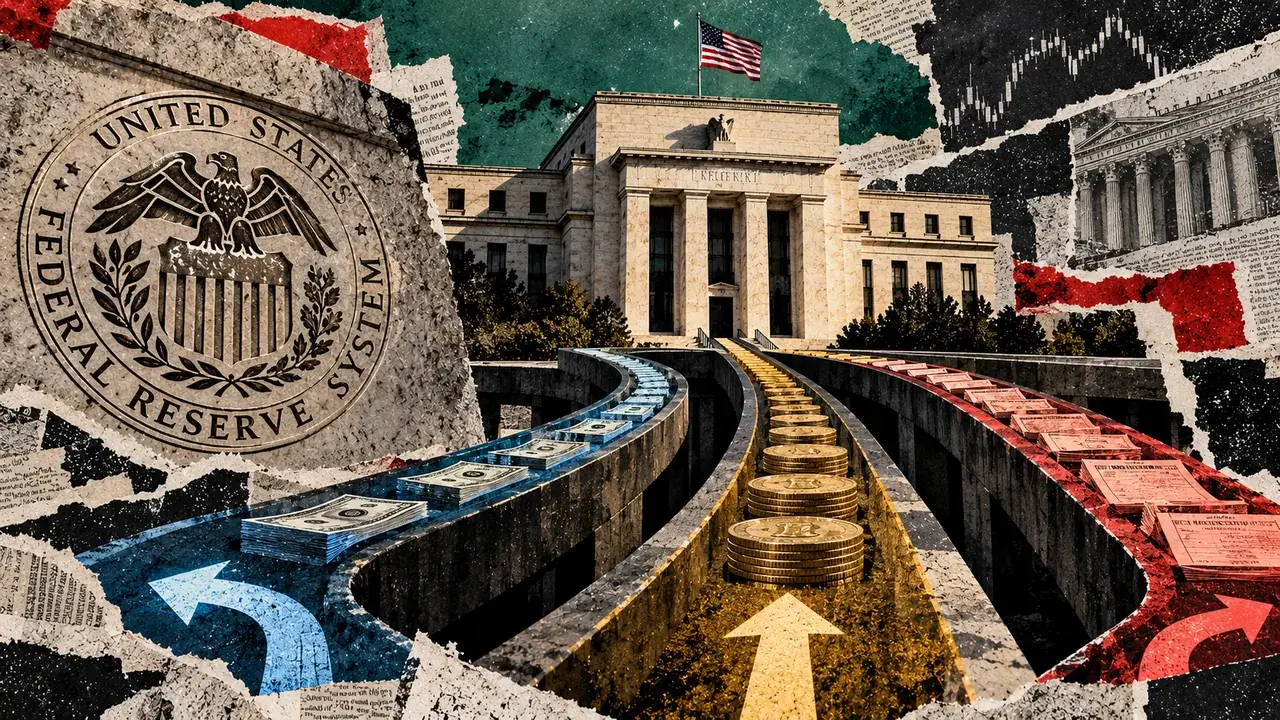
The United States Securities and Exchange Commission (SEC), an agency that has spent the previous decade primarily defining digital asset policy through litigation and enforcement actions, has officially released its draft Strategic Plan for fiscal years 2026 through 2030. In a significant rhetorical and policy pivot, the document describes blockchain technology not as a peripheral risk, but as a mechanism with the "potential to revolutionize America’s financial infrastructure." By dedicating a standalone objective to digital assets and blockchain technology, the SEC has elevated the sector to a strategic priority, placing it on equal footing with long-standing pillars such as investor protection, capital formation, and the modernization of agency operations.
The move signals an intentional departure from the "regulation by enforcement" era that characterized the early 2020s. According to the draft, the agency aims to establish a regulatory foundation for the digital asset sector through what it describes as a "rational, coherent, and principled approach." This shift suggests that the SEC is moving toward a more structured framework that seeks to integrate distributed ledger technology (DLT) into the existing plumbing of the U.S. capital markets.
A New Framework for Tokenized Securities
Following the publication of the strategic roadmap, Jamie Selway, the director of the SEC’s Division of Trading and Markets, provided further clarity during the Piper Sandler Global Exchange & Fintech Conference in New York. Selway confirmed that his division is currently spearheading the development of a formal framework specifically for the listing and trading of tokenized securities. This framework is expected to address the technical and legal requirements for assets that exist natively on a blockchain or are represented by digital tokens on a distributed ledger.
A critical component of this effort involves inter-agency cooperation. SEC and Commodity Futures Trading Commission (CFTC) staff are reportedly working jointly to resolve long-standing discrepancies between their respective rulebooks. These discussions are focused on three primary friction points: swap reporting requirements, portfolio margining, and standardized product definitions. For years, the lack of a unified taxonomy has led to "jurisdictional ambiguity," a state where market participants were often unsure which agency held authority over a specific asset class.
The collaborative effort aims to eliminate "regulatory arbitrage"—a scenario where firms seek out the most lenient regulator to gain a competitive advantage. Selway emphasized a principle of "innovation without arbitrage," suggesting that while the SEC is open to the efficiency gains offered by blockchain, it will not allow the technology to be used as a vehicle to bypass traditional investor protections or transparency requirements.
The Chronology of SEC Policy Evolution
To understand the weight of the 2026–2030 Strategic Plan, one must look at the timeline of the SEC’s engagement with the digital asset space. This evolution reflects a transition from skepticism to cautious integration:
- 2017–2019: The ICO Era. The SEC’s focus was almost entirely on the "DAO Report" and subsequent enforcement actions against Initial Coin Offerings (ICOs), which the agency deemed unregistered securities offerings.
- 2020–2023: The Litigation Phase. This period saw high-profile lawsuits against major industry players, including Ripple, Coinbase, and Binance. The agency’s stance was largely reactive, focusing on the application of the 1946 Howey Test to modern digital tokens.
- 2024: The ETF Watershed. The approval of spot Bitcoin and Ethereum Exchange-Traded Funds (ETFs) marked a turning point, signaling that digital assets had reached a level of institutional maturity that the SEC could no longer ignore.
- 2025: Legislative Momentum. In July 2025, the House passed the CLARITY Act with a bipartisan 294-134 vote. By May 2026, the Senate Banking Committee cleared the bill 15-9, setting the stage for a unified federal taxonomy for digital assets.
- 2026: The Strategic Pivot. The publication of the 2026–2030 Strategic Plan formalizes the agency’s intent to move from a litigation-heavy posture to a rule-making and infrastructure-focused approach.
The Narrative Shift: From Crypto to Market Modernization
One of the most profound impacts of the SEC’s new language is the way it reshapes the risk assessment for institutional investors. For years, the term "crypto" carried a heavy reputational and legal burden. By reframing the conversation around "market modernization" and "on-chain financial infrastructure," the SEC has altered the internal calculus for banks, asset managers, and public companies.
Jennie Levin, chief legal and operating officer at the Algorand Foundation and a former federal prosecutor, noted that this change in terminology is a vital "regulatory architecture" in itself. According to Levin, when the SEC discussed digital assets through the lens of enforcement, compliance teams viewed blockchain initiatives as exposure to a volatile and speculative asset class.
"For institutions, stripping the word ‘crypto’ out of the conversation and replacing it with ‘market modernization’ fundamentally changes the risk calculus," Levin stated. She argued that compliance teams are no longer being asked to underwrite a speculative asset; they are being asked to evaluate a more efficient and secure way to manage the financial infrastructure they already operate. This "invitation to build within a known legal architecture" provides the certainty that markets often value more than deregulation itself.
Programmable Compliance and Efficiency Gains
The SEC’s pivot also acknowledges the inherent technological advantages of public ledgers. Traditional markets currently rely on fragmented settlement infrastructure and multiple layers of reconciliation to ensure trust and accuracy. These intermediaries add cost, time, and potential points of failure to every transaction.
Levin argues that the assumption that blockchain’s efficiency depends on avoiding regulation is a fallacy. Instead, the real value lies in "programmable compliance." On-chain markets allow for transfer restrictions, allow lists, and freeze-and-clawback controls to be embedded directly into the asset’s protocol.
In this model, compliance is no longer a manual, post-trade process performed by massive back-office teams; it is an automated check performed at the moment of execution. When compliance is a property of the asset itself, the traditional tension between efficiency and investor protection is resolved. The SEC’s Strategic Plan indicates a growing recognition that a public ledger does not need legal shortcuts to outperform the current system—it simply needs a stable framework in which to operate.
Supporting Data and Institutional Milestones
The agency’s strategic document does not exist in a vacuum; it follows a series of incremental steps taken over the past year to integrate blockchain into mainstream finance. Several key milestones illustrate this trend:
- Exchange Adoption: In early 2026, the SEC approved rules allowing Nasdaq and the New York Stock Exchange (NYSE) to begin trading tokenized versions of select equities alongside traditional shares. This move brought "crypto rails" directly into the heart of Wall Street.
- Self-Custody Safeguards: An April 2026 staff statement provided self-custody trading interfaces with a five-year "runway" to obtain necessary broker licenses, offering a clear path to compliance for decentralized finance (DeFi) service providers.
- Innovation Exemptions: The agency has contemplated specific exemptions for tokenized stocks, acknowledging that the speed of blockchain settlement (T+0) requires a different set of rules than the traditional T+1 or T+2 cycles.
These steps have moved blockchain from the periphery of securities policy to the center of the agency’s agenda. The battle for control over tokenized equities is now a primary concern for Wall Street incumbents, who see the technology as a way to reduce operational overhead and open new liquidity pools.
The Legislative Hurdles: The CLARITY Act
While the SEC’s internal strategy is a significant step, permanent stability requires statutory backing. The CLARITY Act remains the most critical piece of pending legislation. Having been placed on the Senate Legislative Calendar at the start of June 2026, the bill faces a tight window. It requires 60 votes on the Senate floor before the August recess to avoid being delayed by the upcoming election cycle.
The market’s confidence in a 2026 passage has recently fluctuated. Galaxy Digital, a prominent digital asset investment firm, recently lowered its odds of the bill passing this year from 75% to 60%, citing scheduling pressures. Similarly, prediction markets like Polymarket have priced the outcome in the mid-50% range.
Without the CLARITY Act, the SEC’s new strategy remains an "interpretation"—a bridge to a destination rather than the destination itself. Federal statute is what would ultimately lock a unified taxonomy into law, preventing future administrations from reversing the agency’s current trajectory.
Implications for the Financial Ecosystem
If the SEC’s 2026–2030 strategy is fully realized, the primary beneficiaries will likely be the infrastructure providers who prioritize compliance over speculation. The plan explicitly mentions that custody, trading, and staking services should be able to operate under "appropriate oversight without duplicative or conflicting requirements."
The broader impact of this policy shift includes:
- Reduction in Capital Flight: For years, U.S.-based firms have moved operations offshore to jurisdictions with clearer crypto regulations (such as the EU under MiCA). A predictable U.S. framework could reverse this trend.
- Faster Internal Decision-Making: Predictable classification allows institutional risk committees to approve projects with confidence, potentially shortening the development cycle for tokenized financial products.
- Enhanced Investor Protection: By bringing tokenized assets under the SEC’s umbrella, retail investors gain the protections of federal securities laws, including disclosure requirements and anti-fraud provisions.
The SEC, an agency that once questioned whether blockchain technology belonged in the U.S. financial system at all, is now drafting the blueprints for its integration. The future of tokenization appears to depend less on the removal of rules and more on the establishment of a stable, predictable, and modernized legal framework. The 2026–2030 Strategic Plan is the most definitive signal yet that the era of experimentation is ending, and the era of institutional infrastructure has begun.