admin
admin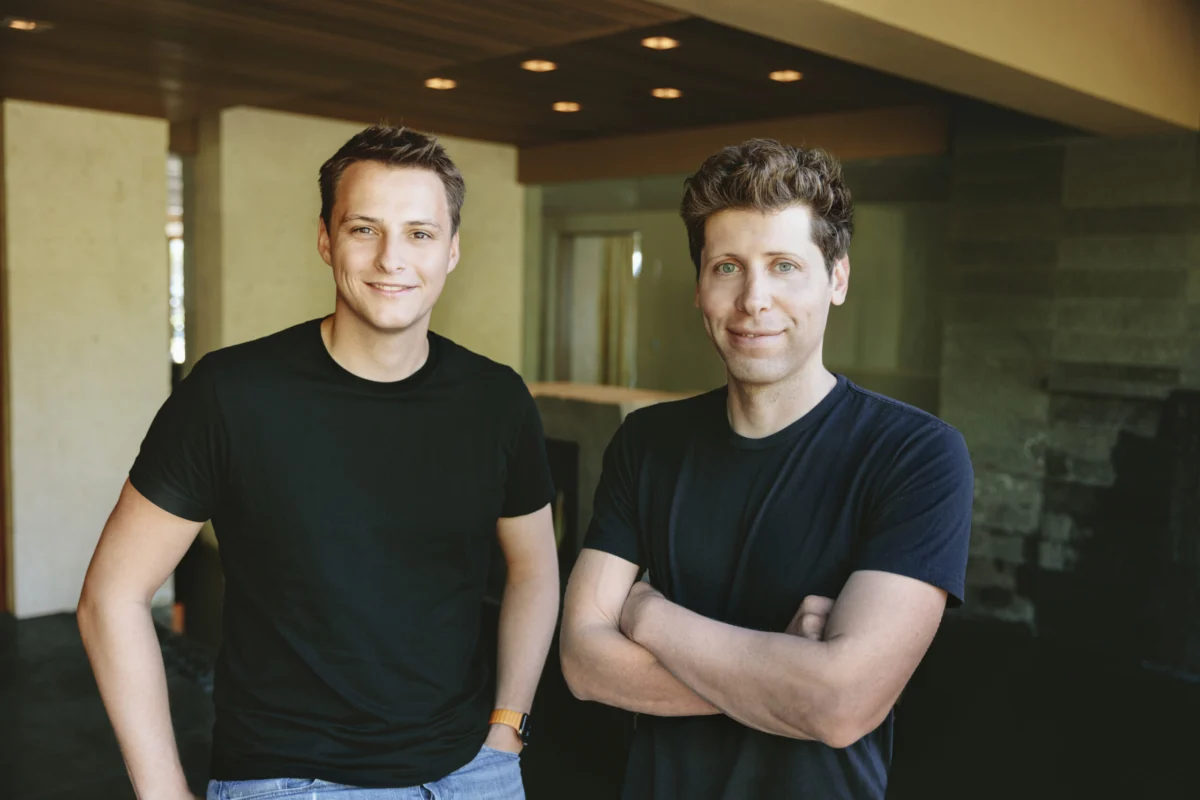
World, the ambitious identity verification venture co-founded by OpenAI Chief Executive Sam Altman and Alex Blania, has successfully raised $52.5 million through a targeted sale of its native WLD tokens to a cohort of strategic institutional investors. The funding round, announced via the World Foundation, represents a significant vote of confidence in the project’s mission to establish a global "proof of personhood" protocol in an era increasingly dominated by artificial intelligence.
The capital injection was structured as a private token sale involving a mandatory 12-month lockup period. This mechanism prevents participating investors from selling or trading their WLD holdings for one year, a move designed to ensure long-term alignment with the project’s development goals. Lead participation in the round came from Pantera Capital, a prominent venture capital firm specializing in digital assets and blockchain infrastructure. Other notable contributors included Eightco Holdings, Bain Capital Crypto, Susquehanna Crypto, and Selini Capital.
According to a press release issued by the company, the proceeds will be directed to the World Foundation, an exempted limited guarantee foundation based in the Cayman Islands. This entity serves as the steward for the World network, overseeing its decentralized expansion and managing the distribution of resources intended to scale the project’s infrastructure globally.
The Evolution of World: From Crypto Experiment to Identity Infrastructure
The project, which operates under the corporate umbrella of San Francisco-based Tools for Humanity (TFH), recently underwent a significant rebranding. Formerly known as Worldcoin, the venture shortened its name to "World" in an effort to distance itself from the broader volatility and negative connotations often associated with the cryptocurrency sector. Despite the name change, the underlying technology remains rooted in blockchain and cryptographic verification.
At the core of World’s value proposition is the World ID, a secure, anonymous digital marker designed to verify that a user is a unique human being rather than an automated bot or an AI agent. As generative AI continues to flood digital ecosystems with synthetic content, the ability to distinguish human interaction from machine-generated activity has become a critical challenge for social media platforms, financial institutions, and service providers.
To obtain the highest level of verification, users must interact with a specialized hardware device known as the Orb. The Orb is a chrome-finished, spherical camera that performs a high-resolution scan of an individual’s iris. This biological data is then converted into a unique cryptographic code—a digital fingerprint that proves "personhood" without requiring the user to disclose their name, address, or other sensitive personal identifiers. These Orbs have been deployed in major metropolitan hubs worldwide, operating out of World-branded offices and through various third-party retail partnerships.
Strategic Financials and the Role of the WLD Token
The WLD token serves as the primary utility and governance asset within the World ecosystem. While the project initially gained notoriety for its "airdrop" model—whereby users in certain jurisdictions received free tokens in exchange for iris scans—this latest $52.5 million raise focuses on institutional commitment rather than retail distribution.
The 12-month lockup period is a standard practice in high-stakes venture capital within the Web3 space, intended to mitigate market volatility and demonstrate that investors are not merely seeking short-term speculative gains. For World, this stability is essential as it attempts to transition from a niche technology experiment to a foundational layer of the global internet.
The involvement of Pantera Capital and Bain Capital Crypto suggests that despite the regulatory hurdles World has faced in several jurisdictions, institutional appetite for decentralized identity (DID) solutions remains robust. These firms are betting on the thesis that as AI agents become more sophisticated, the "Humanity-as-a-Service" market will become a multi-billion-dollar industry.
A Chronology of Milestones and Setbacks
The journey of Tools for Humanity and the World project has been marked by rapid technological advancement punctuated by significant operational challenges.
- 2019–2021: Inception and Development. Sam Altman and Alex Blania quietly began developing the concept of a global identity and financial network. The "Orb" was designed to solve the problem of sybil attacks (where one person creates multiple fake identities) in a decentralized system.
- July 2023: Official Launch. The project emerged from its beta phase, launching the WLD token on major exchanges. Within months, millions of users in countries ranging from Argentina to India signed up for iris scans.
- April 2024: Ecosystem Expansion. World announced a major update to its mobile application and revealed integrations with mainstream digital platforms. Partnerships were established with Tinder to verify user authenticity, Zoom for secure meeting access, and DocuSign to ensure the human validity of digital signatures.
- June 2024: Operational Restructuring. Despite its high-profile partnerships, Tools for Humanity faced the realities of a challenging venture market and the high costs of global hardware deployment. The company conducted a round of layoffs to streamline operations and extend its financial runway.
- October 2024: Rebranding and Token Sale. The company officially transitioned from Worldcoin to World, emphasizing its broader mission of "Humanity-Centric" technology, culminating in the recent $52.5 million funding announcement.
Regulatory Scrutiny and Privacy Concerns
World’s reliance on biometric data has made it a lightning rod for privacy advocates and government regulators. The project’s data collection practices have been the subject of intense investigation in several countries.
In Spain, the data protection authority (AEPD) issued a temporary ban on the project’s data collection activities, citing concerns over the processing of biometric information belonging to minors and the difficulty users faced in withdrawing consent. Similarly, authorities in Kenya suspended the project’s operations in 2023, citing potential risks to public safety and data privacy, although some of these restrictions have since been navigated through legal appeals and policy adjustments.
In response to these criticisms, World has consistently maintained that its technology is "privacy-first." The company asserts that the Orb does not store raw images of the iris; rather, it processes the image locally on the device to create a numerical hash and then deletes the original image unless the user explicitly opts into "Data Custody" for future updates. The recent capital raise is expected to fund further research into Zero-Knowledge Proofs (ZKPs), a cryptographic method that allows one party to prove to another that a statement is true without revealing any information beyond the validity of the statement itself.
Analyzing the Broader Impact on the AI Economy
The successful $52.5 million raise arrives at a pivotal moment for the technology industry. As OpenAI, the company where Sam Altman serves as CEO, continues to push the boundaries of artificial intelligence with models like GPT-4o and Sora, the "World" project serves as a necessary counterweight.
The strategic implication of World is the creation of a "Proof of Personhood" layer that could eventually underpin a global Universal Basic Income (UBI) system. Altman has frequently discussed the potential for AI to automate vast swaths of the labor market, suggesting that a digital identity tied to a financial wallet could be the mechanism through which AI-generated wealth is redistributed to humans.
Furthermore, the integration with platforms like Tinder and DocuSign highlights a shift toward a "verified internet." In a landscape where "deepfakes" can impersonate corporate executives or romantic interests, the market for a definitive, biometric-backed digital identity is expanding. If World can overcome its regulatory hurdles and achieve mass adoption, the WLD token and the World ID could become as ubiquitous as the "Sign in with Google" or "Sign in with Apple" buttons, but with a decentralized and biometric-verified twist.
Future Outlook and Scalability
The path forward for World involves significant engineering and logistical hurdles. Scaling the production and deployment of Orbs is a capital-intensive endeavor. The $52.5 million will likely be utilized to refine the Orb’s hardware—making it more portable and cost-effective—while expanding the network of "World Operators" who manage the devices in the field.
However, the project must also address the "usage gap." While over six million people have had their eyes scanned, the daily active utility of the World ID remains limited. The company’s success will depend on its ability to convince more third-party developers to integrate World ID into their applications, creating a network effect where the ID becomes an essential tool for digital life.
As the 12-month lockup period for the new investors begins, the tech industry will be watching closely to see if World can transform its ambitious vision into a sustainable global standard. With the backing of Pantera and the strategic guidance of Altman and Blania, World is positioned to remain at the center of the debate over identity, privacy, and the human role in an AI-driven future.