admin
admin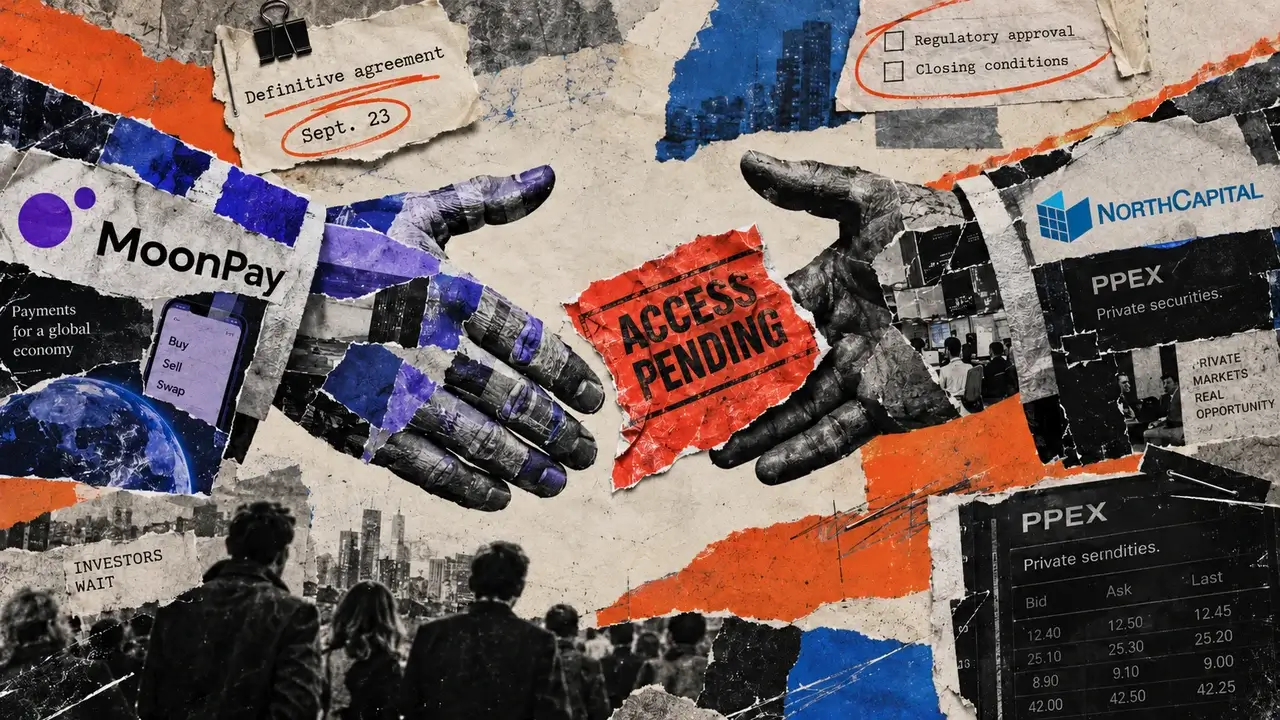
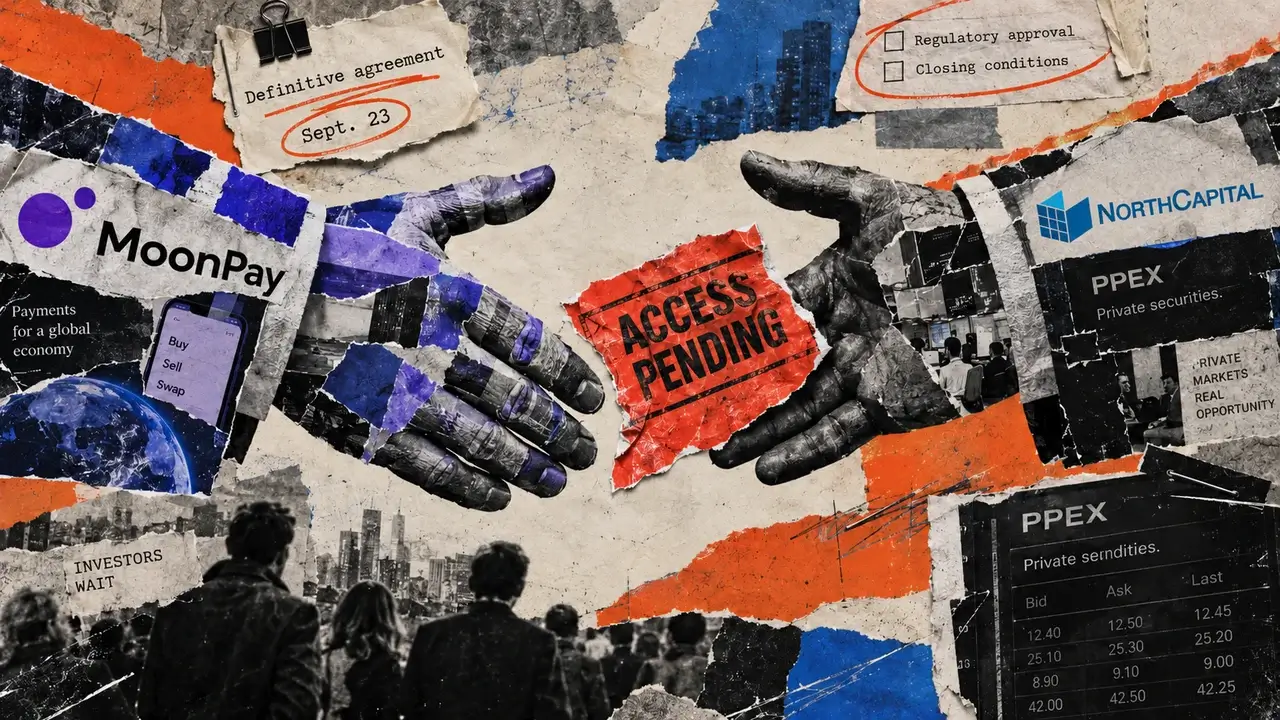
MoonPay has entered into a definitive agreement to acquire North Capital Investment Technology, a move that would integrate a regulated private-securities trading venue into the crypto payments company’s burgeoning ecosystem. The transaction, announced on September 23rd, has received approval from the boards of directors of both companies, but its completion remains contingent upon securing necessary regulatory approvals and satisfying other standard closing conditions. While the deal signifies a significant strategic expansion for MoonPay, the immediate impact on its existing customer base regarding access to private securities trading remains unaddressed, with no clear launch date, eligibility criteria, or pathway to the platform yet revealed.
Strategic Integration of Private Securities Infrastructure
The proposed acquisition of North Capital, a firm specializing in technology and regulated services for private securities, marks a pivotal step for MoonPay. North Capital’s existing infrastructure encompasses investor onboarding, transaction processing, custody services, and crucially, secondary trading capabilities. This integration aims to bridge the gap between the rapidly evolving digital asset markets and the more traditional, yet increasingly digitized, private capital markets. For MoonPay, known primarily for its role in facilitating fiat-to-crypto transactions, this acquisition represents a strategic pivot towards becoming a more comprehensive financial services provider.
North Capital’s subsidiary, North Capital Private Securities Corporation, is a registered broker-dealer. It operates PPEX, an Alternative Trading System (ATS) that allows for the trading of eligible securities outside of traditional stock exchanges. The U.S. Securities and Exchange Commission (SEC) listed the firm and PPEX on its ATS list as of June 30th, prior to the announcement of the proposed acquisition, underscoring its established regulatory standing.
The addition of North Capital’s regulated entities, trading system, and brokerage business would significantly bolster MoonPay’s existing infrastructure, which is designed to facilitate the seamless movement of funds between conventional and digital assets. Furthermore, North Capital possesses an investment advisory business, which could present additional avenues for synergy and service expansion post-acquisition.
Unveiling the Path Forward for Customer Access
Despite the definitive agreement, a significant question mark hangs over how and when MoonPay customers will gain access to the private securities trading capabilities offered by North Capital. The announcement offers no specific timeline for the launch of a customer-facing securities product, nor does it detail the eligibility requirements or the user journey for accessing such a platform. This lack of clarity leaves MoonPay’s user base anticipating further announcements regarding the integration and the terms of access to what could be a substantial new offering.
The strategic intent behind the acquisition appears to be the creation of a more robust on-chain capital markets infrastructure. PPEX, as an existing trading venue, provides a blueprint for what MoonPay aims to introduce: a platform for the secondary trading of private and other exempt securities, with the potential to include tokenized securities. This aligns with the broader trend of digitalization within financial markets, where the lines between traditional securities and digital assets are becoming increasingly blurred.
Timeline and Regulatory Hurdles
The path to a completed acquisition is not without its obstacles. The definitive agreement signed by MoonPay and North Capital is subject to several conditions precedent. The most significant among these is the approval from relevant regulatory bodies. The timeline for obtaining these approvals can vary widely, depending on the complexity of the transaction and the caseload of the regulatory agencies involved. Historically, financial technology acquisitions involving regulated entities often undergo thorough scrutiny to ensure compliance with anti-trust laws, financial regulations, and investor protection standards.
While both companies have expressed optimism, they have also issued a cautionary note: "there is no assurance that it will close, or when." This statement reflects the inherent uncertainties in the M&A process, particularly within the highly regulated financial sector. The absence of a disclosed purchase price or a firm closing date further emphasizes the pending nature of the transaction.
The initial announcement on September 23rd marked the formalization of the deal, with both parties signifying their commitment. However, the preceding months likely involved extensive due diligence, negotiation, and preliminary discussions with regulatory bodies to gauge the feasibility of such an integration. The subsequent period will be dedicated to navigating the formal regulatory review process, which could involve submitting detailed filings, responding to information requests, and potentially undergoing public comment periods depending on the jurisdiction.
Background and Market Context
The acquisition comes at a time of significant evolution in both the cryptocurrency and private capital markets. The crypto payments sector, exemplified by MoonPay, has experienced substantial growth, driven by increased adoption and demand for easier fiat-to-crypto on-ramps. Simultaneously, the private securities market has been exploring technological solutions to improve liquidity, transparency, and accessibility. The tokenization of real-world assets, including private equity and debt, is a burgeoning trend that promises to unlock new investment opportunities and capital formation avenues.
MoonPay’s entry into this space can be viewed as an attempt to capitalize on this convergence. By acquiring an established player with regulatory licenses and an operational trading venue, MoonPay aims to bypass the lengthy and complex process of building such infrastructure from scratch. This strategic move could position MoonPay as a key intermediary, enabling investors to access private markets more efficiently, potentially through tokenized representations of securities.

The private securities market, traditionally characterized by limited liquidity and high barriers to entry, has been increasingly looking towards technology to address these challenges. Alternative trading systems like PPEX are at the forefront of this transformation, offering a more streamlined and potentially cost-effective way to trade securities that are not listed on major public exchanges. The integration of such a system into a widely used crypto payment platform could democratize access to these asset classes for a broader investor base.
Potential Implications and Analysis
The successful integration of North Capital into MoonPay’s operations could have several far-reaching implications:
- Enhanced Liquidity for Private Markets: By providing a regulated trading venue accessible through a familiar payment interface, MoonPay could significantly improve liquidity for private securities. This could attract more issuers and investors, leading to a more vibrant private capital market.
- Bridging Traditional and Digital Finance: The acquisition represents a concrete step towards blurring the lines between traditional finance and the digital asset space. It could pave the way for a more unified financial ecosystem where investors can seamlessly trade both tokenized and traditional securities.
- Increased Investor Access: If MoonPay eventually offers broad access to its private securities platform, it could open up previously inaccessible investment opportunities to a wider range of retail and institutional investors. This could lead to greater capital formation for private companies and enhanced portfolio diversification for investors.
- Regulatory Compliance as a Differentiator: In a crypto landscape often characterized by regulatory uncertainty, MoonPay’s strategic acquisition of a regulated entity positions it as a compliant and trustworthy player. This could be a significant competitive advantage as regulators worldwide continue to refine their frameworks for digital assets.
- Expansion of Use Cases for Crypto Payments: The integration could create new use cases for MoonPay’s core crypto payment services. For instance, investors might use their crypto holdings to purchase private securities or receive proceeds from their sale, further embedding crypto into mainstream financial activities.
However, the success of this venture hinges on several factors. The ability to seamlessly integrate North Capital’s technology and regulatory framework with MoonPay’s existing platform will be crucial. Furthermore, the company will need to develop a clear and compelling product offering that meets the needs of both issuers and investors. The regulatory environment for digital assets and private securities is also continually evolving, and MoonPay will need to remain agile and adaptable to navigate these changes effectively.
Official Statements and Future Outlook
In the official announcement, MoonPay CEO Ivan Soto-Wright expressed enthusiasm for the strategic alignment, stating, "This acquisition represents a significant milestone for MoonPay, enabling us to expand our offerings into the private capital markets and provide our users with access to a broader range of investment opportunities. North Capital’s expertise and regulated infrastructure are invaluable as we continue to build a comprehensive financial ecosystem."
While specific quotes from North Capital executives were not immediately available, their participation in the definitive agreement suggests a shared vision for the future of private securities trading. The focus for both companies now shifts to navigating the regulatory landscape and ensuring a smooth integration process.
Looking ahead, the market will be closely watching for updates on regulatory approvals and the unveiling of MoonPay’s customer-facing private securities product. The successful completion of this acquisition could set a precedent for other crypto-native companies seeking to expand their footprint into regulated financial markets, potentially accelerating the integration of blockchain technology into the broader financial system. The coming months will be critical in determining whether this ambitious acquisition fulfills its promise of bridging the gap between digital assets and the world of private capital.