admin
admin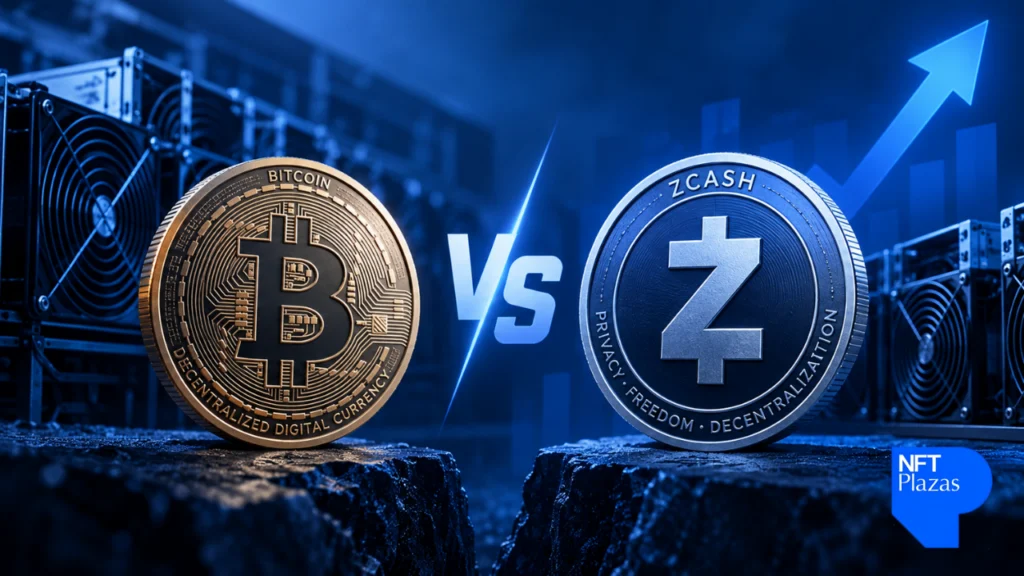
A comprehensive new analysis from Grayscale Research reveals that Zcash (ZEC) mining has achieved a notable lead over Bitcoin (BTC) in terms of profitability for individual operators, despite Bitcoin’s overwhelming dominance in the overall scale of the cryptocurrency mining industry. This surprising development underscores a significant shift in the proof-of-work landscape, drawing attention to efficiency metrics over sheer volume. The report, spearheaded by Grayscale Research director Zach Pandl, meticulously highlights a pronounced divergence between the economic dynamics of these two prominent proof-of-work networks. While Bitcoin continues to generate substantially more collective revenue for its vast network of miners, Zcash is currently delivering markedly higher returns per individual mining machine and, crucially, per unit of electricity consumed.
This remarkable change in the profitability landscape coincides with Zcash (ZEC) experiencing one of its most robust price rallies in recent memory. The token’s value has surged past the $1,000 mark, a level not seen in nearly a decade, consequently attracting a significant influx of computing power to its network and intensifying mining activity. The confluence of rising asset value and enhanced mining efficiency paints a compelling picture for Zcash, challenging conventional perceptions of mining profitability in the broader cryptocurrency ecosystem.
Bitcoin’s Unrivaled Scale in Miner Rewards
Despite Zcash’s newfound advantage in per-unit profitability, Bitcoin’s colossal scale in the cryptocurrency mining sector remains unchallenged. When measured by the total aggregate value distributed to miners globally, Bitcoin operates in an entirely different league. Grayscale’s estimates indicate that Bitcoin miners collectively generate an staggering approximate sum of $35 million in daily rewards. In stark contrast, Zcash miners, while experiencing a boom, collectively accrue around $2 million in daily rewards. This vast discrepancy is a direct reflection of Bitcoin’s substantially larger market capitalization, its pervasive network activity, and the immense, specialized infrastructure that has been built around its mining operations over more than a decade. Bitcoin’s status as the pioneer and largest cryptocurrency by market cap naturally translates into a much larger reward pool, sustaining an industrial-scale mining ecosystem comprising vast data centers and specialized Application-Specific Integrated Circuits (ASICs).
However, this macro comparison takes a dramatic turn when the lens shifts from the collective to the individual, focusing on the performance and yield of single mining machines. According to the detailed analysis from Grayscale, a typical Zcash mining rig is currently capable of generating approximately twice the daily revenue of a comparable Bitcoin mining machine. The advantage becomes even more pronounced and compelling when the critical factor of electricity consumption is integrated into the economic equation. The research firm’s calculations reveal that Zcash mining produces an estimated four times as much revenue per megawatt-hour (MWh) as Bitcoin mining, under Grayscale’s carefully considered assumptions. This level of energy efficiency is so significant that Grayscale posited Zcash mining could currently generate higher revenue per unit of electricity than even some advanced artificial intelligence (AI) and high-performance computing (HPC) cloud services, highlighting its exceptional operational leverage in terms of energy input.
It is crucial to note that this does not automatically translate to Zcash mining being four times more profitable in every single market or for every operator. The actual net profitability for individual operators is influenced by a multitude of variables. These include fluctuating electricity prices across different geographical regions, the initial capital expenditure on hardware, ongoing cooling requirements, maintenance costs, pool fees, and the ever-changing network difficulty, which dynamically adjusts based on the total computing power dedicated to the network. Each of these factors can significantly alter the economic viability and final profitability for a given mining operation.

ZEC’s Historic Price Rally as the Catalyst
The profound improvement in Zcash mining economics is inextricably linked to the cryptocurrency’s dramatic and sustained price appreciation. ZEC recently surged to approximately $1,155, marking its highest price point in roughly nine years. This impressive ascent is part of a powerful, multi-month rally that has positioned Zcash as one of the strongest-performing large-cap cryptocurrencies in the current market cycle. At one point during the reported period, ZEC was up more than 14% over a single week, a period during which Bitcoin experienced a modest decline of nearly 3%. This strong independent performance propelled ZEC’s market capitalization to an impressive approximately $19.5 billion, signaling renewed investor confidence and market momentum.
The rally has also pushed Zcash well beyond its performance levels observed earlier in 2026. Grayscale’s report highlights that ZEC’s substantial price gains have served as a powerful incentive for miners to deploy additional computing power. Consequently, the network’s total mining activity, as measured by its hashrate, has increased by more than 2.5 times since the beginning of the year. This surge in hashrate is not merely a statistical anomaly but represents a crucial feedback loop for the Zcash network. Higher ZEC prices make mining inherently more attractive, which in turn encourages a greater number of miners to participate and dedicate their resources. While this increased mining power naturally leads to greater competition for block rewards, it simultaneously strengthens the overall security and robustness of the Zcash blockchain, making it more resilient against potential attacks.
Zach Pandl, director of Grayscale Research, described this relationship as potentially self-reinforcing. He suggested that stronger mining economics not only support enhanced network security but also have the potential to sustain and further amplify investor interest in Zcash, creating a virtuous cycle of growth and adoption. This dynamic is critical for the long-term health and decentralization of any proof-of-work network.
The Incompatibility of Mining Hardware
An important and often overlooked limitation when conducting a direct comparison between Bitcoin and Zcash mining profitability lies in the fundamental difference in their underlying mining algorithms and the specialized hardware they require. The two networks employ distinct cryptographic hashing algorithms. Bitcoin relies exclusively on the SHA-256 algorithm, which is processed by highly specialized Application-Specific Integrated Circuits (ASICs). In contrast, Zcash utilizes the Equihash algorithm, which requires different types of ASICs designed specifically for its computational demands.
As a direct consequence of this algorithmic divergence, a Bitcoin miner cannot simply redirect their existing Bitcoin ASIC hardware to mine Zcash when ZEC becomes more profitable. The hardware is purpose-built for a specific algorithm, making it incompatible with the other. Grayscale’s detailed analysis meticulously accounts for this distinction by comparing the performance of a Bitmain S23 Hydro, a leading Bitcoin miner, with a Bitmain Z15 Pro, a top-tier Zcash miner. Their calculations were based on a set of standardized assumptions, including an electricity cost of $0.05 per kilowatt-hour, an assumption of full uptime for the machines, and the exclusion of transaction-fee revenue, focusing solely on block reward profitability.

Furthermore, these estimates primarily focus on mining revenue rather than an operator’s final net profit. To arrive at actual returns, various additional expenses must be factored in, which can materially reduce the apparent advantage. These critical operating expenses include hardware depreciation or financing costs, facility overheads, cooling infrastructure, ongoing maintenance, and mandatory pool fees. The cost of electricity, in particular, stands out as an exceptionally important variable. A miner operating in a region burdened with high electricity prices may discover that the perceived profitability advantage of Zcash quickly diminishes or even disappears once these significant operating expenses are fully accounted for. This highlights the localized and nuanced nature of mining profitability.
The Sustainability Challenge: Zcash’s Smaller Reward Pool
The most significant question confronting prospective Zcash miners, and indeed the market at large, is whether the current impressive profitability advantage can be sustained over the long term. Zcash’s daily mining rewards, while currently offering superior per-unit returns, represent only a fraction of Bitcoin’s total reward pool. With approximately $2 million distributed across its entire mining network each day, the pool of available rewards is comparatively small.
This smaller reward pool introduces a critical dynamic: as more miners are enticed to enter the Zcash market due to high profitability, the same fixed reward pool must be divided among an increasing amount of computing power. Consequently, a rapidly rising hashrate and corresponding increase in network difficulty can quickly reduce the amount of ZEC earned by each individual machine, even if the price of ZEC itself remains stable or continues to climb. This inherent mechanism of diminishing returns for individual miners due to increased competition is already demonstrably visible in Zcash’s rapidly expanding hashrate. The more than 2.5-fold increase in mining activity observed this year vividly illustrates how quickly miners can respond and reallocate resources when economic incentives become sufficiently attractive.
While Bitcoin faces the exact same fundamental mechanism where rising hashrate increases difficulty and reduces individual profitability, its vastly larger mining ecosystem and significantly larger reward pool mean that these dynamics operate on an entirely different scale. The sheer size of Bitcoin’s network provides a greater buffer against rapid individual profitability fluctuations, even as its hashrate continues to grow.
Institutional Demand Adds Another Layer of Momentum
The burgeoning Zcash mining boom is unfolding concurrently with a noticeable surge in institutional interest in the privacy-focused cryptocurrency. Grayscale’s own Zcash investment product, trading under the ticker ZCSH, commenced trading on NYSE Arca on August 25. The asset manager reported that this fund attracted approximately $179 million in net assets during its initial 11 trading days, pushing its total assets under management (AUM) beyond the $700 million mark.

Grayscale proudly announced that ZCSH ranked among the top 1% of nearly 4,000 exchange-traded products by net asset growth during this period and characterized it as the fastest-growing altcoin exchange-traded product by net assets, based on the issuer’s internal data. This remarkable institutional uptake signifies a strong vote of confidence from sophisticated investors, indicating a growing acceptance and demand for Zcash within traditional financial frameworks.
The convergence of rising institutional demand, robust price performance, and significantly improving mining economics has collectively created a far more favorable and dynamic environment for Zcash compared to its position earlier in 2026. This multi-faceted growth trajectory suggests a broadening appeal and strengthening fundamentals for the Zcash ecosystem.
Efficiency, Not Size, as the Key Takeaway
Grayscale’s comprehensive research should not be interpreted as a suggestion that Zcash has somehow eclipsed Bitcoin as the overall dominant force in the cryptocurrency mining business. Bitcoin unequivocally remains overwhelmingly larger in terms of total mining revenue, the sheer scale of its infrastructure, and its overall market footprint.
Instead, the analysis from Grayscale masterfully highlights a different, yet equally critical, metric: the efficiency with which an individual mining machine can generate revenue relative to its energy consumption. On this specific and highly relevant measure, Zcash currently holds a clear and compelling advantage. This focus on efficiency is particularly pertinent in an era where energy costs and environmental considerations are becoming increasingly scrutinized within the cryptocurrency mining industry.
Whether this newfound advantage for Zcash mining persists will be contingent upon a delicate interplay of several critical factors: the sustained price performance of ZEC, the stability or fluctuation of electricity costs, the dynamic adjustment of network mining difficulty, and the rate at which new hardware continues to enter the Zcash network. The rapid and substantial growth in Zcash’s hashrate observed this year strongly suggests that miners are already actively responding to this lucrative opportunity, indicating a robust and competitive market.
For the immediate future, however, Grayscale’s conclusion remains straightforward and impactful: Bitcoin continues to be the undisputed leader in terms of overall mining network size and total revenue, but Zcash is currently offering considerably more attractive mining economics for individual machines and demonstrating superior revenue generation per unit of electricity consumed. This analysis provides valuable insights for both individual miners evaluating their operational strategies and institutional investors assessing the evolving landscape of digital asset mining.