admin
admin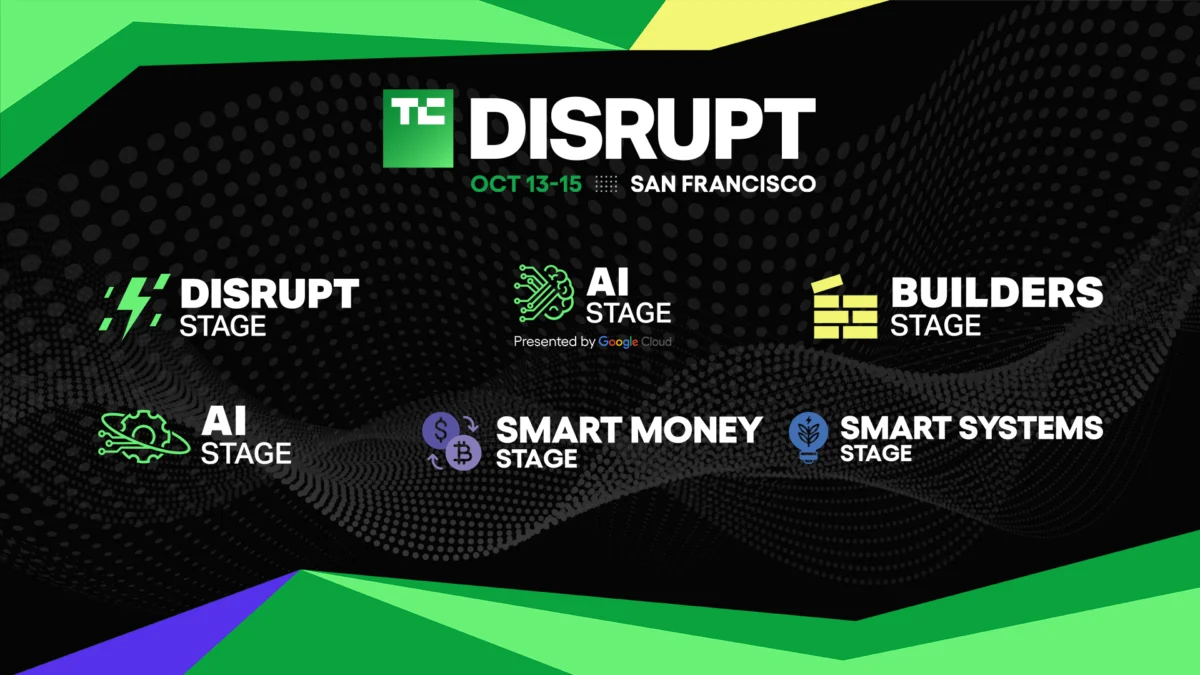
The global technology ecosystem is currently navigating a period of profound structural transformation, where the primary risk to founders and investors has shifted from the speed of execution to the peril of delayed market adaptation. In response to these complex dynamics, TechCrunch Disrupt 2026 has announced an expanded programming framework designed to provide high-level strategic intelligence and tactical operational guidance. Scheduled to take place from October 13 to 15 at the Moscone West convention center in San Francisco, the event is expected to draw more than 10,000 attendees, including founders, venture capitalists, and corporate operators. The 2026 iteration of the conference features a refined architecture consisting of six specialized stages, addressing the multifaceted pressures of AI-native competition, infrastructure bottlenecks, and a shifting venture capital landscape.
A Strategic Response to a Volatile Market
The central thesis of the 2026 conference is the necessity of informed, rapid decision-making in a market characterized by high volatility. As venture capital dynamics continue to evolve away from the "growth at all costs" era toward a focus on durable unit economics and infrastructure resilience, Disrupt serves as a critical forum for benchmarking innovation. The event will host over 250 sessions featuring insights from an equivalent number of industry leaders.

The programming is meticulously organized into six distinct stages, each targeting a specific pillar of the modern tech economy. This structure reflects the reality that startup success in the mid-2020s is no longer solely a matter of software development but involves navigating complex physical constraints, regulatory environments, and capital efficiency requirements.
The Disrupt Stage: Macro Trends and the Startup Battlefield
The Disrupt Stage remains the focal point of the event, serving as the venue for headline discussions with prominent founders and top-tier investors. This stage is designed to provide a "center of gravity" for understanding the broader market shifts that dictate where attention and capital are concentrating.
A cornerstone of this stage is the Startup Battlefield 200, the premiere startup competition that has historically served as a launchpad for companies that have collectively raised billions in follow-on funding. The competition provides a transparent look at the startups that media and investors believe have breakout potential. For the 2026 cycle, the nomination and application deadline is set for May 29. The conversations on this stage will specifically address the evolving venture landscape, the criteria for late-stage exits in a corrected market, and the strategic positioning required for startups to survive in an environment where competition is increasingly driven by AI capabilities.

The Builders Stage: Operational Tactics for Modern Founders
Recognizing the immense pressure on early-stage companies, the Builders Stage moves away from generalized inspiration toward concrete, tactical execution. This stage addresses the "how-to" of fundraising, hiring, and scaling in a more demanding environment. One of the most anticipated sessions, "How to Win When You’re Not Building AI," addresses the specific challenge of securing capital and market share when investor interest is heavily skewed toward artificial intelligence.
The speaker lineup for the Builders Stage includes notable figures such as Nina Achadjian of Index Ventures, Rajeev Dham of Sapphire Ventures, and Josh Reeves, CEO and co-founder of Gusto. These sessions are intended to help founders minimize errors and accelerate product-market fit. Additional speakers include Grant Lee of Gamma, Robby Stein of Google, and Mo Jomaa of CapitalG, providing a diverse range of perspectives from both the operator and investor sides.
Smart Money Stage: The Evolution of Financial Infrastructure
The Smart Money Stage is dedicated to the fintech sector, which has undergone significant maturation following a period of intense hype and subsequent correction. The focus here is on the transition toward digital financial systems and the durability of various fintech models.

As investor scrutiny increases, this stage examines where real-time payments, embedded finance, and decentralized systems are providing actual value. Speakers such as Jack Zhang, founder and CEO of Airwallex, and Lotti Siniscalco, General Partner at Emergence Capital, will lead discussions on which financial technologies are creating long-term growth and which are losing momentum. The goal is to separate speculative hype from the infrastructure that will define the next decade of global finance.
Smart Systems Stage: Addressing Physical Constraints
One of the most significant shifts in the 2026 agenda is the increased emphasis on physical infrastructure. The Smart Systems Stage addresses the bottlenecks currently facing the technology industry: data center capacity, energy grid connectivity, and industrial logistics. As AI expansion places unprecedented demand on power systems, the intersection of software and hardware has become a critical area of innovation.
This stage features leaders in energy and robotics, including Jeff Lawson, co-founder and CEO of Inertia, and David Kirtley, CEO of Helion. The programming explores the "bottleneck economy," focusing on how energy, climate tech, and industrial systems are becoming the next major competitive advantages—or barriers—for software-driven companies.

AI in the Real World: Reliability and Production
While much of the discourse around AI has focused on large language models and creative applications, the AI in the Real World Stage shifts the focus to operational reality. When AI systems are integrated into manufacturing, autonomous transportation, or drug discovery, reliability becomes a mission-critical business issue rather than a technical curiosity.
The sessions on this stage will explore the challenges of deploying AI in environments where cloud access may be limited and where failure has real-world physical or financial consequences. This stage is particularly relevant for investors evaluating the next generation of AI companies that are moving beyond prototypes into full-scale industrial production.
The AI Stage: Rewriting the SaaS Business Model
Presented by Google Cloud, the AI Stage focuses on the fundamental changes occurring within the software industry. The primary topic of discussion is the erosion of traditional SaaS (Software as a Service) advantages. As generative AI and autonomous agents become standard, the economics of software development and user expectations are being rewritten in real time.

Sessions such as "Rewriting SaaS: Why AI Breaks the Old Business Model" will analyze how companies are adapting their product economics to survive this transition. The focus is on the long-term viability of software companies in an era where AI can automate many of the tasks previously handled by proprietary software platforms.
Chronology and Event Logistics
The timeline for TechCrunch Disrupt 2026 is structured to facilitate maximum engagement throughout the year leading up to the October event:
- May 29, 2026: Deadline for Startup Battlefield 200 applications.
- Early Summer 2026: Announcement of the first round of selected startups and keynote speakers.
- Late Summer 2026: Tiered pricing increases for attendee passes.
- October 13–15, 2026: The main event at Moscone West, San Francisco.
Organizers have implemented an "Early Bird" registration strategy to encourage early participation, offering savings of up to $410 on standard passes. Additionally, a 50% discount on second tickets is available to facilitate team-based attendance.

Broader Impact and Industry Implications
The 2026 edition of TechCrunch Disrupt comes at a time when the tech industry is attempting to find a new equilibrium. Following the "VC winter" of 2023–2024, the market has seen a bifurcated recovery: extreme capital concentration in AI infrastructure and a much more conservative approach to consumer and traditional enterprise software.
By dedicating specific stages to physical systems, fintech durability, and AI reliability, TechCrunch is signaling a shift in the industry’s priorities. The event serves as a bellwether for the San Francisco tech ecosystem, which has seen a resurgence in activity driven by the AI boom but faces ongoing questions regarding its long-term economic structure.
The inclusion of topics like energy grid resilience and the "bottleneck economy" reflects a growing realization that the next wave of tech giants will likely be those that can solve physical-world constraints. For the 10,000+ expected attendees, the value of Disrupt 2026 lies in its ability to synthesize these diverse pressures into a coherent roadmap for the future of innovation. As the market continues to shift, the intelligence gathered at Moscone West in October may prove decisive for the next generation of founders and investors.