admin
admin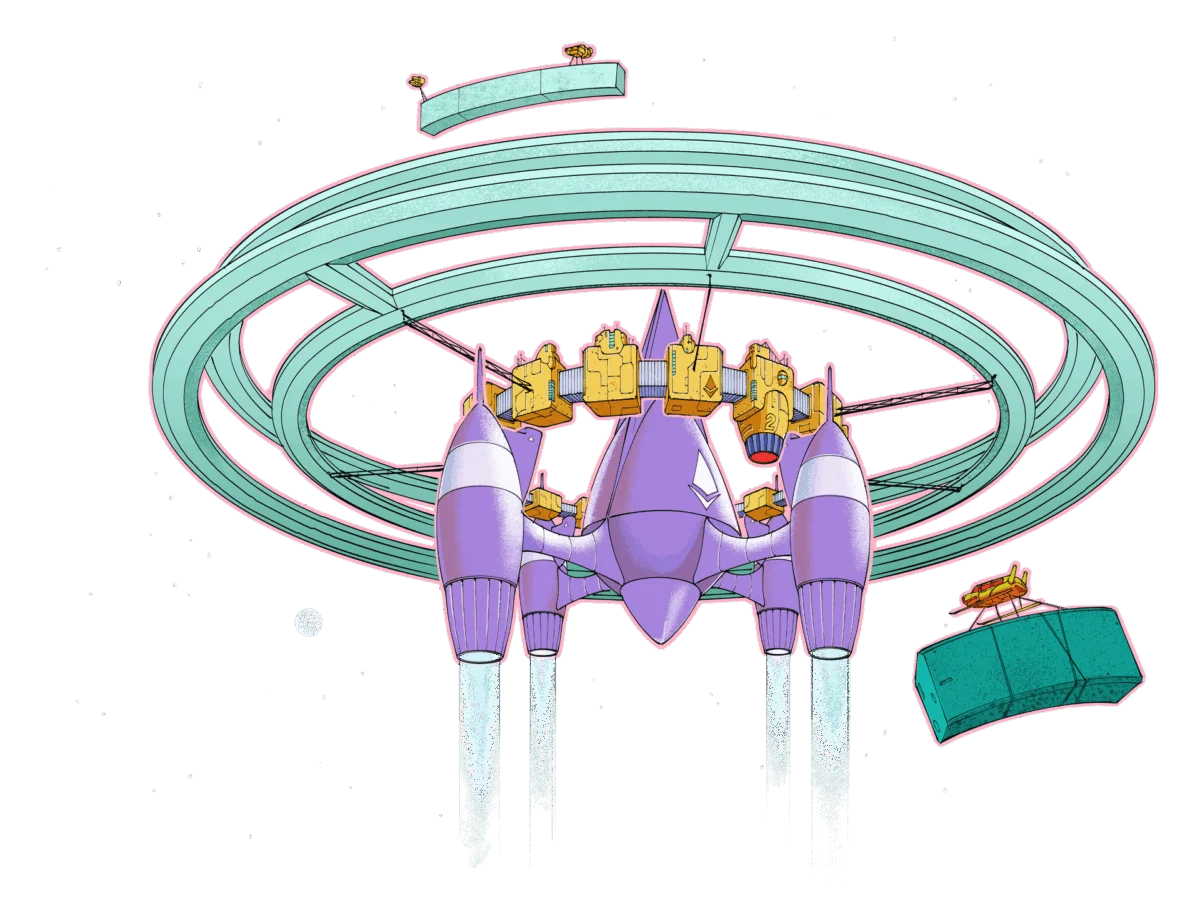
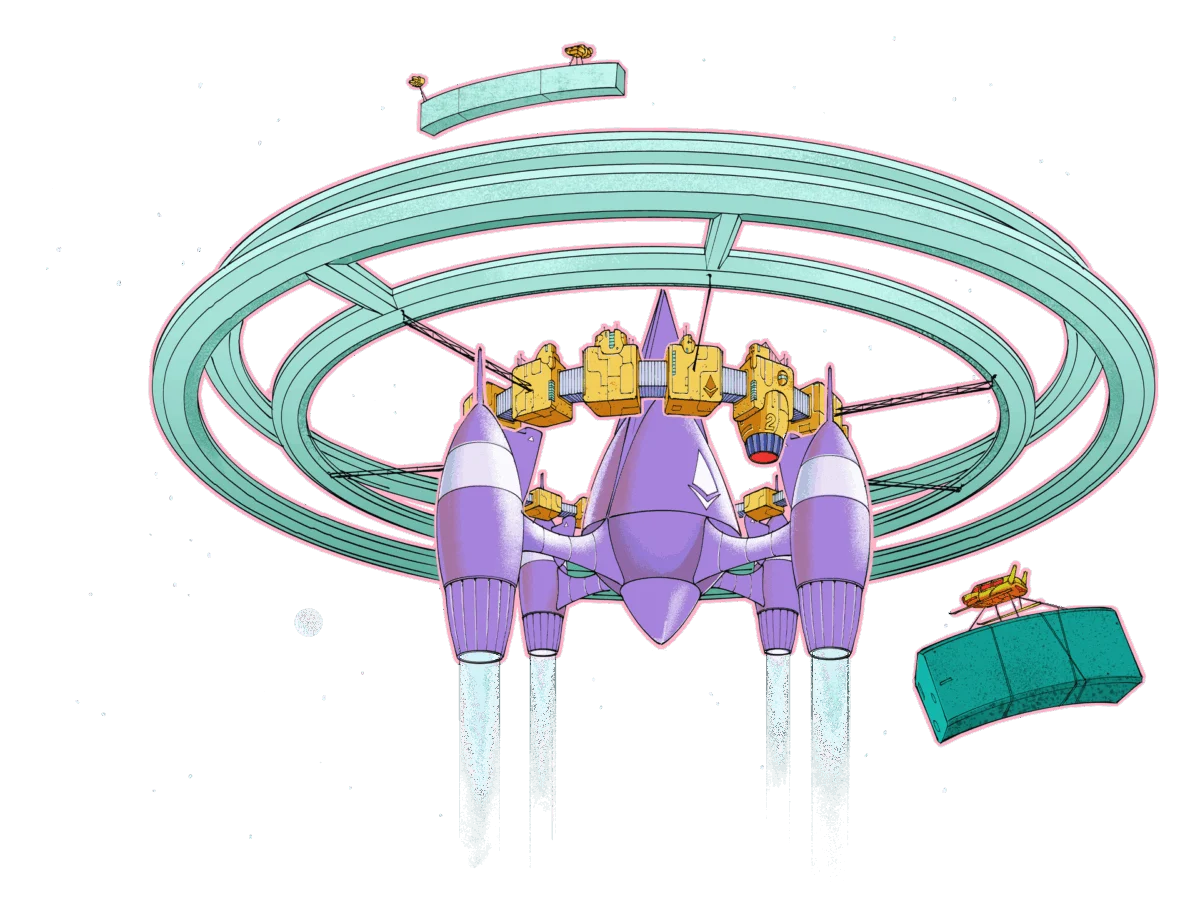
The Ethereum network, the world’s most significant smart-contract blockchain by total value locked and market capitalization, is currently preparing for its most ambitious technical evolution to date. Scheduled for the middle of this year, "The Merge" represents the definitive transition of the Ethereum protocol from a Proof-of-Work (PoW) consensus mechanism to a Proof-of-Stake (PoS) system. This transition is not merely a software update; it is a fundamental re-engineering of a decentralized ecosystem that secures hundreds of billions of dollars in digital assets. Industry observers and core developers often compare this feat to replacing the engine of a commercial airliner while it remains in mid-flight, as the network must maintain 100% uptime and continue producing valid blocks without interruption throughout the process.
The Architecture of the Transition: Merging Two Layers
To understand the risks and rewards of the upcoming transition, one must look at the structural separation of duties that will define the post-Merge environment. Currently, Ethereum nodes handle both the execution of transactions and the validation of those transactions under the PoW model. The Merge will decouple these responsibilities into two distinct layers: the Execution Layer and the Consensus Layer.

The Execution Layer will continue to house the Ethereum Virtual Machine (EVM), where smart contracts reside and transactions are processed. This layer will essentially function as the current Ethereum mainnet does today, but without the mining component. The Consensus Layer, powered by the Beacon Chain which has been running in parallel since December 2020, will handle the validation and finalization of blocks. Post-Merge, a full Ethereum node will consist of two client software versions—an execution client and a consensus client—communicating via an Engine API.
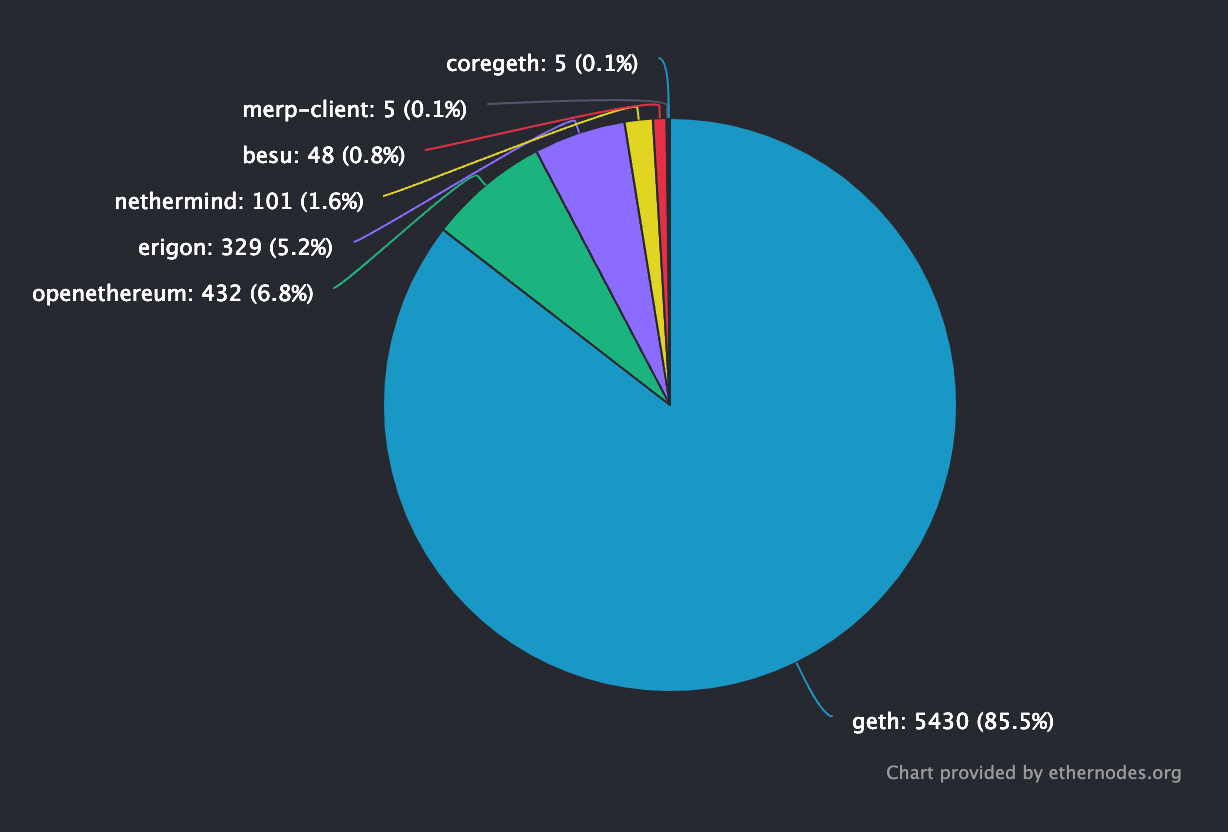
Unlike the Bitcoin network, which relies almost exclusively on the Bitcoin Core software client, the Ethereum community has deliberately fostered a multi-client ecosystem. Encouraged by the Ethereum Foundation (EF), various independent teams have developed several implementations of the protocol using different programming languages, such as Go, Rust, Java, and Nim. This diversity is intended to serve as a biological defense mechanism; if a bug is found in one software version, the rest of the network can theoretically continue to function.
The Mathematics of Consensus and the Danger of Supermajorities
The stability of a Proof-of-Stake network is predicated on the distribution of "staking power" across these different software clients. In Ethereum’s PoS model, specific thresholds of network participation determine the severity of potential disruptions. These thresholds are critical for maintaining liveness (the ability to keep moving) and safety (the guarantee that transactions cannot be reversed).

If a single client software is used by more than 33% of the network’s validators, a bug in that client could prevent the network from reaching "finality"—the point at which a transaction is considered irreversible. While the network would continue to produce blocks, it would enter a state of emergency where automatic mechanisms begin to penalize offline or malfunctioning nodes to restore consensus.
If a client controls more than 50% of the staking power, a bug could lead to more significant disturbances, potentially causing the network to fork or experience extended downtime. However, the most catastrophic scenario occurs at the 66% (two-thirds) threshold. This is known as a "supermajority." If a client with a supermajority contains a consensus-breaking bug, the buggy chain will "finalize." In this "game over" scenario, the honest, non-buggy clients are unable to stop the finalization of the incorrect chain. The community would then be forced to choose between a permanent chain split—resulting in two separate versions of Ethereum—or manually intervening to adopt the buggy chain, undermining the principle of protocol immutability.
The Current Landscape: Prysmatic Labs and the Dominance of Prysm
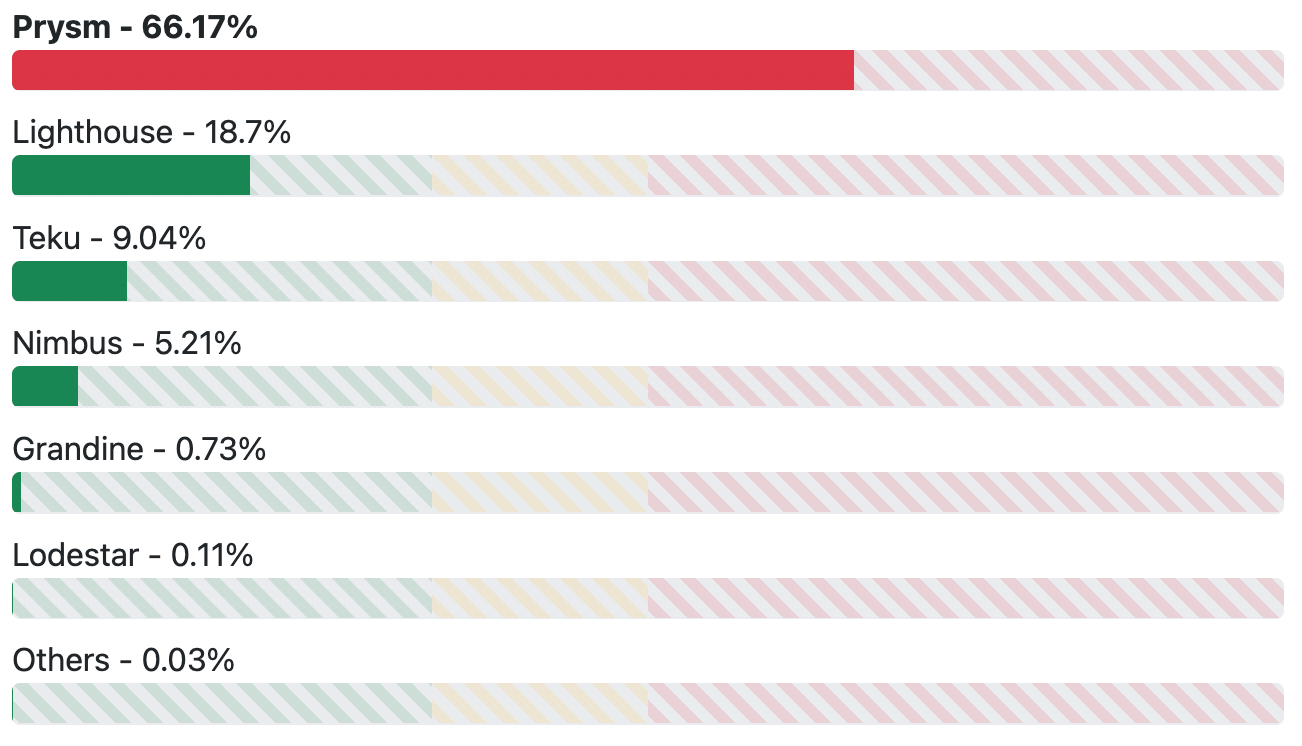
As the network approaches the Merge, data indicates a concerning lack of diversity within the Consensus Layer. Currently, the Prysm client, developed by Prysmatic Labs, holds a dominant position that frequently hovers near or at the 66% supermajority threshold. While Prysm is widely regarded as a high-quality, stable, and well-documented client, its sheer dominance creates a single point of failure for the entire Ethereum ecosystem.
Other consensus clients, including Lighthouse (Rust-based), Teku (Java-based), and Nimbus (Nim-based), offer robust alternatives but have struggled to capture significant market share. Smaller projects like Grandine and Loadstar remain in the sub-1% range. The dominance of Prysm is largely attributed to its first-mover advantage. Being the first functional prototype for the Beacon Chain allowed Prysmatic Labs to build superior tooling, a comprehensive web interface, and extensive documentation, making it the default choice for early adopters and professional staking operations.
Marius van der Wijden, an Ethereum core developer, noted that Prysm’s use of the Go programming language (Golang) also contributed to its success. Since the most popular Execution Layer client, Geth (Go-ethereum), is also written in Go, developers and auditors found Prysm easier to understand and integrate into existing workflows.
The Role of Institutional Stakers and Exchanges
The client diversity crisis is not merely a result of individual hobbyists choosing the most popular software; it is heavily influenced by large-scale institutional staking services. Centralized exchanges such as Coinbase, Kraken, and Binance, along with decentralized liquid staking protocols like Lido, control a massive portion of the staked Ether (ETH).
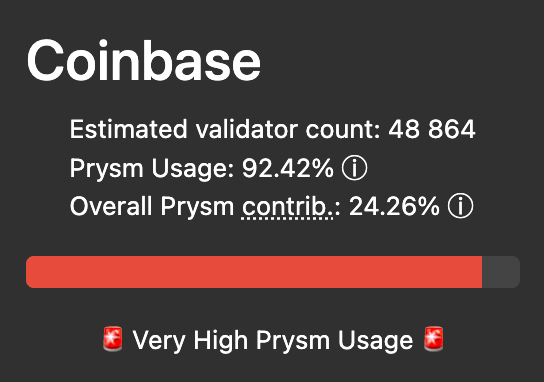
Coinbase alone operates approximately 17.5% of the validator nodes on the Beacon Chain. Internal data suggests that over 92% of Coinbase’s validators run the Prysm client. When questioned about this concentration, Coinbase pointed to the necessity of "remote signers"—a security feature that allows validator keys to be stored in isolated environments. At the time of the Beacon Chain’s launch, Prysm was the only viable client supporting this specific security architecture.
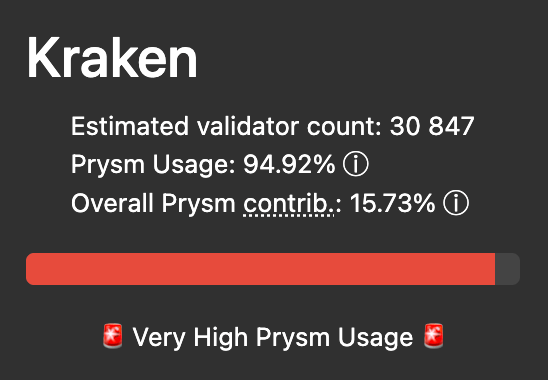
Kraken, which controls roughly 11% of the validator count, also relies heavily on Prysm, citing its maturity and stability. However, unlike some of its peers, Kraken has publicly acknowledged the risk and begun migrating a portion of its infrastructure to the Teku client following consultations with the Ethereum Foundation. Similarly, Lido, the largest decentralized staking pool with an 18% market share, has a Prysm usage rate of approximately 42.8%, showing a more balanced—though still imperfect—distribution compared to centralized exchanges.
In contrast, smaller decentralized players like Rocket Pool have led the way in diversity. Rocket Pool accounts for less than 1% of the network but maintains a Prysm usage rate of only 10.6%, with the majority of its operators opting for alternative clients.
Chronology of Ethereum’s Path to Proof-of-Stake
The journey to the Merge has been a multi-year endeavor marked by several key milestones:
- July 2015: Ethereum launches as a Proof-of-Work blockchain, with a long-term roadmap that always included a transition to Proof-of-Stake.
- December 2020: The Beacon Chain is launched, marking the birth of the Consensus Layer. This allowed users to begin staking ETH, although these assets remained locked and separate from the mainnet.
- October 2021: The Altair upgrade is successfully implemented on the Beacon Chain, serving as a "warm-up" for the technical complexities of the Merge.
- March 2022: The Kiln testnet becomes the final public testnet to successfully simulate the Merge, providing a proof-of-concept for the transition of the mainnet.
- Mid-2022 (Projected): The official Merge date, where the Total Terminal Difficulty (TTD) will trigger the end of mining and the start of PoS validation.
Official Responses and the "No Bailout" Policy
Despite the looming risks of client concentration, Ethereum core developers remain committed to the mid-2022 timeline. The prevailing sentiment among the developer community is one of cautious optimism, supported by a "tough love" policy regarding potential failures.
Marius van der Wijden emphasized that the Ethereum community has a "strong consensus" that there will be no social bailouts for stakers running a majority client if that client fails. This means that if a bug in a supermajority client leads to a loss of funds or slashing penalties, the protocol will not be hard-forked to "save" those investors. This stance is intended to create a financial incentive for exchanges and large stakers to diversify their software stack immediately to protect their own capital.
"The chances of a consensus failure happening are very small," van der Wijden stated, pointing to the permanent "fuzzing" and testing infrastructure designed to catch discrepancies between clients before they reach the mainnet. He also noted that switching clients is a relatively straightforward process for most operators, requiring only a few minutes of downtime to ensure that a validator does not "double-sign" and face penalties.
Broader Implications for the Global Crypto Economy
The successful execution of the Merge is expected to have profound implications for the broader financial landscape. By moving to Proof-of-Stake, Ethereum will reduce its energy consumption by an estimated 99.95%, addressing one of the primary criticisms leveled against blockchain technology by ESG (Environmental, Social, and Governance) focused investors.
Furthermore, the transition will significantly alter the economics of ETH. The issuance of new tokens is expected to drop by approximately 90% as mining rewards are eliminated, leading many analysts to describe ETH as "ultrasound money" due to its potential deflationary pressure when combined with existing fee-burning mechanisms.
However, the client diversity issue remains the final "boss" at the end of this technical marathon. If the Merge is completed while Prysm maintains a supermajority, the network will remain in a state of heightened vulnerability. The stability of the decentralized web—and the security of billions in DeFi protocols, NFT marketplaces, and corporate treasuries—depends on the willingness of a few large institutions to prioritize network health over the convenience of a first-mover software client.
As the middle of the year approaches, the eyes of the global financial community are on Ethereum. The Merge represents a landmark moment in the history of computer science and decentralized governance, but its success hinges as much on the social coordination of its largest stakeholders as it does on the elegance of its code.