admin
admin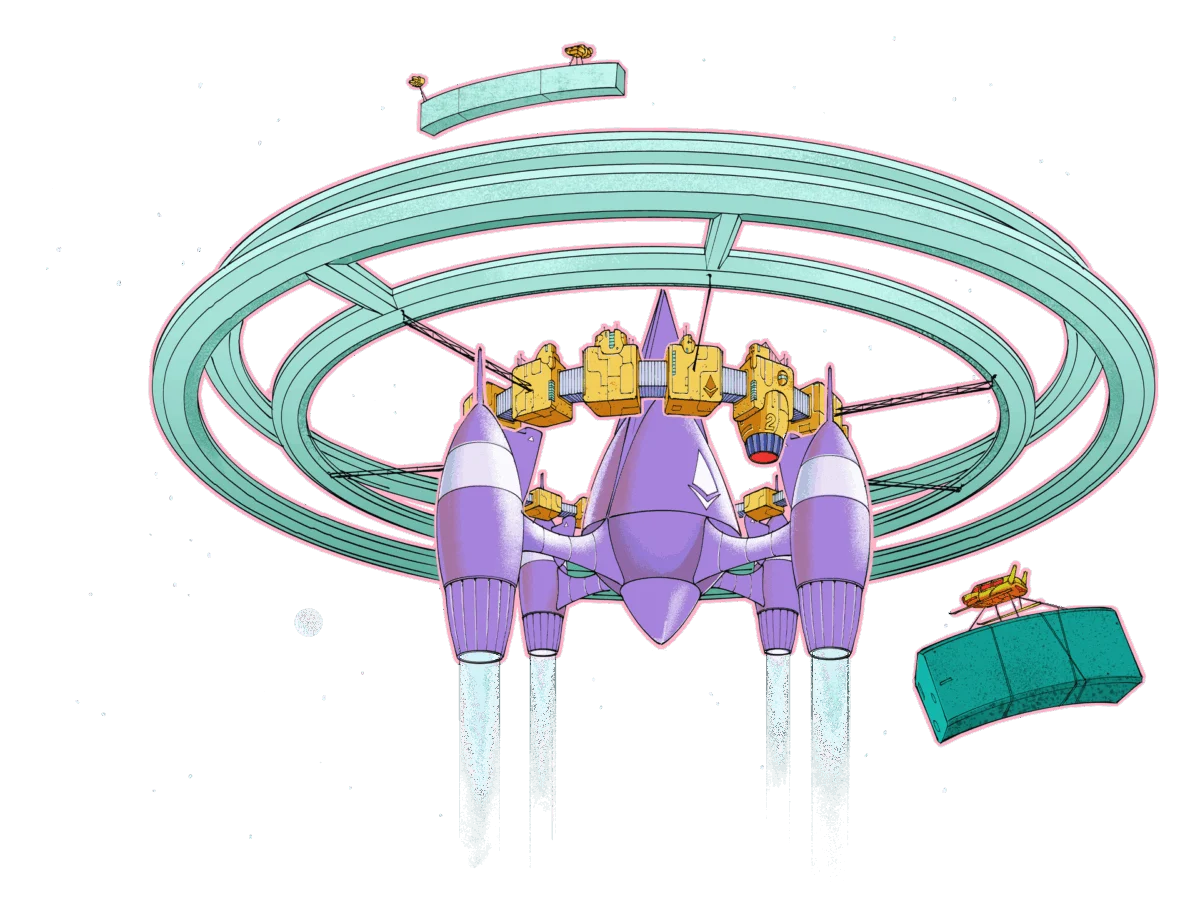
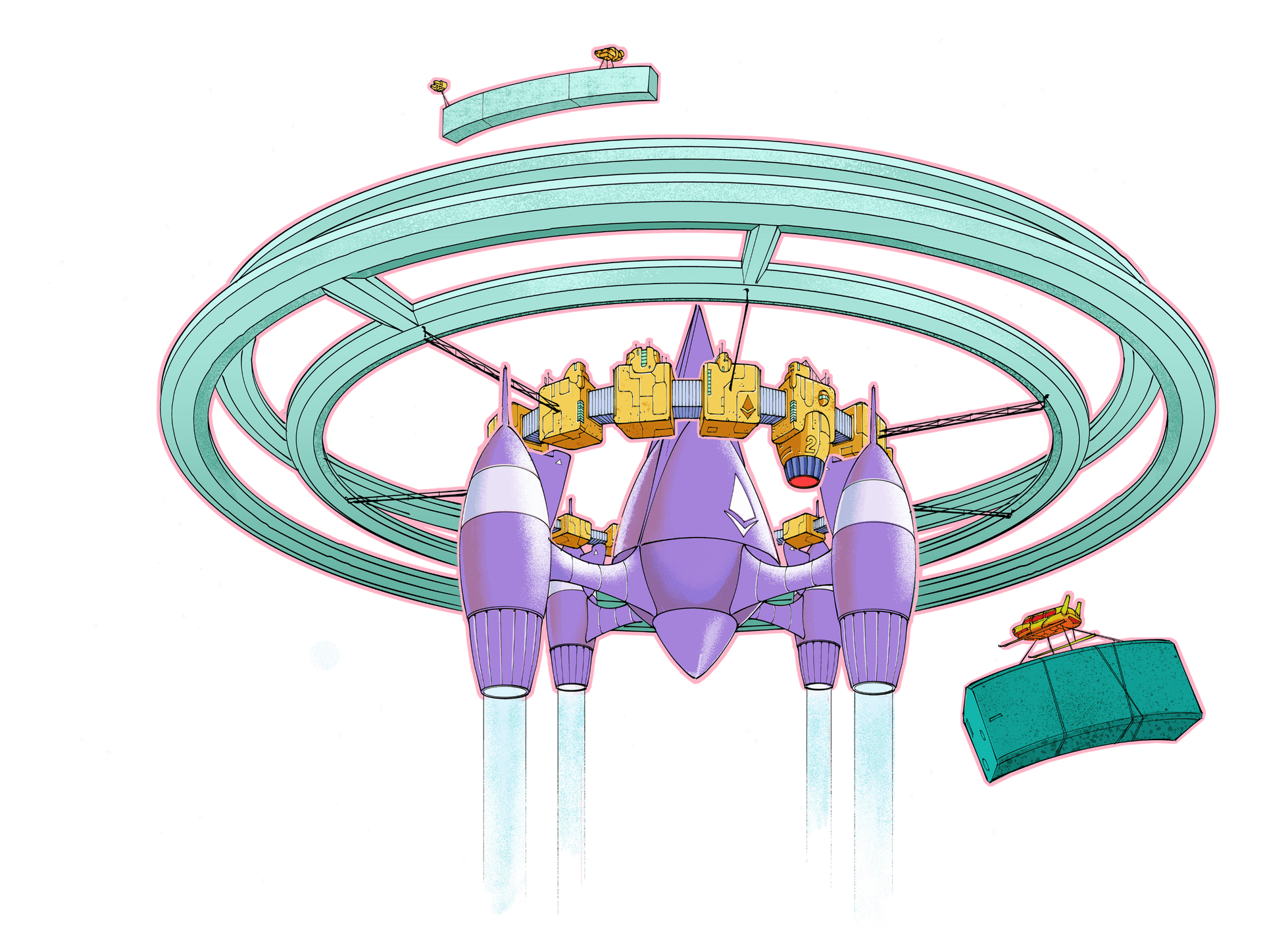
The Ethereum network, currently the world’s second-largest blockchain by market capitalization and the foundational layer for hundreds of billions of dollars in decentralized finance (DeFi) and digital assets, is approaching its most significant technical milestone since its inception in 2015. Known as "The Merge," this transition represents a fundamental shift in the network’s consensus mechanism, moving from the energy-intensive Proof-of-Work (PoW) model used by Bitcoin to a more sustainable and scalable Proof-of-Stake (PoS) system. This transition has been frequently compared by developers and industry analysts to "changing the engine of an airplane while it is mid-flight," highlighting the immense technical difficulty of a migration where the network must continue to produce valid blocks without even a second of downtime. However, as the projected date for the transition nears, a critical vulnerability has emerged: the lack of client diversity within the consensus layer, a situation that could theoretically lead to a catastrophic failure of the entire network.

The Evolution of Ethereum and the Road to the Merge
The journey toward Proof-of-Stake has been part of the Ethereum roadmap since its earliest days, intended to address the long-term sustainability and security of the network. The process began in earnest with the launch of the Beacon Chain in December 2020. The Beacon Chain acts as the "ledger of stakes," running parallel to the main Ethereum execution chain. While the Beacon Chain has been operational for over a year, it currently exists without processing actual user transactions; its primary function has been to establish the validator set and ensure the stability of the PoS logic.
The Merge is the specific event where the current Ethereum mainnet "merges" with the Beacon Chain. At a predetermined block height, the PoW mining process will cease entirely, and the responsibility for validating transactions and producing blocks will pass to the validators on the Beacon Chain. This separation of duties is a hallmark of the new architecture. Post-merge, the network will utilize two distinct types of nodes. Execution nodes will handle the Ethereum Virtual Machine (EVM), executing smart contracts and processing transactions, while consensus nodes (validator nodes) will handle the validation of those transactions and the security of the chain.
The Technical Imperative of Client Diversity
One of the unique strengths of the Ethereum ecosystem is its commitment to a multi-client philosophy. Unlike Bitcoin, which relies almost exclusively on a single implementation (Bitcoin Core), the Ethereum Foundation (EF) and the broader developer community have actively encouraged the development of several independent software versions of the protocol. These clients—such as Prysm, Lighthouse, Teku, and Nimbus—are written in different programming languages and maintained by separate teams.
The logic behind this redundancy is rooted in fault tolerance. If a critical bug, vulnerability, or logic error is discovered in one client, the rest of the network can continue to function using the other implementations. This prevents a single software error from bringing down the entire multi-billion dollar ecosystem. However, for this safety net to be effective, no single client should control a majority of the network’s staking power. In the context of Ethereum’s consensus mechanism, specific thresholds carry varying levels of risk:
- The 33% Threshold: If a client with more than one-third of the stake experiences a bug, it can prevent the network from reaching "finality"—the point at which transactions are considered irreversible. While the network continues to function, the lack of finality creates uncertainty.
- The 50% Threshold: If a client used by more than half of the network fails, it could lead to an unintended split (fork) in the chain. While automatic mechanisms exist to mend such situations, they often result in significant disturbances and financial losses for users.
- The 66% Threshold (The Supermajority): This is the "game over" scenario. If a single client controls more than two-thirds of the staking power and suffers a consensus bug, that bug becomes the "truth" for the network. The buggy chain will finalize, and non-buggy clients will be forced to either follow the corrupted chain or permanently split the network into two separate Ethereums.
The Prysm Dominance and the Institutional Factor
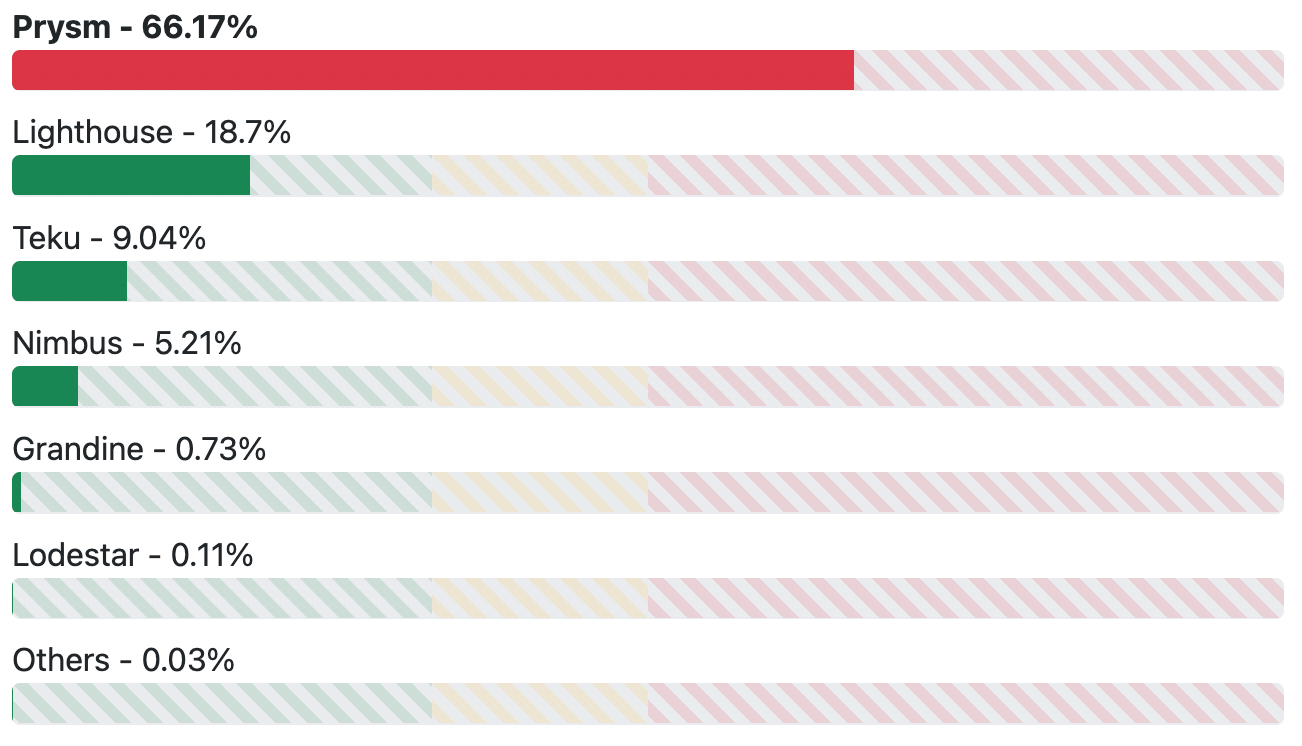
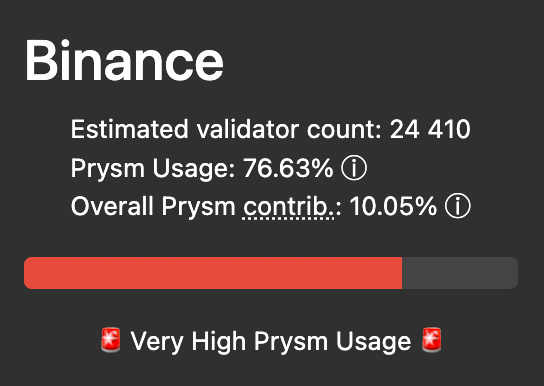
As of the first quarter of 2022, the Ethereum network faces a precarious situation regarding this diversity. Data indicates that approximately 66% of the network’s staking power is concentrated in a single client: Prysm, developed by Prysmatic Labs. This puts the network on the edge of the "supermajority" risk.
The reasons for Prysm’s dominance are largely historical and practical. Marius van der Wijden, a prominent Ethereum core developer, notes that Prysm benefited significantly from a "first-mover advantage." It was the first client to offer a functional prototype, allowing it to build a robust ecosystem of documentation and tooling, such as its user-friendly Web UI. Furthermore, Prysm is written in Golang (Go), a language that is highly performant and widely understood by the existing developer base, many of whom were already familiar with the Geth execution client, also written in Go.
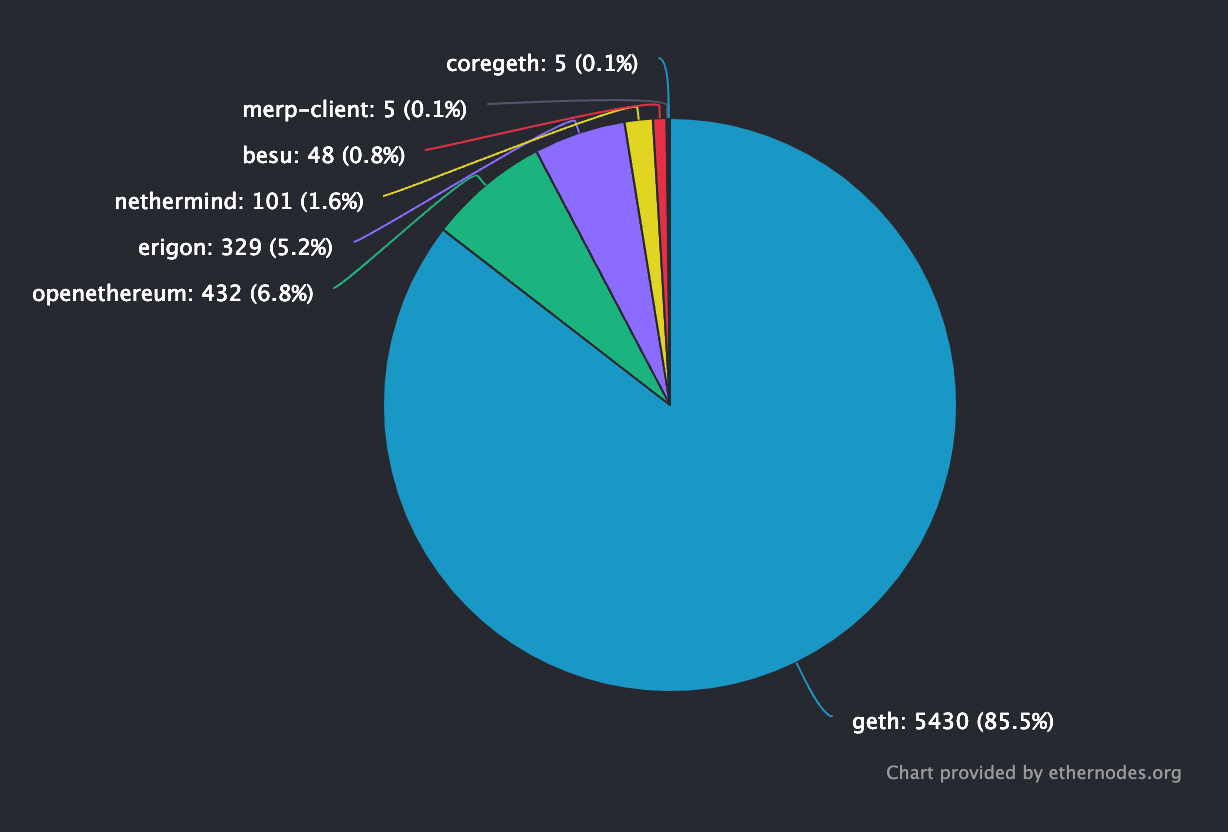
While the dominance of Geth on the execution layer is even higher (roughly 85%), developers are less concerned about this because execution nodes do not provide the same type of security finality that consensus nodes do. Post-merge, a validator can run multiple execution clients alongside a single beacon client to ensure they remain on the correct chain.
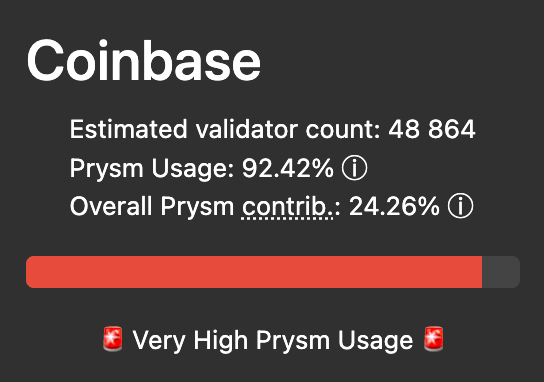
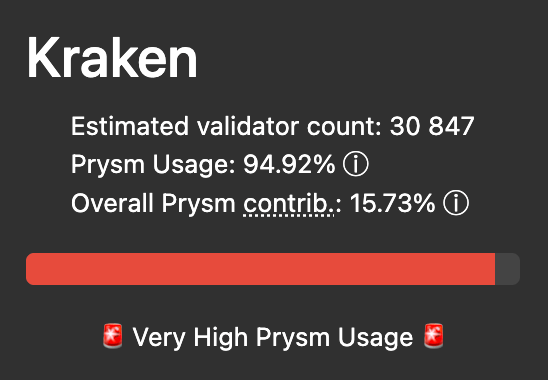
The concentration of Prysm usage is not evenly distributed across all stakers. Instead, it is heavily driven by centralized exchanges and major staking services. For example, Coinbase, which manages approximately 17.5% of all validators on the Beacon Chain, runs Prysm on over 92% of its nodes. This single entity contributes nearly a quarter of the total "diversity deficit" on the network. Similarly, Kraken accounts for 11% of the validator set, with 94.9% of its nodes running Prysm.
Official Responses from Staking Providers
When questioned about this concentration, major institutions have cited security and maturity as their primary motivations. In a statement via Twitter, Coinbase Cloud explained that when they launched their staking services, Prysm was the only viable client that supported "remote signers." This feature allows validators to store their cryptographic keys in isolated, secure environments rather than on the validator server itself, significantly reducing the risk of key theft.
However, recognizing the systemic risk, some providers have begun to shift their strategy. Kraken’s Senior Product Manager, Brian Hoffman, confirmed that the exchange has engaged in discussions with the Ethereum Foundation and has started rolling out new validators built on the Teku client. "This way we can increase diversity in our validator client software and offer clients an even more resilient on-chain staking service," Hoffman stated.
Lido, the largest decentralized staking pool with roughly 18% of the validator market, has maintained a more balanced approach, with its Prysm usage sitting at approximately 42.8%. Meanwhile, smaller, decentralized protocols like Rocket Pool have led the way in diversity; only 10.6% of Rocket Pool’s validators utilize Prysm, demonstrating that a more distributed approach is technically feasible.
Chronology of the Transition
To understand the urgency of the client diversity issue, one must look at the timeline of Ethereum’s development:
- July 2015: Ethereum launches using Proof-of-Work.
- December 2020: The Beacon Chain (PoS) launches, initiating "Phase 0."
- October 2021: The Altair upgrade successfully updates the Beacon Chain.
- March 2022: The Kiln testnet successfully simulates the Merge, providing a final dress rehearsal.
- Mid-2022 (Projected): The official Merge on the Ethereum mainnet.
The "Difficulty Bomb," a mechanism designed to make PoW mining exponentially harder and eventually impossible, acts as a ticking clock for the developers. This ensures that the transition to PoS cannot be delayed indefinitely without the network becoming unusable.
Broader Implications and Analysis
The current state of client diversity highlights a fundamental tension in the blockchain space: the trade-off between the security of "tried and tested" software and the decentralization required for a resilient network. If the Merge proceeds with Prysm holding a supermajority, the network remains vulnerable to a "black swan" event—a single coding error that could potentially wipe out billions in value or necessitate a controversial hard fork.
Despite these risks, Ethereum core developers remain confident. Marius van der Wijden emphasizes that the chances of a catastrophic consensus failure are statistically small due to rigorous testing and "fuzzing" infrastructure that constantly checks for discrepancies between different client implementations. Furthermore, the Ethereum community has established a "no-bailout" social consensus. Stakers who choose to run a majority client do so at their own risk; if that client fails and causes a consensus error, the network will not be rolled back to save them. This creates a strong financial incentive for large-scale stakers to diversify their software stack before the Merge occurs.
In conclusion, while the technical "engine swap" of Ethereum is a feat of engineering, the human and institutional choices regarding software diversity will ultimately determine the long-term stability of the network. The coming months will be a test of whether the Ethereum ecosystem can move away from the convenience of a single dominant client and embrace the complexity—and security—of a truly multi-client future. Success will solidify Ethereum’s position as a robust, decentralized global computer, while failure could serve as a cautionary tale for the entire cryptocurrency industry.