admin
admin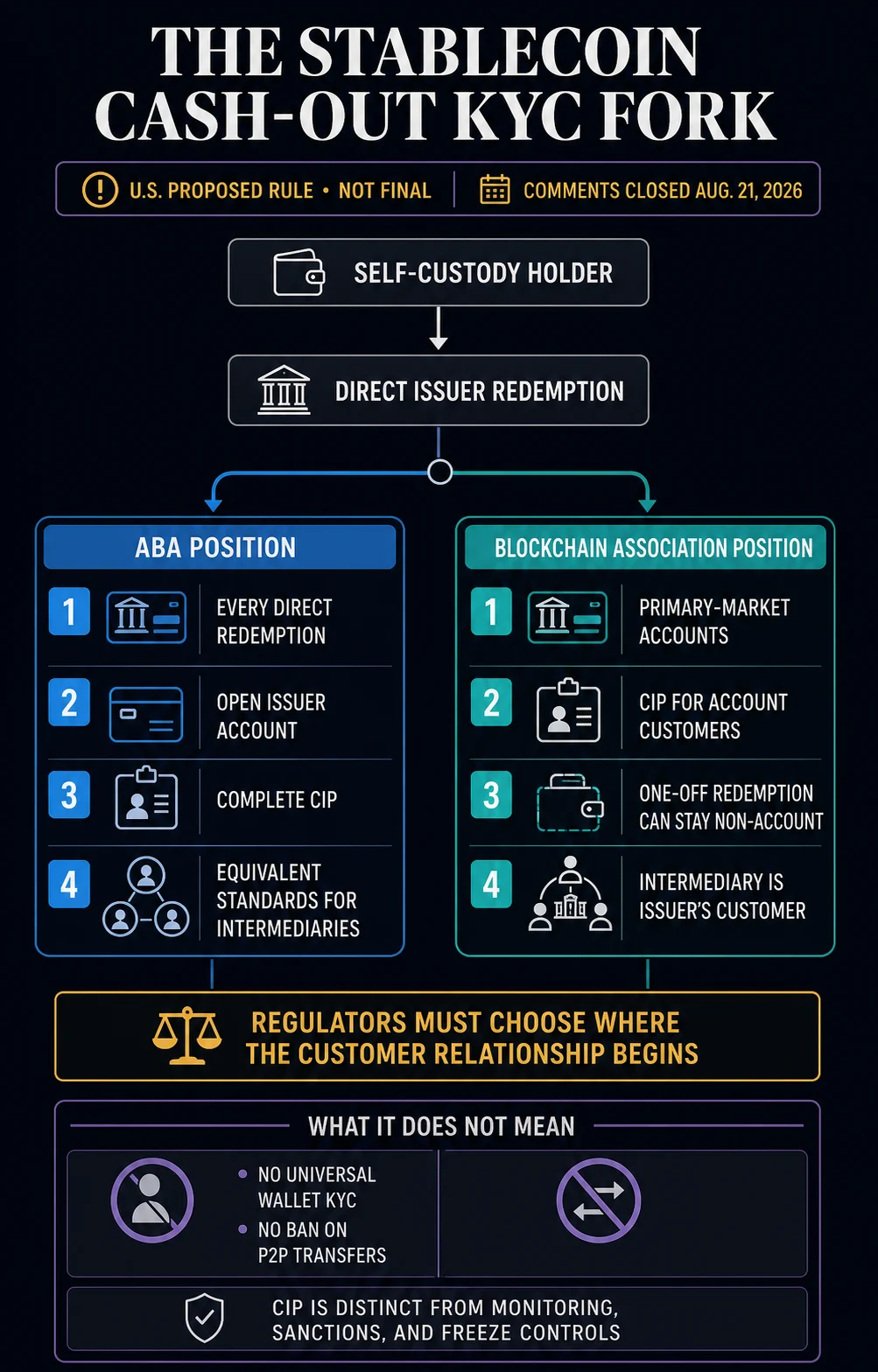
The landscape of digital asset regulation is facing a critical juncture as the American Bankers Association (ABA) and the Blockchain Association present divergent views on how stablecoin issuers should identify customers for direct transactions. At the heart of this debate lies a joint federal proposal that seeks to establish Customer Identification Programs (CIPs) for permitted payment stablecoin issuers, a move that could fundamentally alter the user experience for those interacting directly with stablecoin providers. The core disagreement centers on whether every direct purchase or redemption of a stablecoin from its issuer should automatically trigger a formal account opening and comprehensive identity verification process, or if more flexibility should be afforded for certain types of redemptions.
The regulatory proposal, jointly issued by federal agencies, aims to clarify the requirements for stablecoin issuers to implement robust CIPs. This initiative stems from a broader effort to integrate digital assets into the existing financial framework while mitigating risks associated with illicit finance and consumer protection. The Federal Reserve, along with other relevant agencies, has been actively soliciting feedback on these crucial policy questions. The comments submitted by the ABA and the Blockchain Association, both publicly available, highlight the significant industry concerns and differing perspectives on the practical application of these proposed rules. The eventual regulatory decision will have far-reaching implications for how individuals and businesses engage with stablecoins, potentially shaping the accessibility and operational efficiency of this rapidly evolving sector.
The Core Disagreement: Direct Interaction and Account Creation
The crux of the industry’s contention lies in defining what constitutes an "account" in the context of stablecoin issuer interactions. The joint federal proposal outlines that directly issuing or redeeming payment stablecoins are activities that can establish such an account. However, it explicitly states that mere token ownership or third-party transactions interacting solely with an issuer’s smart contract would not automatically render every user an issuer’s customer. This leaves a significant gray area regarding the precise boundary of direct issuer engagement.
The American Bankers Association, representing a significant portion of the traditional financial sector, advocates for a stringent approach. In their August 21st comment letter, the ABA urged regulators to mandate that any individual or entity purchasing or redeeming a payment stablecoin directly from its issuer must first open an account and undergo the issuer’s CIP. Under this proposed framework, even a single, one-off redemption directly from an issuer would necessitate a comprehensive customer onboarding process. This means that a holder who acquired stablecoins through a decentralized exchange or peer-to-peer transfer, and who has no prior relationship with the issuer, would be required to complete a full Know Your Customer (KYC) verification before receiving fiat currency in return. The ABA frames this recommendation as essential for maintaining parity between the regulatory treatment of stablecoin transactions and those conducted through conventional financial channels, emphasizing the need for consistent anti-money laundering (AML) and counter-terrorist financing (CTF) safeguards.
Conversely, the Blockchain Association, a prominent advocate for the digital asset industry, argues for a more nuanced approach. While acknowledging the necessity of identity checks for customers directly establishing an account with an issuer in the primary market, they contend that an optional, one-off redemption or a redemption facilitated through another regulated intermediary should not automatically classify the underlying holder as an issuer’s customer. In their official comment, the Blockchain Association proposes that when a regulated intermediary, such as a cryptocurrency exchange, aggregates stablecoins for redemption from an issuer on behalf of its own customers, that intermediary should be considered the issuer’s customer. This would prevent a cascade of onboarding requirements, ensuring that the direct relationship is with the regulated entity handling the transaction, rather than burdening every end-user with the issuer’s CIP requirements. They emphasize that this approach balances regulatory oversight with the operational realities and user experience of the digital asset ecosystem.
A Look at the Regulatory Proposal and Its Ambiguities
The joint federal proposal, published in June, explicitly asks for public input on whether a direct redemption by a holder with no prior issuer relationship should indeed create an account. This question remains unanswered within the proposal itself, precisely to elicit detailed feedback from stakeholders. The intention appears to be to gather diverse perspectives before codifying specific requirements.
A CIP, in essence, is the foundational process of collecting and verifying a customer’s identifying information during account opening. For payment stablecoin issuers, the proposal suggests that activities like directly issuing tokens or facilitating their redemption could trigger the need for such a program. However, the ambiguity surrounding the definition of "direct redemption" by an unassociated holder is what has ignited the current debate.
Consider a user who acquires stablecoins through an exchange or a peer-to-peer transaction. This user might never have directly interacted with the stablecoin issuer. The next step for this user could be to redeem their stablecoins for fiat currency. They have two primary avenues:
- Direct Redemption from the Issuer: The user approaches the stablecoin issuer directly to exchange their stablecoins for fiat currency.
- Intermediary-Routed Redemption: The user presents their stablecoins to an exchange or another regulated intermediary, which then aggregates these tokens and redeems them from the issuer on behalf of its customer base.
The ABA’s stance implies that the first scenario, a direct redemption, would always necessitate the user opening an account and completing the issuer’s CIP. This would effectively transform what might otherwise be a simple cash-out into an "issuer-onboarding event." The Blockchain Association, however, argues that the issuer should have the option to facilitate such a one-off redemption without mandating a full account opening, especially if the user has no intention of establishing an ongoing relationship. Furthermore, they believe the second scenario should clearly designate the intermediary as the issuer’s customer, absolving the individual end-users from direct issuer CIP obligations.
Chronology of Regulatory Engagement
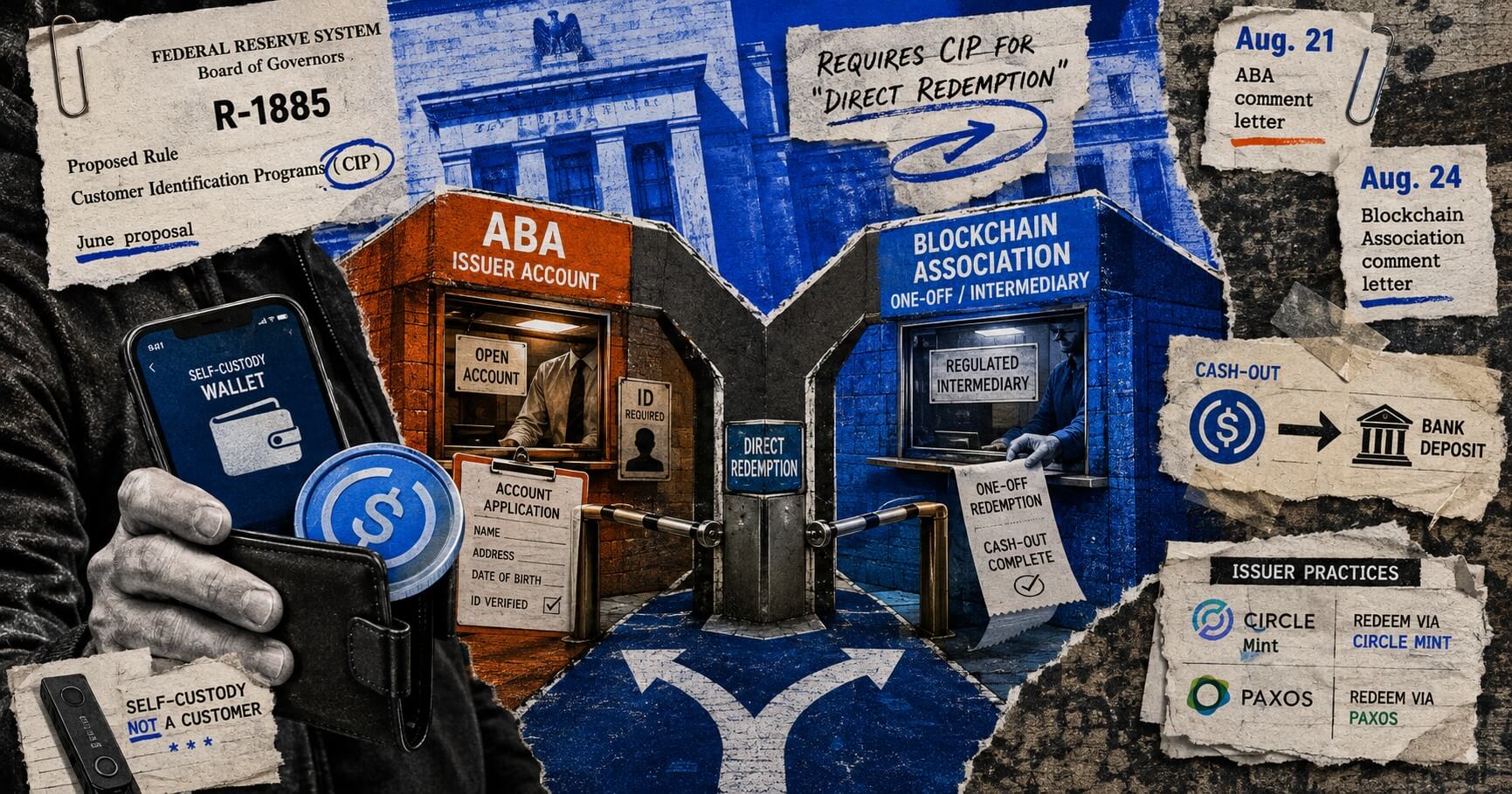
The dialogue on stablecoin issuer customer identification programs has been unfolding over recent months. The initial federal proposal, which sparked this specific debate, was published in June. Following its release, various industry participants and stakeholders were given a period to submit their comments.
- June 2026: Federal agencies release a joint proposal concerning customer identification programs for permitted payment stablecoin issuers.
- August 21, 2026: The American Bankers Association submits its comment letter, advocating for mandatory account opening and CIP for all direct issuer transactions.
- August 24, 2026: The Blockchain Association lodges its comment, proposing a more flexible approach that differentiates between direct account relationships and one-off or intermediary-routed redemptions.
These submissions, along with others, are now under review by the agencies. The Federal Reserve’s public index confirms the posting dates of these crucial comments, underscoring the transparency of the regulatory process. The agencies’ eventual decision will hinge on balancing the need for robust financial integrity with the desire to foster innovation and maintain user accessibility in the digital asset space.
Supporting Data and Existing Practices
While the regulatory debate is ongoing, certain stablecoin issuers already implement stringent identification procedures for direct redemptions. Major players like Circle and Paxos, for instance, have established policies that reflect a commitment to regulatory compliance and risk mitigation.
Circle, the issuer of USD Coin (USDC), requires eligible customers in the United States seeking direct redemption to go through its Circle Mint account. Access to Circle Mint is restricted to verified users within supported jurisdictions and is governed by a user agreement that mandates account verification. This effectively means that direct redemption for USDC holders in the US already involves an account opening and identity check process, aligning in spirit with the ABA’s advocated position for direct issuer interactions.
Similarly, Paxos, which issues stablecoins like Pax Dollar (USDP), outlines terms and conditions for direct redemption that are available only to fully verified, eligible account customers. These existing practices demonstrate that a robust identity verification framework for direct issuer redemptions is not only feasible but is already a reality for a significant portion of the stablecoin market. However, these are issuer-specific policies and do not represent a universally mandated regulatory standard.
It is also worth noting that regulatory approaches can vary by jurisdiction. Circle’s redemption policy in the European Economic Area (EEA), for example, operates under MiCA (Markets in Crypto-Assets) regulations. Under this policy, eligible retail holders can utilize a dedicated form instead of the Circle Mint account product for redemption. However, this alternative still involves rigorous identity checks, transaction screening, freeze checks, and the requirement of an eligible EEA bank account. This demonstrates that while the mechanics of compliance might differ, the underlying principle of verifying user identity remains paramount.
Broader Implications and Analysis
The outcome of this regulatory debate will have profound implications for the broader digital asset ecosystem.
- For Users: If the ABA’s stringent approach prevails, the process of cashing out stablecoins directly from issuers could become more cumbersome. This might disincentivize individuals from using stablecoins for short-term liquidity needs if they are not already established customers of an issuer. Conversely, the Blockchain Association’s more flexible approach could preserve a smoother user experience, particularly for those who engage with stablecoins through intermediaries.
- For Issuers: The regulatory decision will dictate operational costs and compliance burdens. Issuers may need to invest further in KYC/AML infrastructure if a broad account-opening requirement is mandated for all direct interactions. The clarity provided by a final rule will also help issuers design their services and compliance frameworks more effectively.
- For Financial Intermediaries: The stance on intermediary-routed redemptions is particularly significant for exchanges and other crypto service providers. If intermediaries are consistently treated as the issuer’s customer, it simplifies compliance for end-users and reinforces the role of these platforms as regulated gateways to the digital asset economy.
- For Regulatory Harmonization: The ABA’s push for equivalent standards across stablecoin and conventional financial channels highlights a key theme in digital asset regulation: the desire for regulatory arbitrage to be minimized. The ultimate rule will reflect the agencies’ judgment on how best to achieve this balance without stifling innovation.
Furthermore, the context of this debate is set against a backdrop of other related regulatory proposals. A separate federal proposal from April of 2026 addresses broader anti-money laundering and sanctions programs for permitted payment stablecoin issuers. This proposal delves into aspects like transaction monitoring, sanctions screening, and the powers to block or freeze activities. While these AML/CTF measures may apply to specific transactions or wallet activities without necessarily defining every token holder as an issuer’s account customer, the CIP discussion is about establishing a foundational identity relationship.
The ABA’s argument for treating exchanges and other secondary-market service providers similarly to issuers in terms of customer identification regulation underscores a concern about a potential two-tiered system. They advocate for a uniform approach to customer due diligence across all points of interaction with stablecoins, whether direct with an issuer or indirect through a service provider. This perspective seeks to close potential loopholes that could be exploited for illicit purposes.
The Blockchain Association’s position, on the other hand, emphasizes that not all interactions are equivalent. They argue that a regulated intermediary that has already performed its own robust KYC/AML checks should be the primary point of contact for the issuer, thereby avoiding redundant compliance burdens on the end-user. This perspective values efficiency and recognizes the established compliance functions of existing regulated entities.
Ultimately, the decision by the relevant federal agencies will determine whether the regulatory floor for direct stablecoin issuer engagement will mandate account opening and full CIP for every instance, or if a more flexible approach will be adopted, allowing for exceptions in specific scenarios like one-off redemptions or those routed through regulated intermediaries. The ongoing deliberation signifies a critical moment in shaping the future of stablecoins and their integration into the global financial system. The coming months will reveal the definitive regulatory stance on this pivotal issue.