admin
admin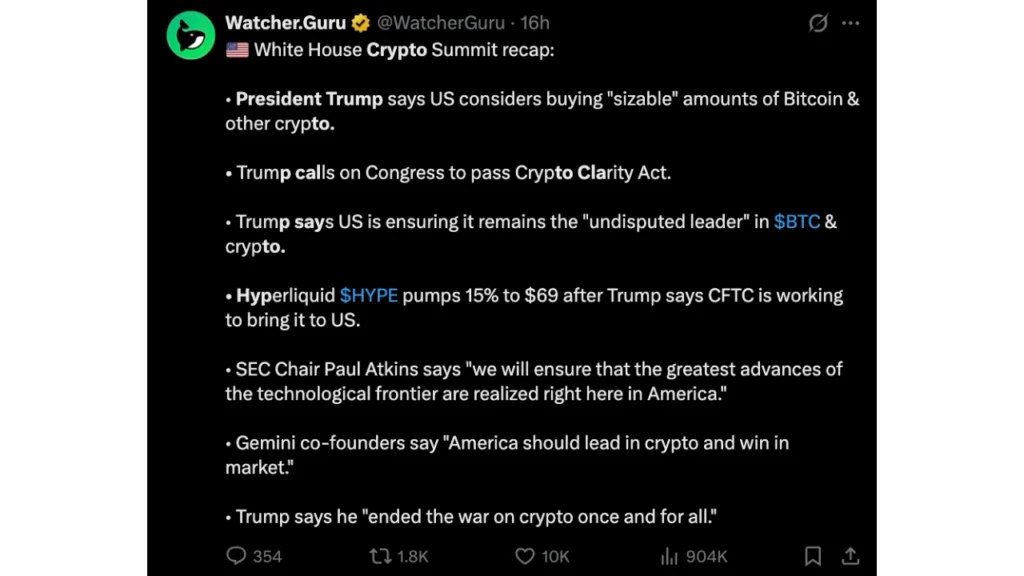
Bitcoin has successfully reclaimed the critical $70,000 threshold for the first time since early June, ending a protracted period of subdued price action and injecting a significant burst of renewed optimism into the broader cryptocurrency market. This pivotal move saw the leading digital asset briefly touch $70,000 on August 19th before confidently pushing above $71,000 just one day later on August 20th. The swift ascent marked a dramatic turnaround from only days prior when Bitcoin was trading below $65,000, transforming what many observers had dismissed as another failed recovery attempt into one of its sharpest and most decisive rallies in weeks. This sudden reversal of fortune was not attributable to a singular event but rather a confluence of several impactful developments that converged almost simultaneously, effectively altering the market’s prevailing sentiment overnight. These catalysts included a significant expansion of long-term bond buybacks by the U.S. Treasury, renewed efforts by former President Donald Trump to advance crucial crypto legislation, and a powerful short squeeze that forced the unwinding of heavily concentrated bearish positions as Bitcoin decisively breached key resistance levels.
A Timeline of Bitcoin’s Resurgence
The journey back above $70,000 was a rapid one, unfolding over just a few days in mid-August, following a period of nearly two and a half months (78 days) where the cryptocurrency struggled to maintain upward momentum.
- Early August 2026: Bitcoin trades consistently below the $67,000 mark, fostering bearish sentiment and encouraging the accumulation of short positions in the derivatives market. The price action is largely muted, fluctuating within a tight range, and failing to overcome significant resistance levels.
- August 15-18, 2026: Bitcoin experiences a minor dip, falling below $65,000, which reinforces the belief among some traders that the crypto market is destined for further declines, leading to an increase in speculative short bets.
- August 19, 2026:
- U.S. Treasury Announcement: Treasury Secretary Scott Bessent announces a doubling of long-dated government bond buyback operations, from $2 billion to at least $4 billion per operation. This signals increased liquidity and potential easing of long-term yields.
- Political Catalyst: Former President Donald Trump meets with prominent cryptocurrency and technology executives at the White House. During the meeting, he publicly urges Congress to advance the CLARITY Act, a legislative initiative aimed at providing clearer legal definitions for digital assets. He also mentions discussions about a "sizable U.S. government Bitcoin purchase."
- Initial Price Movement: Driven by these macro and political signals, Bitcoin begins to show signs of recovery, starting its climb from below $65,000 and briefly touching the $70,000 mark for the first time in months.
- August 20, 2026:
- Breakthrough and Short Squeeze: Building on the previous day’s momentum, Bitcoin decisively pushes above $70,000 and extends its rally past $71,000. This sustained upward movement triggers a massive short squeeze across the market.
- Massive Liquidations: Over $2.7 billion in bearish crypto positions are liquidated within a 24-hour period, according to market data, marking one of the largest such events since 2021. This forced buying by short sellers provides significant upward pressure, propelling Bitcoin higher at an accelerated pace.
- Market Sentiment Shift: The combination of positive macro, political, and technical factors fundamentally shifts market sentiment from cautious to bullish, creating a fresh wave of momentum.
U.S. Treasury’s Strategic Move Bolsters Market Liquidity
One of the foundational shifts that contributed to Bitcoin’s rally originated from Washington, D.C., albeit not directly related to cryptocurrency policy. Treasury Secretary Scott Bessent announced that the U.S. Treasury would significantly expand its buyback operations for longer-dated government bonds. Specifically, the size of these purchases would at least double, increasing from $2 billion to a minimum of $4 billion per operation. This program targets Treasury securities with maturities ranging from 10 to 30 years, an area of the bond market particularly sensitive to long-term interest rate expectations.
For astute Bitcoin traders and broader financial market participants, the critical takeaway from this announcement was the clear signal regarding liquidity. Treasury intervention through bond buybacks serves multiple purposes, primarily aiming to enhance market functioning, reduce supply, and potentially lower long-term yields. In essence, by purchasing its own debt, the Treasury injects cash into the financial system, effectively increasing the money supply available for investment. This increased liquidity, coupled with the prospect of lower long-term interest rates, typically makes higher-risk, non-yielding assets – such as Bitcoin – comparatively more appealing. When the return on safer, fixed-income assets diminishes, investors often reallocate capital towards assets with greater growth potential.
The timing of this particular Treasury move was exceptionally pertinent. Bitcoin’s preceding summer decline had largely coincided with a period of rising Treasury yields and a strengthening U.S. dollar. These conditions generally create a less favorable environment for risk assets, as investors gravitate towards the perceived safety and higher returns offered by government bonds. Therefore, the prospect of easing pressure in the bond market and a potential reversal in the trend of rising yields provided a crucial "breathing room" for risk assets like Bitcoin to stage a recovery. This macro backdrop laid a vital foundation for the subsequent price surge, suggesting that broader financial conditions might be becoming more accommodating.

Trump Re-Energizes Crypto Legislative Push
Adding a significant political tailwind to the rally, former President Donald Trump held a high-profile meeting with prominent cryptocurrency and technology executives at the White House on August 19th. During this summit, Trump publicly urged Congress to accelerate the advancement of the CLARITY Act. This proposed legislation is designed to establish clearer legal definitions for digital assets, a critical step toward resolving the ongoing jurisdictional ambiguities between the Securities and Exchange Commission (SEC) and the Commodity Futures Trading Commission (CFTC). The lack of regulatory clarity has long been cited as a major impediment to innovation and institutional adoption within the U.S. crypto industry, creating an environment of uncertainty that deters mainstream investment and development.
The CLARITY Act seeks to define which cryptocurrencies are securities (falling under the SEC’s purview) and which are commodities (under the CFTC’s jurisdiction), or perhaps a new asset class altogether. Such clear guidelines would significantly de-risk operations for crypto businesses, exchanges, and developers, potentially unlocking substantial investment and fostering a more robust, compliant ecosystem.
While the legislation holds immense promise for the industry, it is not yet a guaranteed success. The bill currently remains stalled in the Senate, facing disagreements over various provisions, including those related to ethics, decentralized finance (DeFi) protocols, and other complex issues inherent in regulating emerging technologies. Despite these hurdles, Senate Banking Committee Chairman Tim Scott has expressed optimism, indicating that the bill has a strong chance of advancing in September, with a crucial procedural vote tentatively scheduled for September 15th. This positive outlook from a key legislative figure injected further confidence into the market regarding the potential for a more favorable regulatory environment in the near future.
Beyond legislative advocacy, Trump also captured significant attention by mentioning that a "sizable U.S. government Bitcoin purchase" had been discussed, and that he was open to recommendations on the matter. While the administration had already established a Strategic Bitcoin Reserve in 2025, an open-market purchase of Bitcoin by the U.S. government would represent an entirely different magnitude of development. Such a move would not only signify unprecedented official endorsement but could also act as a powerful demand driver, validating Bitcoin as a strategic asset. It is important to note that, as of now, there is no concrete evidence that such an open-market purchase has occurred or is imminent. However, the mere discussion of such a possibility by a high-profile political figure was enough to be priced into the market as another bullish possibility, highlighting the increasing mainstream acceptance and strategic consideration of Bitcoin at the highest levels of government.
The Catalyst: A Historic Short Squeeze
While the macroeconomic and political developments provided a crucial backdrop for Bitcoin’s upward trajectory, it was the specific dynamics of derivatives positioning that appears to have transformed a mere recovery into a powerful surge. For weeks leading up to the rally, Bitcoin had been struggling to break past the $67,000 resistance level. This prolonged period of consolidation and failure to achieve significant upward movement had encouraged a substantial number of traders to bet on a further decline in price, leading to a heavily exposed market dominated by short positions. These short sellers were essentially betting that Bitcoin’s price would fall, hoping to profit by selling borrowed Bitcoin and buying it back at a lower price.
The moment Bitcoin decisively pushed through its immediate resistance levels, these bearish positions began to break. As the price started to climb, short sellers who were facing significant losses found themselves in a precarious situation. To limit their losses or to meet margin calls, many were forced to "cover" their short positions, which entails buying Bitcoin back in the open market. This forced buying created additional upward pressure, pushing the price even higher and triggering a cascade of further liquidations. This self-reinforcing cycle is the classic feedback loop known as a "short squeeze."

The scale of this particular short squeeze was truly enormous. Market data reported that over $2.7 billion in bearish crypto positions were liquidated across various exchanges within a single 24-hour period. CoinDesk, a prominent crypto news outlet, characterized this episode as the largest short-liquidation event in the cryptocurrency market since at least 2021. This monumental unwinding of short positions helps to explain the astonishing speed and intensity of the rally. Much of the buying pressure that propelled Bitcoin past $70,000 and beyond came not from new, organic demand but from traders who had been positioned for the exact opposite outcome.
While incredibly potent, the fuel provided by a short squeeze is inherently temporary. Once the majority of forced liquidations have occurred, the market will need to rely on genuine, sustained buying interest from new investors and long-term holders to maintain and further extend the rally. This suggests that the immediate aftermath of the squeeze could present a more challenging environment for continued upward momentum.
Technical Picture Significantly Improves
From a purely technical analysis perspective, Bitcoin’s decisive move above the $70,000 mark carries substantial significance. Earlier analyses of Bitcoin’s price action had identified the development of an inverse head-and-shoulders pattern forming from its June lows. This pattern is widely regarded by chartists as a bullish reversal signal, indicating a potential shift from a downtrend to an uptrend. The "neckline" of this particular pattern was identified around the $66,600 level. A successful and sustained breakout above this neckline, as observed during the recent rally, typically points towards a potential price target derived from the pattern’s height. In this instance, the implied target was projected to be near the $76,000 mark. This makes the $75,000 to $76,000 area the next obvious and crucial test for Bitcoin bulls, where they will need to demonstrate continued strength to validate the pattern’s full implications.
Beyond the inverse head-and-shoulders pattern, the $70,000 level itself holds immense psychological and technical importance. If Bitcoin can consolidate and spend several trading sessions consistently above this level, traders and analysts will likely begin to treat it as a new support zone. Establishing $70,000 as firm support would lend significant credibility to the recent rally, suggesting that market participants are accepting this higher price range as a new equilibrium. Conversely, if Bitcoin quickly falls back below $70,000, the latest move could be interpreted more as a fleeting short-lived squeeze rather than the inception of a sustained, robust uptrend.
The recent surge has already pushed Bitcoin above several other closely watched technical levels, including various moving averages and prior resistance zones. This series of breakthroughs has undeniably helped to shift the short-term momentum back decisively in favor of buyers, altering the immediate technical outlook from bearish or neutral to clearly bullish. However, the sustainability of this momentum hinges on the market’s ability to hold these newly conquered levels.
The Lingering Shadow of the Federal Reserve
Despite the recent bullish developments, a significant macroeconomic obstacle continues to loom in the background: the monetary policy stance of the Federal Reserve. The minutes from the Fed’s July meeting, released shortly before Bitcoin’s rally, revealed a nuanced and somewhat cautious outlook. While the majority of officials expressed support for keeping interest rates unchanged at that particular meeting, a notable segment of the committee favored an additional rate hike. Furthermore, officials continued to emphasize that inflation risks remained "tilted to the upside," indicating persistent concerns about price stability despite recent progress.

This hawkish undertone from the Fed is critically important because Bitcoin’s broader rally and its appeal as a risk asset are partly predicated on expectations of easier financial conditions in the global economy. A dovish Fed, signaling lower interest rates or quantitative easing, tends to boost assets like Bitcoin by reducing the cost of capital and increasing overall liquidity. Conversely, a more hawkish Fed, characterized by higher interest rates, quantitative tightening, or strong rhetoric against inflation, typically puts significant pressure on risk assets. Such a scenario can lead to a renewed rise in Treasury yields, a stronger U.S. dollar (making dollar-denominated assets like Bitcoin more expensive for international buyers), and a general shift away from speculative investments towards safer, yielding alternatives.
Bitcoin has historically demonstrated a strong inverse correlation with hawkish monetary policy and a sensitivity to movements in Treasury yields and the dollar index. Therefore, any indication of a renewed tightening cycle by the Fed could quickly dampen the current market enthusiasm and introduce significant headwinds for the cryptocurrency. While the market currently enjoys strong momentum, the Fed’s upcoming decisions and its ongoing assessment of inflation and economic growth will remain a paramount factor influencing Bitcoin’s trajectory in the coming months.
The Road Ahead: Sustaining the Momentum
Even with its impressive recent rebound, Bitcoin remains significantly below its all-time high of approximately $126,080, which was reached last October. The current price still represents about a 44% decline from that peak. This substantial gap underscores that while the recent breakout is momentous, the cryptocurrency still has a considerable journey to undertake before it can fully recover its previous valuation.
For now, however, the market has something it has conspicuously lacked for much of the summer: momentum. Bitcoin has definitively broken above the $70,000 level after an extended 78-day period below it. This breakout has been fueled by a compelling confluence of factors: the U.S. Treasury’s policy shift providing a narrative of increased liquidity, former President Trump’s comments reviving hopes for a more favorable and clear crypto regulatory environment, and a colossal short squeeze that amplified the initial price movement with remarkable speed and force.
The next phase of this rally, however, is likely to be more challenging. The market now faces the crucial task of proving that there is sufficient genuine buying interest and demand to sustain Bitcoin above the $70,000 mark, particularly as the effects of forced liquidations fade. A sustained move towards the technical target range of $75,000 to $76,000 would significantly strengthen the case for a genuine and enduring recovery, indicating that the market is absorbing new supply and that investor confidence is solidifying at higher price levels.
Until such sustained upward movement and consolidation are observed, the reclaim of $70,000, while undeniably a major technical and psychological breakout, should be viewed as a critical first step rather than definitive proof that Bitcoin’s broader downtrend, experienced over the past months, is entirely over. The market remains dynamic, and while the immediate outlook has brightened considerably, vigilance against lingering macroeconomic challenges and the need for organic demand will be key determinants of Bitcoin’s path forward.