admin
admin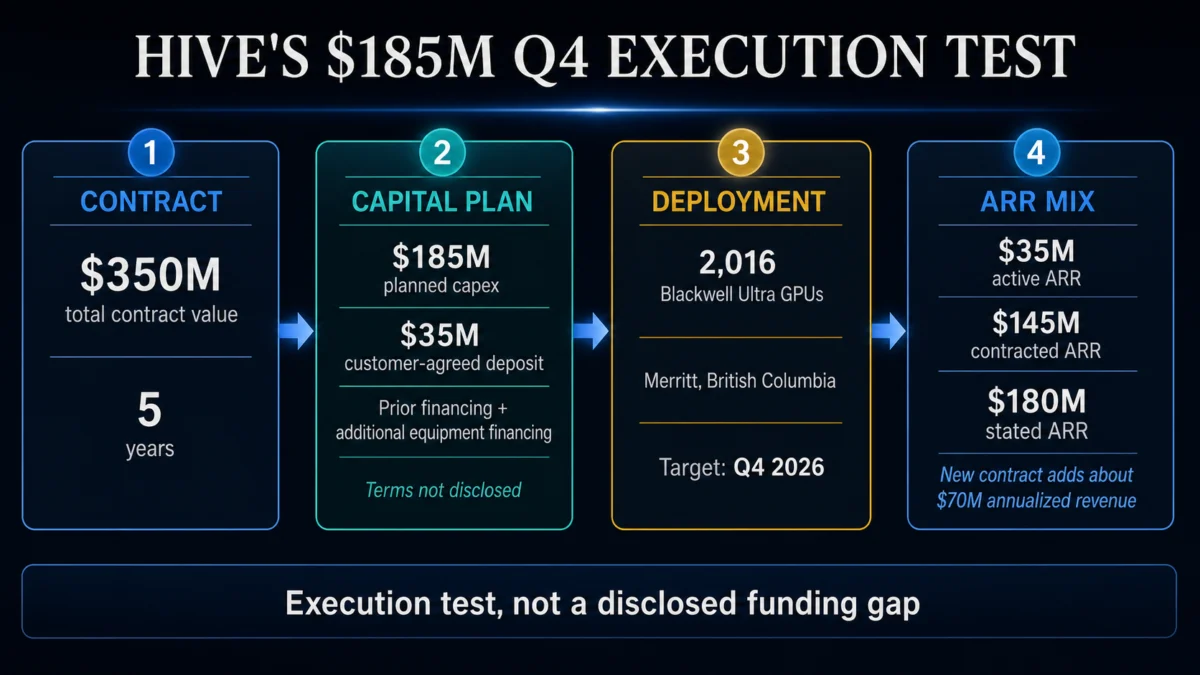
HIVE Digital Technologies is poised to tap into the burgeoning artificial intelligence market with a significant five-year contract valued at $350 million. However, this lucrative agreement hinges on the company successfully completing a substantial $185 million capital expenditure for NVIDIA GPUs within the fourth quarter of 2026. Until this critical infrastructure buildout is finalized, the majority of the projected revenue stream from this deal will remain largely unrealized. The performance and execution of this ambitious project will be closely scrutinized by investors and industry observers alike, as it represents a pivotal moment for HIVE as it diversifies beyond its traditional cryptocurrency mining operations.
The Strategic AI Pivot: A $350 Million Bet on Future Demand
HIVE Digital Technologies, a company primarily known for its Bitcoin mining operations, has made a significant strategic pivot towards the high-growth artificial intelligence sector. Through its BUZZ High Performance Computing (HPC) division, HIVE has secured a substantial five-year cloud contract with an unnamed, investment-grade enterprise customer. This agreement, valued at an impressive $350 million, is projected to generate approximately $70 million in annualized revenue once the necessary infrastructure is fully deployed and operational. This move signals HIVE’s ambition to become a key player in the AI cloud computing space, capitalizing on the insatiable demand for processing power driven by advancements in machine learning, generative AI, and other computationally intensive applications.
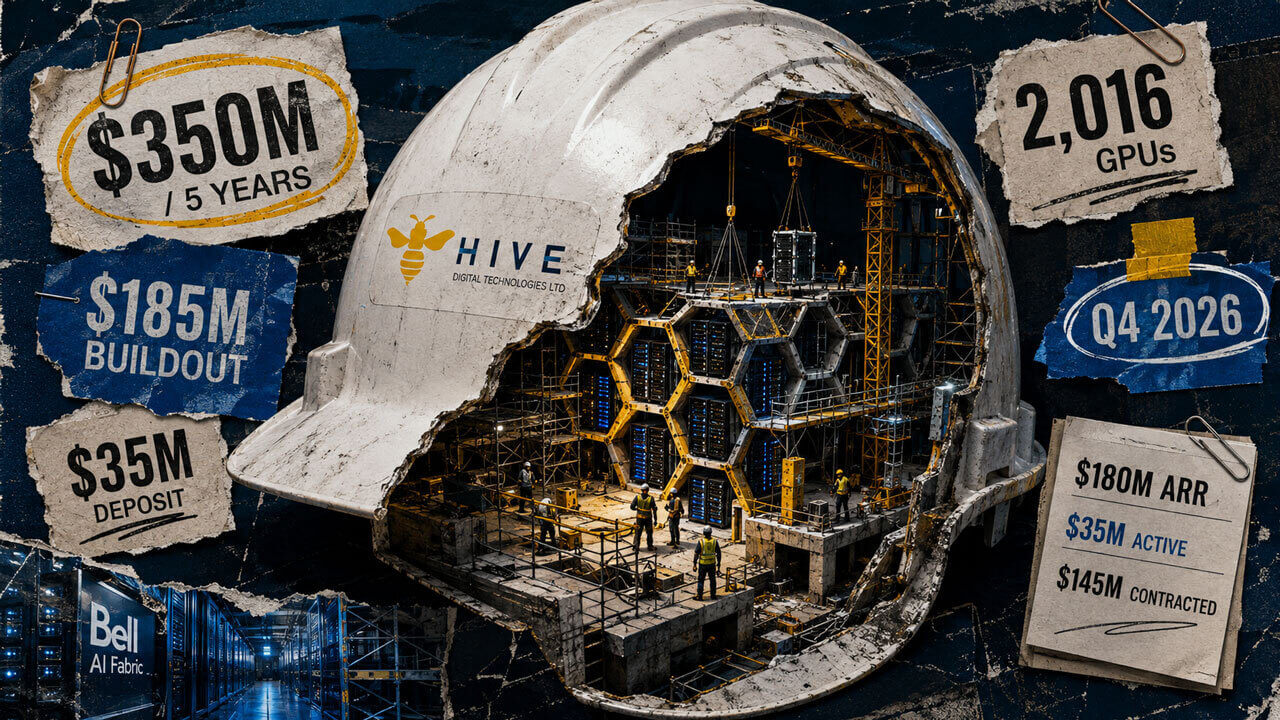
The core of this agreement lies in the deployment of cutting-edge hardware. BUZZ plans to install 2,016 NVIDIA Blackwell Ultra GPUs, housed within the GB300 NVL72 systems, at HIVE’s Bell AI Fabric facility located in Merritt, British Columbia. This state-of-the-art hardware is essential for meeting the demanding computational needs of the enterprise client. The total cost associated with acquiring this hardware, along with related equipment and service warranties, is estimated to be around $185 million. The company has set an aggressive deployment timeline, targeting completion in the fourth quarter of calendar year 2026. This timeline underscores the urgency and strategic importance of this AI initiative for HIVE.
Financial Foundations and Funding Challenges
To initiate this ambitious project, HIVE has received a crucial upfront deposit from its enterprise customer, equivalent to approximately 10% of the total contract value, amounting to $35 million. While the specifics of whether this payment has already been received have not been explicitly disclosed, its presence indicates a commitment from the client and provides an initial financial injection for HIVE.
However, the remaining significant portion of the $185 million required for the GPU buildout necessitates a robust financing strategy. HIVE has been actively pursuing various avenues to secure the necessary capital. In June, the company successfully raised $130 million through the issuance of zero-percent exchangeable senior notes due in 2031. Furthermore, during the preceding fiscal quarter, HIVE announced another substantial fundraising effort, securing $245 million from similar zero-percent notes. Chief Executive Officer Aydin Kilic has publicly stated that proceeds from these bond and debt financings are intended to support the GPU purchase.
Despite these considerable fundraising efforts, the exact amount of these proceeds that remains available for the specific GPU deployment, as well as the terms and closing status of any additional equipment financing, have not been fully detailed by the company. This lack of precise financial transparency may lead to investor scrutiny regarding HIVE’s ability to meet the full capital requirements on schedule.
The Revenue Picture: A Pipeline Under Construction
The newly signed AI contract significantly bolsters BUZZ’s reported Annual Recurring Revenue (ARR) to approximately $180 million. However, it is crucial to note that only a fraction of this amount, around $35 million, is currently active and generating revenue. The remaining $145 million is contracted but is contingent upon the successful delivery, installation, and commissioning of the new GPU infrastructure. This means that the vast majority of HIVE’s projected AI revenue is still in the pipeline, awaiting the completion of the hardware buildout.
HIVE defines ARR based on annualized revenue from weekly, daily, or quarterly metrics, rather than historical reported revenue. The company also provides a standard disclaimer that these projected figures are subject to change and may not reflect future cancellations, discounts, or reductions in service. This cautious approach to revenue projection is common in the industry and highlights the inherent uncertainties in long-term contracts.
Once the new infrastructure is fully operational, HIVE anticipates its High-Performance Computing (HPC) and AI business segment to generate substantial daily revenue, estimated at around $500,000. This projection underscores the significant revenue potential of the AI cloud computing market and HIVE’s strategic positioning within it.
HIVE’s Financial Health and Operational Capacity
HIVE recently reported a cash reserve of $208 million. However, the company has not publicly disclosed how much of this cash is specifically earmarked for the GPU deployment. This detail is critical for assessing HIVE’s immediate liquidity and its capacity to fund the project without further external financing or delays.
The company’s history in the cryptocurrency mining sector has provided it with experience in managing large-scale hardware deployments and significant energy consumption. However, the transition to AI cloud computing presents a different set of operational and technical challenges. The successful integration of NVIDIA’s cutting-edge GPUs and the ongoing management of a high-performance computing environment require specialized expertise and robust infrastructure.
Implications and Future Outlook

The $350 million AI contract represents a significant diversification strategy for HIVE Digital Technologies, moving it beyond its traditional reliance on Bitcoin mining. The success of this venture hinges on several key factors:
- Capital Execution: Securing the remaining financing required for the $185 million GPU buildout is paramount. Any delays or shortfalls in funding could jeopardize the project timeline and the realization of projected revenues.
- Hardware Deployment and Commissioning: The timely delivery, installation, and successful commissioning of the 2,016 NVIDIA Blackwell Ultra GPUs are critical. This involves complex logistical and technical processes that must be managed efficiently.
- Customer Retention and Growth: The long-term success of the AI cloud business will depend on maintaining strong relationships with its enterprise customer and potentially attracting new clients. The performance and reliability of HIVE’s AI infrastructure will be key differentiators.
- Market Dynamics: The AI cloud computing market is highly competitive, with major players like Amazon Web Services, Microsoft Azure, and Google Cloud dominating the landscape. HIVE will need to carve out a niche and offer competitive services to thrive in this environment.
The contract provides HIVE with a significant pipeline of committed AI demand, offering a compelling narrative for investors. However, the immediate future is defined by execution. The company must demonstrate its ability to translate this committed demand into live revenue by the end of 2026. This requires meticulous financial planning, efficient operational management, and a clear understanding of the technical intricacies involved in deploying and managing advanced AI infrastructure.
Background and Industry Context
The cryptocurrency mining industry has faced considerable volatility and regulatory scrutiny in recent years. Many mining companies have sought to diversify their revenue streams to mitigate risks associated with fluctuating cryptocurrency prices and evolving energy policies. The burgeoning field of artificial intelligence, with its seemingly insatiable demand for computational power, has emerged as a natural area for these companies to explore.
NVIDIA, the leading manufacturer of GPUs, has become a pivotal player in this transition. Its high-performance graphics processing units are the backbone of modern AI development, powering everything from large language models to complex scientific simulations. Companies like HIVE are essentially becoming large-scale providers of AI infrastructure, leveraging their existing expertise in managing large data centers and significant power consumption.
The Bell AI Fabric facility in Merritt, British Columbia, is part of HIVE’s growing portfolio of data center operations. The company has been expanding its infrastructure footprint to accommodate the increasing demand for computing resources. The strategic location and capacity of this facility are crucial for supporting the new AI contract.
The trend of Bitcoin miners pivoting to AI is not unique to HIVE. Several other publicly traded mining companies have announced similar strategic shifts, investing in GPU hardware and seeking AI-related contracts. This indicates a broader industry-wide recognition of the lucrative opportunities within the AI sector and a proactive effort to secure a foothold in this rapidly expanding market. The success of these endeavors will shape the future landscape of both the cryptocurrency and AI industries, potentially blurring the lines between traditional digital asset operations and the cutting-edge world of artificial intelligence.
The success of HIVE’s $350 million AI deal will be a critical test case for the broader cryptocurrency mining sector’s ability to adapt and thrive in new technological frontiers. The company’s ability to navigate the financial complexities, execute on its ambitious deployment schedule, and deliver reliable AI cloud services will ultimately determine its long-term success in this new venture.