admin
admin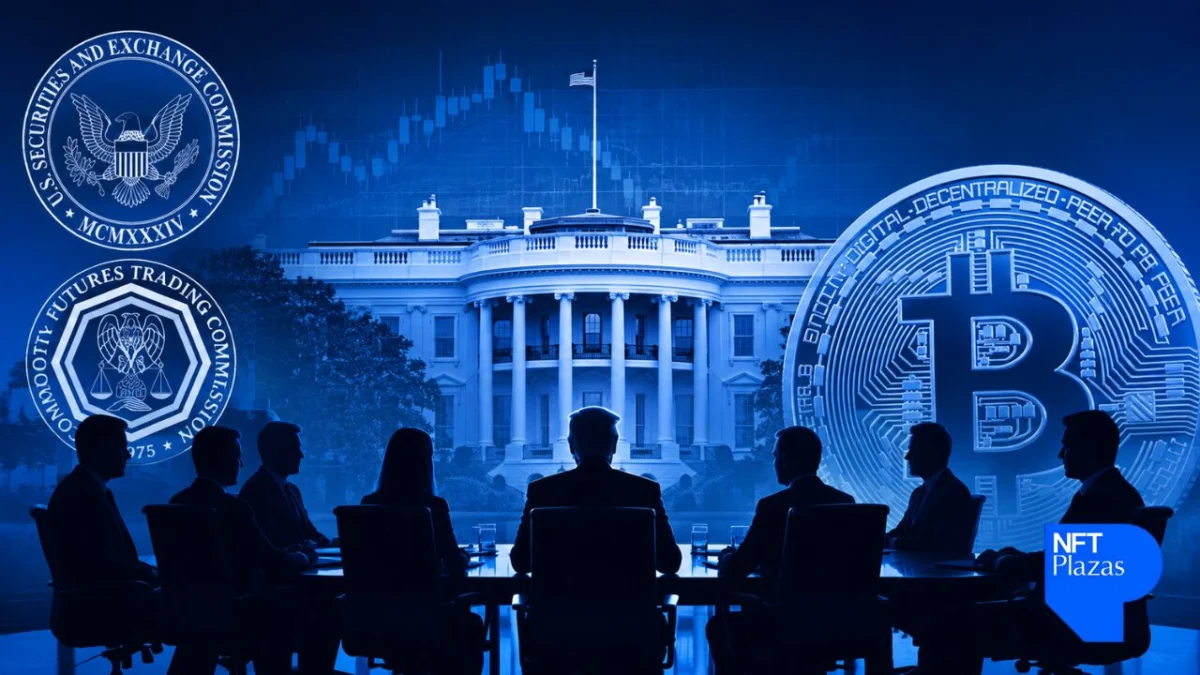
The White House is poised to host a pivotal meeting with leading cryptocurrency and prediction-market executives on Wednesday, August 19, an event set to gather President Donald Trump, key U.S. financial regulators, and representatives from the digital asset industry’s most prominent firms as Washington grapples with the intricate future of digital-asset regulation. This high-stakes summit, scheduled at the historic Eisenhower Executive Office Building, signifies an escalated engagement from the executive branch in shaping the regulatory trajectory of a rapidly evolving sector, particularly in the wake of congressional inaction on critical market-structure legislation. The confluence of these influential figures underscores a growing recognition of digital assets as an integral, rather than peripheral, component of the broader U.S. financial ecosystem.
President Trump is slated to participate in the discussions, highlighting the administration’s direct involvement in an area that has, until recently, seen more reactive than proactive federal oversight. Accompanying him will be Securities and Exchange Commission (SEC) Chairman Paul Atkins and Commodity Futures Trading Commission (CFTC) Chairman Michael Selig, signaling a concerted effort by the nation’s primary financial watchdogs to align strategies. The guest list reads like a who’s who of the digital economy and traditional finance, with confirmed or invited attendees including executives from major crypto exchanges such as Coinbase, Gemini, and Robinhood, alongside blockchain innovator Ripple. The burgeoning prediction-market sector will also be represented by leaders from Polymarket and Kalshi, platforms that have drawn increasing regulatory scrutiny. Adding a layer of comprehensive engagement, traditional financial powerhouses like Nasdaq and the New York Stock Exchange are also linked to the broader gathering, emphasizing the convergence of established finance with the innovative digital realm.
Further deepening the roster of influential participants, reports suggest that venture capital giant a16z, blockchain infrastructure provider Chainlink, crypto investment firm Paradigm, and the advocacy group Digital Chamber could also send representatives. The anticipated involvement of Treasury Secretary Scott Bessent and Commerce Secretary Howard Lutnick further elevates the meeting’s stature, indicating a whole-of-government approach to understanding and potentially guiding digital asset policy. While the final attendee list and precise agenda were still awaiting formal release as of August 16, the sheer breadth and depth of the expected participants underscore the profound importance Washington now places on digital assets, moving beyond treating them merely as an emerging technology to recognizing their growing integration into the foundational architecture of the U.S. financial system. This shift marks a significant evolution from earlier, more skeptical stances often characterized by concerns over illicit finance and speculative volatility.
A Critical Juncture for U.S. Digital Asset Policy
The timing of this White House summit is no coincidence; it arrives at a particularly critical juncture for the U.S. cryptocurrency industry. For months, the sector has championed comprehensive market-structure legislation, most notably the Digital Asset Market CLARITY Act, as its paramount regulatory priority. However, despite intense lobbying and bipartisan interest, Congress has struggled to advance these legislative efforts. The resulting vacuum has increasingly empowered federal agencies like the SEC and CFTC to forge ahead with their own initiatives, attempting to establish clearer rules for digital assets through enforcement actions and proposed frameworks, often leading to a fragmented and uncertain regulatory environment.
The current global cryptocurrency market capitalization stands at approximately $3.2 trillion, reflecting a significant rebound and sustained investor interest following periods of volatility. Daily trading volumes frequently exceed $100 billion, showcasing the immense liquidity and scale of the digital asset economy. In the U.S., studies indicate that over 50 million Americans own some form of cryptocurrency, with adoption rates steadily climbing across various demographics. This widespread engagement, coupled with significant institutional investment — which saw over $15 billion flow into crypto funds in the first half of the year alone — highlights the pressing need for a coherent regulatory framework that can foster innovation while safeguarding consumers and market integrity. The lack of a clear regulatory roadmap has often been cited by industry leaders as a major impediment to further institutional adoption and the full realization of blockchain technology’s potential within the United States, potentially ceding leadership to jurisdictions with more defined guidelines.
Prediction Markets in the Regulatory Crosshairs
A notable aspect of the White House gathering is the prominent inclusion of prediction-market operators like Kalshi and Polymarket. These platforms, which allow users to bet on the outcome of future events ranging from political elections to economic indicators, have experienced rapid growth and have become an increasingly complex issue for U.S. regulators. The CFTC, in particular, has taken an active role in defining the boundaries for these markets, grappling with how event contracts should be regulated and where federal oversight should begin and end. Recent actions, such as the CFTC’s order to Kalshi to stay open amidst a New York lawsuit, exemplify the agency’s hands-on approach and its determination to establish clear rules in this nascent but fast-expanding sector.
The controversy surrounding prediction markets often revolves around their classification. Are they gambling products, financial derivatives, or novel forms of information aggregation? This ambiguity has fueled the regulatory debate. Proponents argue that prediction markets offer valuable tools for aggregating collective intelligence and forecasting future events, potentially even serving as early warning systems for societal trends. Critics, however, raise concerns about potential manipulation, consumer protection, and the moral implications of betting on sensitive events. The participation of Kalshi and Polymarket executives alongside CFTC Chairman Michael Selig at the White House meeting underscores the administration’s intent to engage directly with these platforms as part of a broader strategy to develop a comprehensive approach to digital asset regulation, recognizing their unique challenges and opportunities.
Setting the Stage for CFTC Innovation Discussions
The White House event holds additional significance as it is strategically scheduled one day prior to the inaugural major session of the CFTC’s Innovation Advisory Committee. This committee, specifically designed to provide expert counsel to the agency on technological developments impacting financial markets and the broader economy, boasts a diverse membership including representatives from crypto companies, prediction-market platforms, and traditional financial institutions. CFTC Chairman Michael Selig is at the helm of this crucial initiative, aiming to ensure the agency remains agile and informed in the face of rapid technological change.
The proximity of these two events suggests a deliberate sequencing, positioning Wednesday’s White House gathering as a foundational discussion. It could serve as a high-level precursor, allowing for an exchange of views and priorities among the highest echelons of government and industry before more granular regulatory conversations commence within the CFTC’s advisory framework. This strategic alignment aims to ensure that the committee’s work is informed by direct executive input and reflects a unified vision for digital asset oversight. For the industry, this sequence offers a glimmer of hope for a more coordinated and thoughtful regulatory approach, moving away from what has often been perceived as an uncoordinated "regulation by enforcement" strategy.
The CLARITY Act’s Precarious Path

Against the backdrop of these executive and regulatory discussions, the legislative efforts in Congress to provide a comprehensive framework for digital assets continue to face significant headwinds. The Digital Asset Market CLARITY Act, designed to delineate whether specific digital assets fall under SEC securities regulation or CFTC commodities oversight, has encountered an increasingly difficult path through the U.S. Congress. This legislation is broadly supported by the crypto industry, which views it as essential for fostering long-term regulatory certainty and unlocking greater innovation and investment within the U.S.
The Senate’s recent departure for its August recess without advancing the legislation was a considerable setback, dampening expectations for its passage this year. While Senate Majority Leader John Thune has scheduled a procedural vote for September 15, offering lawmakers another opportunity to push the bill forward upon their return, the delay has sharply reduced optimism. Alex Thorn, head of research at Galaxy Digital, recently revised his estimated probability of the bill’s passage in 2026 to a mere 10%, starkly illustrating the increasingly challenging political landscape.
Despite these legislative hurdles, support for the CLARITY Act has not entirely dissipated. Jane Fraser, CEO of Citigroup, a major traditional financial institution, has publicly expressed her desire to see the bill become law. However, even proponents like Fraser have raised concerns about specific provisions, particularly those related to stablecoin rewards and their potential impact on traditional bank deposits, highlighting the intricate balance lawmakers must strike between innovation and existing financial structures. The legislative quagmire underscores the urgency of the White House meeting, as it may serve to explore alternative avenues for regulatory clarity should Congress remain gridlocked.
SEC’s Evolving Stance and "Regulation Crypto"
The diminishing prospects for the CLARITY Act have, in turn, amplified the importance of direct regulatory action from the SEC and CFTC. Under the leadership of Chairman Paul Atkins, the SEC has visibly adopted a more crypto-friendly and accommodating approach compared to the preceding administration. This shift is epitomized by the agency’s active development of a broader regulatory framework, dubbed "Regulation Crypto," alongside an anticipated "innovation exemption." This exemption aims to provide companies with greater flexibility to experiment with blockchain-based financial products, fostering innovation within a controlled regulatory environment rather than stifling it with overly prescriptive rules.
However, the path to implementing "Regulation Crypto" has not been without its own uncertainties. An SEC meeting initially scheduled for August 14, intended to consider new crypto-related regulatory proposals, was unexpectedly canceled. While this cancellation introduced a degree of uncertainty regarding the agency’s immediate timetable, industry participants largely remain optimistic, expecting the SEC to release elements of its comprehensive crypto framework in the coming weeks or months. This anticipated clarity, even in the absence of congressional legislation, is seen as crucial for guiding the industry and attracting further investment. The contrast between the current SEC’s approach and that of its predecessor, which often relied on aggressive enforcement actions against alleged unregistered securities offerings, is stark and reflective of a broader shift in federal strategy. Chairman Atkins’ tenure has been marked by a stated commitment to working collaboratively with innovators while maintaining investor protection as a core mandate, a balance that the "Regulation Crypto" initiative seeks to embody.
The Convergence of Digital and Traditional Finance
One of the most profound implications of the White House meeting is its explicit positioning of crypto exchanges, blockchain companies, and prediction-market operators alongside established financial institutions and federal regulators. This composition is highly significant because it reflects the undeniable and growing integration of digital assets into the broader U.S. financial system. No longer is crypto viewed solely as an isolated, niche, or fringe technology sector; it is increasingly being discussed and treated alongside traditional exchanges, market infrastructure, and financial institutions as a legitimate and impactful force.
The inclusion of Nasdaq and the New York Stock Exchange in the broader gathering is particularly telling. These institutions represent the bedrock of traditional capital markets, and their engagement signals a recognition that digital assets are not merely an alternative, but a potential future component of the financial infrastructure. This convergence could lead to hybrid financial products, new trading mechanisms, and a more interconnected global financial landscape. For traditional financial entities, engaging with crypto is no longer a matter of if, but when and how, driven by client demand, technological innovation, and the pursuit of new revenue streams. The White House summit, therefore, serves as a high-level forum to discuss how this integration can be managed safely and effectively, fostering innovation while mitigating systemic risks.
Outlook and Implications
For the cryptocurrency industry, Wednesday’s White House meeting offers a crucial signal regarding the Trump administration’s evolving regulatory priorities and its commitment to integrating digital assets into the mainstream economy. The presence of major players like Coinbase and Ripple, representing vast segments of the digital-asset economy, alongside the rapidly expanding prediction-market sector represented by Kalshi and Polymarket, underscores Washington’s increasing view of digital assets as an undeniable part of the future architecture of U.S. financial markets.
While the meeting is unlikely to immediately resolve the legislative deadlock surrounding the CLARITY Act, it could offer invaluable insight into how the administration intends to proceed if Congress ultimately fails to deliver comprehensive market-structure legislation in 2026. This potential shift of regulatory initiative from the legislative branch to the executive and its appointed agencies could have far-reaching consequences for how digital assets are governed in the United States.
For investors, analysts, and market participants, the primary focus will undoubtedly be on whether the gathering signals closer coordination and a more unified approach among the White House, the SEC, and the CFTC. In a year where Bitcoin and the broader crypto market have struggled to regain significant momentum, regulatory clarity remains one of the sector’s most closely watched potential catalysts. The White House meeting, therefore, could offer an early, high-level indication of whether that much-needed clarity will ultimately stem from a proactive, coordinated strategy involving the executive branch and key regulators, or if the industry will continue to navigate a fragmented landscape reliant on piecemeal legislative efforts or agency-specific directives. The outcome of these discussions could profoundly shape the trajectory of digital asset innovation and adoption in the United States for years to come.