admin
admin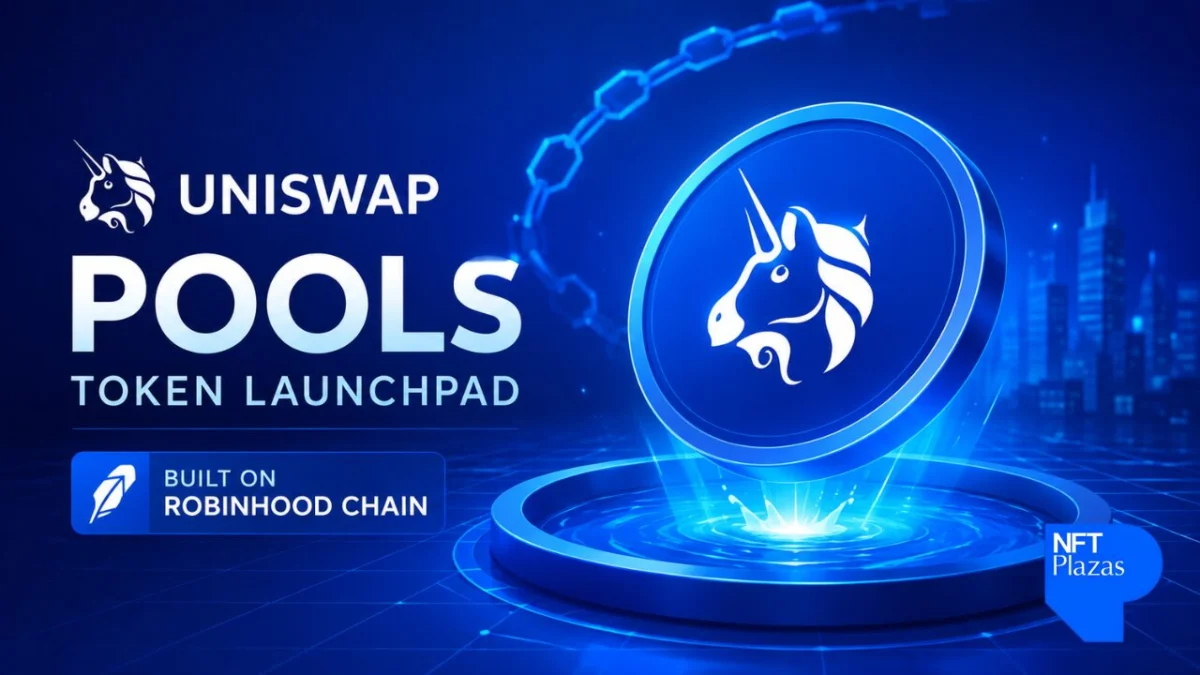
In a significant strategic expansion beyond its established role as the leading decentralized exchange, Uniswap has officially launched "Pools," its inaugural native token launchpad. Built on the Robinhood Chain, this new platform marks Uniswap’s direct foray into the token creation and initial distribution market, aiming to democratize the launch process for new cryptocurrencies. Pools is designed to empower developers and communities to launch, discover, and trade novel digital assets, while simultaneously integrating robust, built-in protections engineered to mitigate inherent risks like "rug pulls" and front-running bots, which have long plagued the nascent token launch ecosystem.
For years, Uniswap has served as the de facto liquidity layer for countless token launches, with developers leveraging its automated market maker (AMM) infrastructure to establish trading pairs for new projects. However, Pools represents a dedicated, protocol-level issuance platform, moving beyond mere infrastructure provision to offer a comprehensive, end-to-end launch solution. While primarily optimized for speculative, high-volatility assets such as meme coins—a sector known for its rapid growth and equally rapid collapses—Uniswap Labs has explicitly stated that it does not review, endorse, or verify any tokens launched through the platform. This stance underscores the decentralized and permissionless nature of the platform, placing responsibility on users for due diligence.
The launch of Pools is a critical step for Uniswap, signaling its ambition to capture a larger share of the burgeoning token economy. By providing a structured, yet flexible, environment for new projects, Uniswap seeks to enhance the overall health and integrity of the decentralized finance (DeFi) space. The move comes at a time when competition among launchpads is intensifying, and investor confidence is often shaken by malicious actors. Pools aims to differentiate itself through a blend of innovative launch mechanisms, transparent fee structures, and sophisticated anti-manipulation features.
The Evolution of Uniswap and the Need for Pools
Uniswap’s journey began in 2018 with the launch of its first protocol, revolutionizing decentralized trading through its groundbreaking AMM model. Subsequent iterations, Uniswap v2 (2020) and v3 (2021), solidified its position as the cornerstone of DeFi liquidity, processing trillions of dollars in trading volume. With the highly anticipated Uniswap v4 on the horizon, promising even greater modularity and customization, the introduction of Pools feels like a natural, albeit ambitious, progression.
The historical context for Pools lies in the inherent challenges of new token launches. Before dedicated launchpads, new tokens were often listed directly on DEXs, creating a chaotic environment ripe for exploitation. Bots would "front-run" legitimate buyers, snapping up tokens at launch and immediately flipping them for profit, leaving retail investors at a disadvantage. Worse still, many projects were "rug pulls," where malicious developers would drain liquidity from the trading pool shortly after launch, disappearing with investors’ funds and leaving the token worthless. These issues have eroded trust and presented significant barriers to entry for new, legitimate projects and everyday investors alike.
The decision to build Pools on Robinhood Chain, while Uniswap typically operates across major EVM-compatible networks, highlights a strategic decision potentially aimed at tapping into a specific user base or leveraging unique features of that chain. This deployment broadens Uniswap’s multi-chain presence, aligning with the broader industry trend of interoperability and accessibility across various blockchain ecosystems.
Dual Pathways for Token Launch: Crowd Launch and Instant Launch
Pools offers two distinct methods for launching a new token, each tailored to different project needs and risk profiles, while prioritizing fairness and stability.
Crowd Launch: Fostering Equitable Distribution
The Crowd Launch mechanism is specifically engineered to promote a more equitable and transparent distribution process. Unlike traditional immediate-trading launches, Crowd Launch introduces a structured, four-hour bidding window. During this period, participants do not submit instant market orders but rather "budgets," committing a certain amount of capital they are willing to spend. These bids are then filled gradually over time, utilizing a time-weighted average price (TWAP) mechanism. This innovative approach significantly reduces the advantage typically enjoyed by high-frequency trading bots and those executing bundled transactions (sandwich attacks), as the price discovery is smoothed out over an extended period rather than being subject to instantaneous volatility spikes.
A critical feature of Crowd Launch is its demand-driven graduation criteria. For a token to successfully launch and become tradable, it must achieve a minimum of a $10,000 fully diluted valuation (FDV) within the four-hour bidding window. This minimum threshold acts as a crucial filter, ensuring that only projects with sufficient initial community interest and demand proceed to a live trading environment. If the demand falls short of this $10,000 FDV requirement, all submitted bids are fully refunded to participants, effectively preventing the launch of tokens lacking initial traction and protecting investors from potentially illiquid assets. Upon successful graduation, the token transitions into a live Uniswap v4 liquidity pool, becoming fully tradable within the broader Uniswap ecosystem.
Instant Launch: Traditional Access with Modern Safeguards
In contrast, the Instant Launch option caters to projects seeking a more immediate listing, adhering to a more traditional token distribution model. With Instant Launch, tokens become tradable instantaneously upon creation. This method typically utilizes a bonding curve, where the token’s price increases progressively as buying demand rises. This mechanism ensures continuous liquidity and price discovery from the moment of launch.
A key distinction from Crowd Launch is the absence of a minimum valuation requirement before trading commences. This allows projects to go live without needing to hit a specific initial demand threshold, offering greater flexibility. However, regardless of the chosen launch model—be it the fairness-focused Crowd Launch or the immediacy of Instant Launch—every token ultimately funnels into a standard Uniswap v4 liquidity pool. This ensures seamless integration with Uniswap’s robust trading infrastructure and its vast network of users and liquidity.
Pioneering Permanently Locked and Auto-Compounding Liquidity
One of the most groundbreaking features introduced by Pools is its commitment to permanently locked liquidity. This mechanism directly addresses one of the most significant risks in the DeFi space: the "rug pull." In many previous token launches, creators retained the ability to withdraw liquidity from the trading pool after attracting initial investments, leaving token holders with worthless assets.
With Pools, liquidity is irrevocably locked within a protocol-controlled pool. This means that once liquidity is established during the launch phase, the token creator cannot subsequently remove it. This fundamental design choice aims to drastically reduce the potential for malicious developers to drain funds, thereby offering a far greater degree of security and confidence to investors. This feature is a direct response to the millions, if not billions, of dollars lost annually to rug pulls across various blockchain networks, a pervasive problem that has severely undermined trust in new crypto ventures.
Furthermore, Pools introduces an innovative auto-compounding liquidity feature. Trading fees generated from transactions involving a newly launched token are not simply collected but are automatically reinvested back into the locked liquidity pool. This mechanism allows the total liquidity of the pool to grow organically over time without requiring any additional deposits from users or creators. According to Uniswap, this dynamic growth in liquidity is intended to enhance long-term market stability, reduce price volatility, and improve the overall trading experience for newly launched tokens, fostering a healthier and more sustainable market environment.

Competitive Fee Structure and Creator Incentives
Pools differentiates itself significantly through its highly competitive and transparent fee structure, aiming to offer a more cost-effective solution compared to many existing launchpads.
Crucially, the platform charges no additional launchpad fee, a stark contrast to many competing services that often levy substantial upfront or platform-specific fees. Instead, Pools only collects Uniswap’s standard 0.25% liquidity provider (LP) fee on all trades. This is notably lower than the typical 1% trading fee commonly imposed by numerous other launchpads in the market. By eliminating extra platform charges, Uniswap posits that Pools provides a lower-cost entry point for projects, encouraging greater participation and reducing the financial burden on both creators and traders.
In line with the auto-compounding liquidity feature, the 0.25% LP fee is automatically directed back into the locked liquidity pool, further strengthening its depth and stability. However, creators have an optional mechanism to monetize their efforts: they can choose to enable creator fees. If activated, creators will receive a 0.05% share of the 0.25% LP fee, with the remaining 0.20% continuing to bolster the locked liquidity pool. This balanced approach incentivizes creators while maintaining a primary focus on enhancing the robustness and longevity of the token’s market. Hayden Adams, Uniswap founder, has openly criticized the higher fee structures of many competitors, arguing that 1% LP fees effectively create a 2% trading spread, which becomes increasingly inefficient and detrimental to projects as they mature and trading volumes grow. He emphasized that the 0.25% LP fee in Pools does not go to Uniswap Labs but is primarily dedicated to strengthening the locked liquidity pool.
Advanced Anti-Sniping Features for a Level Playing Field
The issue of "sniping" and front-running by automated bots has been a persistent challenge in new token launches, often leading to unfair advantages for sophisticated traders and disillusionment among retail participants. Pools introduces several mechanisms specifically designed to counteract these predatory activities.
One of its most innovative features is sniping mitigation, which provides creators with a unique window to purchase their own token in the same blockchain block that the launch occurs. This strategic advantage helps to prevent automated bots from consistently being the first buyers, which typically allows them to drive sharp price swings within seconds of a launch and capture immediate profits at the expense of later entrants. By allowing creators to establish initial price points or significant positions, the impact of these bot-driven pump-and-dump schemes is substantially reduced.
Furthermore, the Crowd Launch mechanism inherently limits unfair advantages by spreading purchases across a four-hour bidding period. This time-weighted average price (TWAP) approach minimizes the reward for the fastest transactions, instead favoring participants who commit to the launch over a longer duration. This design choice effectively neutralizes the "gas war" phenomenon, where bots compete to pay exorbitant transaction fees to get their orders included first, making the launch process more accessible and equitable for all. Collectively, these sophisticated mechanisms are intended to foster a more level playing field, ensuring that retail participants have a fairer chance to engage with new token launches without being immediately outmaneuvered by automated systems.
Seamless Integration Across the Uniswap Ecosystem
A core strength of Pools lies in its deep and seamless integration across the broader Uniswap ecosystem, providing immediate discoverability and accessibility for newly launched tokens. Every project launched through Pools automatically becomes discoverable via the Uniswap Web App, the Uniswap Wallet, and the dedicated Uniswap Launches platform.
Beyond direct Uniswap interfaces, new tokens are also routed through the Uniswap API, making them instantly accessible and tradable across a wide array of third-party wallets and decentralized exchange aggregators. This includes prominent platforms such as MetaMask, Ledger, and various other DeFi front-ends, ensuring maximum reach and liquidity from day one.
The process for launching a token on Pools is designed for simplicity and efficiency, requiring only a ticker symbol, an accompanying image, a concise description, and the selection of either the Crowd Launch or Instant Launch model. For traders, the experience is equally streamlined: new projects can be browsed on the dedicated pools.trade interface. Traders can immediately purchase Instant Launch tokens or place bids on Crowd Launch offerings, claiming their tokens after successful graduation. This integrated approach ensures that tokens launched on Pools benefit from Uniswap’s extensive network effects and user base, enhancing their visibility and potential for success.
Hayden Adams Defends the Model and Future Vision
Uniswap founder Hayden Adams has vocally defended Pools, characterizing it as a logical and necessary evolution of the protocol. In a series of posts on X (formerly Twitter), Adams highlighted Uniswap’s long-standing, albeit indirect, role in token launches. "People have used Uniswap as both a launchpad and launchpad infrastructure for over eight years," Adams wrote, underscoring the protocol’s organic development into this new domain. He expressed enthusiasm for building alongside other launchpads to collectively advance the space, signaling a collaborative rather than purely competitive stance.
Adams’ defense also included a pointed critique of the prevailing fee structures in the launchpad market. He reiterated his argument that the 1% liquidity pool fees commonly charged by many competing platforms effectively create a 2% trading spread, which he views as inefficient and detrimental to the long-term viability of projects, particularly as they mature and require tighter spreads for efficient trading. He clarified that the 0.25% liquidity provider fee associated with Pools does not accrue to Uniswap Labs but is specifically directed towards strengthening the locked liquidity pool, with creators receiving a share only if they opt to enable creator fees. This clarification reinforces the platform’s commitment to community-centric growth and sustainable liquidity.
Early Market Validation and Future Outlook
The market’s enthusiasm for Pools was evident even before its official user interface went live. According to Hayden Adams, traders proactively discovered earlier versions of the platform’s smart contracts and generated more than $150 million in trading volume prior to the public launch. This unexpected early demand prompted the Uniswap team to rapidly update its indexing systems to accommodate both the preliminary and final deployments, highlighting the strong underlying interest in a more robust and secure token launch mechanism.
Pools is currently launching in a beta phase, indicating that Uniswap Labs is committed to an iterative development process. Additional improvements and features are anticipated based on community feedback and real-world usage data, ensuring that the platform evolves to meet the dynamic needs of both creators and traders.
As the competition among token launchpads continues to intensify across the DeFi landscape, Uniswap is making a significant bet on its unique value proposition. The combination of lower fees, permanently locked liquidity, sophisticated anti-sniping protections, and seamless integration with its expansive ecosystem positions Pools as a formidable contender. By addressing critical pain points in the token launch process—namely fairness, security, and accessibility—Uniswap aims to provide a more transparent, equitable, and ultimately more attractive option for creators seeking to launch new projects and for traders looking to engage with them. This strategic move not only diversifies Uniswap’s offerings but also solidifies its role as a pivotal infrastructure provider at the forefront of decentralized innovation, promising to shape the future of token distribution in the digital asset economy.